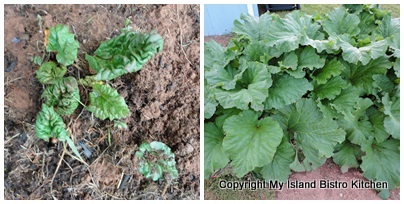
Jamming and preserving season here in PEI starts with rhubarb, one of the first treats from the garden. The two crowns of rhubarb in our garden produce lots of rhubarb for use when it is in season and to freeze for later enjoyment.

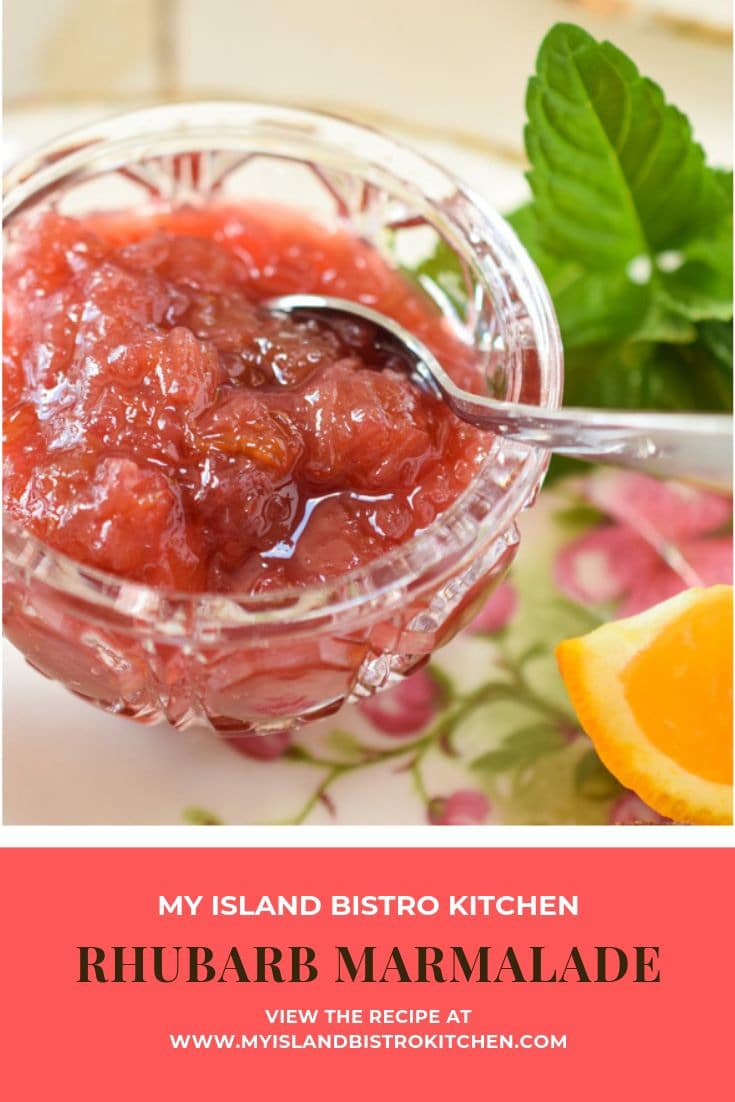
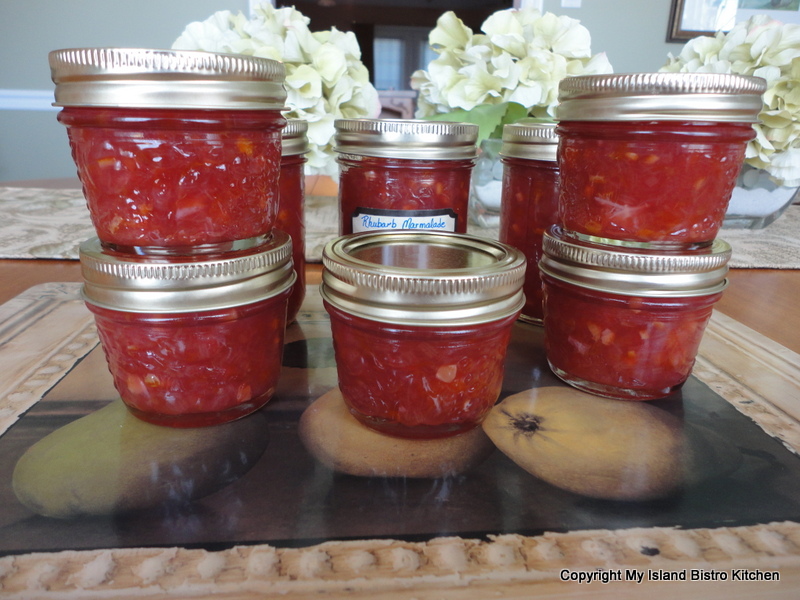
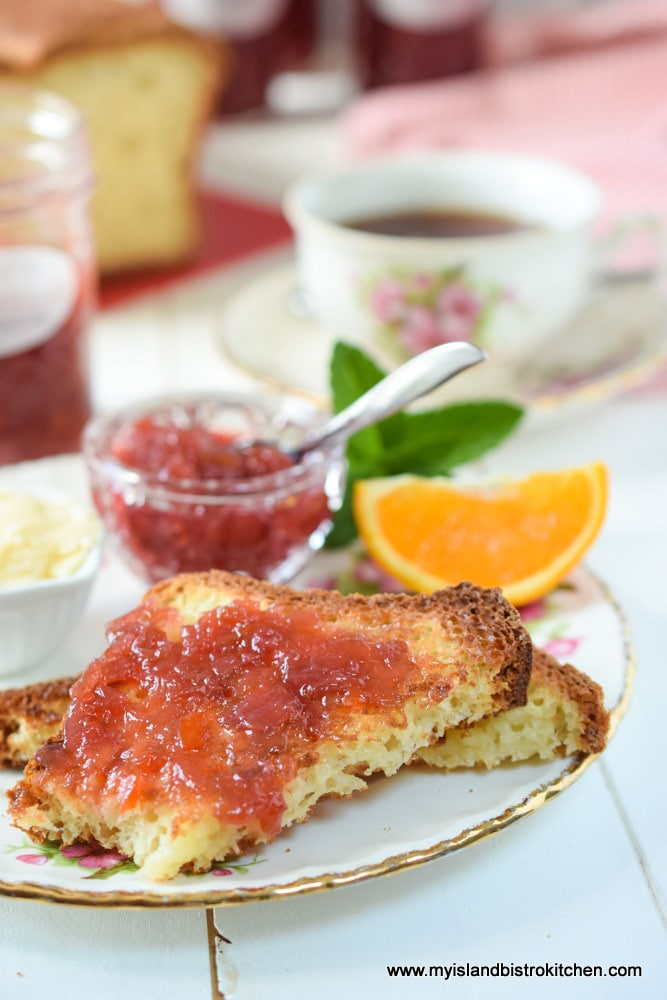
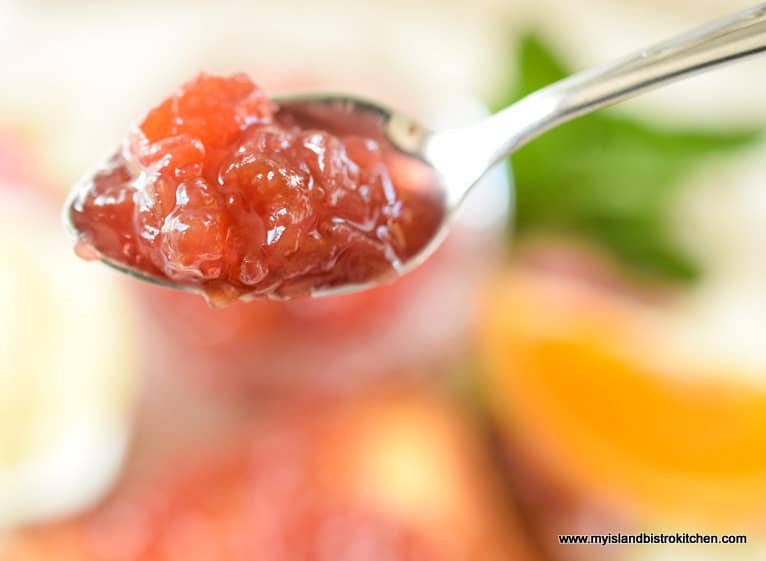
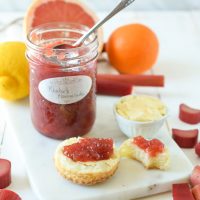
One of the first things I make with rhubarb as soon as it is ready is this wonderful rhubarb marmalade I have been making for years. The marmalade only takes five ingredients – rhubarb, granulated sugar, an orange, half a pink grapefruit, and half of a lemon. The color of the rhubarb marmalade is a lovely deep shade and its flavour is fresh and slightly tart.
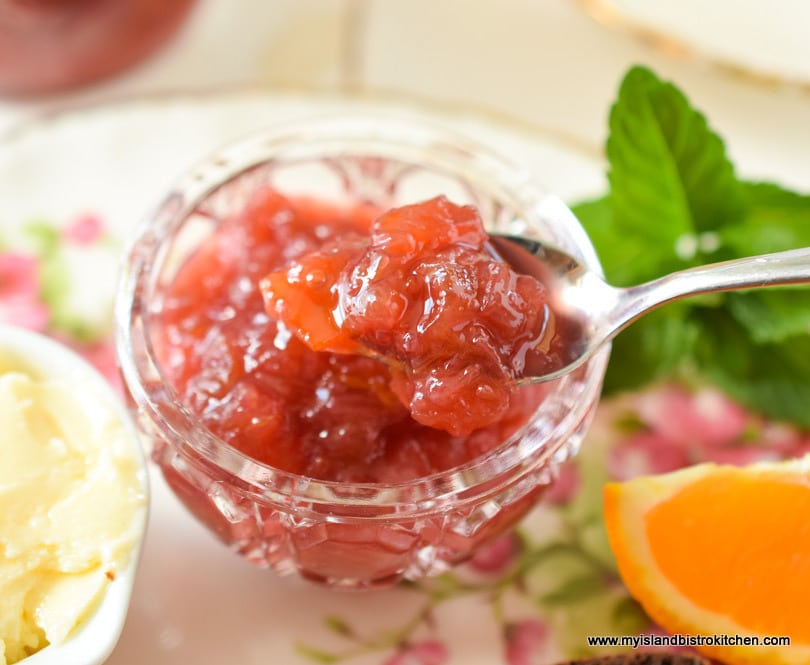
Tips for making rhubarb marmalade:
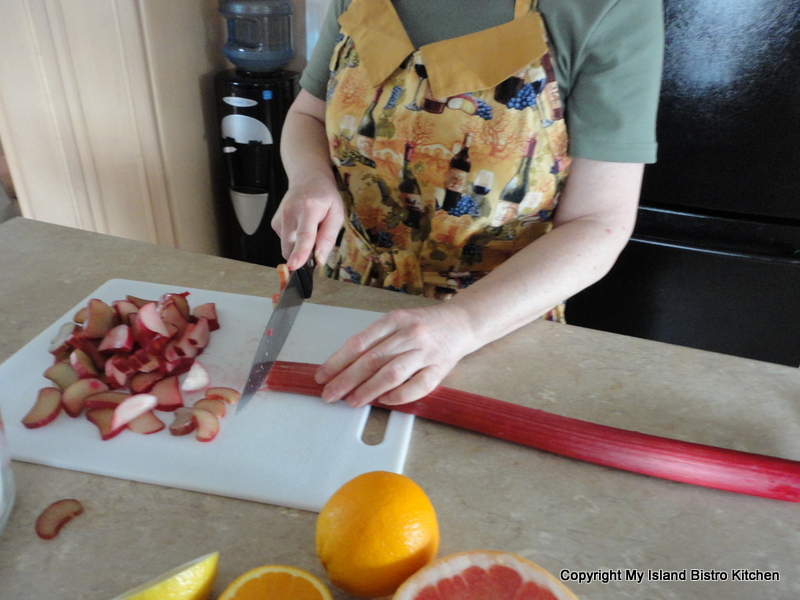
- Choose rhubarb stalks that are slender as marmalade is best made with smaller pieces of rhubarb. Stalks that are a bright red color will yield a marmalade with a richer, deeper color.
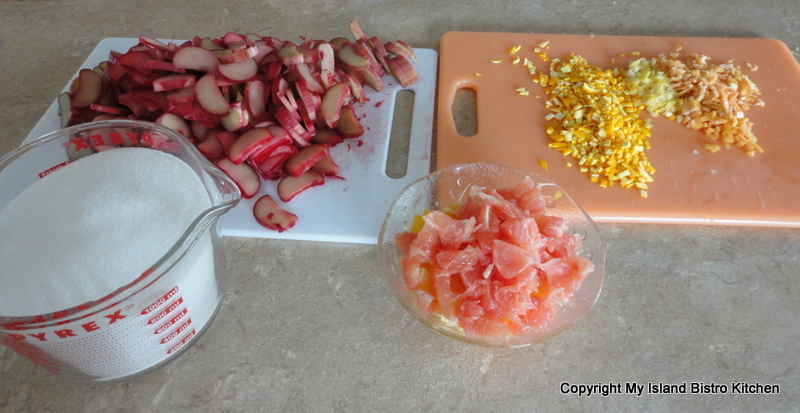
- Prepare all the fruit before beginning to make the marmalade – chop the rhubarb, prepare the citrus fruit, and measure the sugar.
- Set out all the pots and hot water canner needed.
- Organize the process. Begin cooking the marmalade. While it is cooking, get the bottles sterilizing in hot water, and the water heating in the canner so that it will be ready to process the marmalade as soon as it is bottled.
- Cook the marmalade to a sustained temperature of at least 217°F (to a maximum of 220°F) on a candy thermometer. If a candy thermometer is not available to test marmalade doneness, place a couple of freezer-safe saucers in the freezer. This method of testing is explained in the recipe.
- Don’t overcook the marmalade as it will become very thick and dark in color. Cooking the marmalade to 217°F on a candy thermometer will yield a more pliable spread while cooking it to a temperature of 220°F will produce a thicker marmalade.
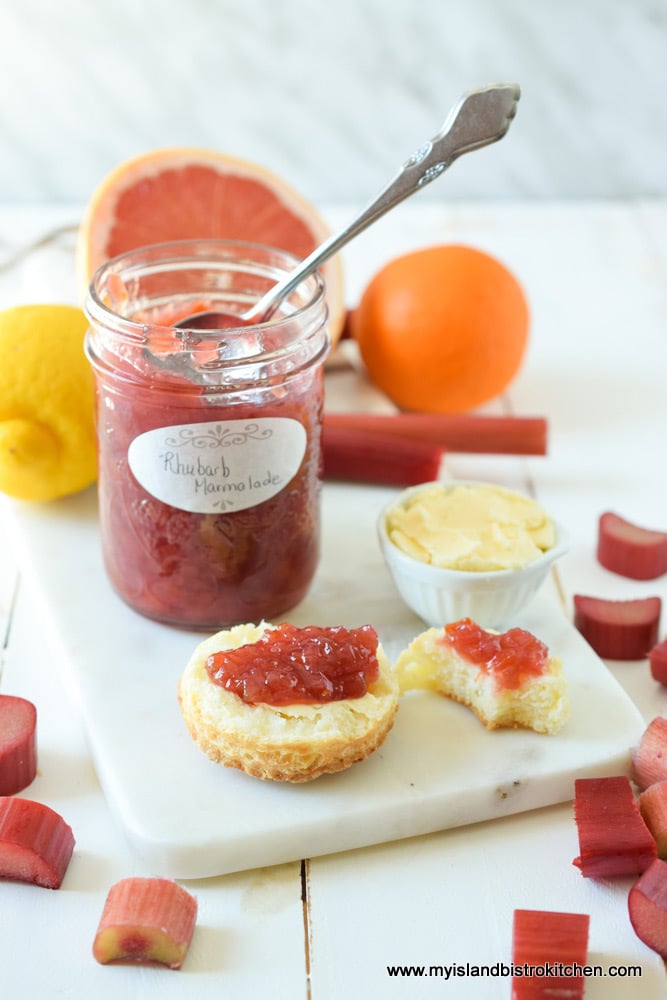
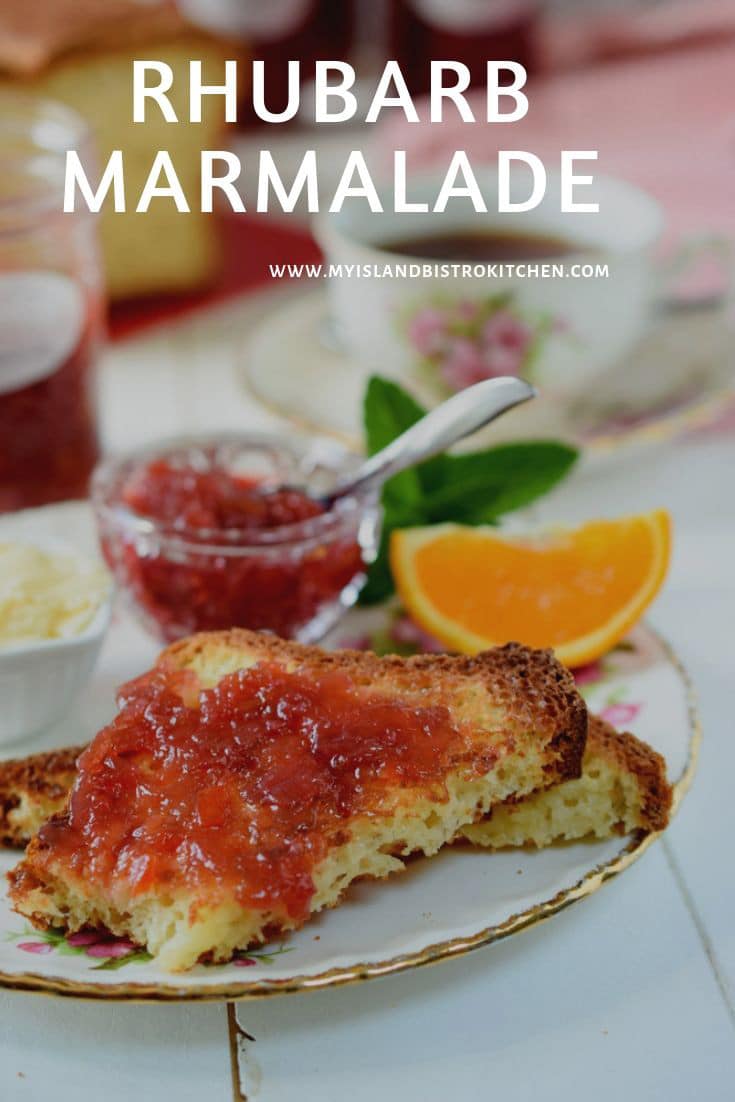
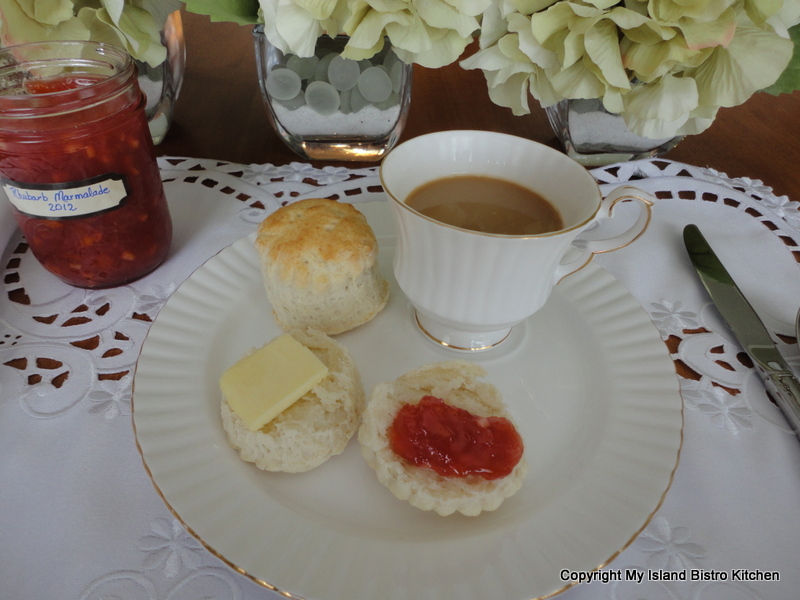
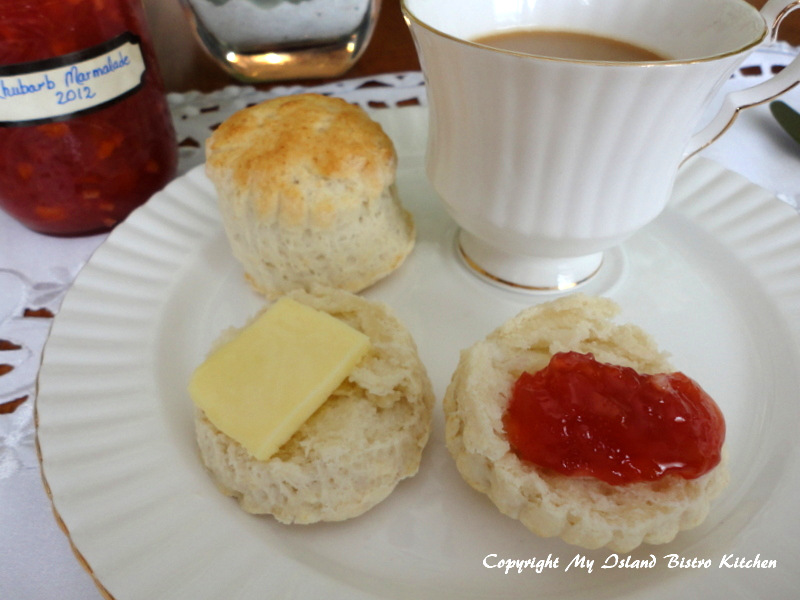
Serve this tasty rhubarb marmalade with biscuits, scones, toast, or crackers. Add a dollop to Greek yogurt or custard for a tasty dessert.
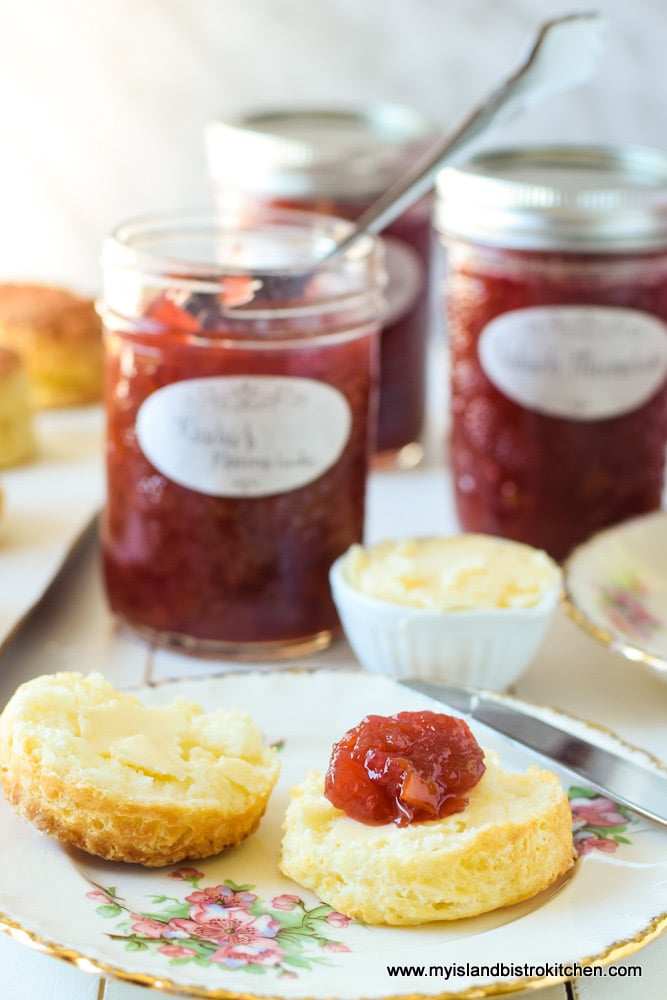
You’ll find many tasty, creative ways to enjoy this special treat!
[Printable recipe follows at end of post]
Rhubarb Marmalade
Ingredients:
8 cups rhubarb, thinly sliced into pieces between 1/8’ and ¼“ thick (apx. 2 pounds, 6 ounces, weighed after rhubarb leaves and root ends removed)
4¼ cups sugar
1 large orange (or 1½ small oranges)
½ pink grapefruit
½ small lemon
Method:
Wash the orange, grapefruit, and lemon well.
Peel orange, grapefruit, and lemon. Chop the pulp, remove and discard any seeds, and place pulp in bowl. Scrape the pith from the fruit peelings and discard. Chop the peel into small pieces. Set aside.
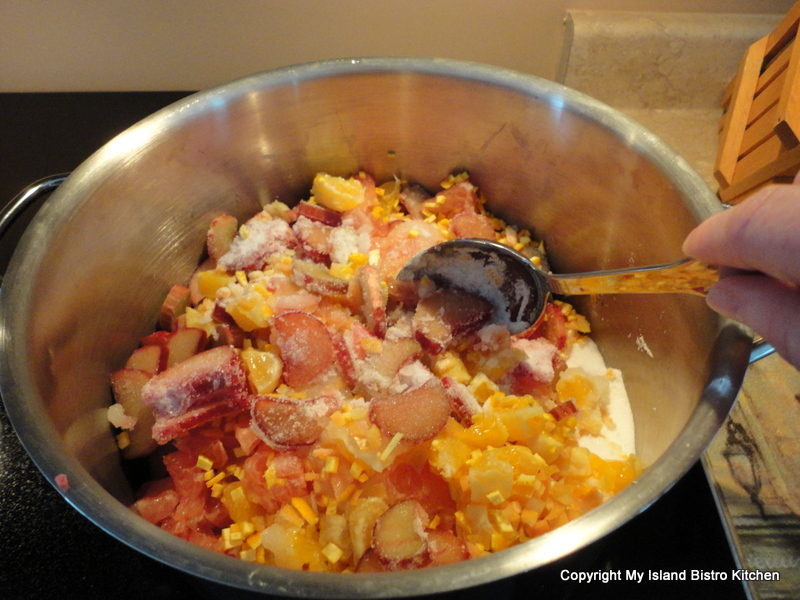
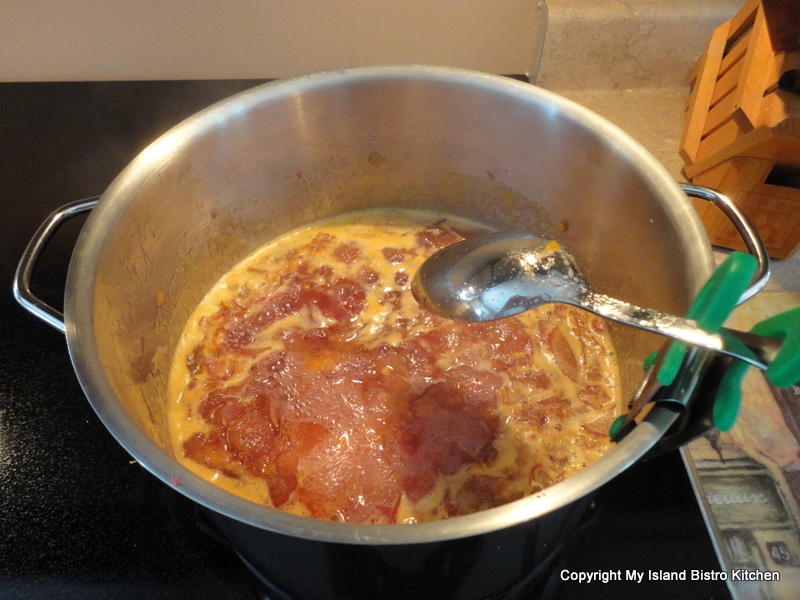
In a large pot, place the rhubarb and sugar. Add the citrus pulp and peel. Bring to a boil over medium high temperature, stirring to prevent scorching. Immediately lower the temperature and cook, uncovered, at a slow gentle boil until mixture thickens and reaches a sustained temperature of 217°F on a candy thermometer (see Note below for alternative testing method). Stir mixture regularly to prevent scorching. Be patient, this can take an hour or so. The marmalade may be cooked to a temperature of 220°F but it will be a thicker marmalade and less pliable to spread than if it is cooked to 217°F.
While the marmalade is cooking, fill a large pot of water, about ¾ full. Place 7 half-pint jars, upright, into the water. Ensure the jars are fully submerged, each jar filled with water, and that the water is at least an inch over the tops of the jars. Cover, bring to a boil, and boil for 10 minutes. Turn off heat and leave the jars in the hot water while the marmalade finishes cooking.
Meanwhile, fill the hot water canner about one-third to one-half full of water. Cover and bring to a boil to have it ready for the filled jars.
When the marmalade is cooked, use a jar lifter to remove the hot jars from the water. Using a canning funnel, pour marmalade into sterilized jars, leaving about ¼” headroom in each jar. Wipe the jar rims with a clean cloth. Seal jars with heated lids and fingertip-tightened ring bands.
Place jars in hot water bath wire basket, ensuring jars do not touch each other or fall over. Carefully lower basket into canner of hot water. Ensure the water level is at least 1” above the tops of jars, adding more boiling water as necessary. Cover with canner lid. Increase the heat to return the water to a rolling boil then decrease the heat to just keep the water at a rolling boil but not boiling over. Process half-pint jars in the hot water bath for 10 minutes, adjusting time for altitude. Start timing the processing from the point where a full rolling boil is reached after basket of jars has been added to the canner. At the end of the processing time, turn off heat and remove canner lid. Wait 4-5 minutes, until the water stops boiling then, using a jar lifter, carefully remove the jars, one at a time, and transfer them to a wire rack to cool completely. Listen for the “pop” or “ping” sound as the bottles seal over the next few minutes or hours. The lids of properly sealed jars will curve downward. Let jars rest, undisturbed, on wire rack for 12 hours. Store in cool, dark place. Refrigerate marmalade once opened.
Yield: Apx. 7 half-pint bottles
NOTE 1: If you don’t have a candy thermometer, place 2-3 freezer-safe saucers in freezer. To test for doneness of the marmalade, place a small amount of marmalade on chilled saucer and swirl saucer around. Let marmalade sit, untouched, for about a minute, then gently push your finger through the marmalade. If the marmalade holds its shape (i.e., does not immediately run back together after the finger has been removed from the marmalade), it is set and ready to bottle. If not, continue to cook mixture, repeating the “chill” test about every 3 minutes or so (always removing the pot from the heat while conducting the chill test) until the marmalade passes the “chill” test. Do not overcook as it will result in a very thick marmalade, dark in color.
Note 2: After jars have completely cooled, if there are any on which the lids have not curved downward, refrigerate them and use within one month.
Rhubarb Marmalade
Ingredients
- 8 cups rhubarb, thinly sliced into pieces between 1/8’ and ¼“ thick (apx. 2 pounds, 6 ounces, weighed after rhubarb leaves and root ends removed)
- 4¼ cups sugar
- 1 large orange (or 1½ small oranges)
- ½ pink grapefruit
- ½ small lemon
Instructions
- Wash the orange, grapefruit, and lemon well.
- Peel orange, grapefruit, and lemon. Chop the pulp, remove and discard any seeds, and place pulp in bowl. Scrape the pith from the fruit peelings and discard. Chop the peel into small pieces. Set aside.
In a large pot, place the rhubarb and sugar. Add the citrus pulp and peel. Bring to a boil over medium high temperature, stirring to prevent scorching. Immediately lower the temperature and cook, uncovered, at a slow gentle boil until mixture thickens and reaches a sustained temperature of 217°F on a candy thermometer (see Note below for alternative testing method). Stir mixture regularly to prevent scorching. Be patient, this can take an hour or so. The marmalade may be cooked to a temperature of 220°F but it will be a thicker marmalade and less pliable to spread than if it is cooked to 217°F.
- While the marmalade is cooking, fill a large pot of water, about ¾ full. Place 7 half-pint jars, upright, into the water. Ensure the jars are fully submerged, each jar filled with water, and that the water is at least an inch over the tops of the jars. Cover, bring to a boil, and boil for 10 minutes. Turn off heat and leave the jars in the hot water while the marmalade finishes cooking.
Meanwhile, fill the hot water canner about one-third to one-half full of water. Cover and bring to a boil to have it ready for the filled jars.
- When the marmalade is cooked, use a jar lifter to remove the hot jars from the water. Using a canning funnel, pour marmalade into sterilized jars, leaving about ¼” headroom in each jar. Wipe the jar rims with a clean cloth. Seal jars with heated lids and fingertip-tightened ring bands.
- Place jars in hot water bath wire basket, ensuring jars do not touch each other or fall over. Carefully lower basket into canner of hot water. Ensure the water level is at least 1” above the tops of jars, adding more boiling water as necessary. Cover with canner lid. Increase the heat to return the water to a rolling boil then decrease the heat to just keep the water at a rolling boil but not boiling over. Process half-pint jars in the hot water bath for 10 minutes, adjusting time for altitude. Start timing the processing from the point where a full rolling boil is reached after basket of jars has been added to the canner. At the end of the processing time, turn off heat and remove canner lid. Wait 4-5 minutes, until the water stops boiling then, using a jar lifter, carefully remove the jars, one at a time, and transfer them to a wire rack to cool completely. Listen for the “pop” or “ping” sound as the bottles seal over the next few minutes or hours. The lids of properly sealed jars will curve downward. Let jars rest, undisturbed, on wire rack for 12 hours. Store in cool, dark place. Refrigerate marmalade once opened.
Recipe Notes
Yield: Apx. 7 half-pint bottles
NOTE 1: If you don’t have a candy thermometer, place 2-3 freezer-safe saucers in freezer. To test for doneness of the marmalade, place a small amount of marmalade on chilled saucer and swirl saucer around. Let marmalade sit, untouched, for about a minute, then gently push your finger through the marmalade. If the marmalade holds its shape (i.e., does not immediately run back together after the finger has been removed from the marmalade), it is set and ready to bottle. If not, continue to cook mixture, repeating the “chill” test about every 3 minutes or so (always removing the pot from the heat while conducting the chill test) until the marmalade passes the “chill” test. Do not overcook as it will result in a very thick marmalade, dark in color.
Note 2: After jars have completely cooled, if there are any on which the lids have not curved downward, refrigerate them and use within one month.
For other tasty marmalade recipes from My Island Bistro Kitchen, click on the links below:
Peach Marmalade
Green Tomato Marmalade
Pin Me To Pinterest!