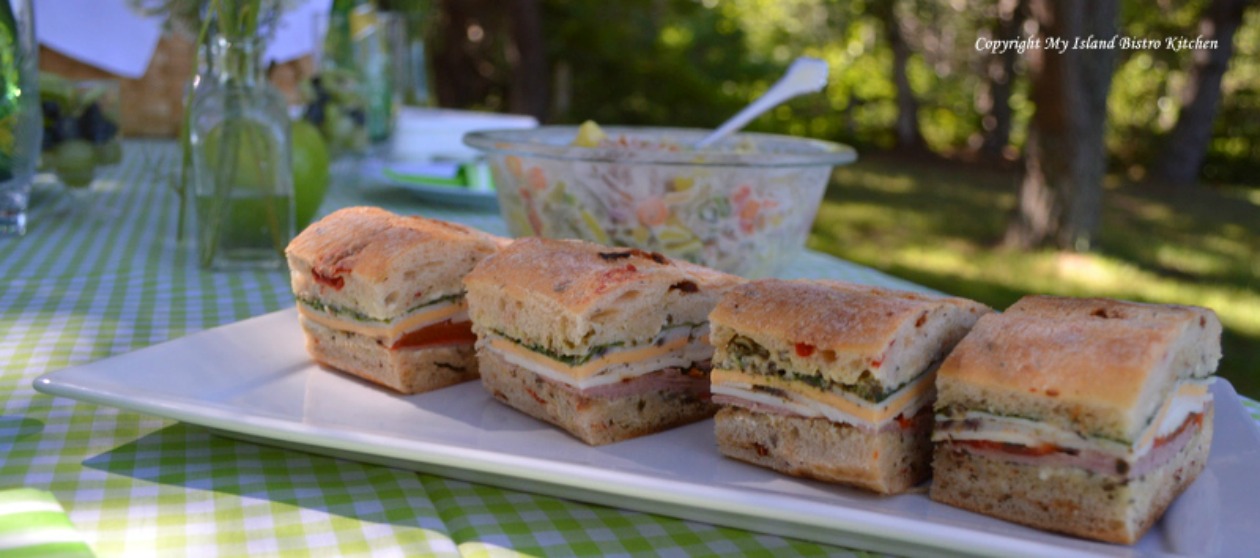
Rhubarb Custard Torte is one of my all-time favorite desserts and it is simply sublime! It makes a lovely springtime treat when the fresh rhubarb is available but can also be made with frozen rhubarb and enjoyed year-round. Continue reading Rhubarb Custard Torte→
Do you have certain foods you like to have in the different seasons? One of the springtime treats in my house is asparagus.
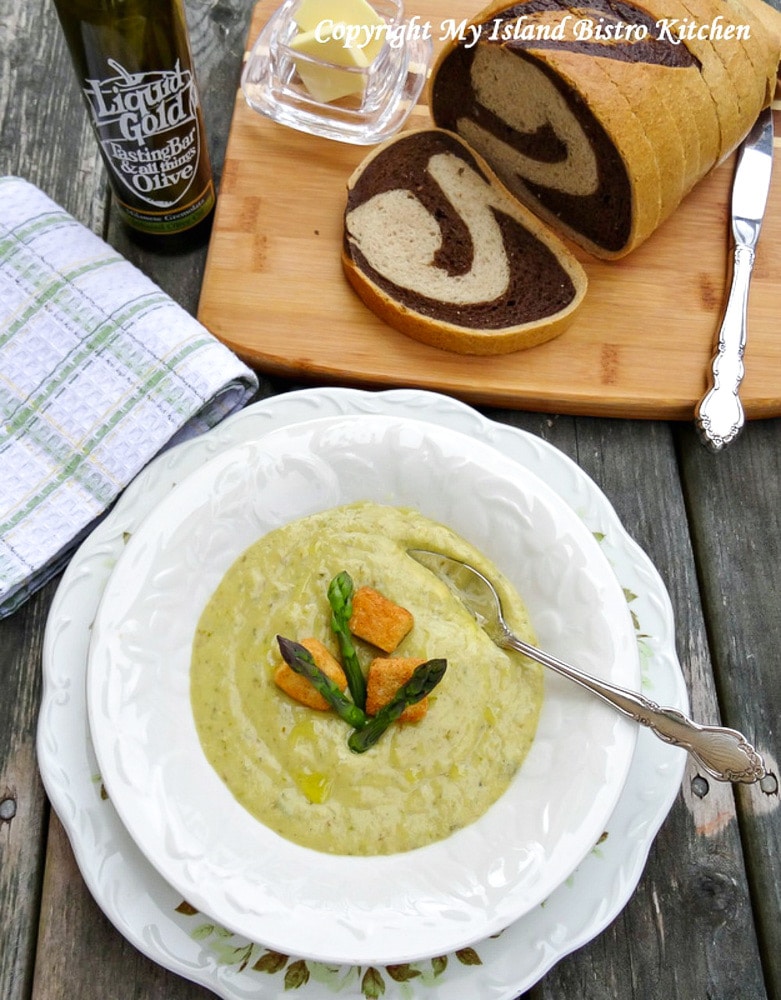
Asparagus is a very versatile vegetable and one of the first available in spring in our Maritime climate. Asparagus is lovely served with a Hollandaise sauce, in a quiche, wrapped with goat cheese in proscuitto and roasted, or in a myriad of other ways. One of my favorite ways to serve asparagus is as a Roasted Cream of Asparagus Soup. I like to roast the asparagus first as I find the roasting brings out the nutty, earthy flavors in the asparagus. Continue reading Cream of Roasted Asparagus Soup→
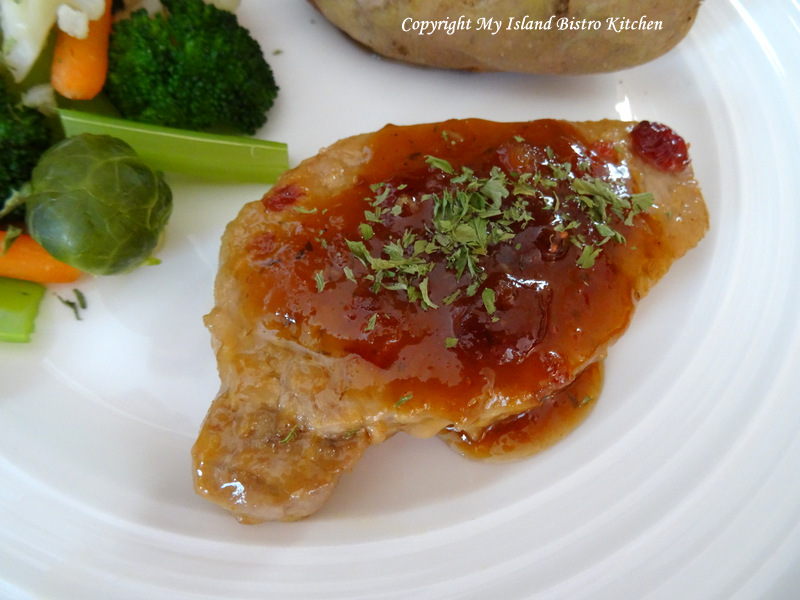
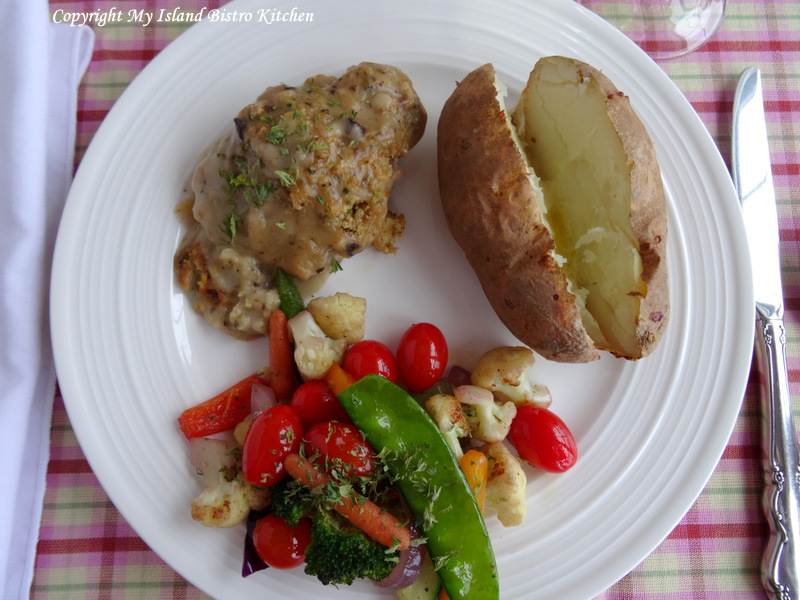
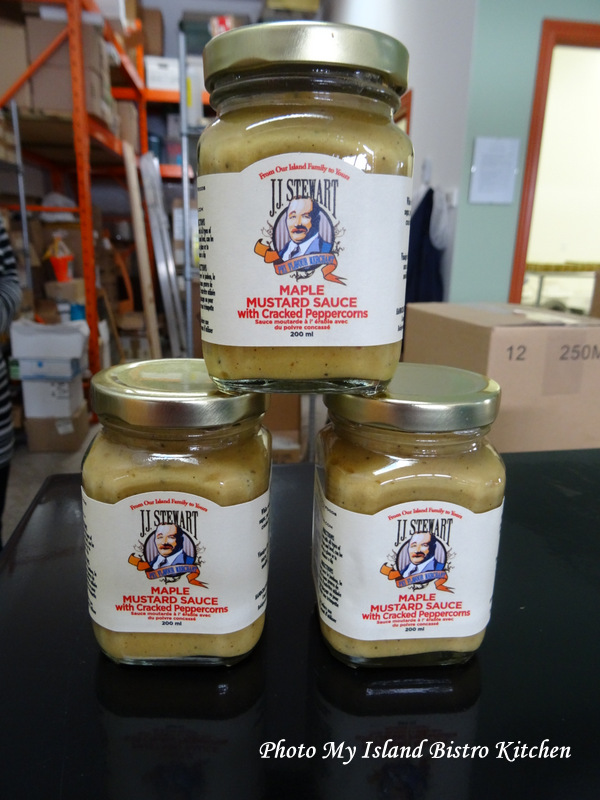
Today, I am sharing a new recipe for pork chops. In addition to PEI pork, I am also featuring two other PEI products, both from J.J. Stewart Foods and Soda Company, in Stratford. The first is a new preserve flavor — Cranberry Champagne with Crystallized Ginger — and the second is from their maple mustard line.
This is a very easy recipe to make and does not take a lot of time to prepare. It is essentially pan-fried pork chops with a pan reduction sauce made with chicken stock, orange juice, mustard, and the preserves. This recipe is easily doubled.
½ cup chicken broth
2 tbsp orange juice
1½ tsp balsamic vinegar (I used Liquid Gold’s Grapefruit Balsamic Vinegar)
3 tbsp J. J. Stewart’s Cranberry Champagne with Crystallized Ginger Preserve
1 tbsp J.J. Stewart’s Dill and Chardonnay Maple Mustard
¼ tsp onion
⅛ tsp garlic powder
Method:
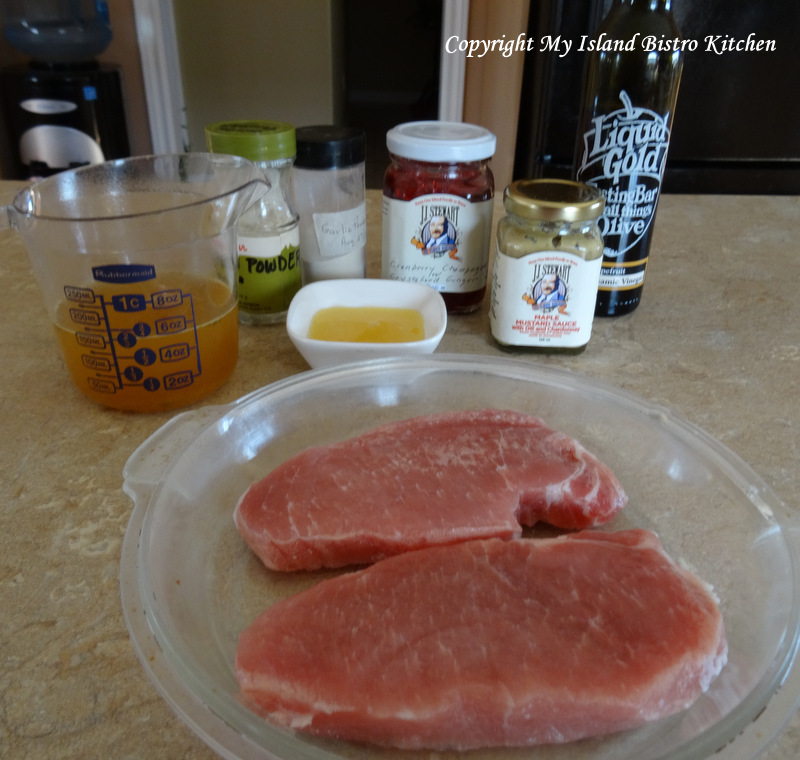
Assemble ingredients.
Over medium heat, add 2 tsp olive oil to small frypan. Add pork chops and cook, turning once until cooked to desired doneness. Remove chops from pan and transfer to oven-proof covered dish. Place pork chops in oven set at very low temperature, just enough to keep them warm while preparing sauce.
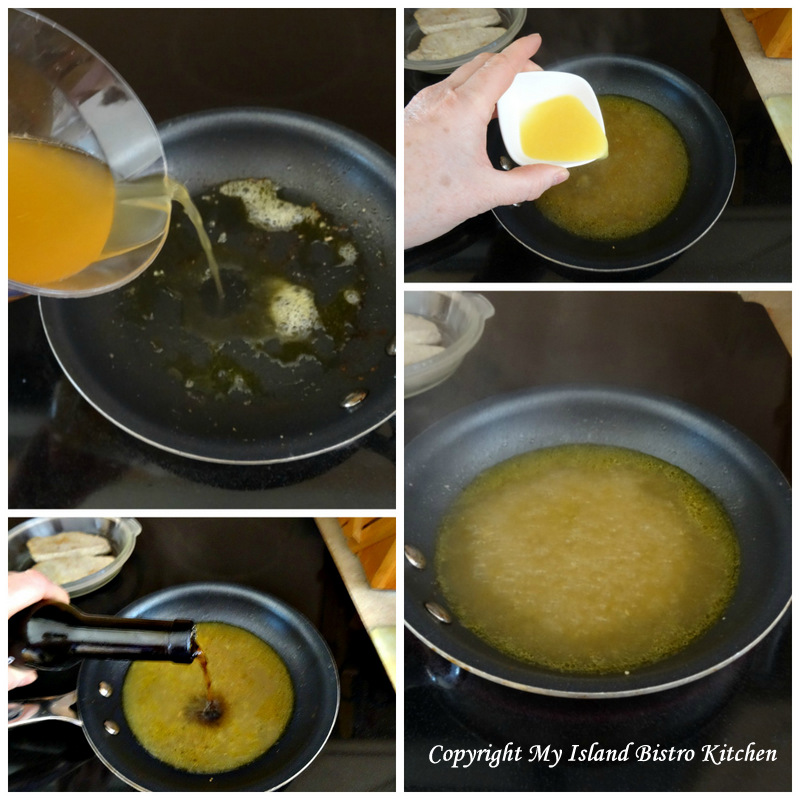
Add the chicken broth, orange juice, and balsamic vinegar to frypan. Over medium heat, cook liquid (uncovered) until it reduces to about half.
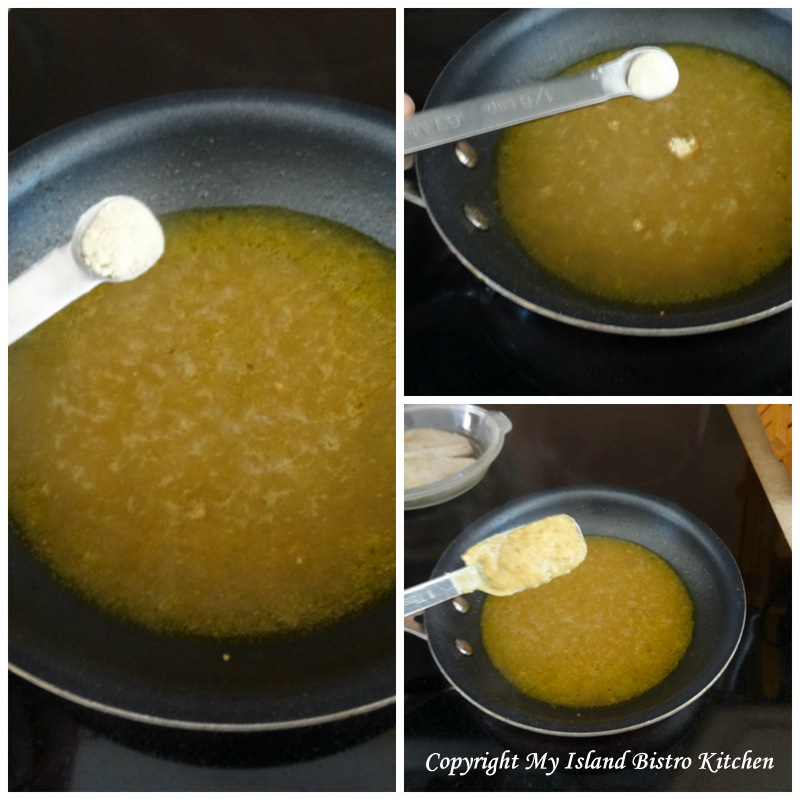
Whisk in the mustard along with the garlic and onion powders until mixture is smooth.
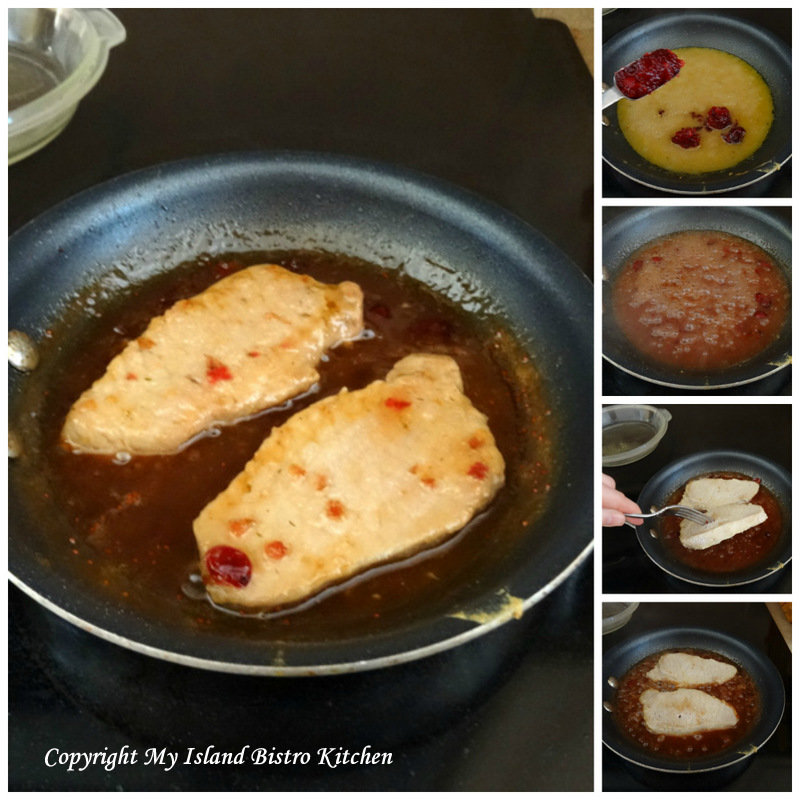
Whisk in the preserves. Cook until mixture becomes the consistency of syrup.
Return the pork chops to the frypan and heat for about 1 minute, turning the chops at half-time to glaze both sides.
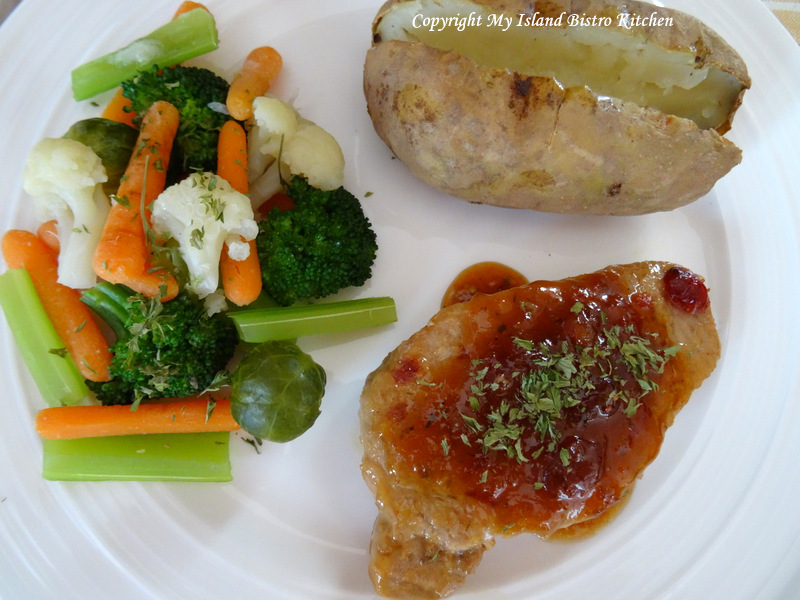
Serve hot with the cranberry-ginger sauce mixture drizzled over top of each pork chop. Serve with potato or rice and your favorite vegetable(s).
Serves: 2
Note: Other brands of preserves, mustard, and balsamic vinegar may be used in this recipe; however, flavor will differ.
You may also like this pork chop recipe from My Island Bistro Kitchen:
There are lots of ways to connect with “the Bistro” through social media:
Join My Island Bistro Kitchen on Facebook Follow the Bistro’s tweets on twitter @PEIBistro Find the Bistro on Pinterest at “Island Bistro Kitchen” Follow along on Instagram at “peibistro”
A very happy Mother’s Day to all Moms out there! I hope you are having a wonderful day and are getting thoroughly spoiled.
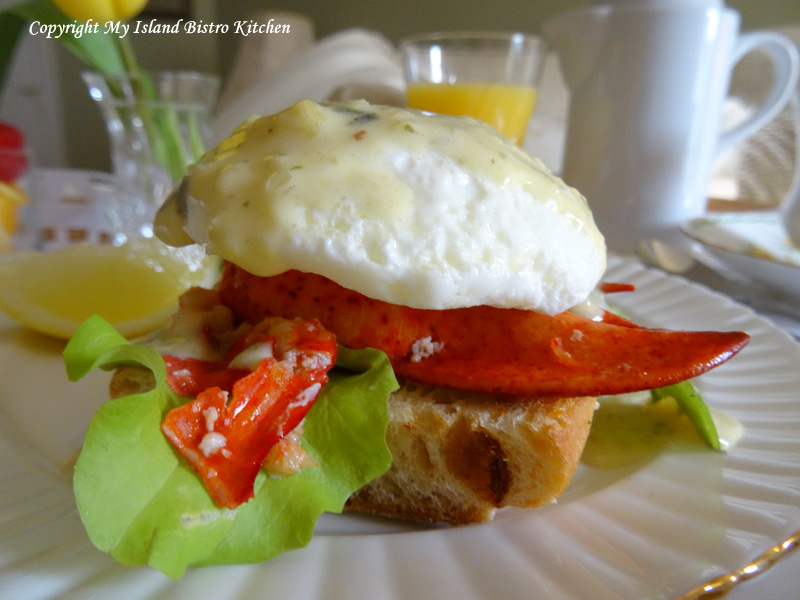
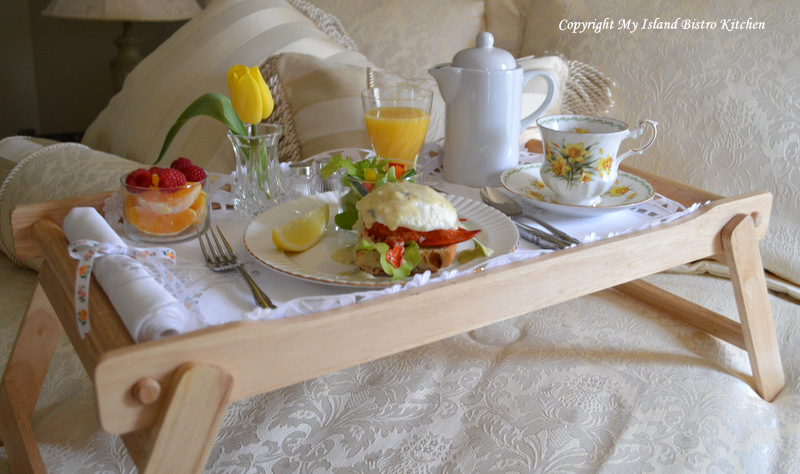
Today, I am sharing my recipe for Lobster Eggs Benedict with a delicious Béarnise sauce. This makes a wonderful brunch entrée and is also perfect for a Mother’s Day breakfast in bed tray although it does take some time and organization to prepare.
Here, on Canada’s East Coast, we are extremely blessed to have ready access to fresh lobster this time of the year. In fact, in many Island families today, they will be celebrating with lobster (many having their first “feed” of the season), whether it be lobster at home or at one of the Island’s famous lobster suppers that open early just for the occasion today. They will then close and re-open for the season in a few weeks time.
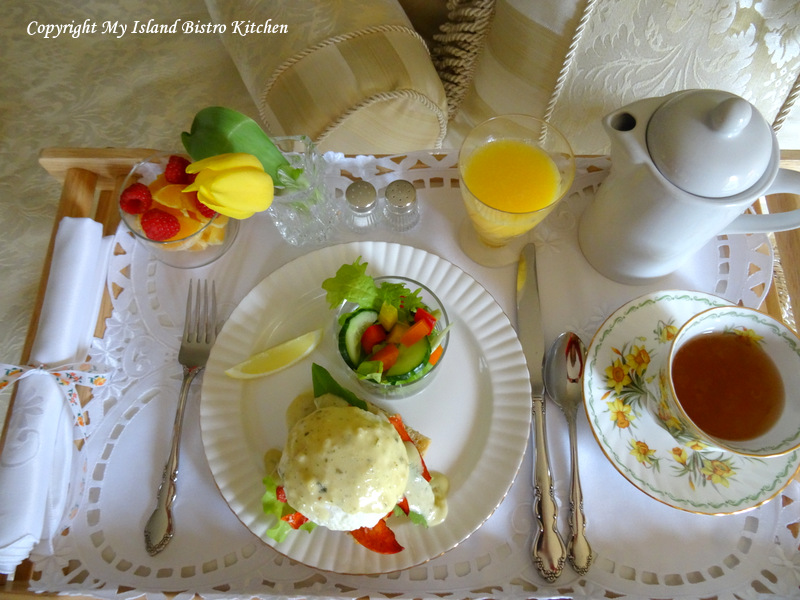
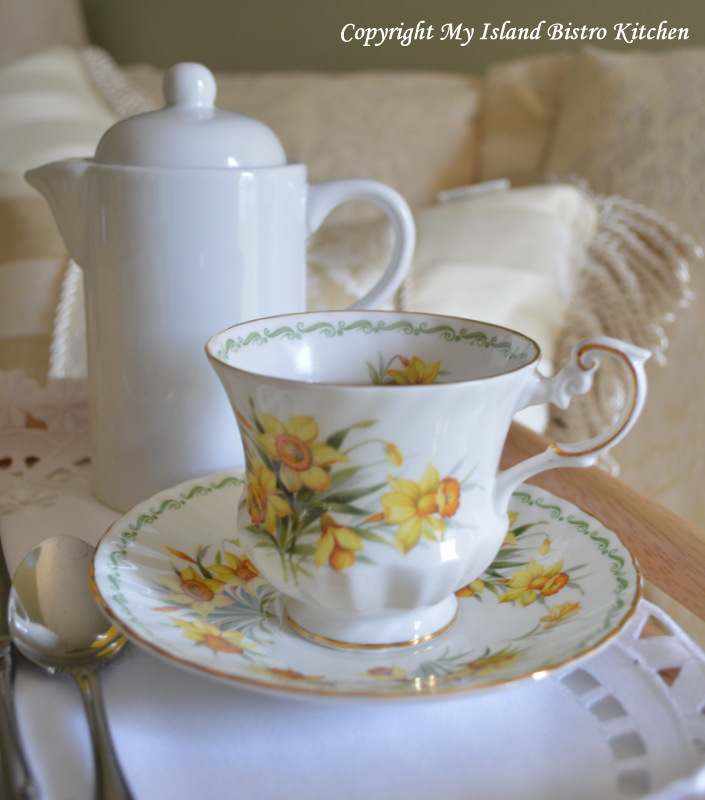
I have gone with a yellow theme for the breakfast in bed tray using, as my inspiration, a single yellow tulip and my favorite spring-time china cup and saucer featuring daffodils.
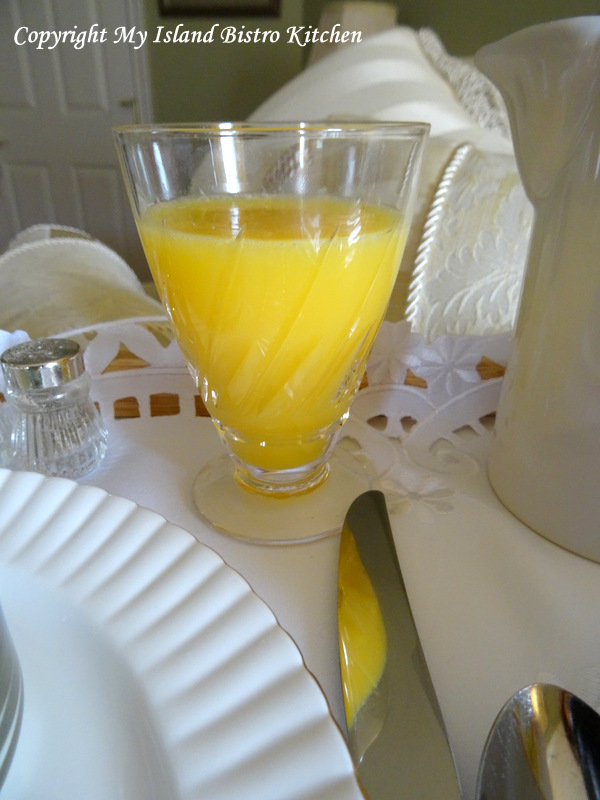
I chose a dainty crystal glass for the freshly-squeezed orange juice.
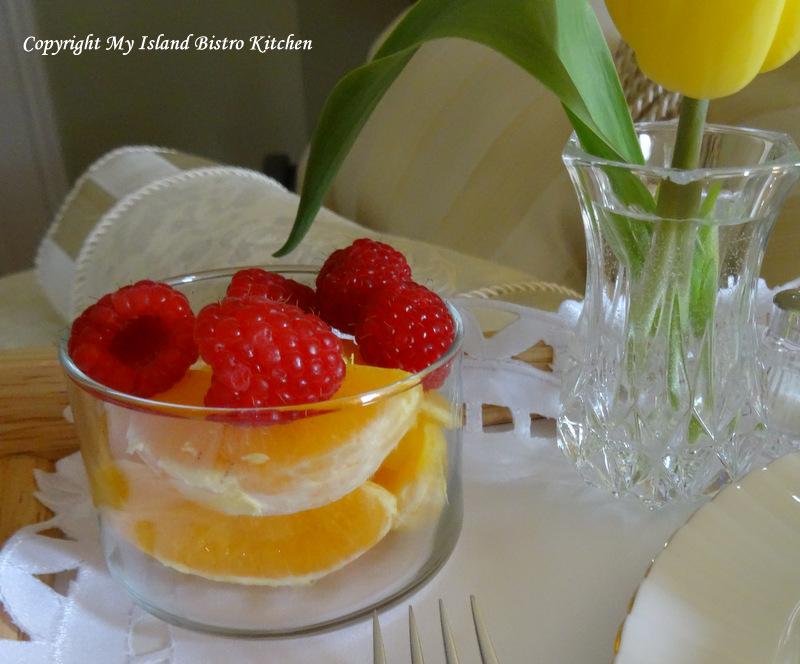
A refreshing fruit cup with orange sections and raspberries adds both color and flavor.
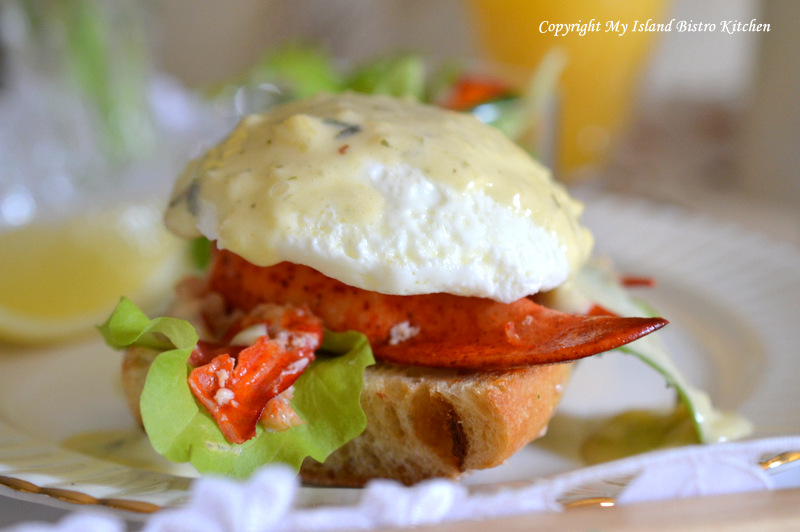
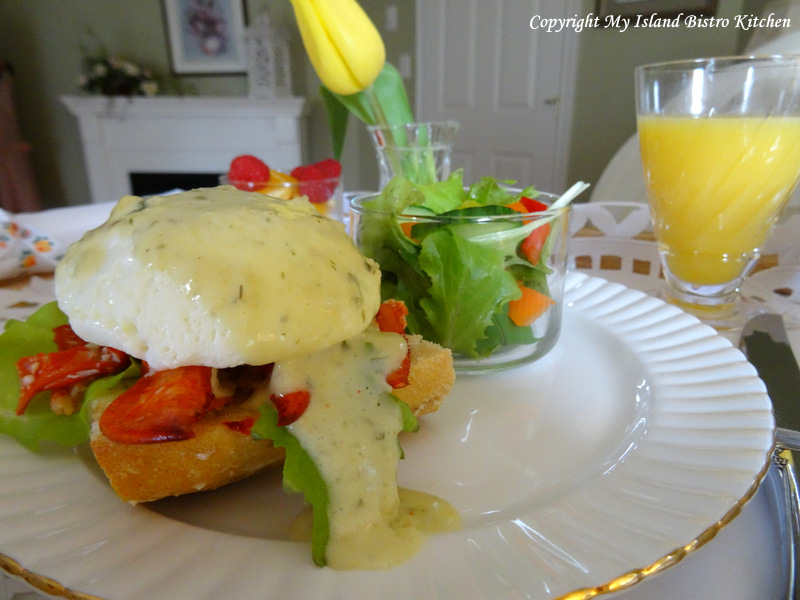
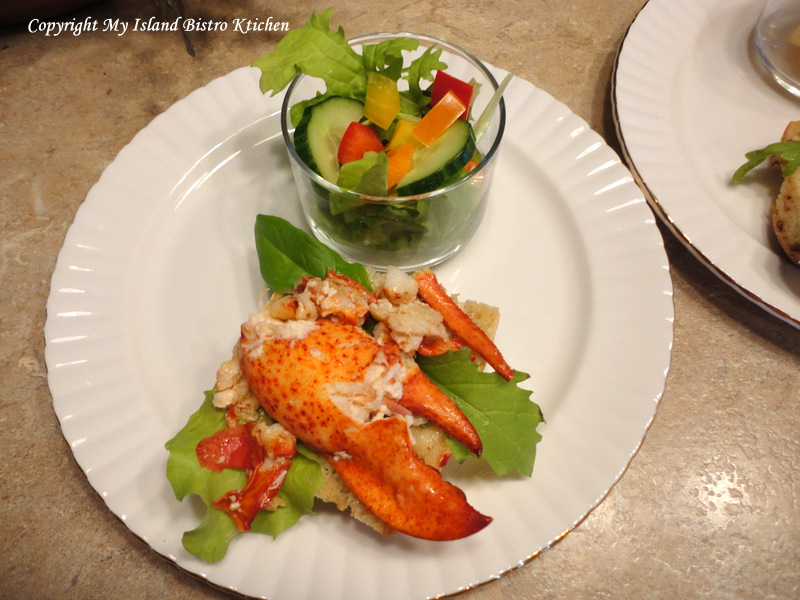
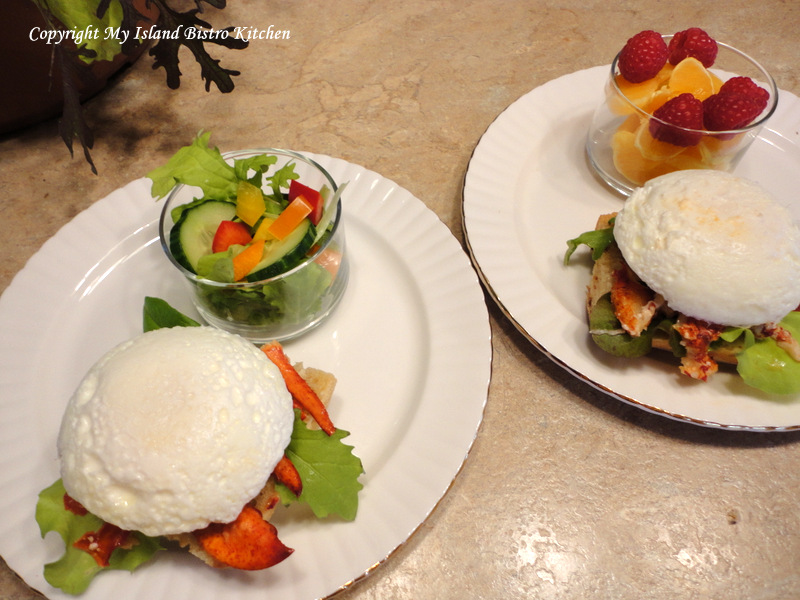
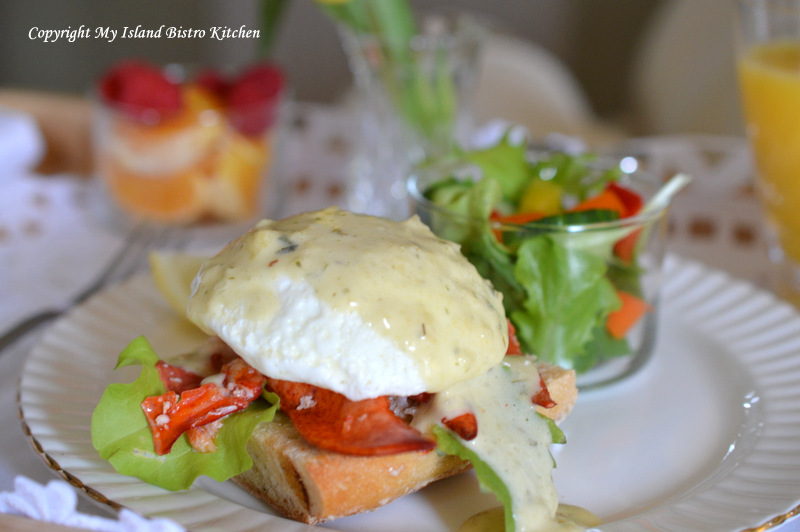
And, of course, the star of the tray – the Lobster Eggs Benedict served on Ciabatta.
Can you taste that succulent lobster? The Béarnise Sauce is rich so you don’t need a lot of it on each serving and using less is more in this case because you don’t want to “drown” or mask the wonderful color of the red lobster claws!
The Bistro’s Lobster Eggs Benedict
Ingredients:
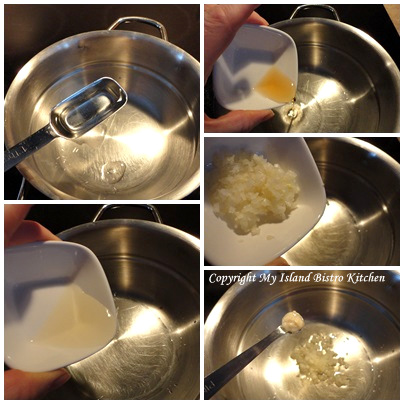
1 tbsp water
½ tbsp balsamic vinegar (I used Liquid Gold’s pomegranate-quince)
½ tbsp white wine
½ tbsp minced onion
⅛ tsp puréed garlic
1 extra-large egg yolk
½ tbsp lemon juice
½ tsp prepared mustard (I used J.J. Stewart’s Maple Mustard with Dill and Chardonnay)
2 tbsp butter, melted
Salt and pepper, to taste
Sprinkle of chopped chives, parsley, and tarragon
1-2 lobster claws and meat from the lobster’s knuckles for each serving
English muffins or artisan bread, such as Ciabatta, sliced for each serving
Method:
Assemble ingredients.
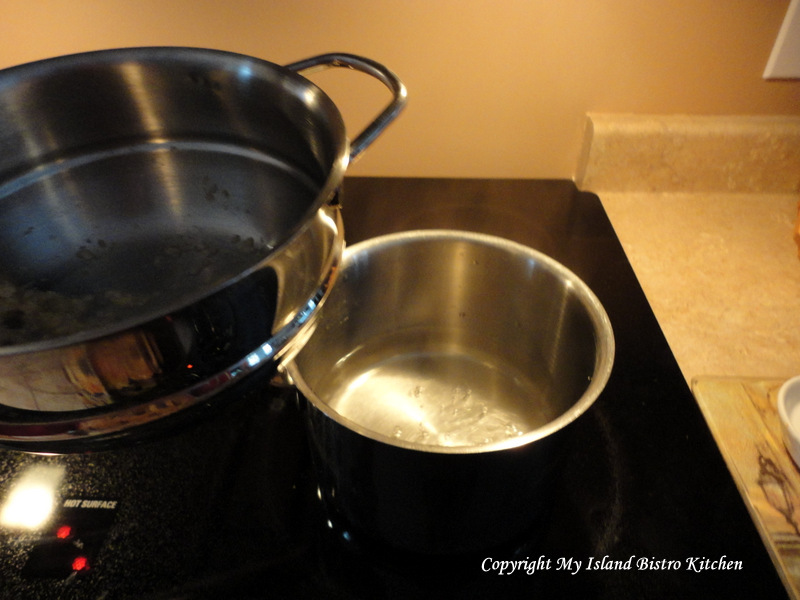
In bottom of double boiler, heat about 2” water to boiling point. Reduce heat to keep the water at a very gentle simmer.
In top of double boiler and over direct heat (not on top of the boiling water), combine first five ingredients. Simmer over medium heat until mixture is reduced by half, about 3 minutes.
Place top of double boiler over saucepan of gently simmering hot water.
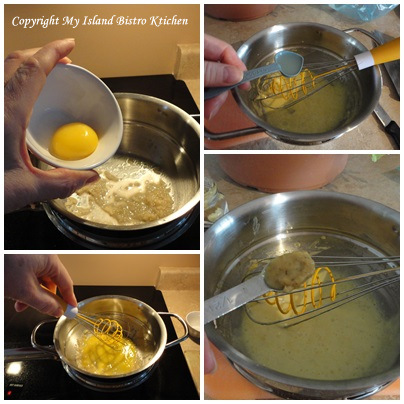
Quickly whisk in the egg yolk and whisk vigorously and continuously till smooth. Whisk in lemon juice and mustard. Add salt and pepper, to taste. Whisk until mixture is just thick enough to coat the back of a spoon (you want it of pouring consistency). Remove from heat and add a sprinkle of chopped chives, parsley, and tarragon.
Note: If mixture thickens too much, whisk in small amount of boiling water, 1 tbsp at a time, to get to pouring sauce consistency.
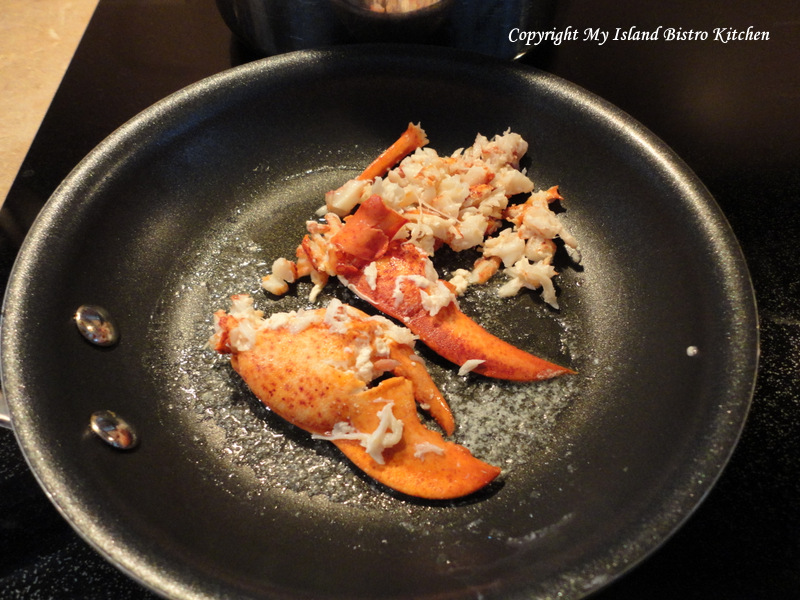
In small saucepan or frypan, heat ½ – 1 tbsp butter and heat lobster over low heat.
Using your favourite method, poach 1 egg to desired doneness for each serving.
To assemble:
Slice English muffin, or if using an artisan bread like Ciabatta, cut loaf into desired lengths (e.g., 3”- 4” per serving) and slice in half horizontally, using one-half for each serving. Butter each piece. Lay a layer of lettuce on each piece of bread or muffin. Add the warmed sautéed lobster.
Top with the poached egg.
Drizzle Bérnaise Sauce over each serving. Serve with a side of green salad or fresh fruit.
Serves: 2
Thank you for visiting “the Bistro” today.
There are lots of ways to connect with “the Bistro” through social media:
Join My Island Bistro Kitchen on Facebook Follow the Bistro’s tweets on twitter @PEIBistro Find the Bistro on Pinterest at “Island Bistro Kitchen” Follow along on Instagram at “peibistro”
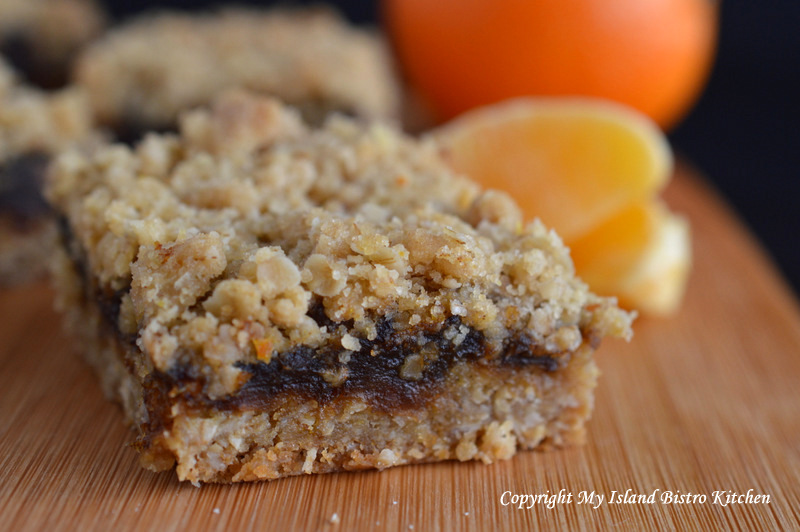
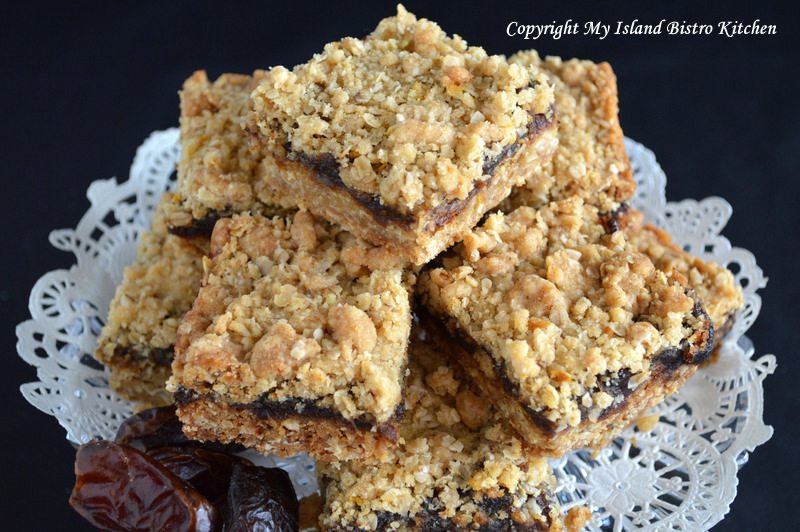
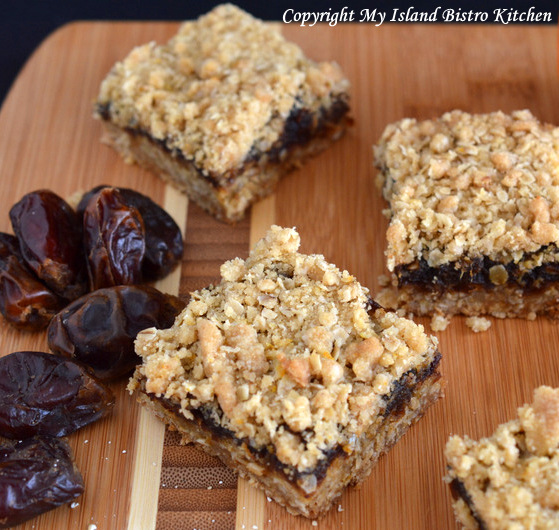
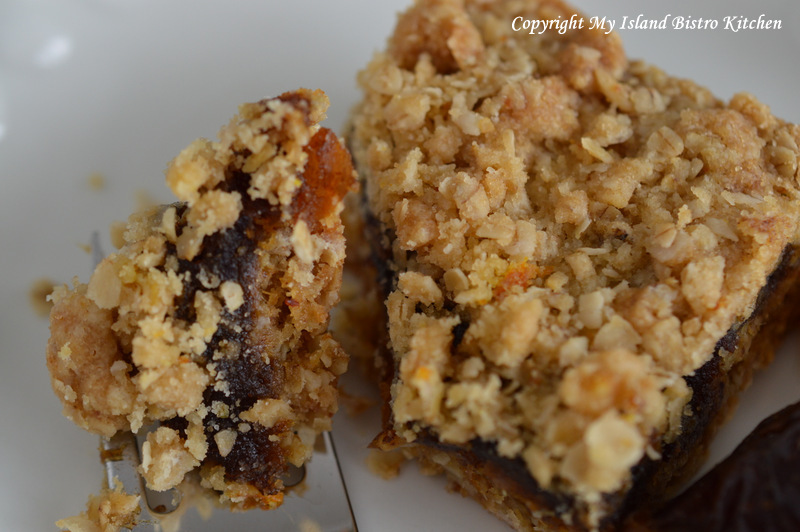
You may know these as Matrimonial Squares. I have always known them as Date Squares. Regardless what they are called, they are tasty. Growing up, Date Squares were pretty much a staple in our household. They are a good, wholesome square made with a tasty date mixture sandwiched between two layers of a rolled oats, flour, and butter mixture. While these squares can be made with margarine, they are ever so much better when made with butter! I add a touch of orange rind to my recipe as it gives them a nice tangy taste.
Date Squares
Date Squares
Ingredients:
12 oz dates, chopped
1 cup boiling water
3 tbsp boiling orange juice
3 tbsp brown sugar
1½ tsp vanilla
3/4 tsp almond flavouring
1⅔ cups rolled oats (not instant)
1 cup + 2 tbsp flour
1 cup brown sugar, packed
1 tsp baking soda
¼ tsp salt
Scant 1 tbsp grated orange rind
1 cup cold butter
Method:
Assemble ingredients.
Preheat oven to 350°F.
Line 9” square pan with parchment paper.
In saucepan, combine dates, boiling water and orange juice, and brown sugar. Let stand 15 minutes.
Over medium-low heat, bring date mixture to a boil and boil gently, stirring frequently, until mixture thickens, about 3-5 minutes. If mixture thickens too fast, add a couple of tablespoons of water, one tablespoon at a time.
Remove from heat and add vanilla and almond flavouring. Let cool for about 10 minutes.
Meanwhile, in large bowl, combine rolled oats, flour, brown sugar, soda, salt, and grated orange rind.
Cut, or grate, in the cold butter until mixture becomes coarse crumbs.
Press between a scant ⅔ of the crumb mixture into the bottom of the prepared pan. Spread the slightly cooled date mixture over crumb base. Sprinkle remaining crumb mixture over date filling.
Bake until crumbs are golden, about 25 – 30 minutes.
Let cool completely in pan on wire rack. Remove from pan and cut into squares.
Date Squares are a wholesome dessert with a date filling sandwiched between a sweet and buttery oatmeal crumb base and topping
Course
Dessert
Keyword
Date Squares, squares
My Island Bistro KitchenMy Island Bistro Kitchen
Ingredients
12ozdates, chopped
1cupboiling water
3tbspboiling orange juice
3tbspbrown sugar
1½tspvanilla
¾tspalmond flavouring
1⅔cupsrolled oats (not instant)
1cup+ 2 tbsp flour
1cupbrown sugar, packed
1tspbaking soda
¼tspsalt
Scant 1 tbsp grated orange rind
1cupcold butter
Instructions
Assemble ingredients.
Preheat oven to 350°F.
Line 9” square pan with parchment paper.
In saucepan, combine dates, boiling water and orange juice, and brown sugar. Let stand 15 minutes. Over medium-low heat, bring date mixture to a boil and boil gently, stirring frequently, until mixture thickens, about 3-5 minutes. If mixture thickens too fast, add a couple of tablespoons of water, one at a time. Remove from heat and add vanilla and almond flavouring. Let cool for 10-15 minutes.
Meanwhile, in large bowl, combine rolled oats, flour, brown sugar, soda, salt, and grated orange rind. Cut, or grate, in the cold butter until mixture becomes coarse crumbs.
Press a scant ⅔ of the crumb mixture into the bottom of the prepared pan. Spread the cooled date mixture over crumb base. Sprinkle remaining crumb mixture over date filling.
Bake until crumbs are golden, about 25-30 minutes.
Let cool completely in pan on wire rack. Remove from pan and cut into squares.
Recipe Notes
Yield: One 9x9 pan of squares
[Copyright My Island Bistro Kitchen]
If you have made this recipe and enjoyed it and/or wish to share it with your friends and family, please do so on social media but be sure to share the direct link to this posting from my website.
Old-fashioned Oatcakes served with Brie and J.J. Stewart’s Cranberry Champagne and Crystalized Ginger Preserves
Oatcakes are very versatile and take such basic, simple ingredients. A cross between a cookie and a cracker, they are savory bites and are not overly sweet. In fact, I would describe these artisan cookies/crackers as having a nice short, crisp texture. Scottish in origin, oatcakes probably made their debut in Canada when they arrived along with Scottish immigrants. Continue reading Old-Fashioned Scottish Oatcakes→
When I have ham, I traditionally boil it and add all the veggies to the same pot in the last 30-40 minutes and let them cook in the broth. You can find my recipe for this comfort food meal here.
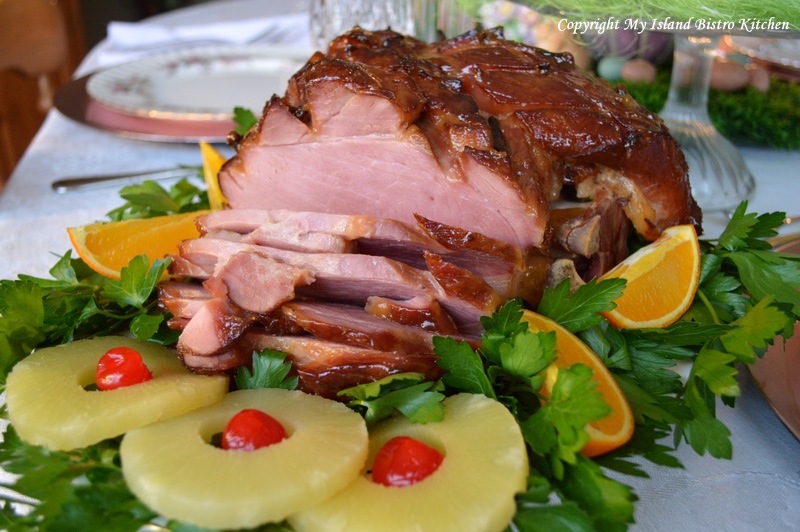
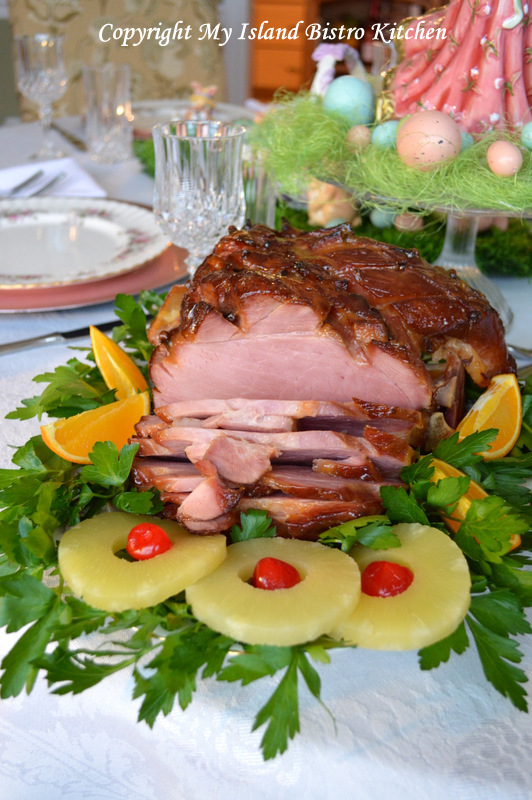
Baked Glazed Ham
However, sometimes, I like to make it a bit more special by baking and glazing the ham. Hams are very economical when bought on sale and they yield a good amount of meat if you are serving a crowd or wanting leftovers — I love leftovers because it means a few days of little meal prep!
Baked Glazed Ham
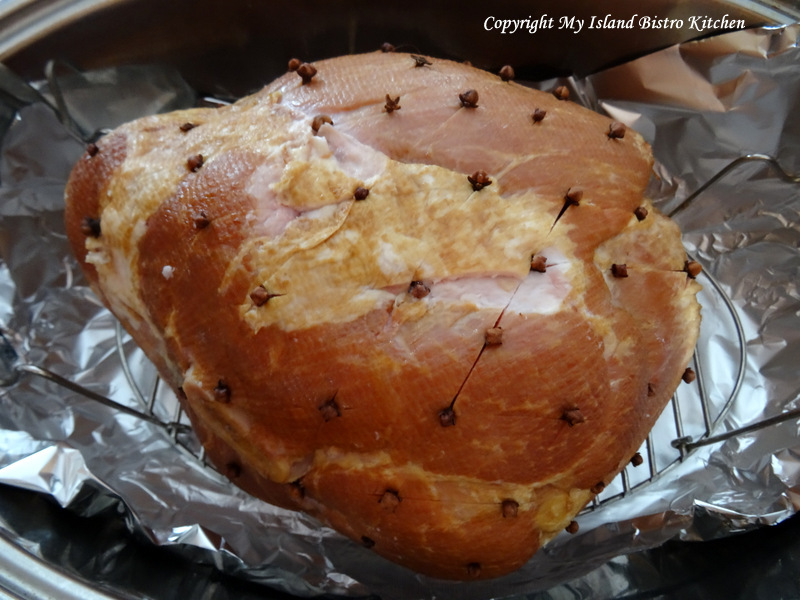
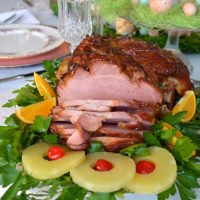
For this baked glazed ham, I started out with a cured ham (bone in). I scored the surface of the ham in a diamond pattern, cutting in between 1/8″ and 1/4″. At the intersection of each diamond, I inserted a whole clove.
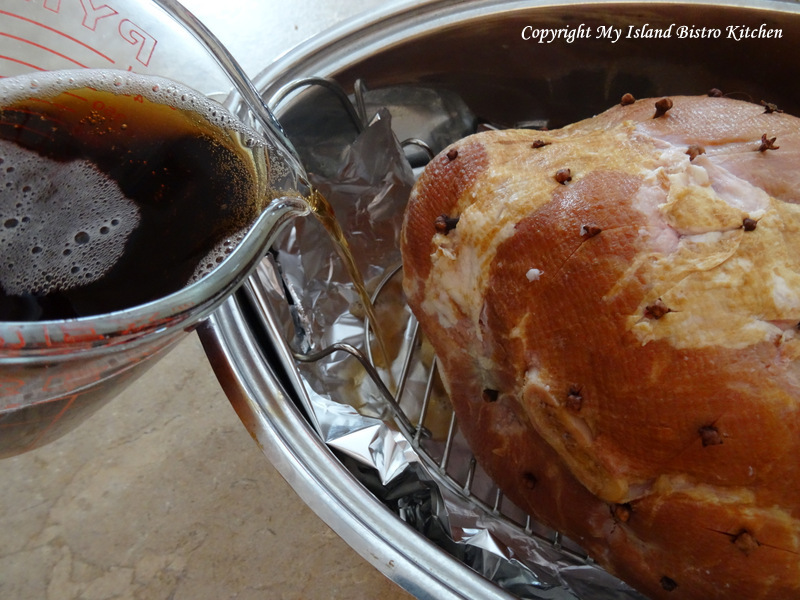
The oven was preheated to 325F and the large roaster was lined with tin foil to make clean up easier. The ham was placed on the roaster’s wire rack. I then poured 1 1/2 cups of root beer into the roaster, ensuring that the ham was not sitting in the root beer.
I brushed a very thin, light coating of the sweet and tasty glaze on the ham (recipe follows).
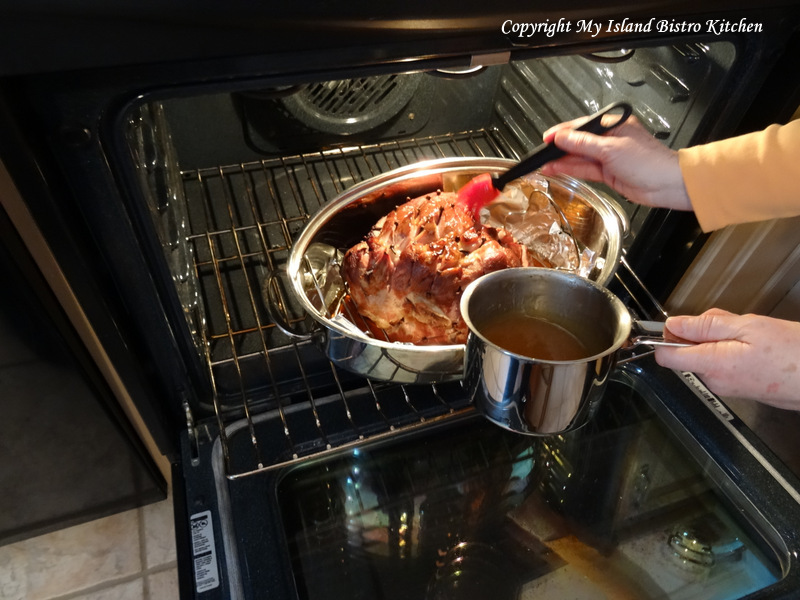
The cover was placed on the roaster and the baking began as the steam from the root beer infused the ham with additional flavor as it baked. About 50 minutes before I estimated the ham to be baked, I applied a thicker coating of the glaze, making sure it penetrated into the ham meat through the scored lines and I returned the ham to the oven to continue baking. About 25 minutes later, I reapplied the glaze. When the ham was cooked, I removed it from the oven and let it rest about 15 minutes before carving it. This makes it much easier to carve clean slices that stay whole.
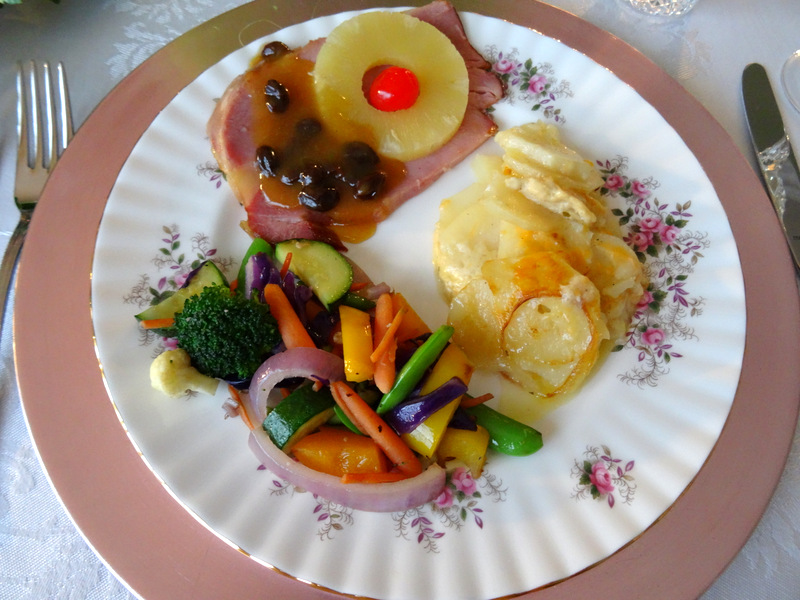
The ham was served with scalloped potatoes and a medley of stir-fried colorful vegetables.
Baked Glazed Ham Served with Scalloped Potatoes and Stir-fry Vegetable Medley
[Printable recipe follows at end of posting]
Glaze for Baked Ham
Ingredients:
1/4 cup orange juice
1 tbsp honey
3/4 tbsp mustard
1 tbsp pineapple juice
2 1/2 tbsp brown sugar
1/2 tbsp cornstarch
1/4 tsp ginger
Method:
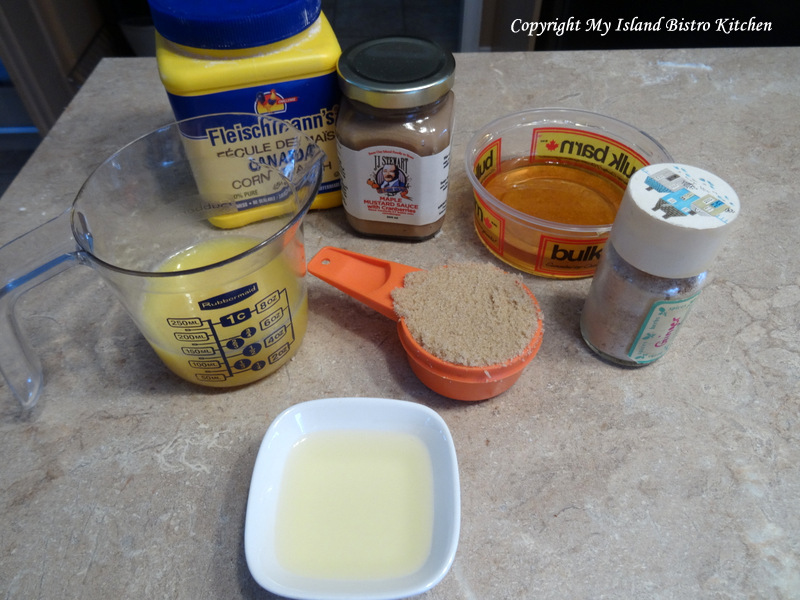
Assemble ingredients.
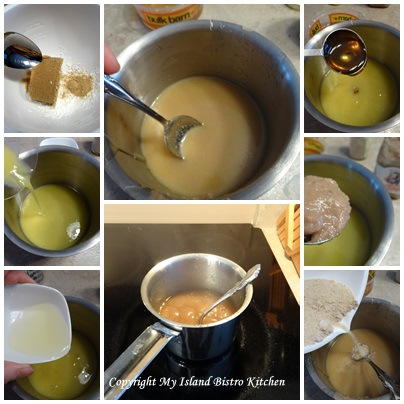
Combine brown sugar and cornstarch together. Add all remaining ingredients into a small saucepan. Stir in the brown sugar-cornstarch mixture. Bring to a boil over medium heat, stirring constantly until slightly thickened.
Brush very lightly over uncooked ham. About 50 minutes before ham is estimated to be baked, apply a thicker coat of the glaze to the ham, ensuring it penetrates into the diagonal cuts in the surface of the ham. About 25 minutes later, apply another coat of the glaze and return to oven to finish baking. Allow ham to rest for about 15 minutes before carving.
Take your baked ham to the next level with this easy-to-make sweet glaze
Course
Main Course
Cuisine
Canadian
Keyword
baked glazed ham
My Island Bistro KitchenMy Island Bistro Kitchen
Ingredients
¼cuporange juice
1tbsphoney
¾tbspmustard
1tbsppineapple juice
2½tbspbrown sugar
½tbspcornstarch
¼tspginger
Instructions
Assemble ingredients.
Combine brown sugar and cornstarch together. Add all remaining ingredients into a small saucepan. Stir in the brown sugar-cornstarch mixture. Bring to a boil over medium heat, stirring constantly until slightly thickened.
Brush very lightly over uncooked ham. About 50 minutes before ham is estimated to be baked, apply a thicker coat of the glaze to the ham, ensuring it penetrates into the diagonal cuts in the surface of the ham. About 25 minutes later, apply another coat of the glaze and return to oven to finish baking. Allow ham to rest for about 15 minutes before carving.
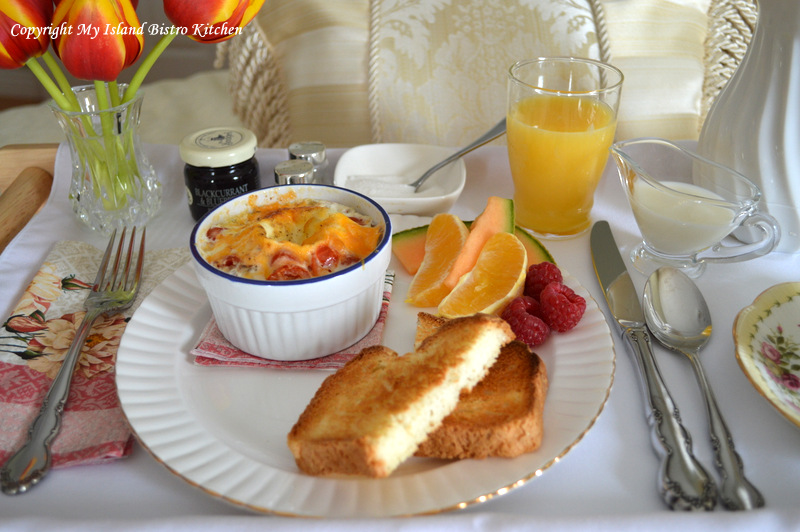
There is nothing that says pampering more than breakfast in bed! In fact, there doesn’t have to be a special occasion to serve a special someone a breakfast tray. And, it doesn’t have to be overly fancy. Toast or a croissant along with fresh orange juice and coffee will somehow seem much more special when served on a pretty tray in bed.
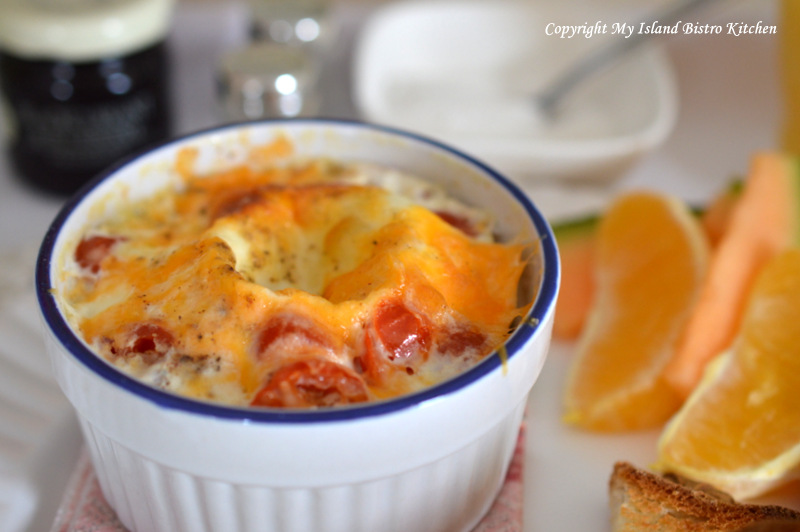
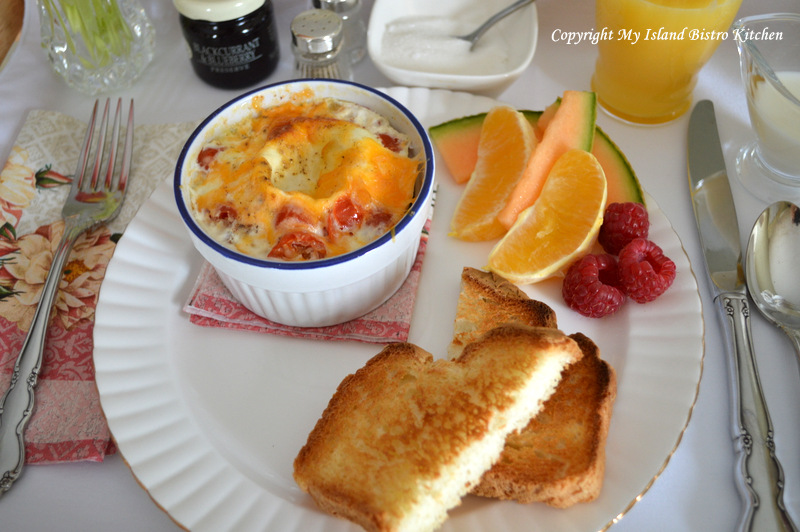
Today, however, because it is Easter and eggs are synonymous with the season, I prepared baked eggs as the main component for the breakfast tray. A recipe I often use is the one I shared in the story last summer about the Burns Poultry Farm. To add some color to the baked eggs, today I added some grated cheddar cheese, sliced cherry tomatoes, onion, and green pepper.
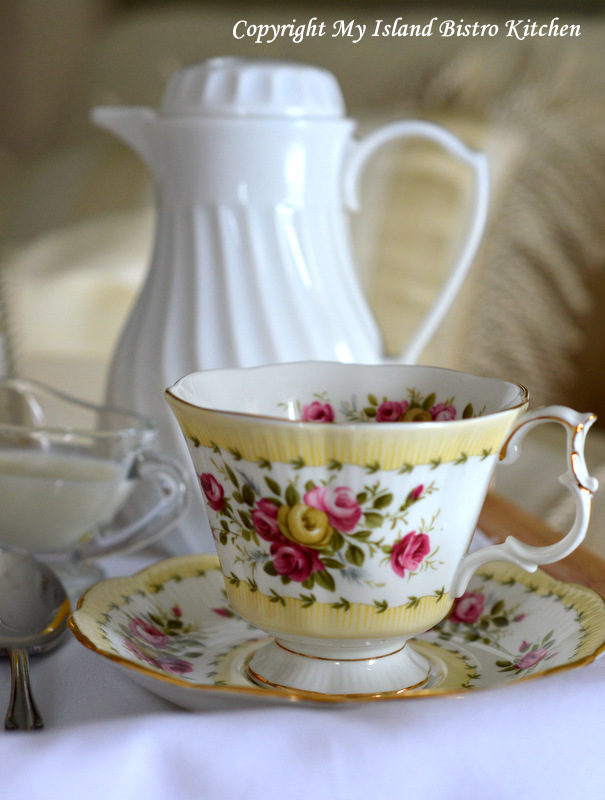
Coffee always tastes more special when served in a fancy cup and saucer. A single-serving sized coffee butler keeps the replenishment coffee hot.
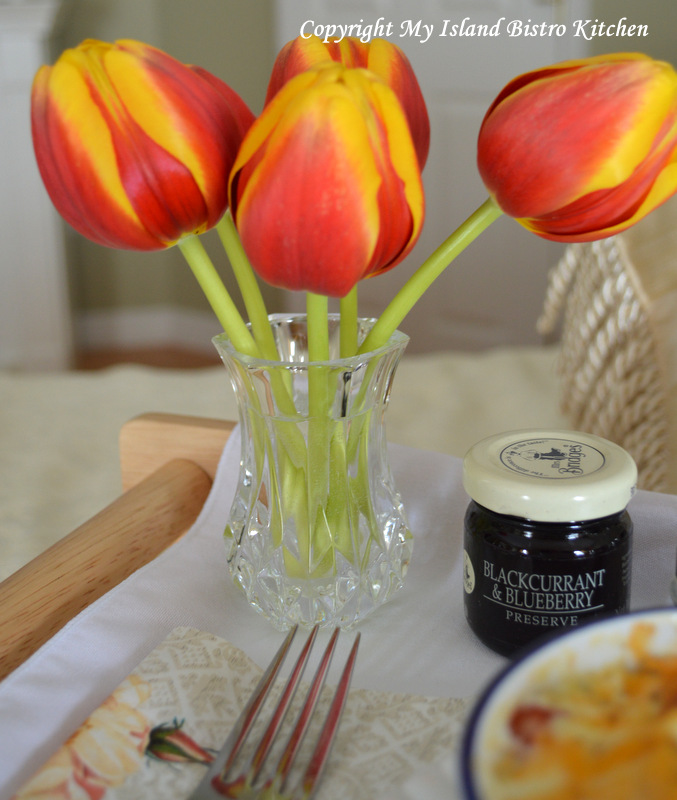
Colorful spring tulips were specially selected to match the entrée. Pretty good match, I’d say!
Add some fresh fruit and toast and the breakfast was complete. A great way to start someone’s day!
Happy Easter!
Thank you for visiting “the Bistro” today.
There are lots of ways to connect with “the Bistro” through social media:
Today, I am sharing a recipe for one of my favorite ways to serve pork – Pork Chops in Mushroom Sauce. It’s very simple and easy to make and uses very few ingredients, none of them uncommon or hard to find. In fact, many cooks likely already have the ingredients in their kitchens. Continue reading Pork Chops with Mushroom Sauce→
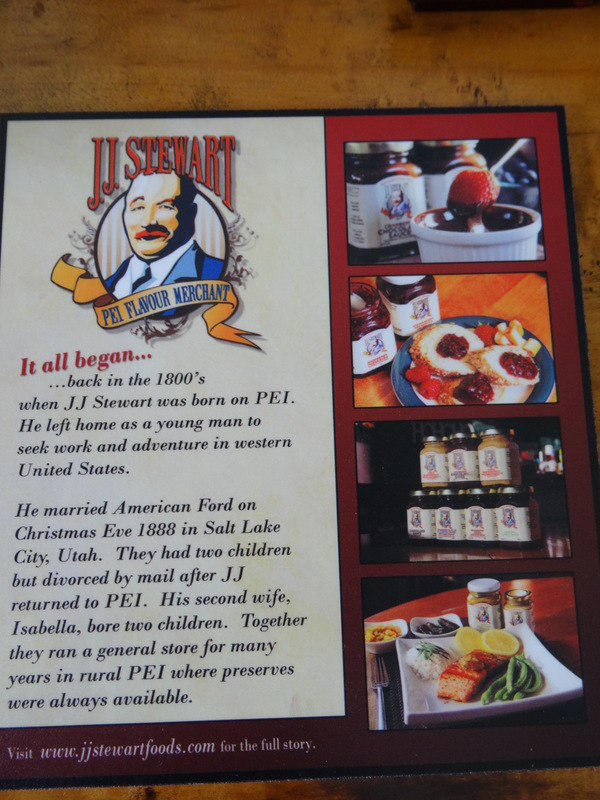
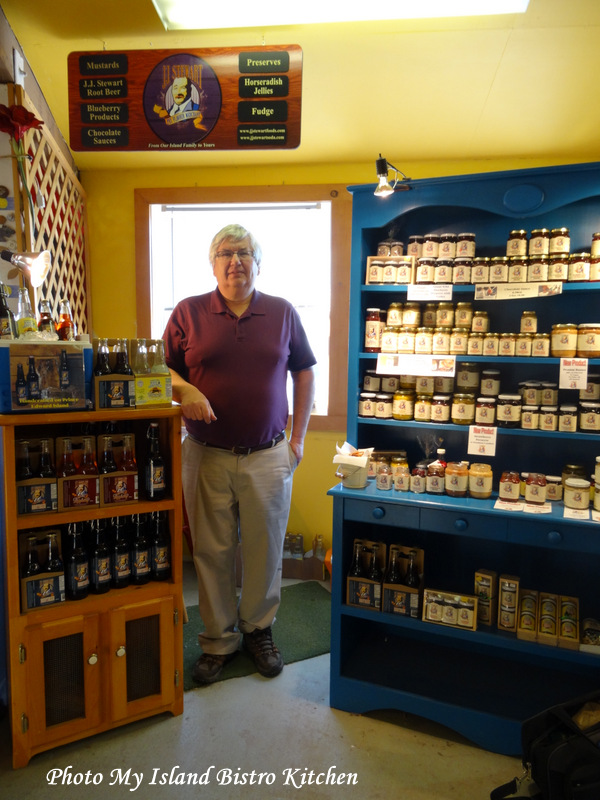
I am always thrilled when I discover products made on PEI. I recently paid a visit to the small commercial kitchen of J.J. Stewart Foods and Soda Company in Stratford, PEI, where I met with owners and sole employees of the company, Heather and Thom MacMillan.
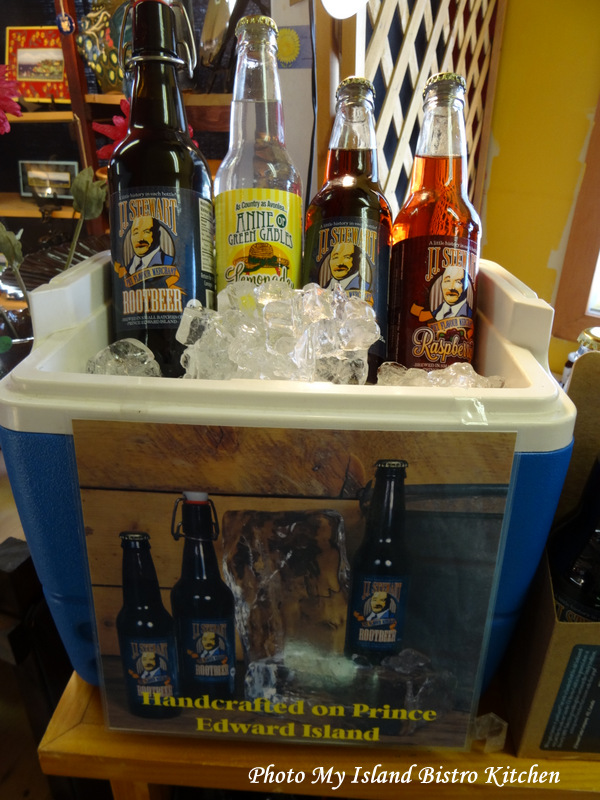
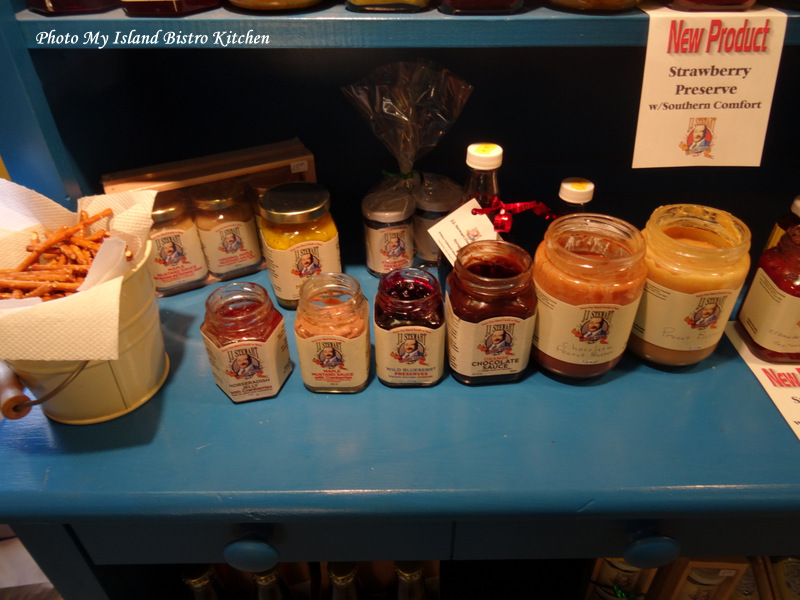
Under the brand label of J.J. Stewart, the MacMillans are producers and purveyors of a number of fine food products that includes preserves, flavoured mustards, sauces, pickles, salsa, lemonade, sodas and, of course, their signature artisan root beer.
While I was anxious to find out more about the products they make, I was first curious to learn about J.J. Stewart and his connection to the company.
The MacMillans tell me that the J.J. Stewart branding came about because of the root beer they were making. They have been producing their artisan root beer since 2009. When they were searching for a brand name for it, they discovered that Heather’s grandfather, John James Stewart, made and sold root beer in the early 1900s in his general store in Wood Islands, PEI. So, with the lineage and history, it seemed only fitting that their root beer should bear his name.
So, that explains the root beer but what prompted the production of the sauces, preserves, maple mustards, and pickles? The MacMillans have been in the tourism business for many years. They decided it was time to downsize and slow down so they sold their hotel business in Wood Islands and moved to Charlottetown. However, their retirement was short-lived as their lifelong entrepreneurial spirit was still prompting them to do something else. Both like to cook and when the Embers Company in Kinkora, PEI, became available for sale about three years ago, they bought it along with rights to the recipes for specialty food condiments that were already well-known and received on the market. They have continued to produce those items as well as develop, test, and market new items, like Peanut Butter and Cranberry Champagne Jam with Ginger, under the J.J. Stewart label.
The dividing line between mass-produced mustards, preserves, and sauces and those produced by the MacMillans lies in the care and attention to detail that can only come with hand-producing small batch quantities, using high quality ingredients, and adhering to a strict individual quality control process.
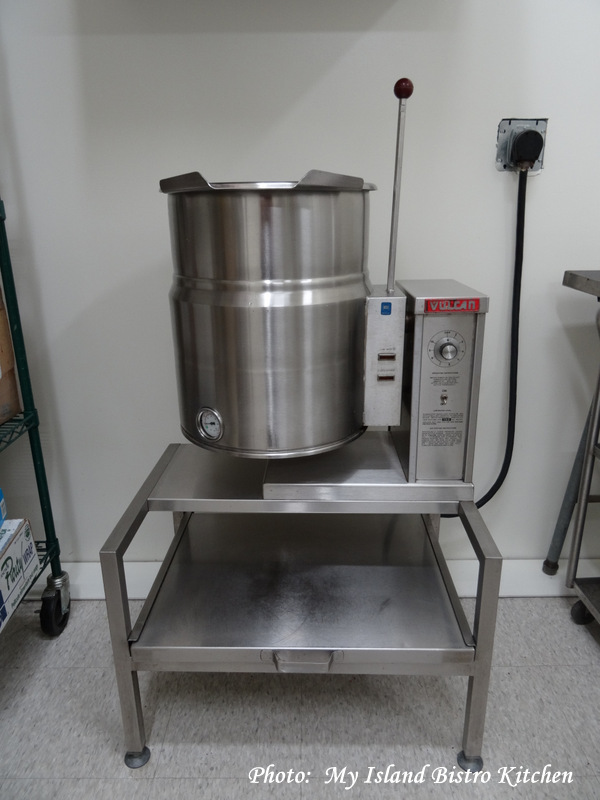
Large Cooking Pot inside the J.J. Stewart Kitchen
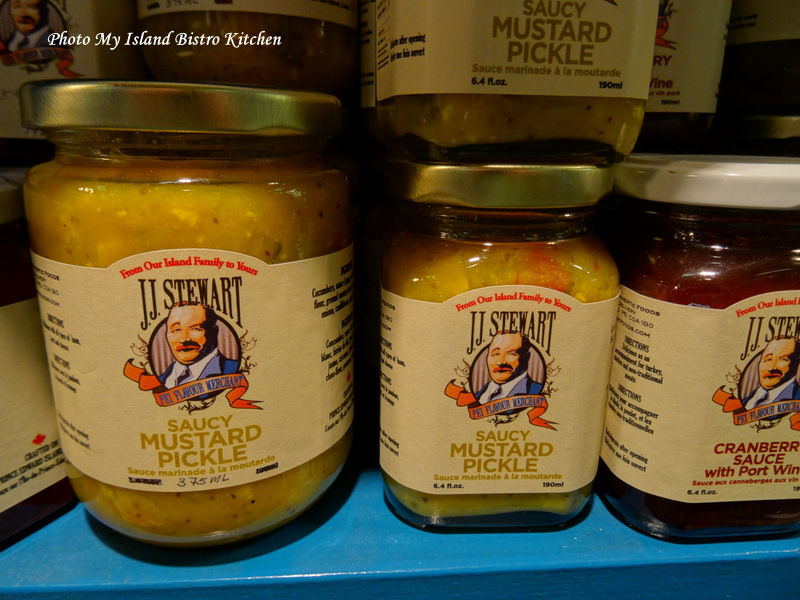
The difference can also be discerned in the taste and flavour when pure ingredients are used. Wherever possible, the MacMillans use regionally-produced products. Thom says he can actually pinpoint the berry field at Penny’s Farms in Belfast, PEI, where the strawberries are picked for the J.J. Stewart Strawberry Preserves! The berries for their blueberry products come from Wyman’s near Morell and the cranberries and raspberries are locally sourced as well. Cucumbers for their mustard pickles come from local roadside farm stands which offer the freshest of garden vegetables. The maple syrup comes from Acadian Maple Products in nearby Nova Scotia. J.J. Stewart products have become synonymous with quality so much so that the MacMillans tell me that people buy their preserves by the case in the summer and their freshly-made mustard pickles are a fall favourite which customers also buy by the case to have as their winter supply.
Like any food product produced and marketed for sale on PEI, the MacMillans are subject to food regulation and provincial inspection processes to ensure their products are safe for the market.
Bottles of Dill and Chardonnay Maple Mustard Waiting to be Labeled
The artisan foods produced by the MacMillans are a perfect blend of modern and traditional fare. Under the J.J. Stewart label that bears his picture, look for modern products like blueberry salsa and blueberry barbeque sauce and a number of flavoured mustards along with old favorites like mustard pickles and raspberry and strawberry preserves.
With distinctive flavour pairings like Dill and Chardonnay Maple Mustard and Wild Blueberry Sauce with Grand Marnier, for example, the J.J. Stewart line of products brings together the best flavour combinations. J.J. Stewart products are both delicious and very versatile. Whether used independently on their own as they are or incorporated as an ingredient into a recipe, these quality products are palette pleasers.
Over the next while, follow my blog postings as I use a number of their products in different recipes.
I am sure J.J. Stewart would have been happy to sell these products in his general store and he would, no doubt, be both thrilled and proud to know that his descendents are carrying on the tradition of producing artisanal root beer and other tasty products. The J.J. Stewart speciality item products are available in select locations in the Maritimes. For example, they can be purchased at the PEI Co. Store in Charlottetown’s Confederation Court Mall, at Riverview Country Market in Charlottetown, and at several other locations across the Island as well as at Sugar Moon Farms in Truro, Nova Scotia.
Thom MacMillan at the J.J. Stewart booth at the Charlottetown Farmers Market
Each Saturday morning, you can also find Thom at his booth at the Charlottetown Farmers Market where sales are brisk and you’ll find regular customers returning week after week to pick up their favorite J.J. Stewart products. Farmers markets are great venues for customers and producers to meet and interact. In fact, Thom says he gets the greatest feedback and new product ideas from his regular Saturday morning customers. Be sure to drop by the Farmers Market and taste the J.J. Stewart products at the tasting bar set up in their booth.
Tasting Bar at the J.J. Stewart booth at the Charlottetown Farmers Market
In the summer months, their products are also sold in their own J.J. Stewart Mercantile Store in Cavendish, PEI. Additionally, products are also available online at www.jjstewartfoods.com and they ship across North America.
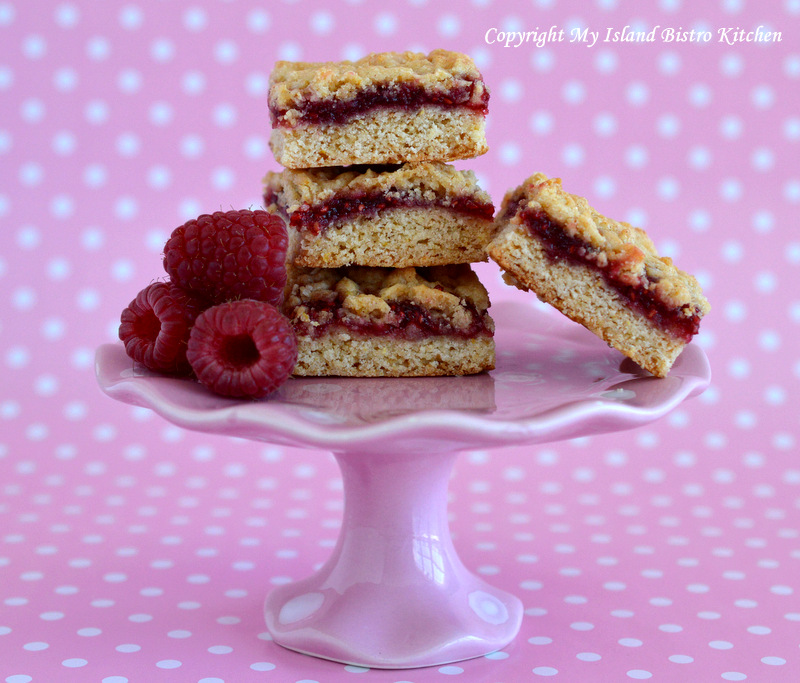
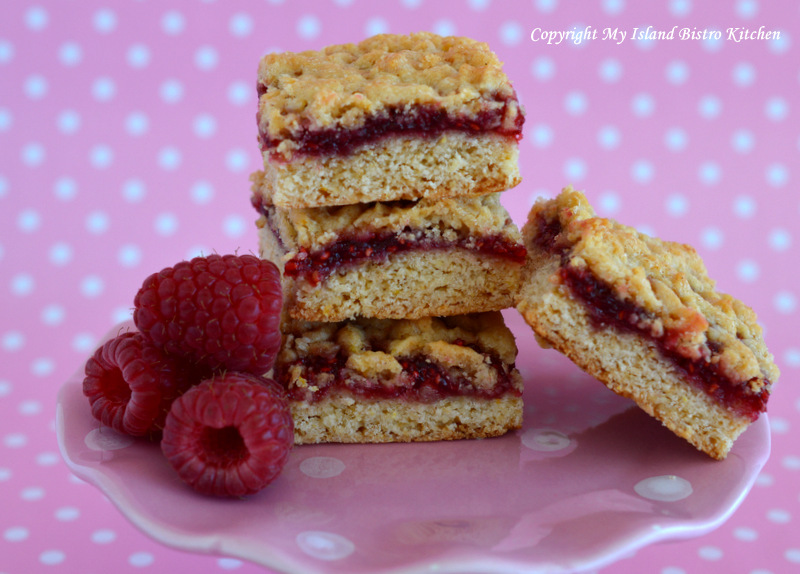
My Island Bistro Kitchen’s Old-fashioned Jam Squares
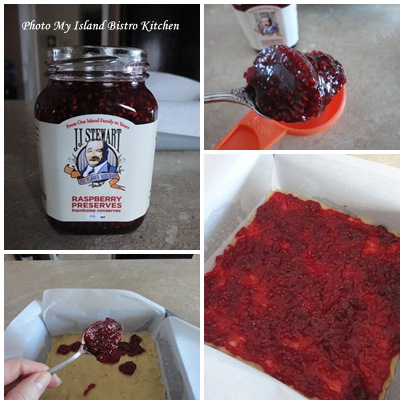
For my feature recipe today using a J.J. Stewart product, I have chosen to use their Raspberry Preserves in old-fashioned vintage jam squares. For this recipe, you need to use a superior quality jam or preserves because that is what gives the square its flavour. Red jams or preserves work best because, for plate presentation purposes, they are the most showy. I found the J.J. Stewart Raspberry Preserves to be a nice, thick consistency which is necessary in order for it to stick to the dough and not be runny when the squares are cut.
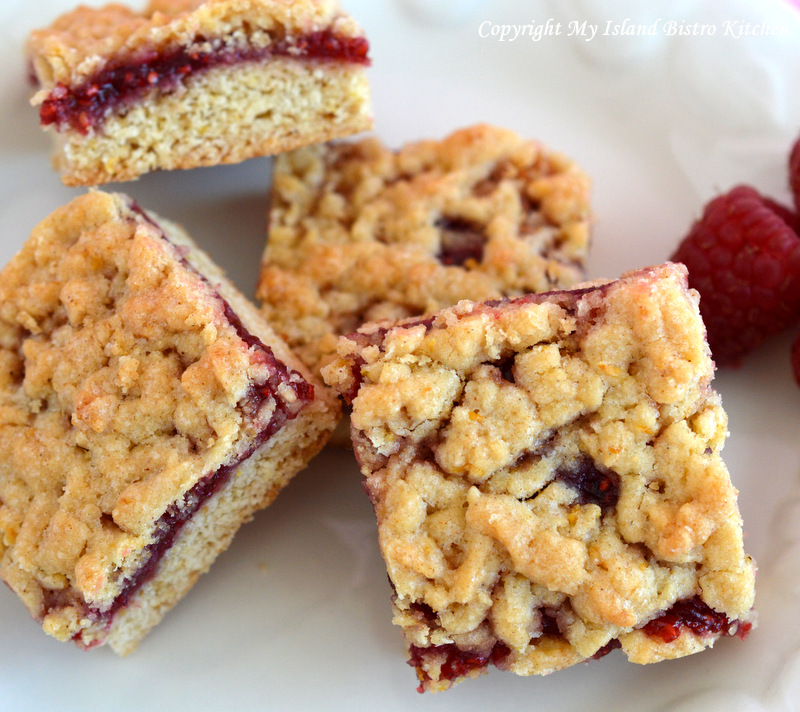
My Island Bistro Kitchen’s Old-fashioned Jam Squares made with J.J. Stewart’s Raspberry Preserves
My Island Bistro Kitchen’s
Old-fashioned Jam Squares
These are an old-fashioned favourite that I grew up with. They are easy to make and take common ingredients. While any kind of jam may be used, they are most showy when red jam (preserves) is chosen.
Ingredients:
⅓ cup butter
1 egg
1 tsp vanilla
½ tsp almond flavoring
½ cup white sugar
1 cup + 2 tbsp all-purpose flour
1 tsp baking powder
¼ tsp salt
¼ tsp cinnamon
⅛ tsp cardamom
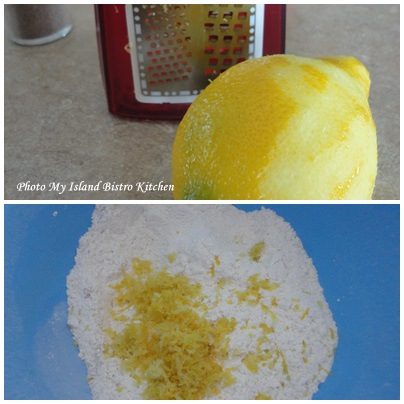
Finely grated rind of 1 lemon
½ cup J.J. Stewart Raspberry Preserves
Method:
Preheat oven to 350°.
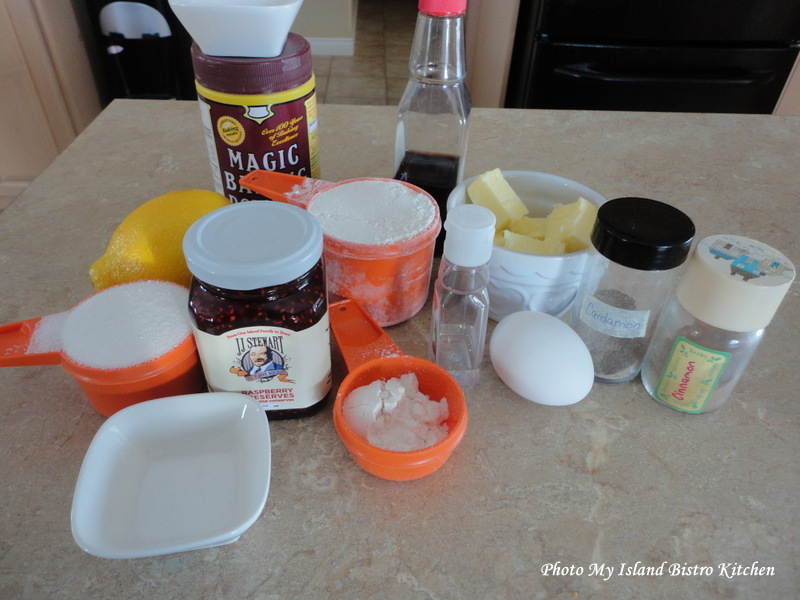
Assemble ingredients.
Ingredients for Jam Squares
Prepare 8”x8” pan by lining with parchment paper.
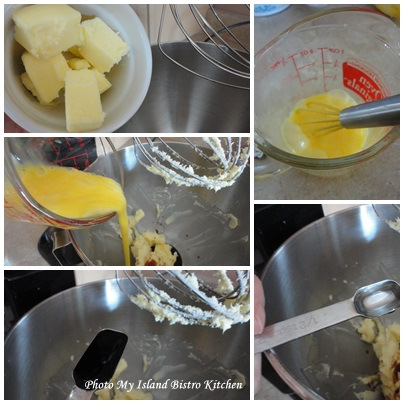
With electric mixer, beat butter well. Beat in egg, vanilla, and almond flavouring. Mixture will appear lumpy.
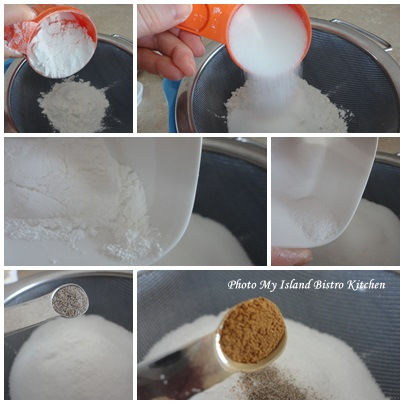
Sift and mix together sugar, flour, baking powder, salt, cinnamon, and cardamom.
Grate the rind of one lemon. Stir in grated lemon rind.
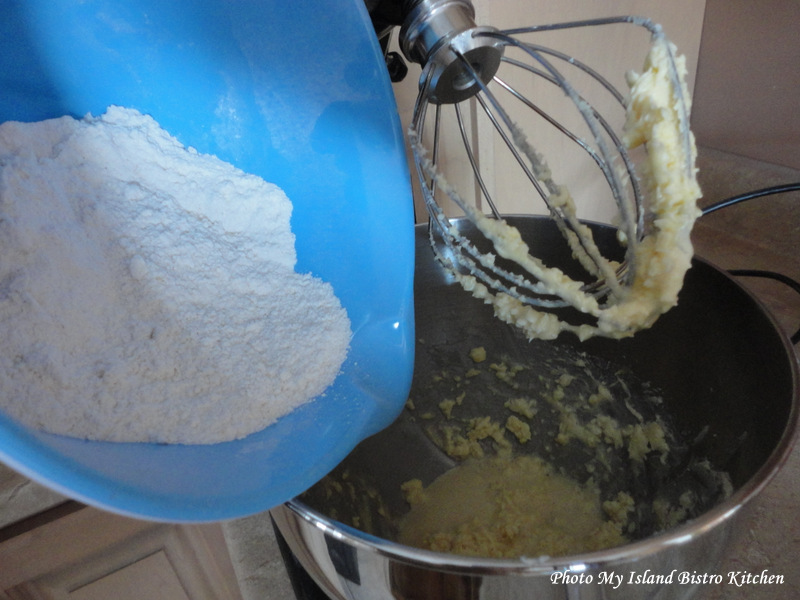
Add dry ingredients to butter-egg mixture and blend thoroughly.
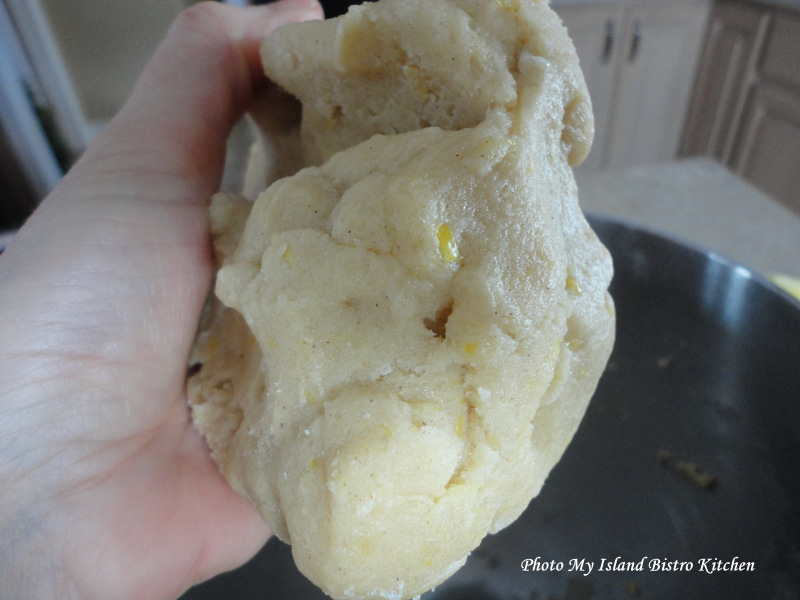
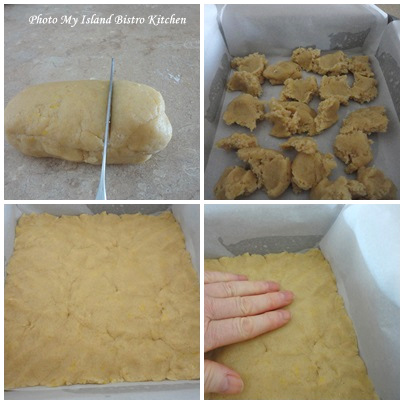
Gather up dough and shape dough into a small oblong shape.
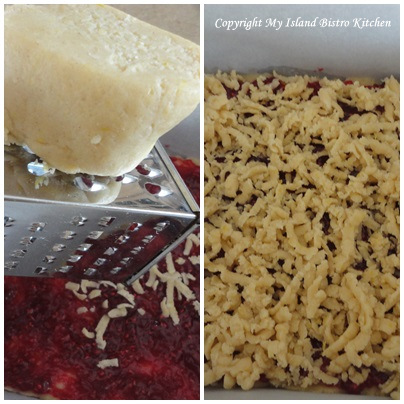
Cut off about ⅓ of the dough and place in freezer for 15 minutes.
Meanwhile, press remaining ⅔ dough into prepared pan. Place pan in freezer.
When the reserved dough has been in the freezer for 15 minutes remove both reserved dough and the pan from the freezer. Evenly spread the ½ cup raspberry preserves over dough in pan.
Using a grater, grate the chilled and reserved 1/3 dough evenly over the jam.
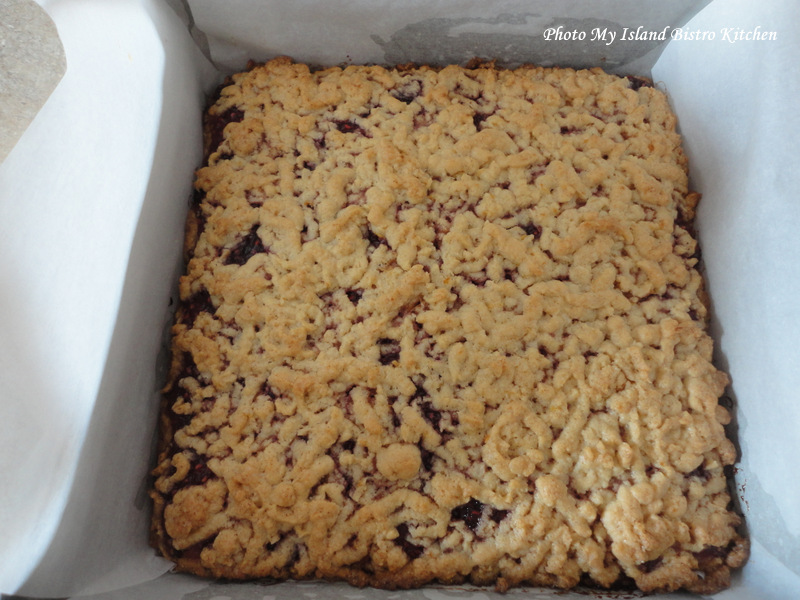
Bake for 30-35 minutes or until topping on square is lightly golden in color.
Let square cool completely in pan before removing and cutting into 16 squares.
Jam Squares
Thank you for visiting “the Bistro” today.
Be sure to visit my Facebook page atMy Island Bistro Kitchen. You may also wish to follow me on twitter @PEIBistro, on Pinterest at “Island Bistro Kitchen”, and on Instagram at “PEIBistro”.
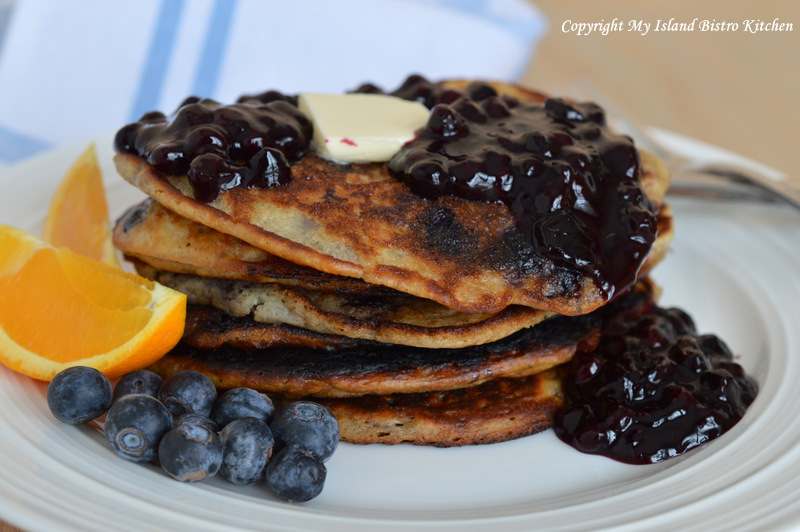
If you like blueberries, you will love these Blueberry Buttermilk Pancakes. Serve them with maple syrup or double the blueberry flavor by adding the delectable Blueberry Sauce. Continue reading Blueberry Buttermilk Pancakes→
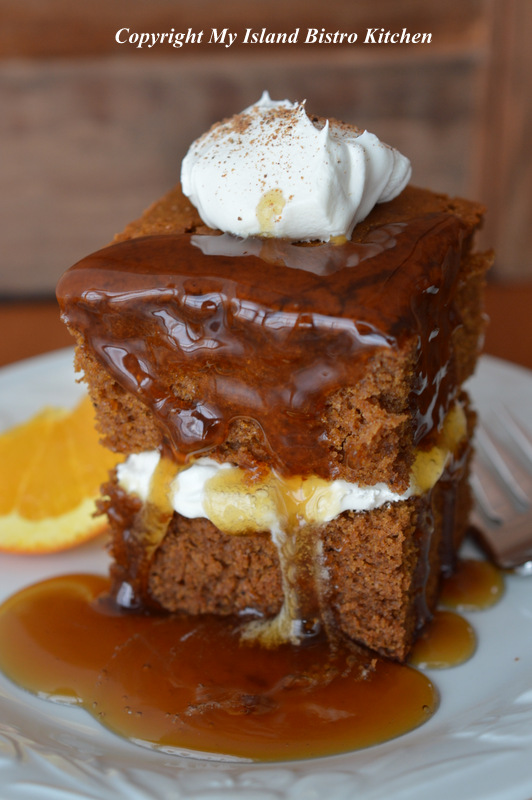
Gingerbread with Whipped Cream and Brown Sugar Sauce
Do you have certain desserts that you associate with different seasons or times of the year? Gingerbread is one dessert I tend to associate most with the coldest winter months for some reason. It’s a plain but tasty dessert any time of the year but it’s a particularly good comfort food in the dead of winter. Continue reading Gingerbread→
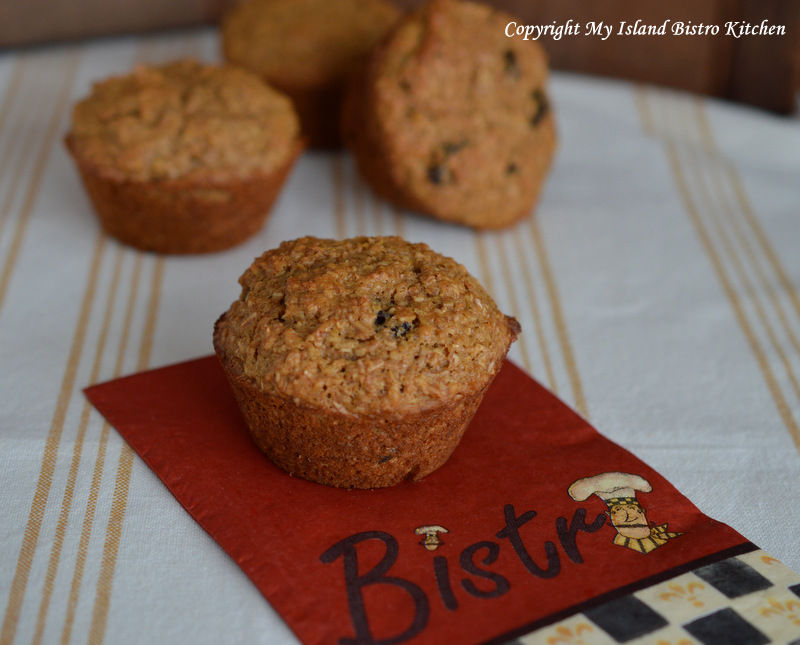
Today, I am featuring my recipe for the Bistro’s Bran Muffins, the perfect breakfast muffin. These easy-to-make classic bran muffins are wholesome and packed full of flavor. Continue reading The Bistro’s Bran Muffins→
Cool fall and cold winter days always put me in the mood for good old-fashioned homemade soup — dinner in a pot and it smells sooooo good simmering away on the stove. So, my soup pot today contains Hamburger Soup in the making. Continue reading Hamburger Soup→
As many of you know, I am part of the year-long Canadian Food Experience Project. Each month, food blogger participants are prompted by a prescribed theme upon which to base a posting on their individual blogs. The February theme is “My Canadian Love Affair”.
What follows is the menu and description of my Valentine’s dinner 2014, using several of my favorite Island food products. In order to meet the timelines of the Project, I have prepared my dinner a week early so it can be included in the Project’s monthly round-up. My Canadian Love Affair is all about the great local food produced on Prince Edward Island, Canada’s smallest province.
When I think of foods that I love, well….there are many! But, coming from an Island blessed with rich red fertile soil and surrounded by the sea, I would have to say that seafood and potatoes would rank high on my list. So, for my Valentine’s dinner, I have incorporated both but the potatoes in one of the recipes may be presented in a form that could surprise some of you. Here’s a taste to whet your appetite ….
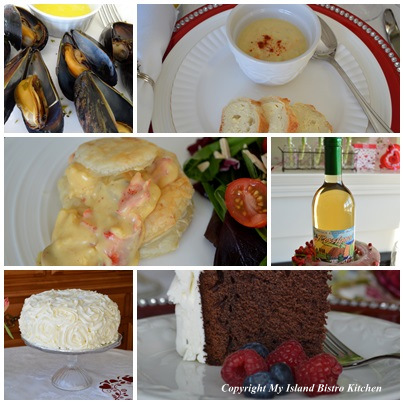
The following is the four-course menu for my Valentine’s Dinner which features some of my favorite Island products:
Starter
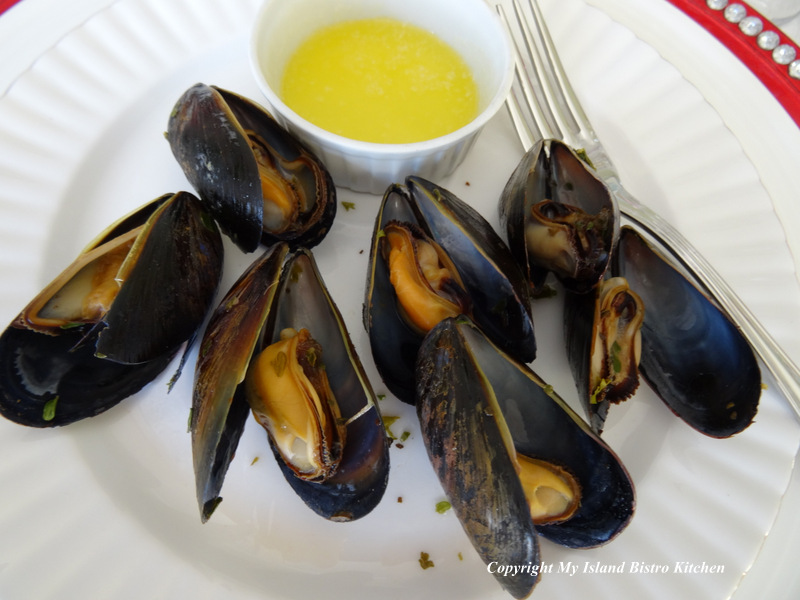
Island Mussels
(steamed in apple cider and herbs and dipped in Island-churned butter)
Soup
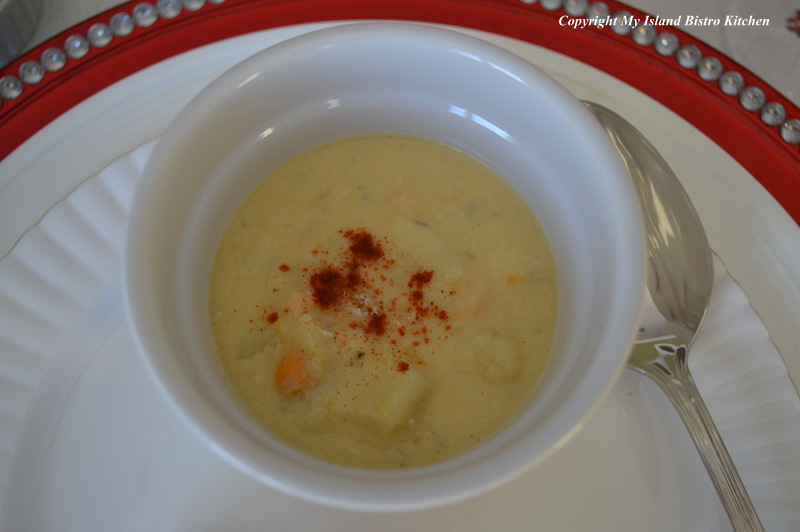
Jeff McCourt’s PEI Seafood Chowder
(a rich, smooth, and creamy chowder filled
with a variety of PEI seafood and Island potatoes)
Main
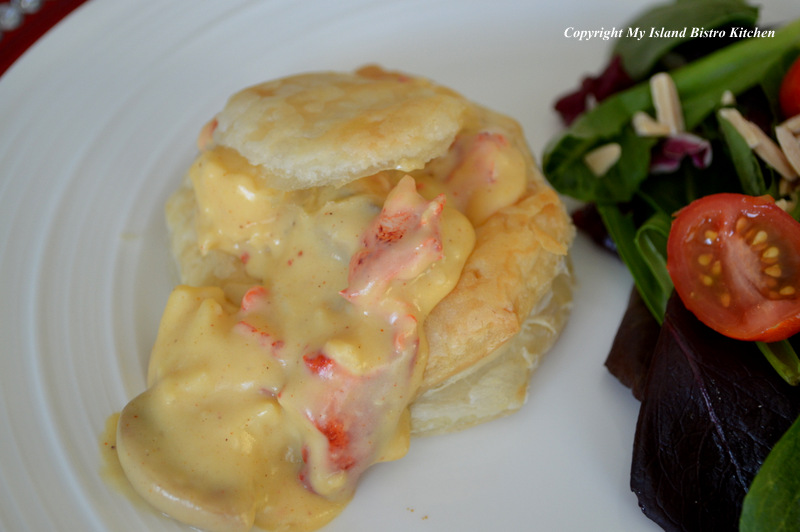
Lobster Newburg served in a patty shell accompanied by a crisp green salad
(lobster and mushrooms in a rich sherry and cheese sauce)
Dessert
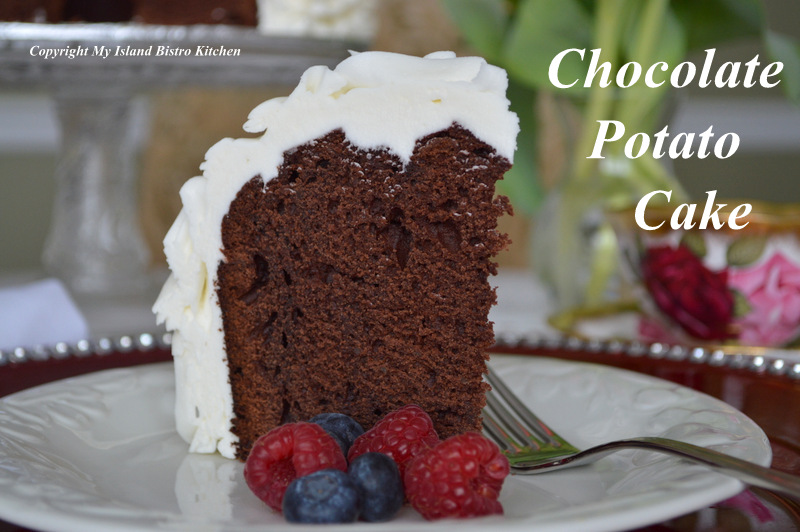
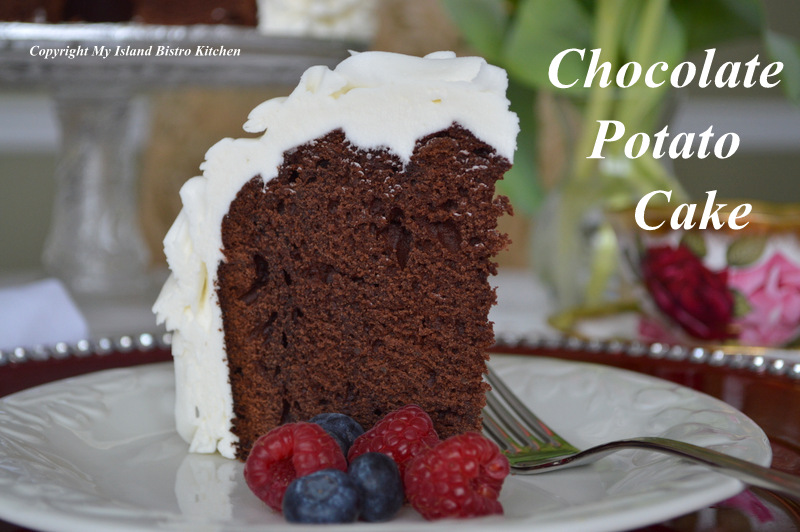
Chocolate Potato Cake
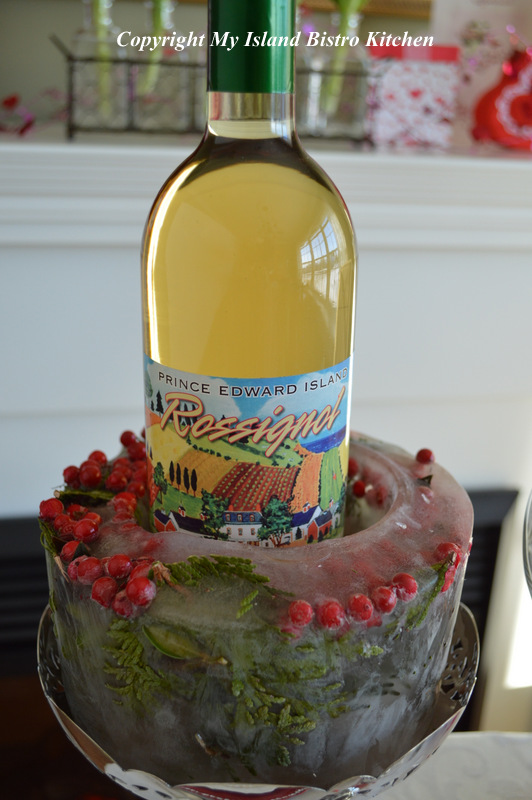
Wine Pairing: Rossignol’s Little Sands White Wine (PEI)
PEI Mussels
It would be hard to surpass PEI mussels. They are shipped all over the globe and are world renowned. There are many ways to prepare mussels and there are many different liquids in which they can be steamed, each of which will give a slightly different flavor to the mussels. The important thing about steaming mussels is to use very little liquid. Using too much liquid will diminish the flavor of the mussels. It is the steam from the liquid that forces the mussel shells open, not the amount of liquid itself. These delicacies take very little time to cook – they are cooked when the shells open, a process that generally takes about 5-7 minutes. Be sure to discard any shells that have not opened during the steaming process.
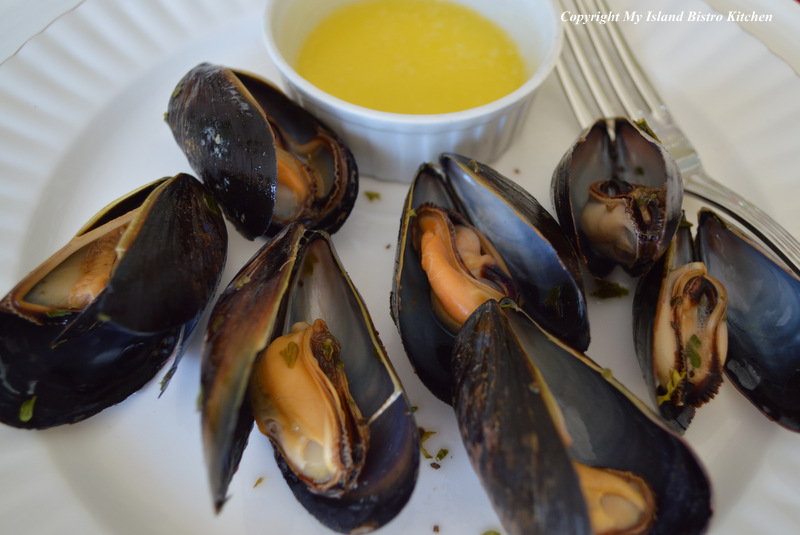
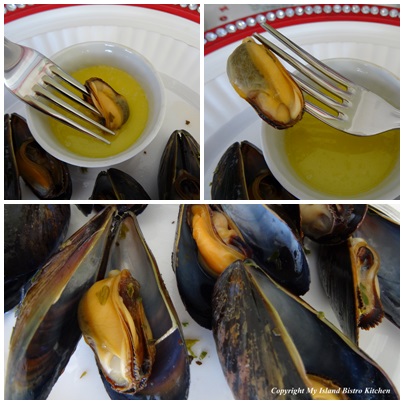
Today, I have steamed the mussels in a small amount of apple cider enhanced by a sprinkle each of lemon thyme, parsley, and basil all dried from our garden last summer. How much liquid is needed is based, of course, on how many mussels are being steamed. Because I was only steaming about 15-20 mussels for these two appetizers, I only used about 2 tbsp of apple cider.
While mussels are used in various recipes, including mussel chowder, the most common way to eat mussels on the Island is dipped in melted butter (oh-là-là!). Mussels are a common food found at many get-togethers because they are quick and easy to prepare and are so very tasty.
For the second course, I couldn’t bypass an all-time favorite of mine – a good seafood chowder.
Seafood Chowder
This recipe comes courtesy of the Culinary Boot Camps at the Culinary Institute of Canada in Charlottetown. This award-winning recipe was developed by Chef Jeff McCourt who was the chef instructor at the one-day “Island Flavors” Boot Camp that I attended a couple of years ago. This chowder was one of the dishes that participants made at the Boot Camp. The Culinary Institute kindly gave me permission to share the seafood chowder recipe as part of the story I was writing on the Boot Camps. If you find yourself on PEI during the summer/fall seasons when the Culinary Boot Camps are operating, this is a fantastic way to learn about cooking with local Island products and flavors. Click here to see my story on the Boot Camps and to get the PEI Seafood Chowder recipe.
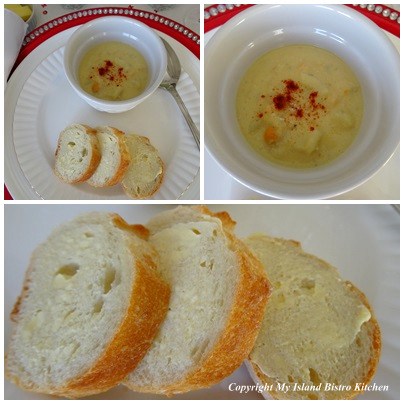
I have made many seafood chowder recipes but have not found any that I liked better than this one. It is filled with a great variety of delectable Island seafood along with PEI potatoes and has a rich, tasty chowder base. Seafood chowder is a great way to sample several different kinds of local seafood all in one dish. This recipe suggests a variety of seafood that includes lobster, oysters, clams, mussels, scallops, and crab. On PEI, we would typically serve the seafood chowder with crusty rolls, biscuits, or baguette slices.
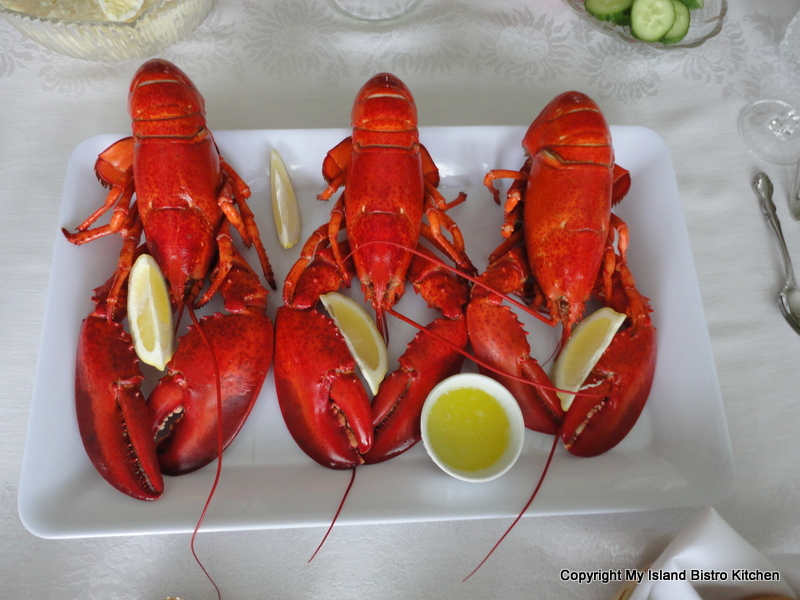
For my main course, I simply had to choose lobster! Lobster is still the seafood king on the Island and Islanders love their lobster.
Lobster
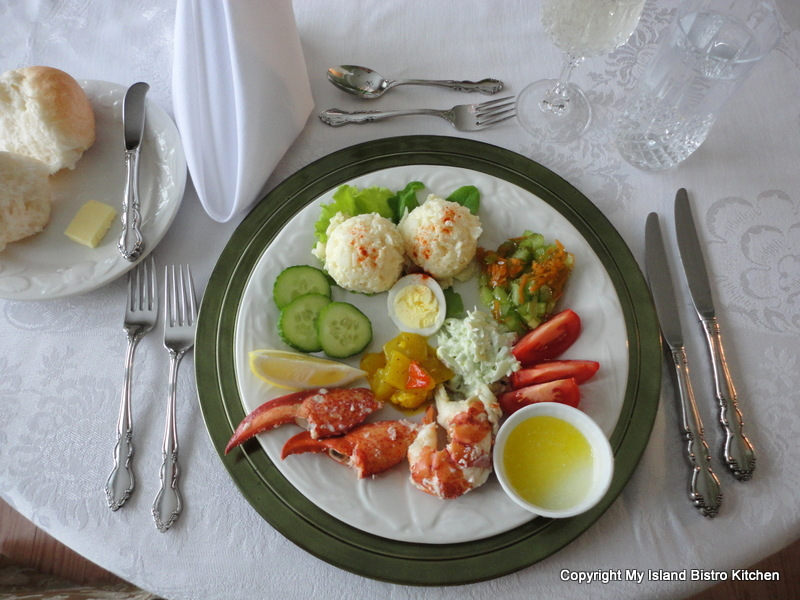
The most typical way Islanders enjoy their lobster is straight out of the shell, dipped in melted butter, and served with potato salad, coleslaw, and rolls. A jellied salad and slices of tomato and cucumber are also often included.
There are numerous enterprises around the Island that, seasonally, serve lobster suppers that generally consist of mussels, seafood chowder, lobster in the shell, salads, rolls, and a selection of pies and other desserts. There are three main lobster supper venues on PEI. Saint Anne’s Church Lobster Suppers in Hope River, not far from Cavendish, PEI, began in 1963 when a priest came up with the idea to have lobster suppers as a means to raise money to pay off the $35,000 mortgage on the church. New Glasgow Lobster Suppers in New Glasgow, in operation since 1958, and Fishermen’s Wharf Restaurant in North Rustico also serve full lobster suppers as well. A traditional lobster supper at one of these establishments is a must-stop for lobster lovers visiting PEI. In addition, most restaurants on the Island will feature lobster in one form or another on their menus. Last summer, I crisscrossed the Island in search of the best lobster roll on PEI since these are a common menu item for many restaurants. Click here to read about which one was my favorite.
The popularity of lobster is somewhat ironic. Today, it is a high-priced food, often considered by many a luxury and reserved for special occasions. However, on PEI, that was not always the case. I remember speaking with an Island woman who grew up about 65 years ago in an Island fishing community where her father was a lobster fisherman. She remembers being embarrassed opening her lunch at school and revealing a lobster sandwich since lobster was associated with poor people! My, how times have changed!
As a child, I had no interest in eating lobster. In fact, when my family was having a “feed of lobster” at home, my mother always roasted me a chicken! They would coax me to try the lobster but it just didn’t appeal to me. Finally, as a young adult, I gave in and tried a bite of lobster….well, let’s just say that’s when my love affair with lobster began and I’ve been making up for all the years I didn’t eat it!
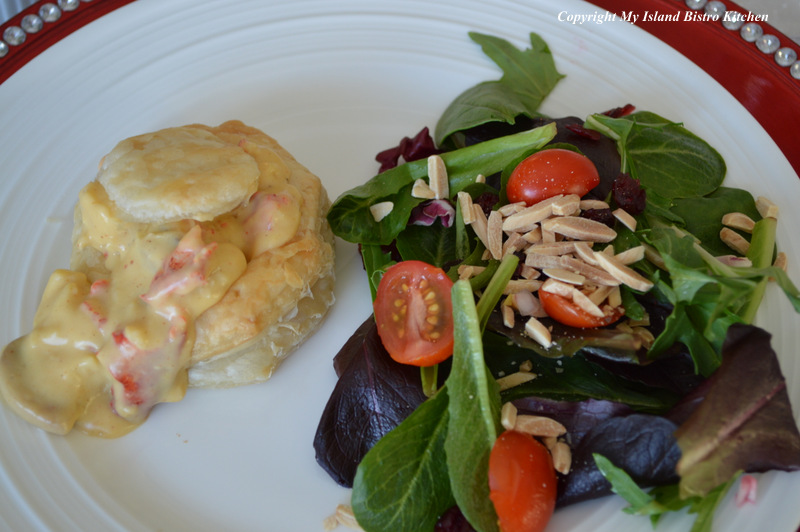
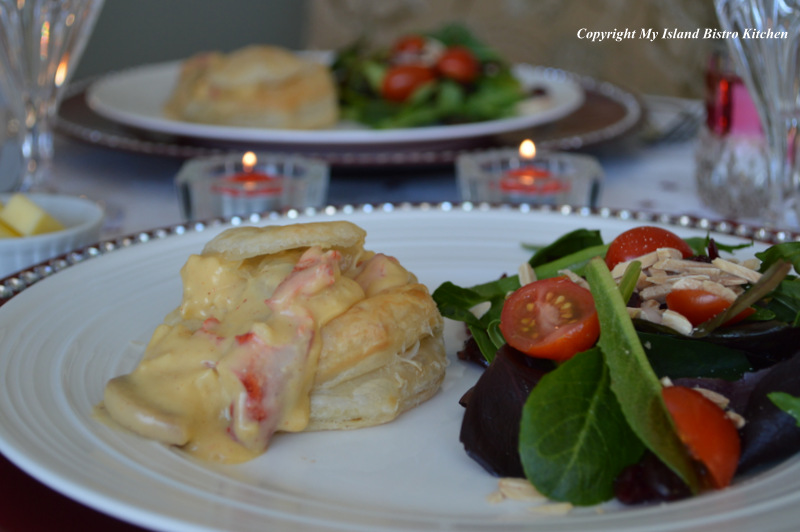
So, it would be a logical choice that I would choose lobster as the main course for a special Valentine’s dinner. I have opted to go with a traditional Lobster Newburg served in light and airy patty shells accompanied by a crisp green salad.
Lobster Newburg
Lobster is fished in PEI from spring through to fall so we have no winter lobster fishing season on the Island. Many of us freeze lobster meat when it is in season to enjoy in recipes, like Lobster Newburg, throughout the remainder of the year. My recipe for Lobster Newburg can be made with either fresh or frozen lobster meat.
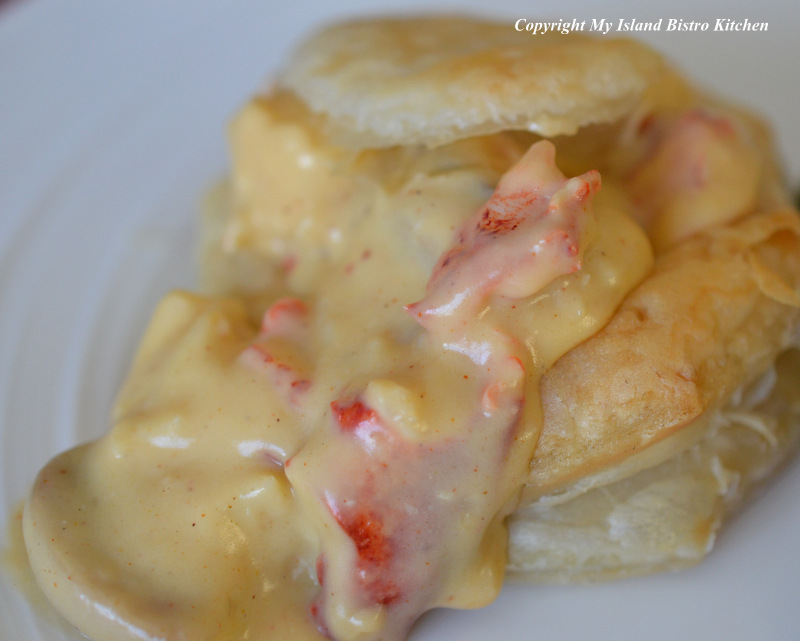
Lobster Newburg
Lobster Newburg, although it is often considered an elaborate menu item, is really quite easy to prepare. It’s also a good way to stretch lobster to increase the number of servings you can get from the meat of a lobster. What makes Lobster Newburg so tasty and silky in texture is the sauce. This is a rich, creamy cheese and sherry sauce so large portion sizes are not necessary. I traditionally serve Lobster Newburg in patty shells. However, it can also be presented over toast points or served over a bed of steamed rice. Or, it may be served in small individual casserole dishes with a side of steamed asparagus spears. The recipe for my Lobster Newburg follows at the end of this posting.
Much as Islanders have an enduring love affair with food that comes from the sea that surrounds us, we also have a special fondness for our famous PEI potatoes. For the past two years, I have followed a couple of potato farmers from the planting of the crop to the harvesting process. To read these stories and get a couple of my favorite potato recipes, here are the two links to the postings for Smith Farms of Newton, PEI and Eric C. Robinson Inc., of Albany, PEI.
I have chosen to serve a Chocolate Potato Cake as a finale to my Valentine’s dinner. Yes, potatoes in a cake! It’s amazing how many different ways potatoes can be served. Earlier this week, I posted my recipe for Chocolate Potato Cake on my food blog.
To make this feast truly a PEI dinner, I chose a white wine from PEI’s Rossignol Winery in Little Sands, PEI. The Island has three wineries – the other two are Newman Estate Winery in Gladstone and Matos Winery in St. Catherine’s, PEI. Each makes fine wine that is a great accompaniment to any meal.
Rossignol’s Little Sands White Wine
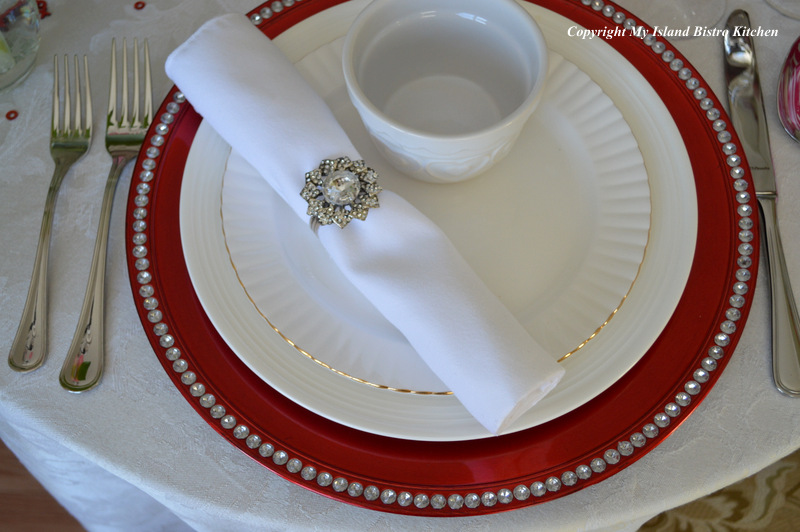
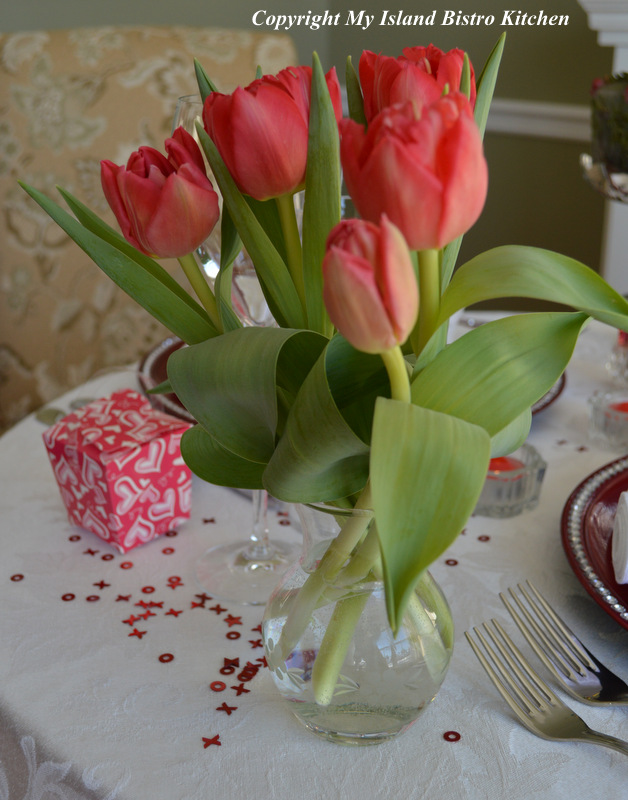
To compliment the tablesetting, I chose locally-grown tulips from Vanco Farms’ greenhouses in Mount Albion, PEI. Aren’t they beautiful flowers!
Vanco Tulips
So, this is my local flavors Valentine’s dinner for 2014, featuring some of my favorite and most loved local PEI foods and wine. I hope you enjoy them, too!
Lobster Newburg
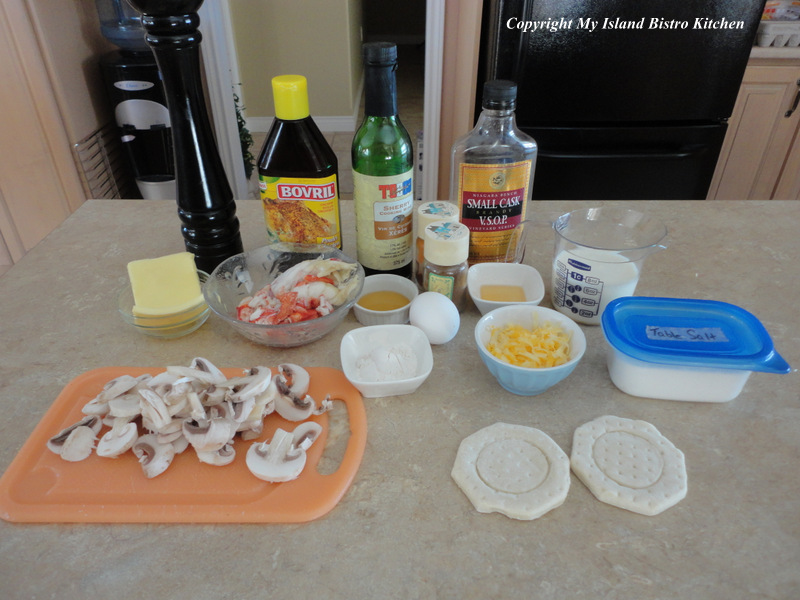
Ingredients:
4-5 oz cooked lobster (either fresh or frozen)
1 tbsp butter
3 oz mushrooms, sliced
1 tbsp butter
1½ tbsp flour
⅛ tsp paprika
pinch nutmeg
¾ cup whole milk or half-and-half
2 tbsp grated cheddar cheese
1 egg yolk, slightly beaten
½ tbsp sherry
1½ tsp brandy
1 tsp liquid chicken bouillon
salt and pepper, to taste
Method:
Assemble ingredients.
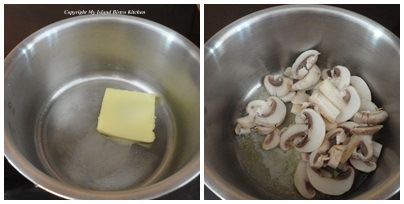
Melt first amount of butter in a medium-sized saucepan. Add and sauté mushrooms for approximately 2 minutes. Set aside.
In separate saucepan, melt remaining tablespoon of butter. Add flour, paprika, and nutmeg. Whisk in the milk until mixture is smooth. Add cheese. Stir mixture constantly until slightly thickened.
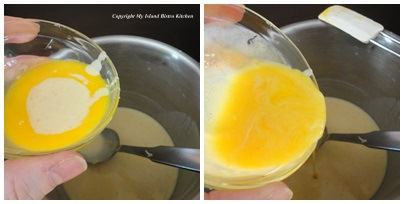
Add approximately 2 tbsp of the hot sauce to the egg yolk to temper the egg so it won’t curdle when added to the hot sauce. Add the tempered egg to the sauce in the pan.
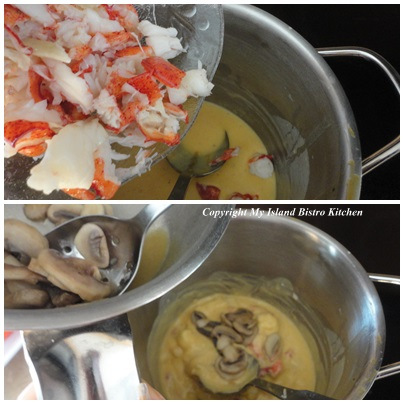
Cook for 1-2 minutes, stirring constantly, then add the lobster meat and mushrooms.
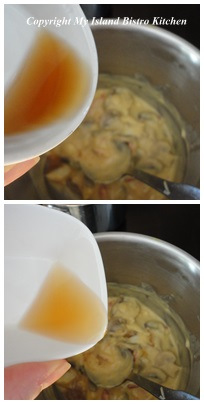
Add the sherry and brandy and cook and stir slowly for 1-2 minutes to heat the lobster and mushrooms. Add salt and pepper to taste, if desired.
Serve immediately in baked patty shells or over toast points or steamed rice.
Yield: 2-3 servings
Thank you for visiting “the Bistro” today.
Be sure to visit my Facebook page at My Island Bistro Kitchen. You may also wish to follow me on twitter @PEIBistro, on Pinterest at “Island Bistro Kitchen”, and on Instagram at “PEIBistro”.
We are familiar with cakes made with vegetables like carrot and zucchini. However, have you ever heard of potato cake?
We Islanders like our spuds, there is no doubt about it. Potatoes are a very versatile vegetable and can be prepared and served in many different ways but have you ever heard of having them for dessert? Well, combine potatoes with chocolate and some light spice seasoning and you have a really tasty cake.
What follows is my creation of a recipe for chocolate potato cake. This is a fairly dense-textured cake so don’t look for it to have the same “foggy” and fluffy texture of a typical chocolate cake mix out of a box! Despite the two cups of sugar in the recipe, it is not overly or sickeningly sweet. The potatoes are cooked and mashed really well before adding them to the cake batter. It is important that they be lump-free as, otherwise, you will have lumps in the cake batter. The mashed potatoes should be warm when added to the batter.
You may find two or three of the ingredients different in this cake recipe. For example, I have added a pinch of cayenne pepper because I find it enhances the depth of the chocolate flavor. The key, of course, is not to overdo it – if you add too much, there will be excessive “heat” in the cake….just a pinch is all it takes. The addition of the espresso powder is also another good way to draw out the flavor of the cocoa and lend a mocha flavor to the cake. I have quite a collection of balsamic vinegars from our local Liquid Gold store here in Charlottetown. One of them is the dark chocolate balsamic vinegar which is delicious when simmered on the stove, reduced down, and drizzled over ice cream. If you have never tried a good quality balsamic vinegar reduction in this way, you are missing out on a delectable treat. I added 1/2 tbsp of this balsamic vinegar to the chocolate cake batter. This is a chocolate all-the-way cake!
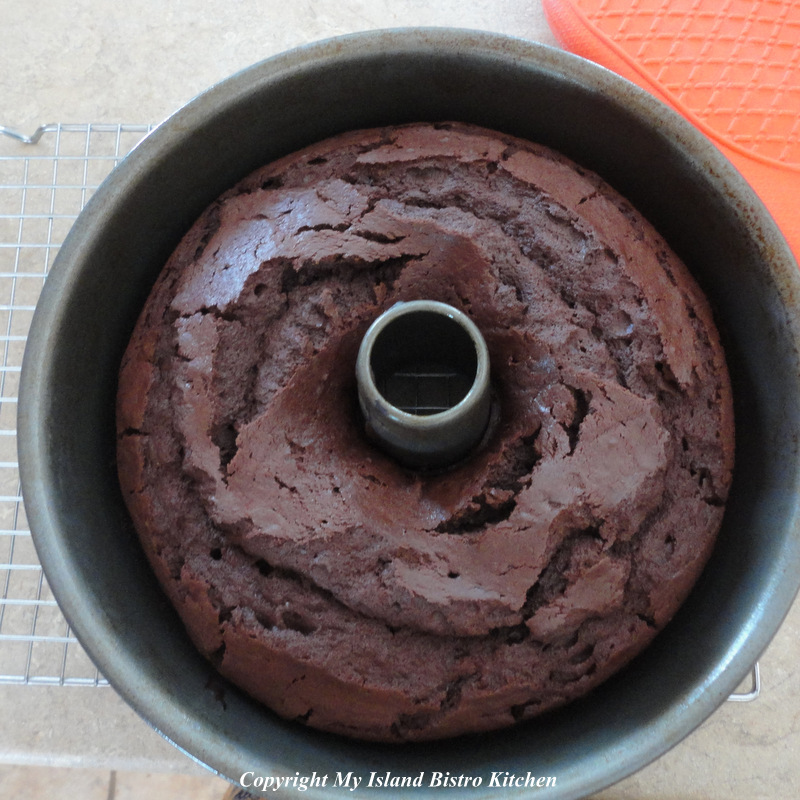
I recommend baking this cake in a 10″ tube or bundt cake pan. These pans have a hollow tube in the center of the pan and this allows dense-batter cakes to rise and bake more evenly. There is also less chance of the cake falling in the middle or the outsides of the cake baking too quickly and drying out before the centre of the cake is baked.
The key to making this cake is not to overbake it. Start checking it at about the 40-45-minute baking point. If a cake tester does not come out clean at that point, continue to bake it but check it every 4-5 minutes. If it overbakes, it will be dry.
Chocolate Potato Cake
2½ cups flour
¼ tsp salt
2¾ tsp baking powder
¼ tsp soda
1 tsp cinnamon
¼ tsp allspice
pinch cayenne
⅔ cup cocoa
¾ cup butter
1 cup white sugar
1 cup brown sugar
3 eggs
1 cup warm mashed potatoes
½ cup milk
1½ tsp espresso powder dissolved in ⅓ cup hot water
½ tbsp dark chocolate balsamic vinegar (optional, but good)
1½ tsp vanilla
Method:
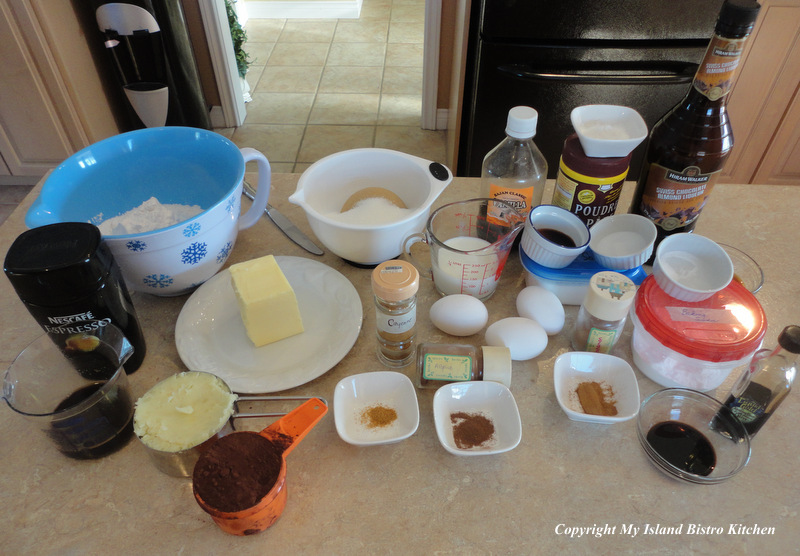
Assemble ingredients.
Ingredients for Chocolate Potato Cake
Preheat oven to 350°F.
Line bottom of 10” tube pan with parchment paper.Grease or spray cooking oil on sides of pan.
Tube Pan Prepared for Chocolate Potato Cake
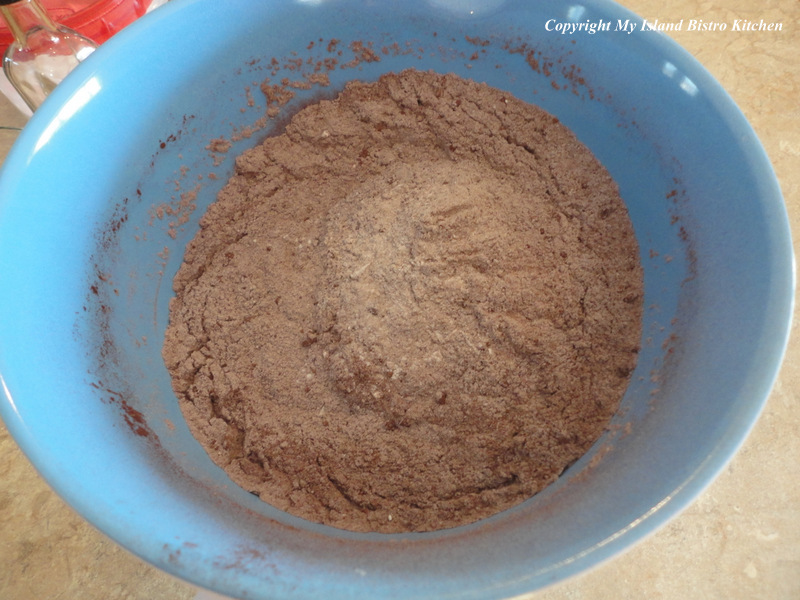
Sift or whisk together the flour, salt, baking powder, soda, cinnamon, allspice, cayenne, and cocoa.Set aside.
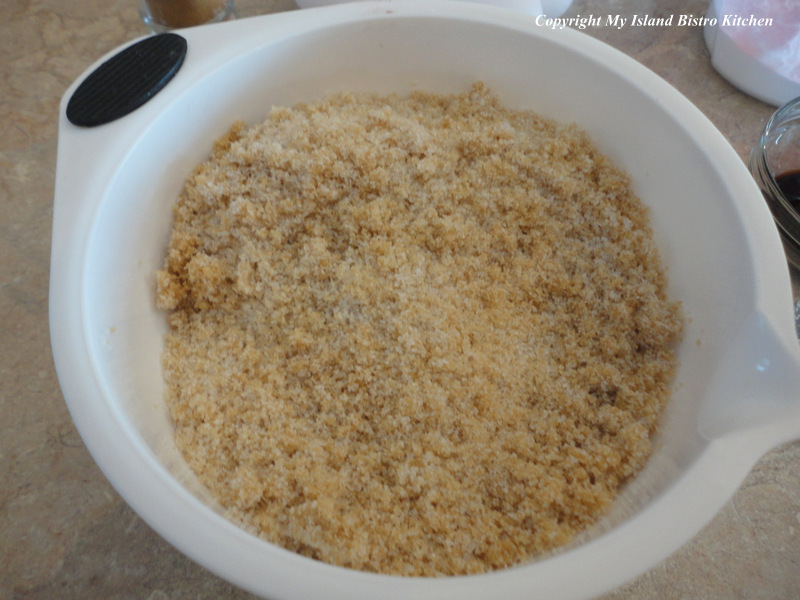
In separate bowl, combine the brown and white sugars.
In bowl of stand mixer, cream the butter and sugars until fluffy (2-3 mins on medium-high speed).
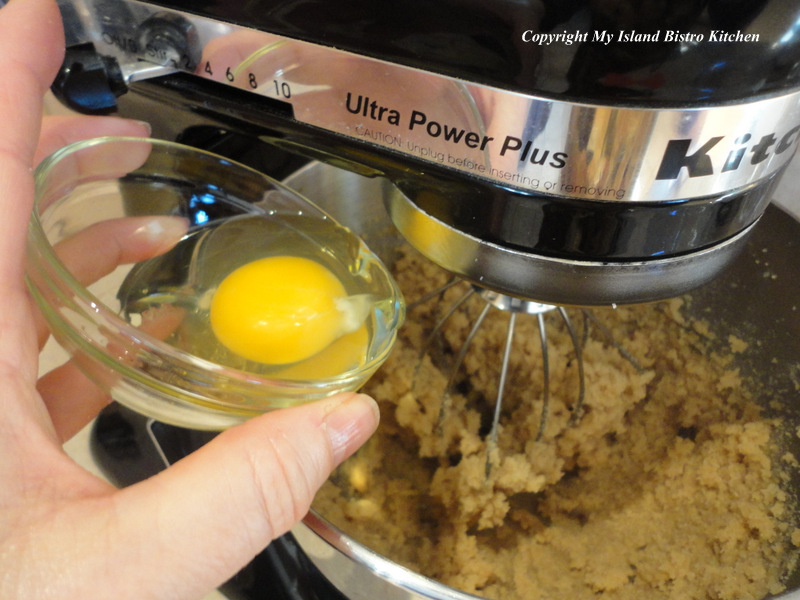
Add the eggs, one at a time and beat well to incorporate after each addition.
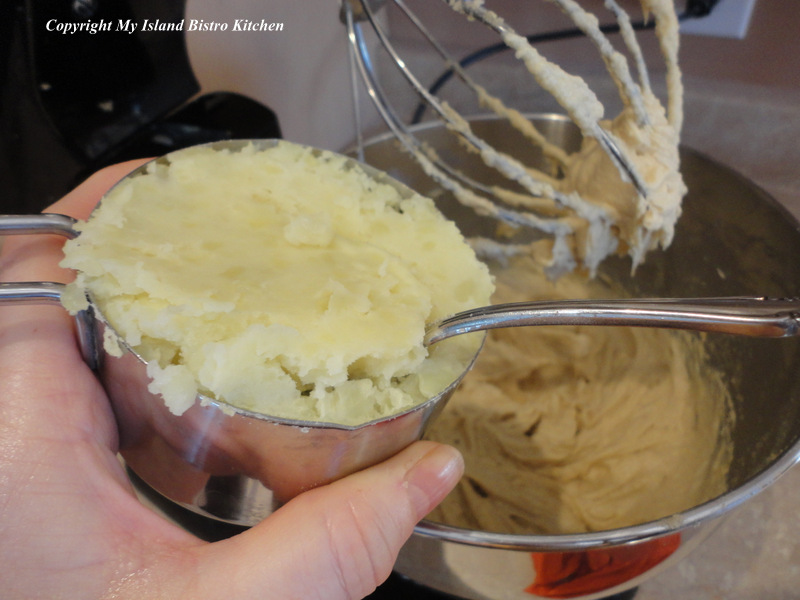
Add the mashed potatoes and beat on medium-high speed for 1-2 minutes until batter is smooth.
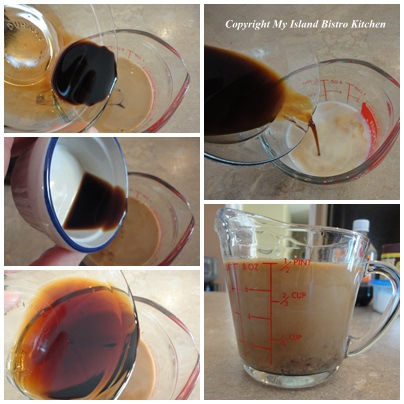
Add the coffee, liqueur, balsamic vinegar, and vanilla to the milk to make 1 cup of liquid. (Note – if you choose not to add the liqueur and/or balsamic vinegar, replace them with milk so that the liquid measurement equals 1 cup.)
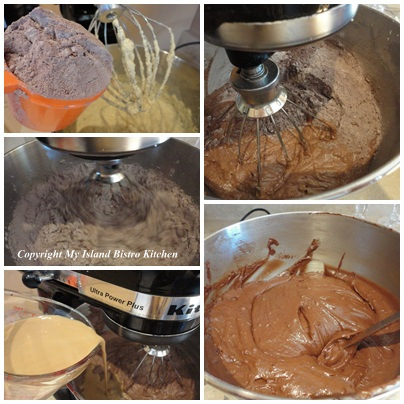
Add the sifted dry ingredients alternately with the liquid ingredients, starting and ending with the flour mixture (process is three additions of dry ingredients to two of liquid), mixing well after each addition.
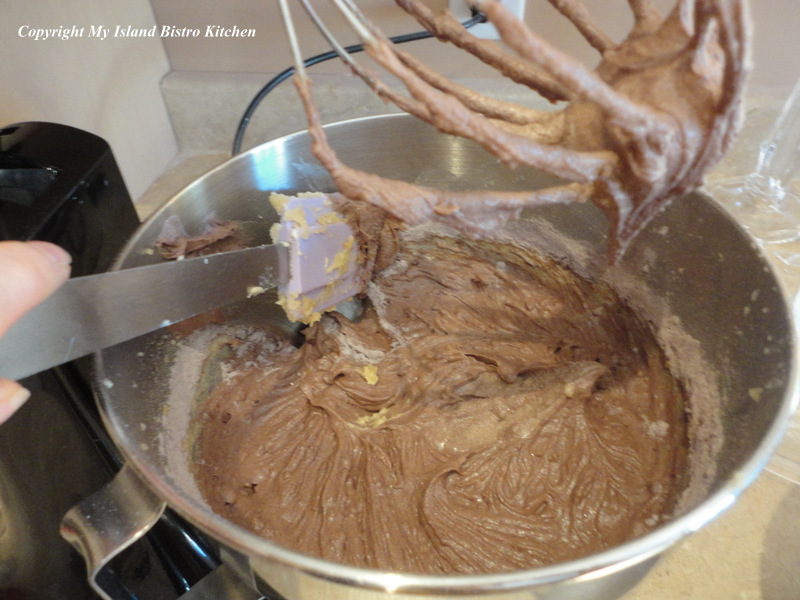
Scrape sides of bowl with spatula as necessary to ensure all ingredients are incorporated.
Scrape Sides of Bowl Frequently
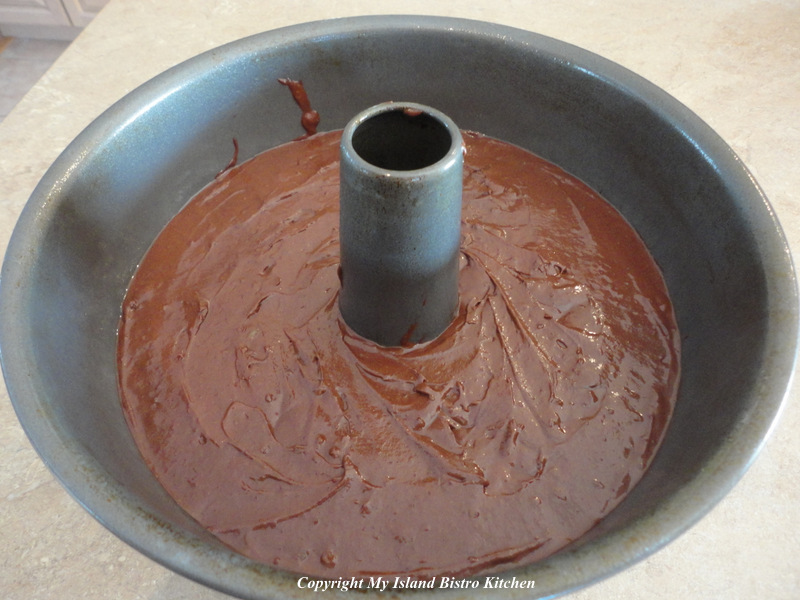
Pour batter into prepared tube pan.
Bake for apx. 40-55 minutes or until cake tester inserted in center of cake comes out clean and the cake springs back to a light touch.Do not overbake or cake will be dry.
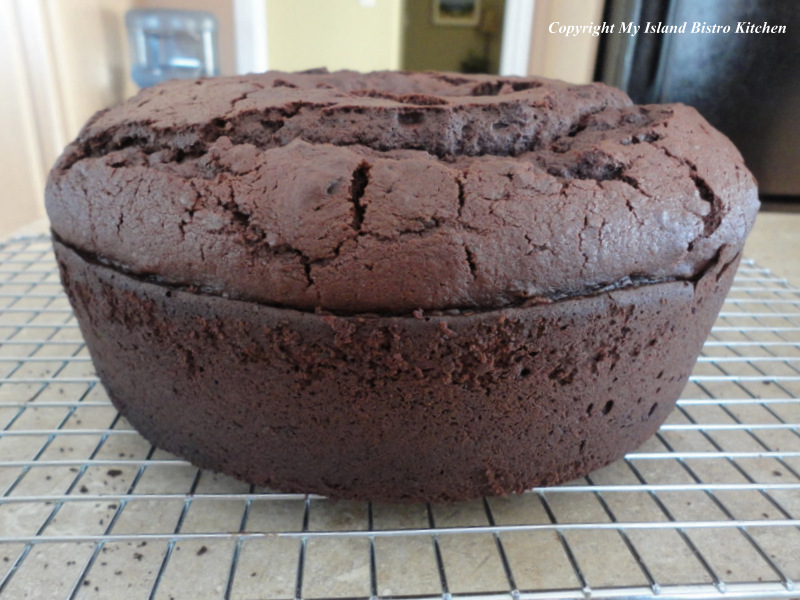
Baked Chocolate Potato Cake
Let cake cool in pan for 10 minutes then transfer to a wire rack to cool completely.
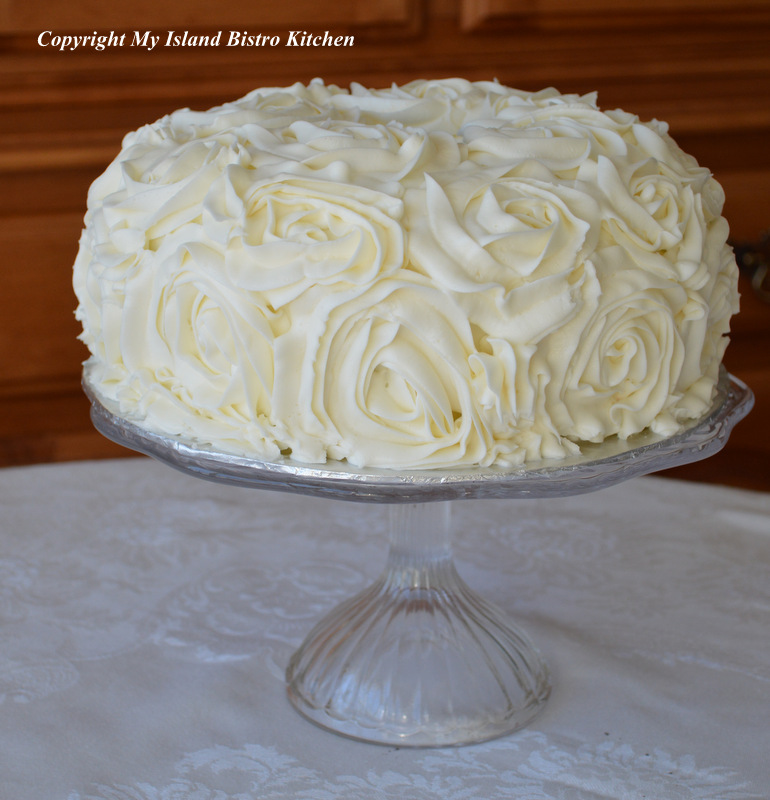
Ice with your favorite frosting.
Enjoy!
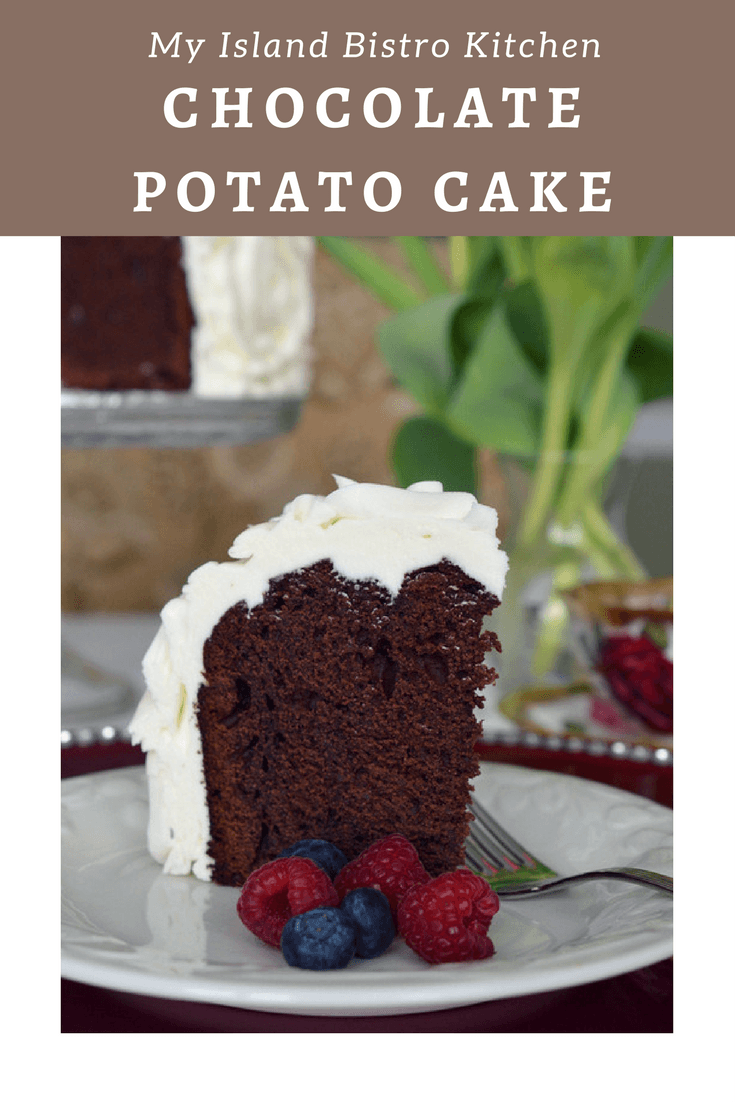
Pin Me to Pinterest!
Chocolate Potato Cake
Thank you for visiting “the Bistro” today.
Be sure to visit my Facebook page atMy Island Bistro Kitchen. You may also wish to follow me on twitter @PEIBistro, on Pinterest at “Island Bistro Kitchen”, and on Instagram at “PEIBistro”.
Yes, it can be chilly after a sleigh ride and there is nothing better to warm up with than a bowl of hot, homemade Chili Con Carne afterward! Nothing stirs up a great appetite better than lots of fresh country air! Continue reading Chili After the Sleigh Ride→
I love making bread from scratch. I like working and kneading the dough, the smell of the dough as it rises, and especially as it bakes. No commercial potpourri could ever duplicate the wonderful scent of homemade bread baking in the oven! It just permeates the whole house and whets the appetite. We do have an electric bread machine in the family but it’s not the same. I find bread made in the machine is not too bad on the day it is made but, after that, I don’t care for it so much, finding it to be somewhat tough. My preference is to make bread the old-fashioned, traditional way. Today, I am sharing my recipe and technique for making homemade white bread. Continue reading Homemade White Bread→
Do you ever have a craving for comfort foods? You know, the foods that are basic, nostalgic, or that you have a sentimental attachment to and that take you down memory lane. Some might even refer to these dishes as vintage. Maybe your mom made them for you when you were a child or you remember them from visits to grandma’s house. I’m talking about foods like macaroni and cheese, baked beans, scalloped potatoes, apple pie or crisp, homemade stews and “boiled dinners“, and baked bread. Cottage pie, rice pudding, roast chicken dinners, meatloaf with mashed potatoes, and fruit cobblers are other comfort foods commonly enjoyed in North American culture. There are many other dishes that bring us comfort, especially in the cold Canadian winters, so this list is not exhaustive and what constitutes comfort food may vary between cultures and regions of Canada.
These foods, in their traditional content, are by no means gourmet fare nor are they necessarily devoid of calories. They’re typically plain and simple stick-to-the-ribs kind of fare and they generate feelings of contentment and satisfaction … you feel warm and cozy when eating the meal. These kinds of dishes take basic, easy-to-find ingredients and are not usually difficult or complicated to make. They’re the kinds of foods that, when you walk into a home where they are being prepared, your appetite is immediately whetted and you harken back to early memories of enjoying those foods. They are hearty classics and endure over time, generation after generation. Yes, even the old tuna casserole is still considered a comfort food by many!
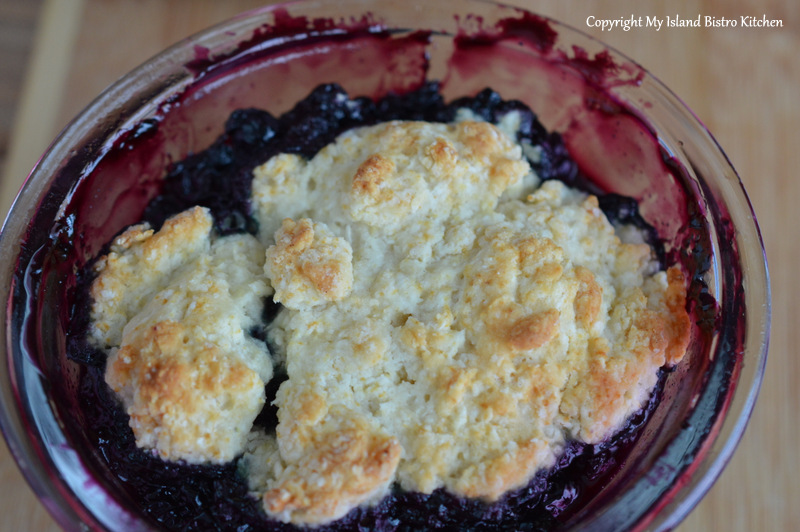
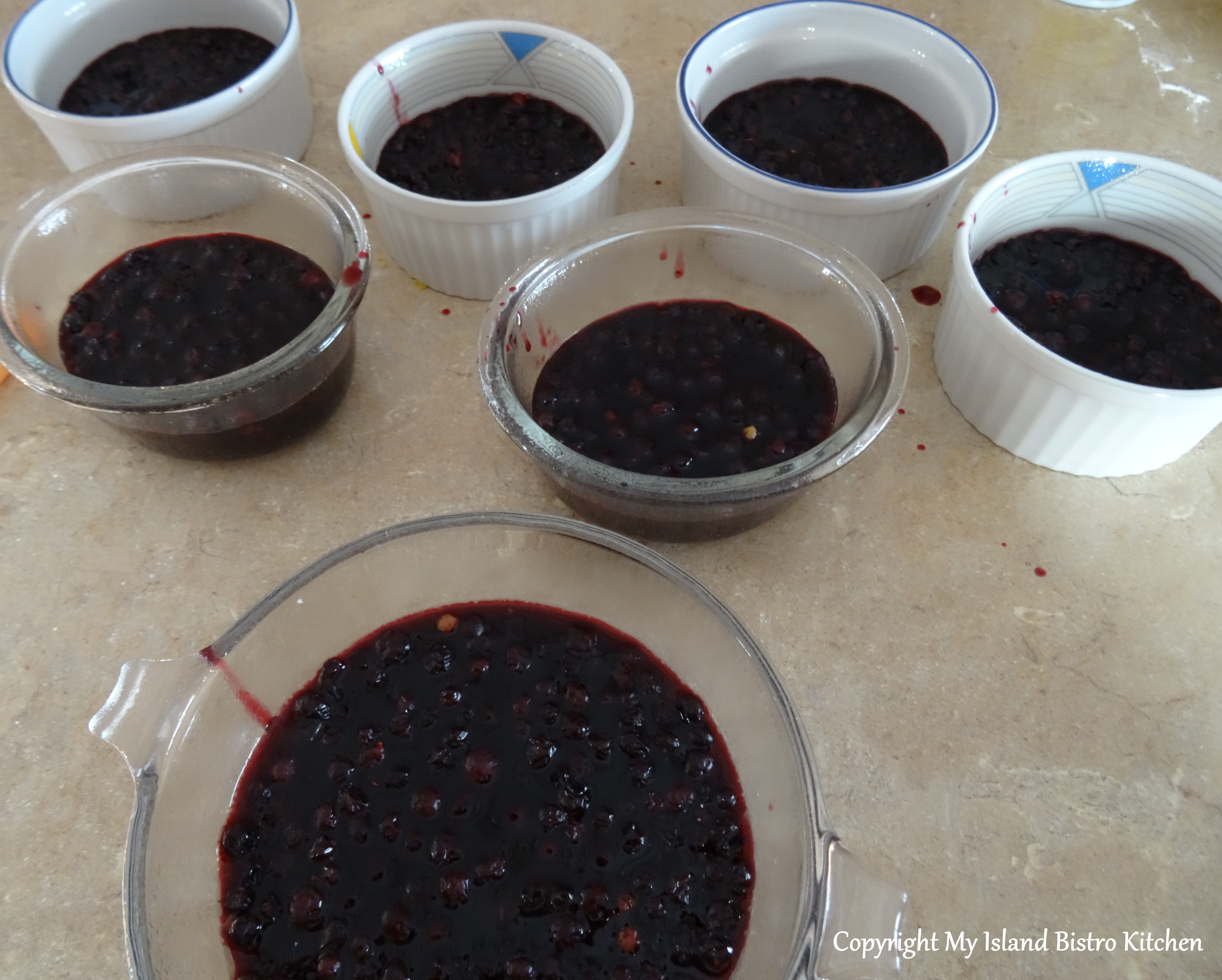
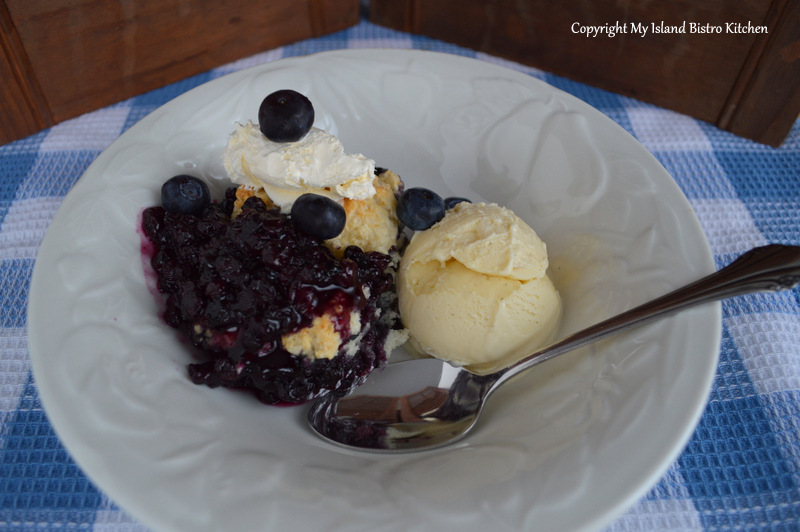
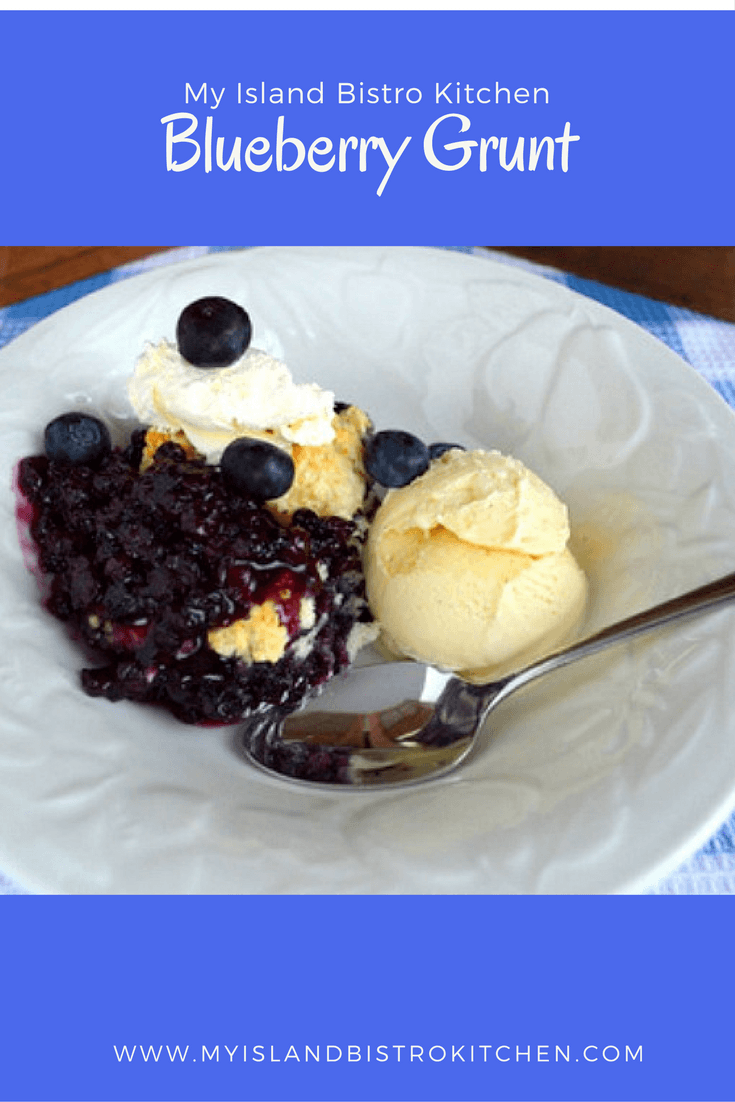
Today, I am sharing my recipe for Blueberry Grunt. I don’t know the origin of this dessert or how it got its name but it’s really just a baked fruit dessert – a slightly thickened fruit sauce on the bottom topped by a biscuit-like dumpling. This dessert is often made on the stove top where the dumplings are put in the pot on top of the bubbling blueberry sauce, covered and let simmer for about 15 minutes. However, my recipe calls for the dessert to be baked in the oven.
Baked Blueberry Grunt
My featured Island product in this recipe are the blueberries. Each summer, I pack away several bags of these sweet little Island-grown morsels for use in my favorite recipes like this one for Blueberry Grunt.
[Printable recipe follows at end of posting]
Blueberry Grunt
Ingredients:
4 cups blueberries, fresh or frozen
1/2 cup white sugar
2 tbsp brown sugar
1 tbsp + 1 tsp cornstarch
2 tsp lemon juice
1 1/2 tsp grated lemon rind
1/2 cup water
1/2 tsp cinnamon
1/4 tsp nutmeg
1/8 tsp cardamon
Topping:
2 cups flour
4 tsp baking powder
1/4 tsp salt
2 1/2 tbsp white sugar
1 cup milk
2 1/2 tbsp cold butter
Method:
Preheat oven to 400F.
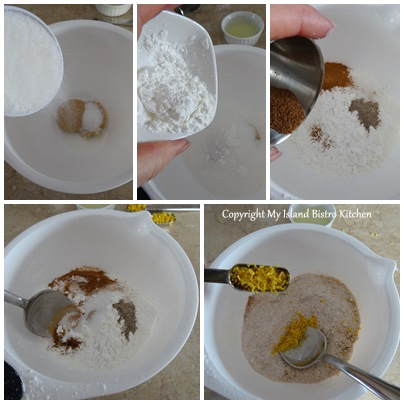
In a small bowl, mix together the sugars, cornstarch, and spices. Stir in the grated lemon rind. Set aside.
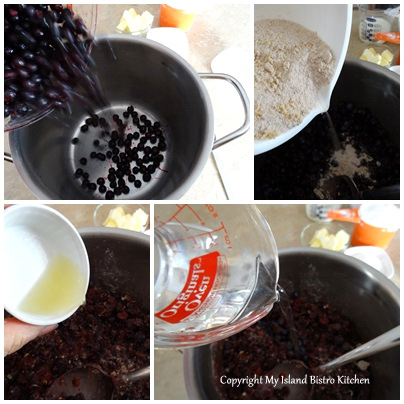
In saucepan, combine blueberries and the sugar mixture. Add the lemon juice and water. Bring to a boil then reduce heat and simmer mixture for 5-6 minutes. Remove from heat.
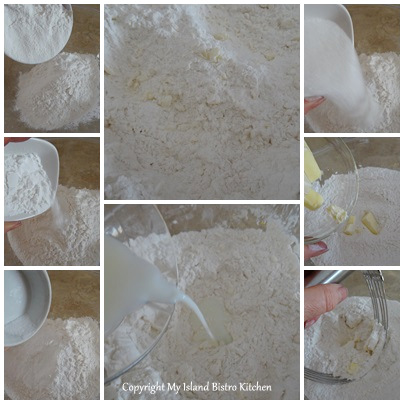
Meanwhile, in a large bowl, combine flour, baking powder, salt and sugar. Cut in cold butter until mixture resembles coarse oatmeal. Add enough milk to make a soft dough mixture that will cling together.
Grease a 1 1/2 or 2-quart baking dish or 8 individual ramekins. Spoon the blueberry mixture into baking dish(es).
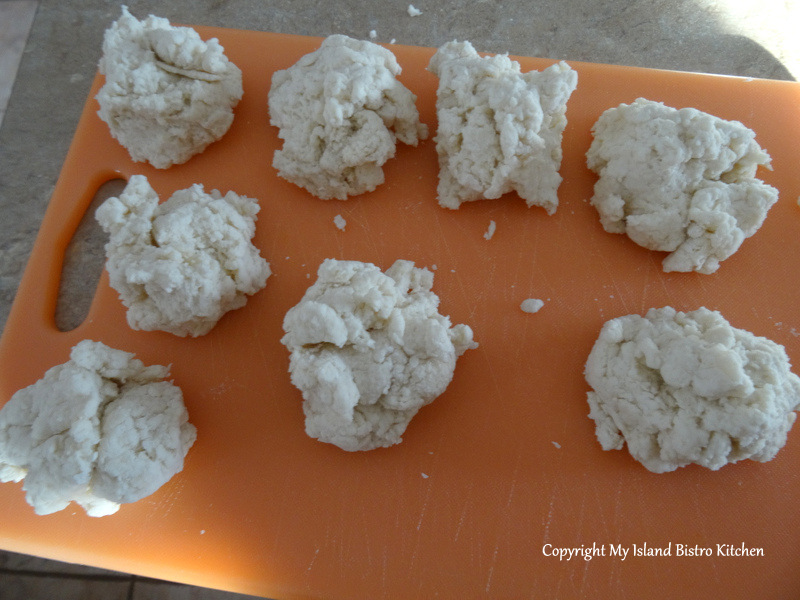
Divide the dumpling dough into 8 portions.
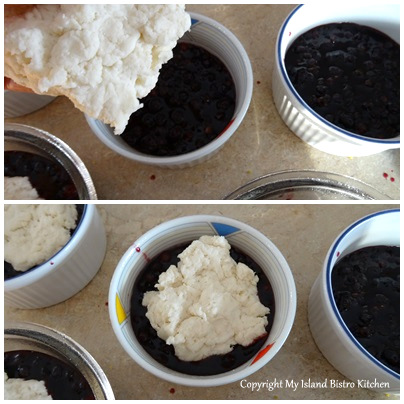
Place dumplings over blueberry mixture (close together if baking in one casserole or centered if using individual dishes).
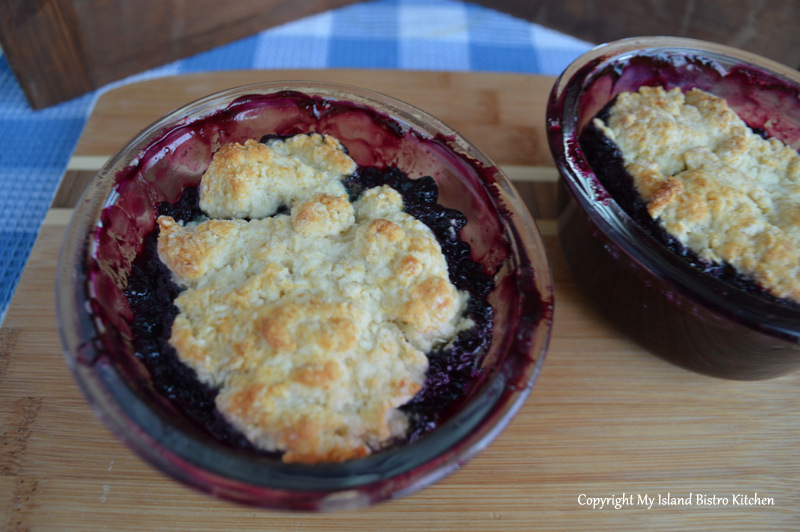
Bake in 400F oven for about 20-25 minutes or until dumplings are done and lightly golden brown on top.
Serve hot or warm with a dollop of whipped cream or vanilla ice cream (or both!).
An easy to prepare comfort dessert, Blueberry Grunt consists basically of blueberries baked in a flavorful sauce under tea biscuit dumplings. Serve hot with vanilla ice cream and/or whipping cream.
Course
Dessert
Cuisine
Canadian
Keyword
blueberries, blueberry grunt
Servings8
My Island Bistro KitchenMy Island Bistro Kitchen
Ingredients
Blueberry Base:
4cupsblueberries, fresh or frozen
1/2cupwhite sugar
2tbspbrown sugar
1tbsp+ 1 tsp cornstarch
2tsplemon juice
1 1/2tspgrated lemon rind
1/2cupwater
1/2tspcinnamon
1/4tspnutmeg
1/8tspcardamom
Topping:
2cupsflour
4tspbaking powder
1/4tspsalt
2 1/2tbspwhite sugar
1cupmilk
2 1/2tbspcold butter
Instructions
Preheat oven to 400F.
In a small bowl, mix together the sugars, cornstarch, and spices. Stir in the grated lemon rind. Set aside.
In saucepan, combine blueberries and the sugar mixture. Add the lemon juice and water. Bring to a boil then reduce heat and simmer mixture for 5-6 minutes. Remove from heat.
Meanwhile, in a large bowl, combine flour, baking powder, salt and sugar. Cut in cold butter until mixture resembles coarse oatmeal. Add enough milk to make a soft dough mixture that will cling together.
Grease a 1 1/2 or 2-quart baking dish or 8 individual ramekins. Spoon the blueberry mixture into baking dish(es).
Divide the dumpling dough into 8 portions.
Place dumplings over blueberry mixture (close together if baking in one casserole or centered if using individual dishes).
Bake for about 20-25 minutes or until dumplings are done and lightly golden brown on top.
Serve hot with a dollop of whipped cream or vanilla ice cream (or both!).
Recipe Notes
Yield: 8 servings
[Copyright My Island Bistro Kitchen]
If you have made this recipe and enjoyed it and/or wish to share it with your friends and family, please do so on social media but be sure to share the direct link to this posting from my website.
Connect with My Island Bistro Kitchen on Social Media
Follow “the Bistro” on Pinterest at https://www.pinterest.ca/peibistro/ and pin the Pinterest-ready photo found at the end of this post to your favorite Pinterest boards.
You may also enjoy these other blueberry dessert recipes from My Island Bistro Kitchen:
Those who regularly follow my blog will recall that I made the commitment back in January 2013 to post one cookie recipe a month for the entire year. So, for ease of retrieval, I thought I would do a year-end round-up of all 12 cookies.
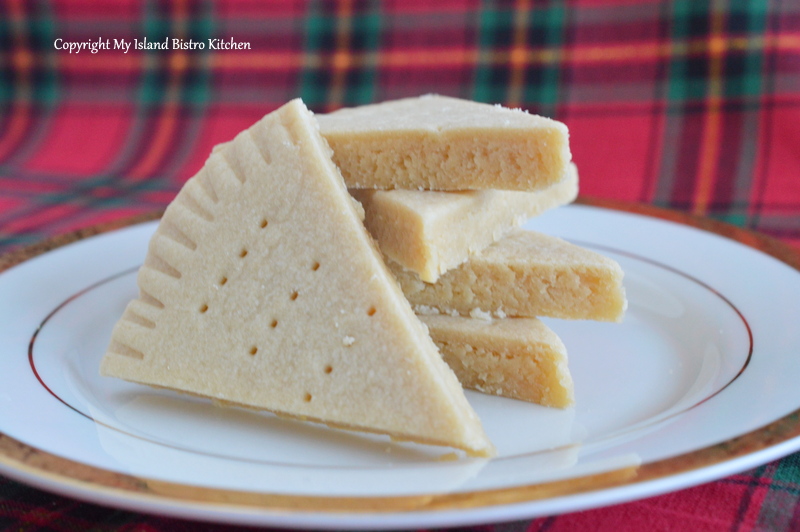
In January, just in time for Robbie Burns Day, I shared my recipe for Shortbread.
Shortbread
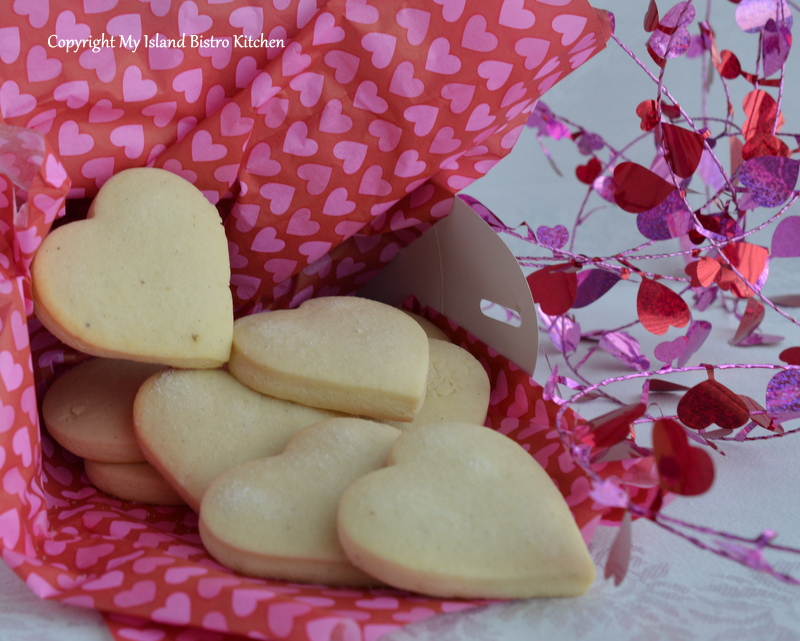
In February, with sweet Valentine’s Day, old-fashioned Sugar Cookies topped the list.
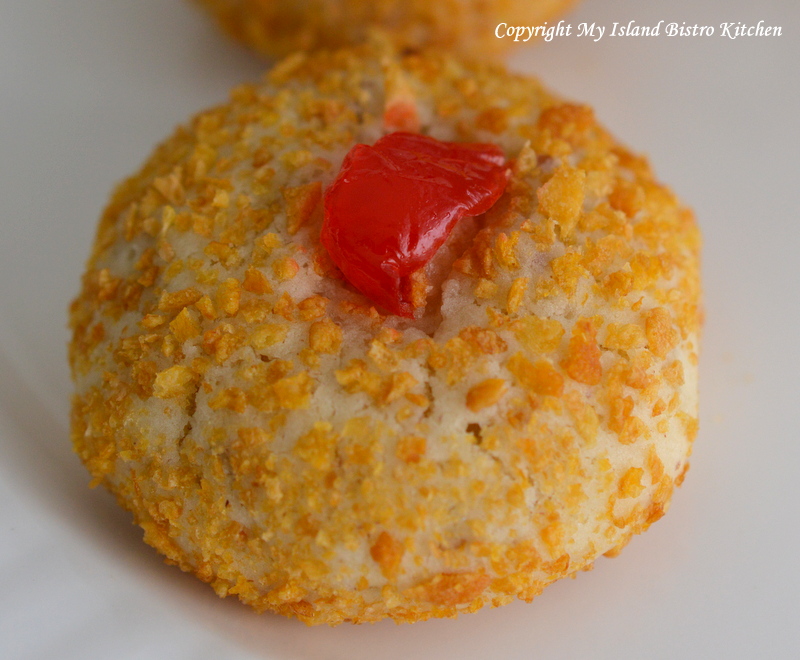
In May, old-fashioned Cherry Winks proved they are still a perennial favorite.
Cherry Wink Cookie
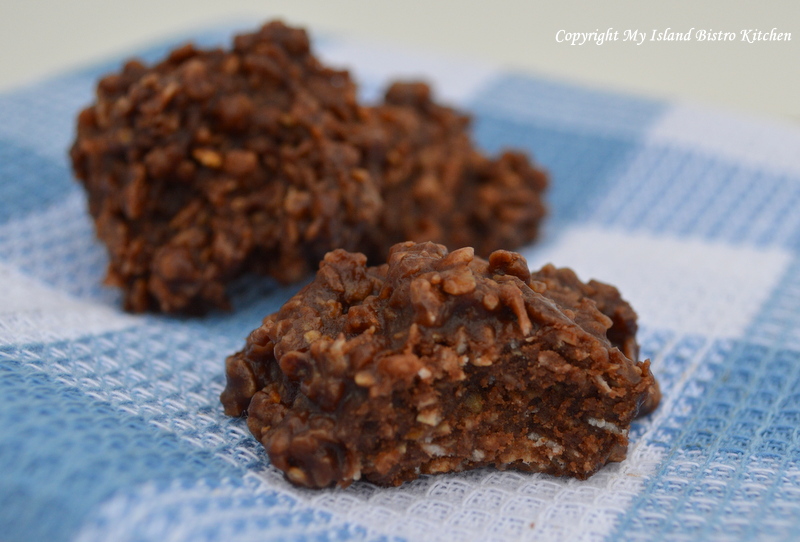
In June, the no-bake Spider Cookies proved they are just as much a favorite today as they were when I was growing up!
Spider Cookies
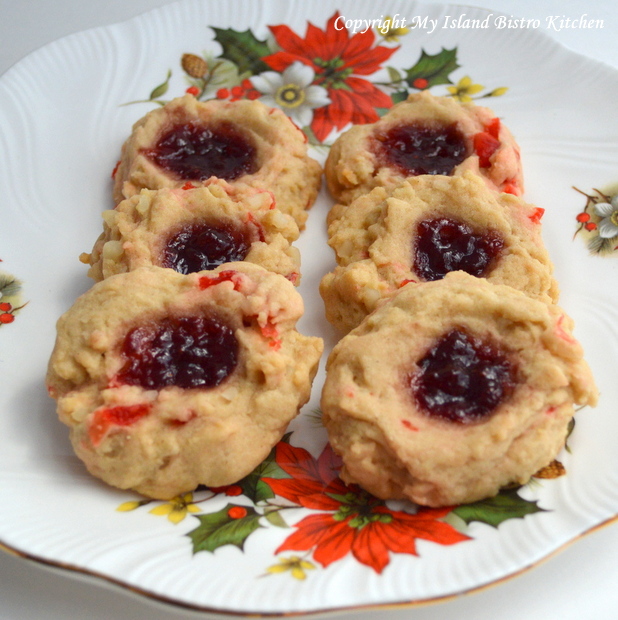
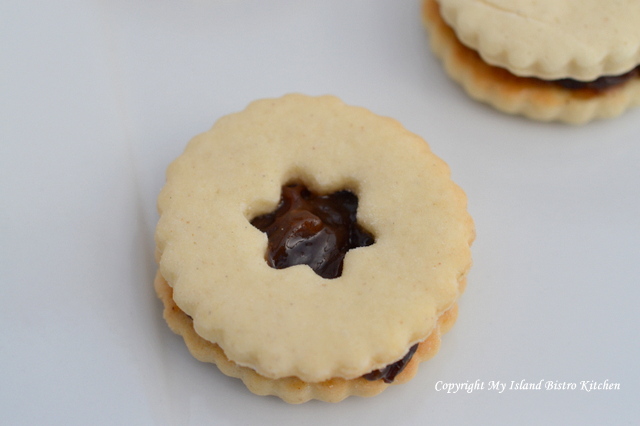
In July, as we celebrated “Christmas in July”, the Brown Sugar Jam-Filled Cookies brought back memories of the kinds of cookies often found in grandma’s cookie jar.
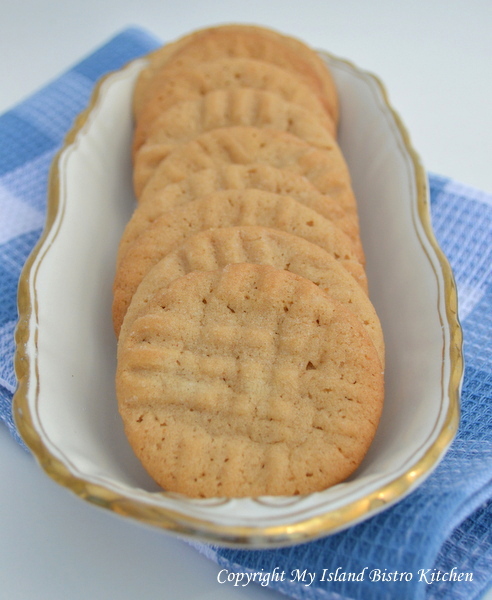
In September, crisp and light-textured Peanut Butter Cookies made it on to the cookie of the month roster.
Peanut Butter Cookies
In October, the substantial and tasty raisin-filled Plum Puff Cookies heralded the fall season.
Plum Puff Cookies
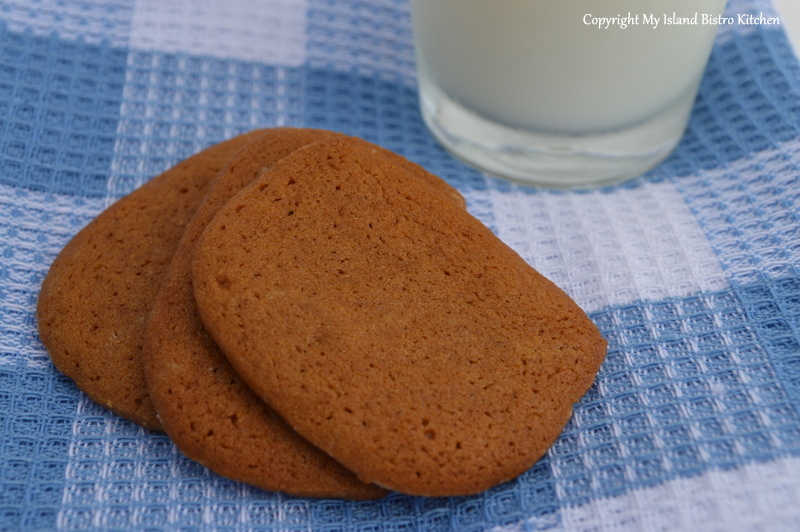
In November, when the days turned cooler and thoughts turned to the sweet smell of cooking with spices, the old-fashioned icebox Gingersnaps made their debut.
Gingersnaps
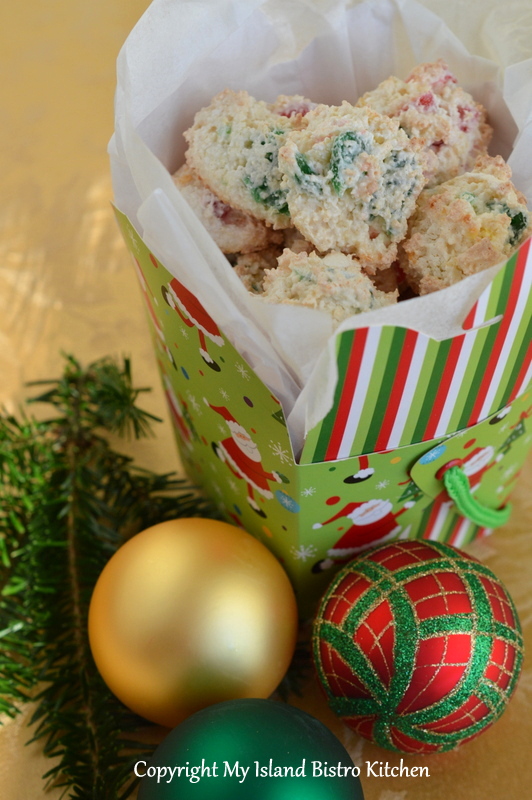
In December, these Coconut Cherry Macaroons made a fine addition to trays of sweets and to gift boxes.
Coconut Cherry Macaroons
I hope you have enjoyed some of my favorite cookie recipes. Do you have a favorite cookie?
Barbara
Thank you for visiting “the Bistro” today.
Be sure to visit my Facebook page atMy Island Bistro Kitchen.You may also wish to follow me on twitter @PEIBistro, on Pinterest at “Island Bistro Kitchen”, and on Instagram at “PEIBistro”.
(Mostly) PEI and Maritime Food – Good Food for a Good Life!