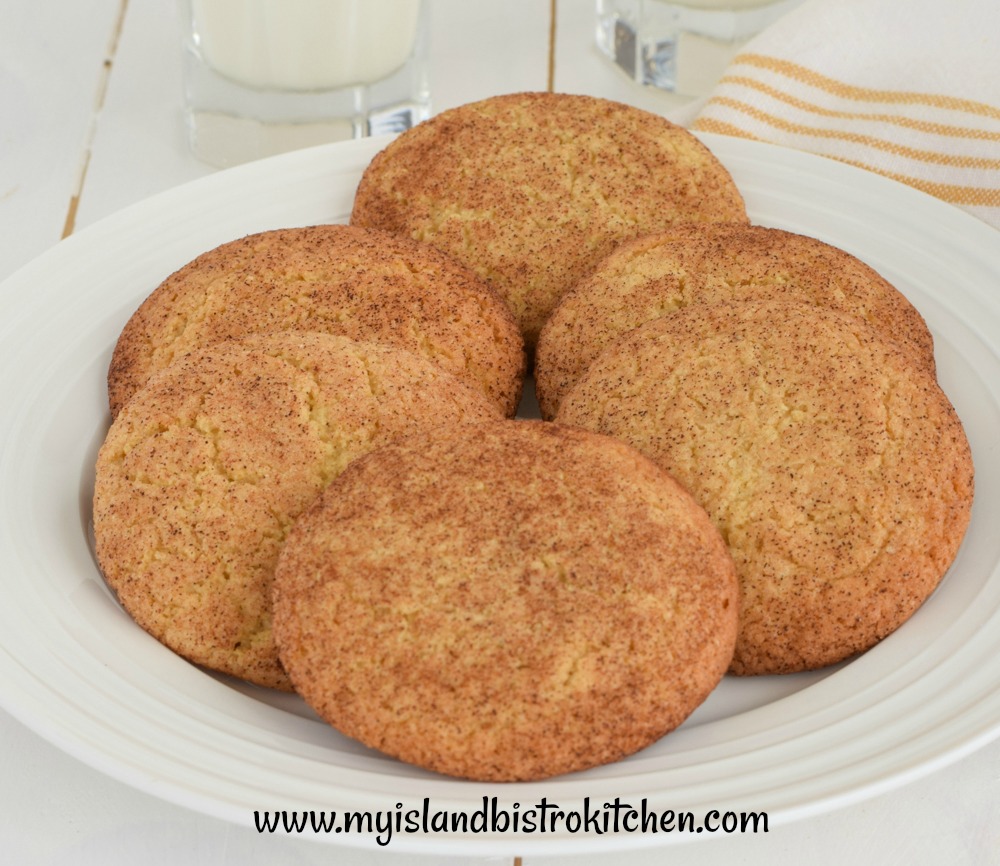
If you like cookies that are super tasty but not overly sweet then you will like these Gluten Free Snickerdoodle Cookies. They sport a lovely soft crumb texture and have superb flavor with the cardamon and nutmeg in the cookies and then the cinnamon-sugar mixture in which they are rolled. Continue reading Gluten Free Snickerdoodle Cookie Recipe→
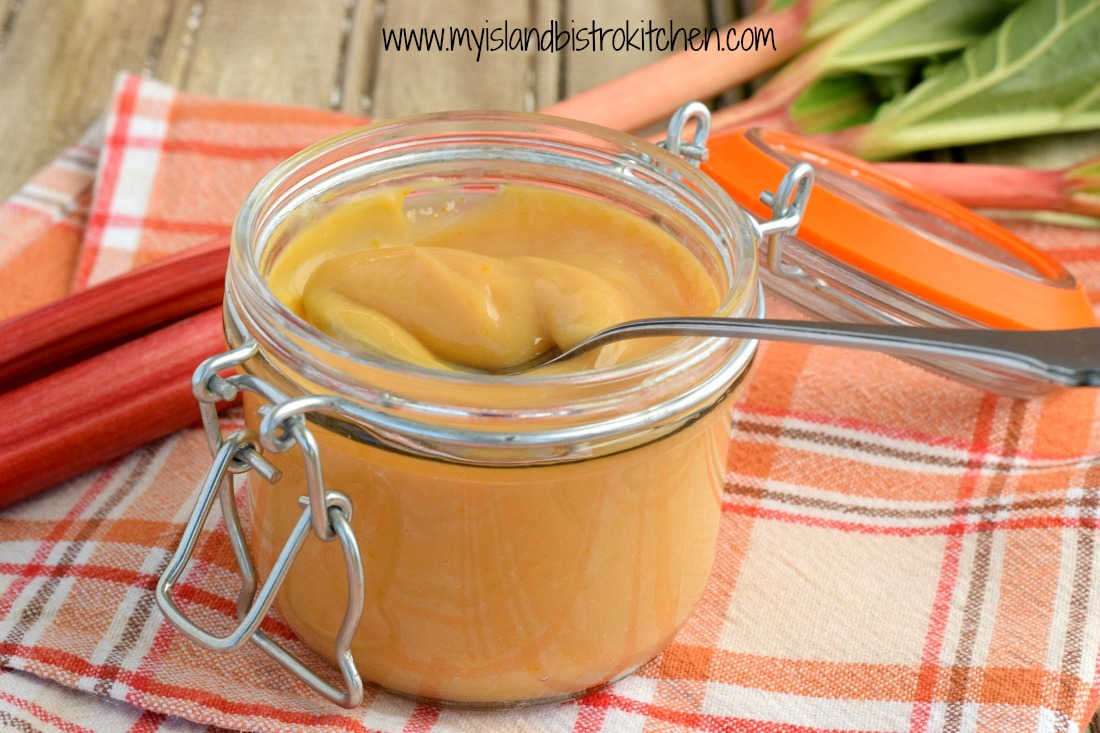
I love rhubarb and use it in a multitude of ways. Being a lover of lemon curd, I figured I would also like rhubarb curd so I set about developing and testing a recipe for it. This delightful creamy curd can be used in the same ways as lemon curd – sandwiching cakes together, spreading on scones, filling cookies, eclairs, macarons, and tarts, stirring into (or topping on) Greek yogurt for quick parfaits, and, well, its uses are only limited by your imagination! Continue reading Rhubarb Curd Recipe→
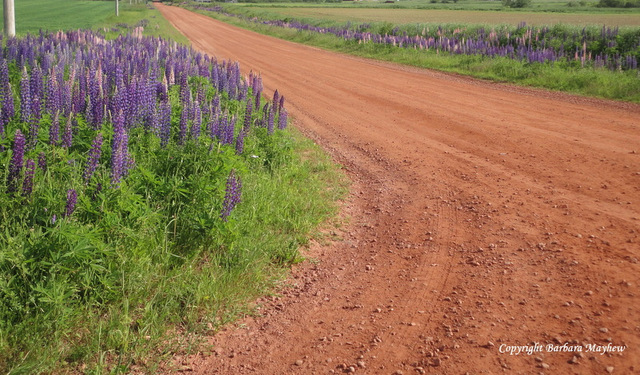
Wild lupines along a red dirt country road in Prince Edward Island, Canada
Every year in late June, the countryside in Prince Edward Island is blooming with the wild lupines that grow in a vast array of colors.
Wild PEI Lupines and Summer Pholx
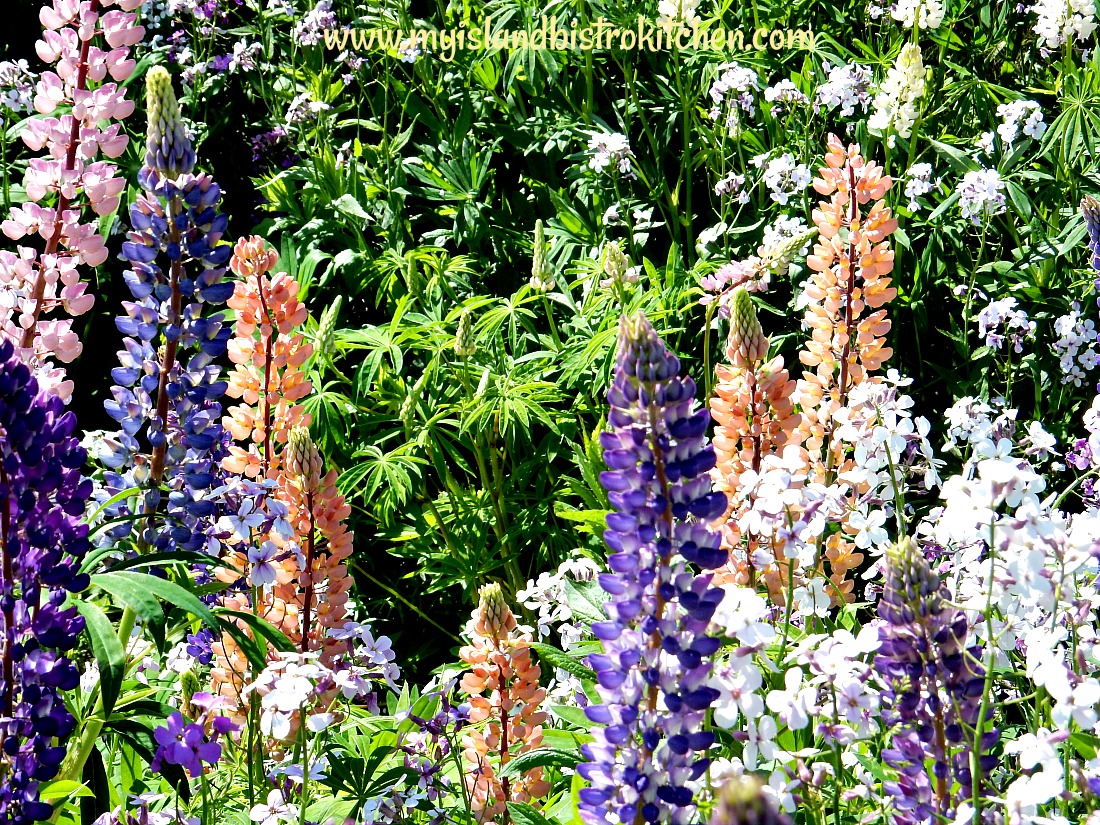
Lupines usher in summer on the Island as their blooms are one of the first signs of the season’s arrival. They don’t have a long season in which to bloom and they don’t last long but they range in shades of purples, pinks, white, salmon, yellow, white, and varigated.
Varigated Lupines
Somewhere around the 20-25th of June is typically when they are in full bloom and at their best.
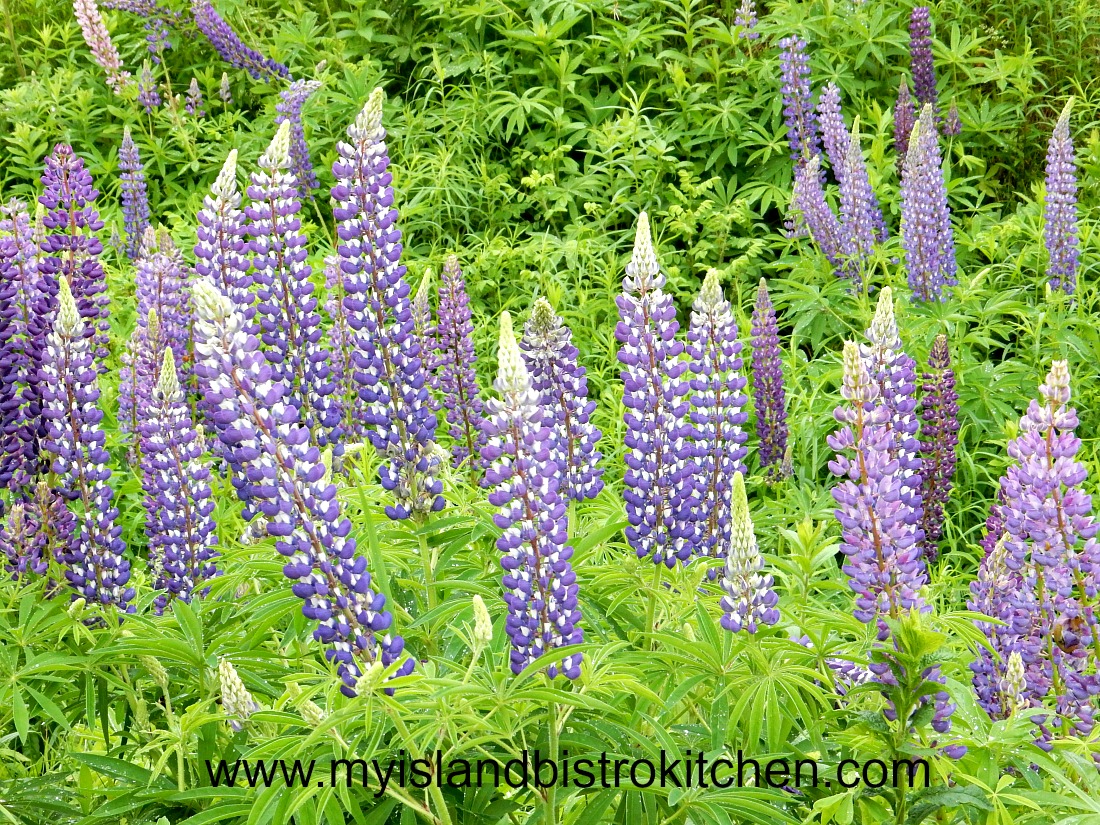
Lupines
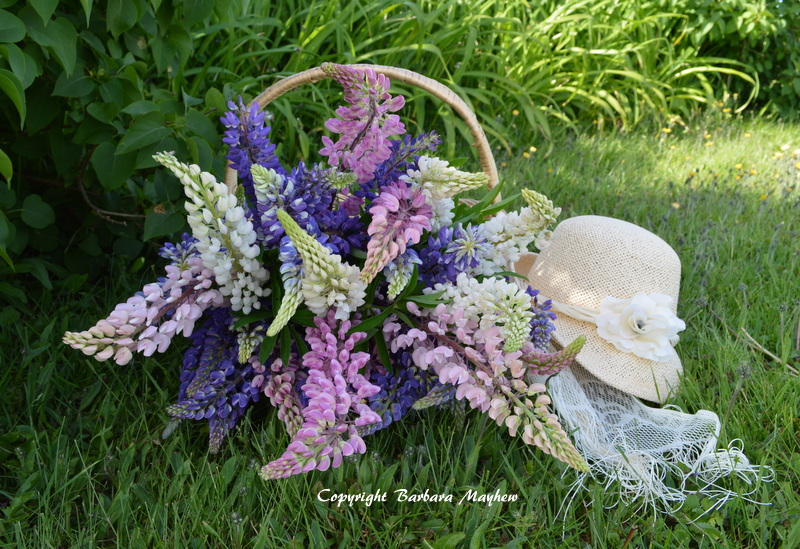
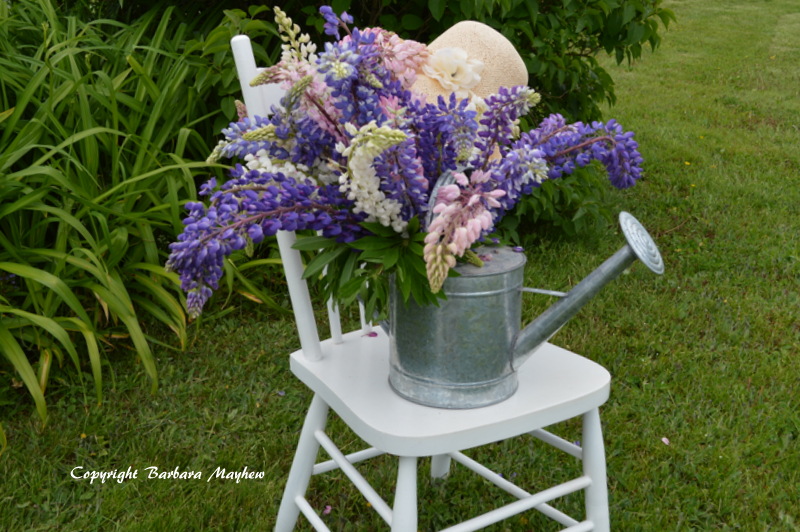
From the time I was a small child, I was in love with these tall elegant flowers. I loved to pick baskets of them and they are so easy to arrange.
Lupines
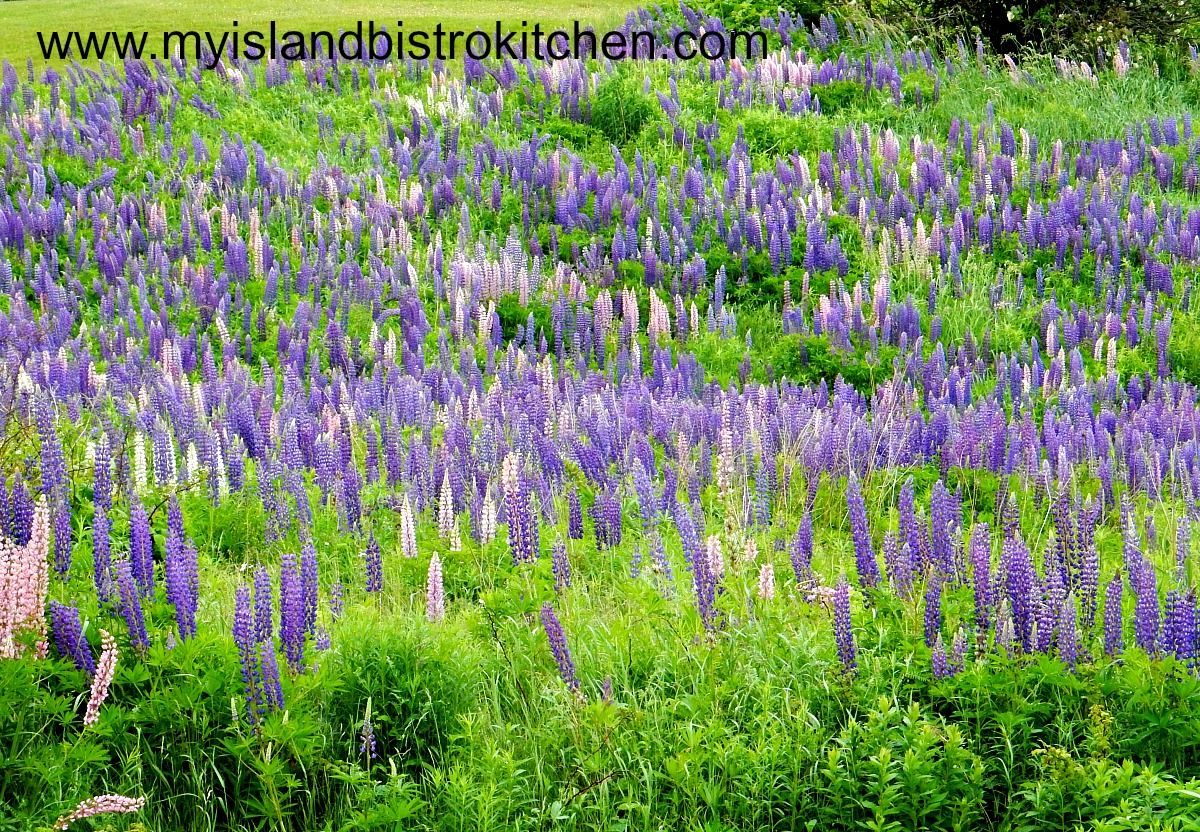
On the south side of the Island, the deep purple tends to be the predominant color although other shades as they have on the north side are starting to take hold. The field in the photo below is beside my mother’s house.
A Field of PEI Lupines
Many, many years ago, I picked huge amounts of seed pods in shades of pink, shelled them (clearly I did not have enough to do at the time!) and threw them out alongside the road to the cottage. They take a long time to take root but, every year, we have more and more bunches of them growing, albeit they are mostly in the purple shades. From time to time, I will buy a few packages of seeds in other colors and plant them where there are none currently growing.
Lupines
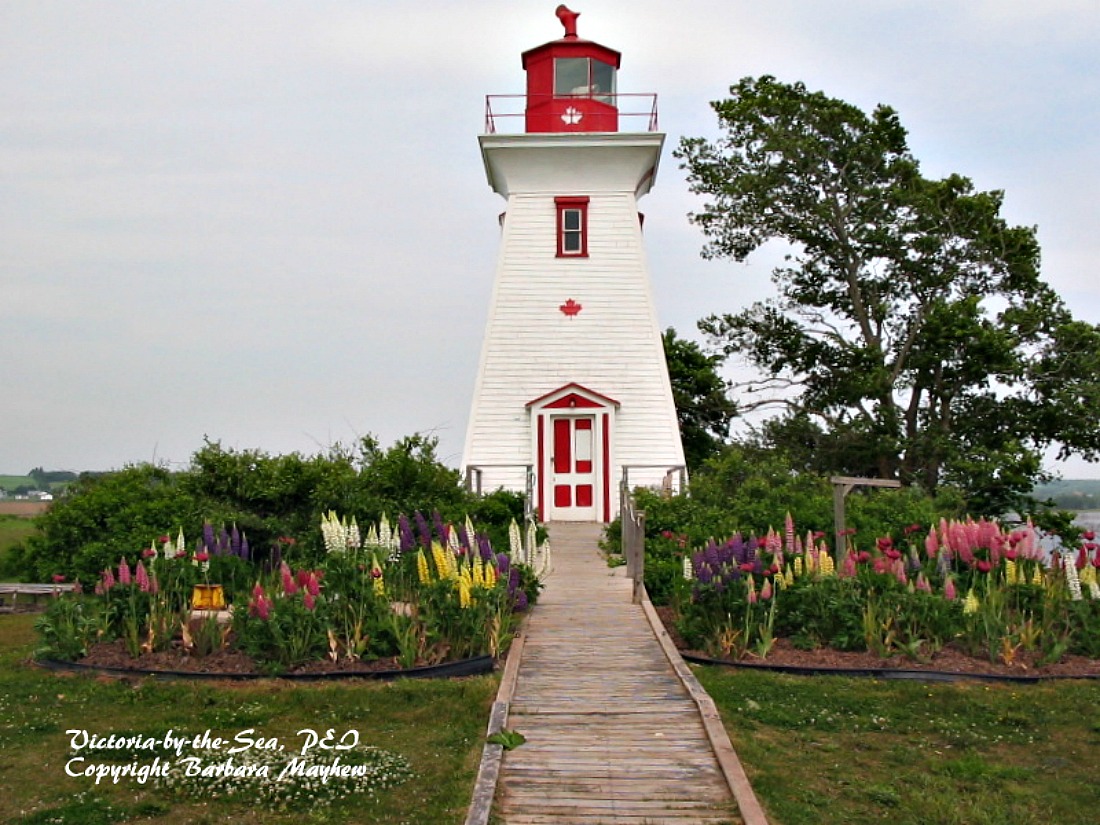
You might even find a lighthouse on PEI that is surrounded by lupines.
Victoria by the Sea Lighthouse
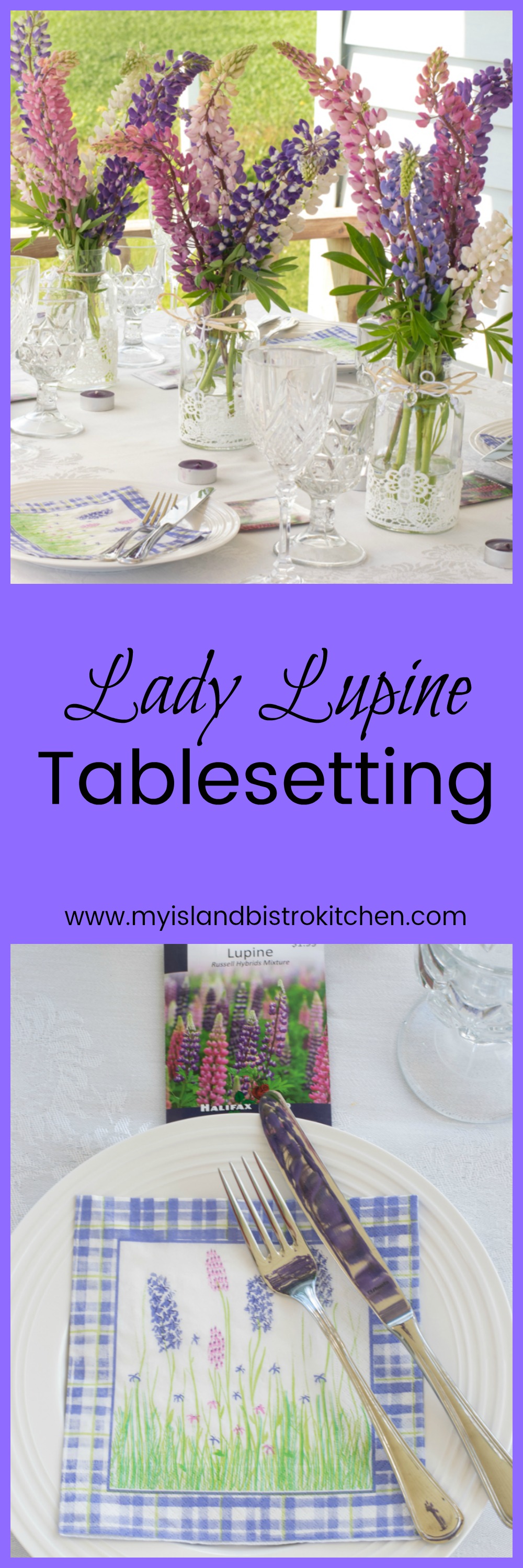
Today, I am featuring these glorious long-stemmed beauties in a tablesetting. I simply clipped some of these wildflowers along the roadside by my mother’s home for a pretty casual arrangement.
Lupine Tablesetting
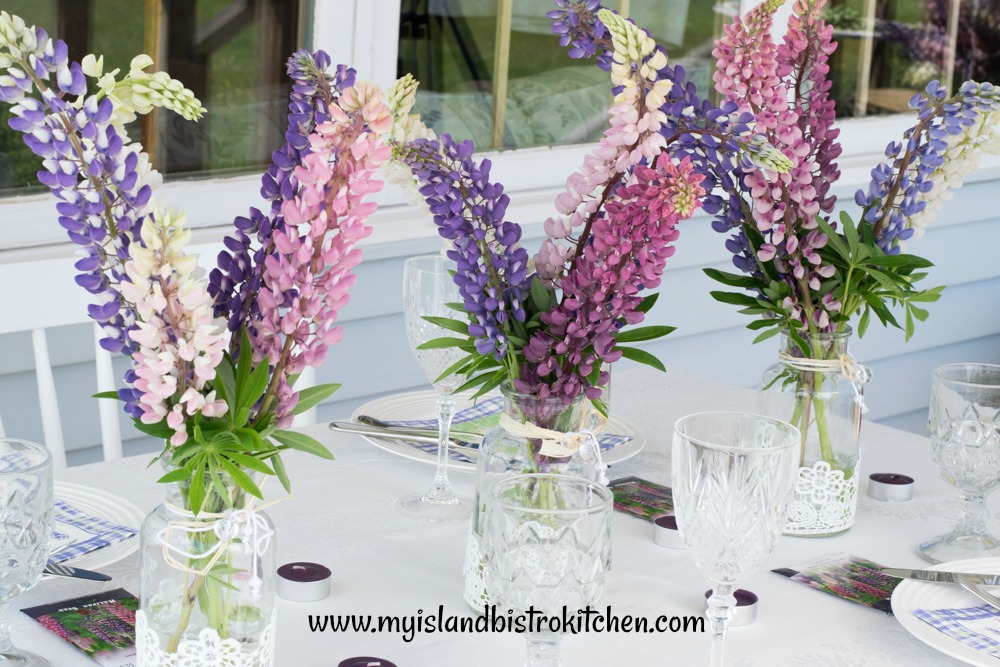
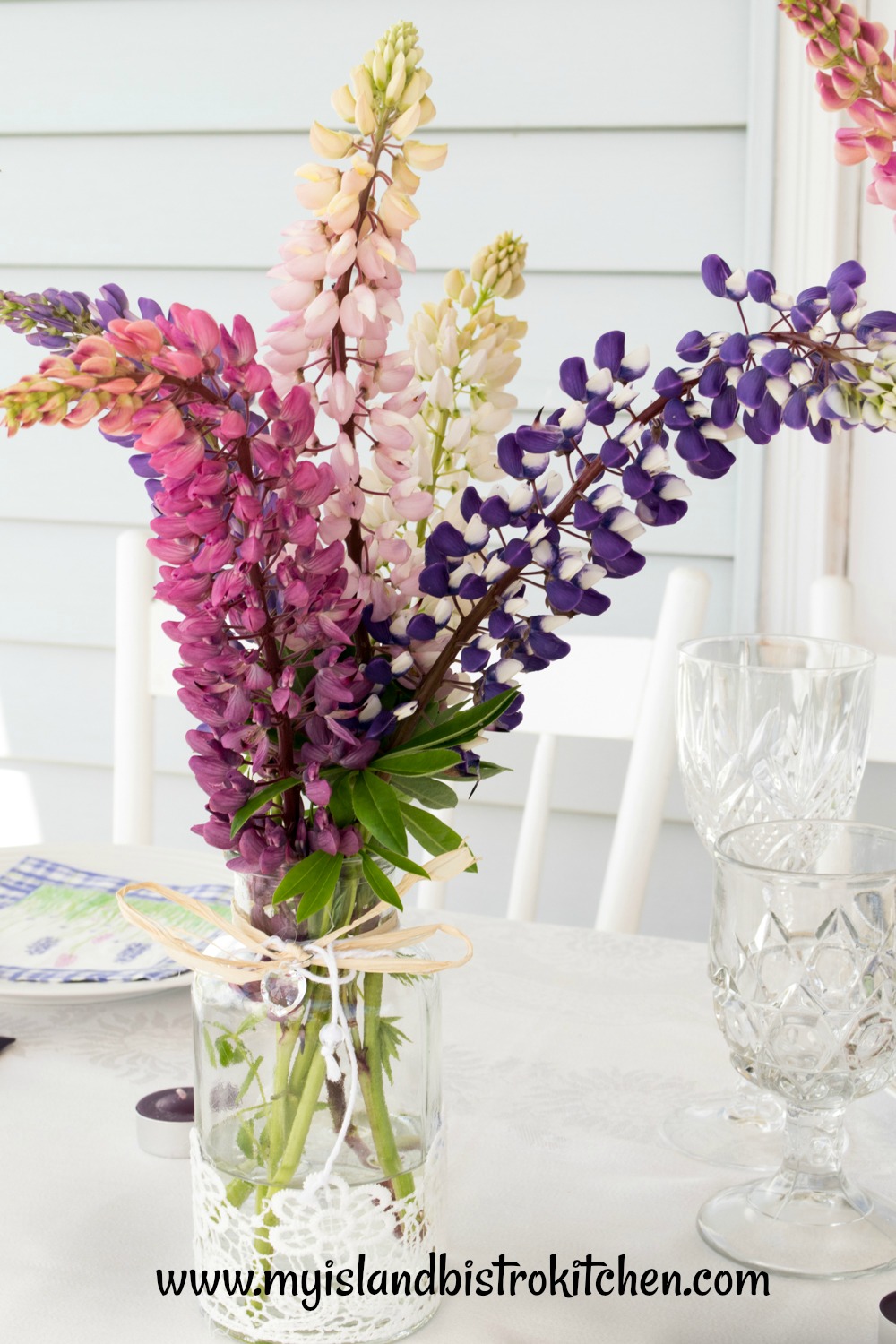
Summer tends to mean more casual dining and it’s fun to move the dinner party outside to the front verandah or porch or the back deck. Lupines are perfect for a casual al fresco dining event. I used small jars decorated with a bit of lace and rafia and, of course, used an odd number of jars for aesthetic purposes.
Lupine Bouquets
The great thing about having individual bouquets like these is that they can easily be re-positioned or clustered into different formats. Here, I have used them equally spaced in a single row along the center of the table. No need to fuss much with arranging these flowers – they are stately enough on their own that they seem to just almost automatically fall into pleasing designs and take on a personality of their own.
When I want color to pop on my table and attention to be drawn to the tablesetting’s focal point which, in this case, would be the colorful lupines, I start with a plain white tablecloth as a blank canvas. Colors always pop on white backgrounds and white provides a non-distracting background. I have several old white linen tablecloths that have been in the family for years and I make good use of them. I am noticing that many second-hand shops will often have some old vintage white linen tablecloths so they are available.
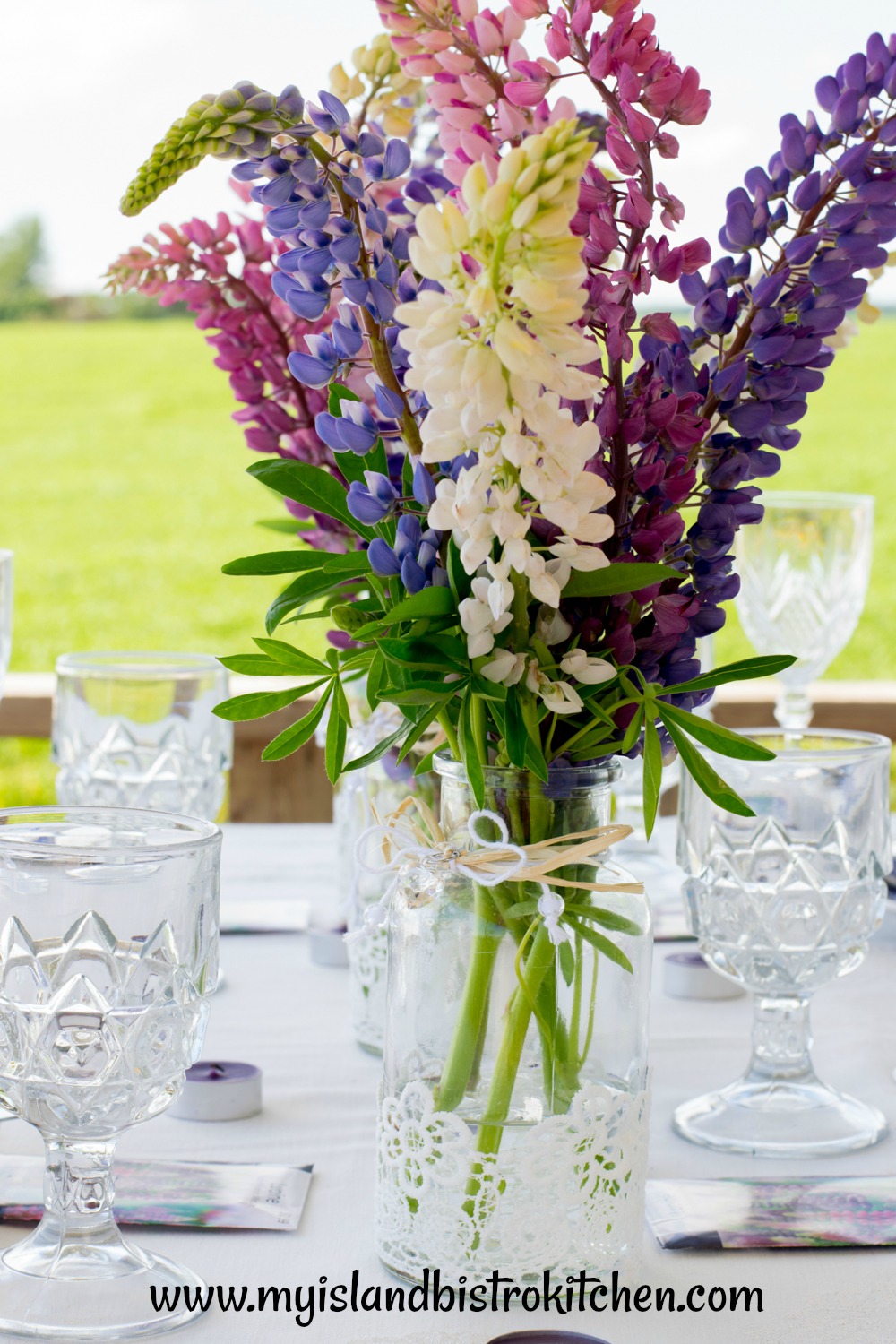
Lupine Bouquet
I can’t take credit for crafting these glass vases – they came from a local dollar store. I make great use of dollar stores and thrift/second hand shops for a lot of the props for my tablesettings. I interspersed little purple votives throughout the tablescape to coordinate with the color scheme.
Lupine Bouquet
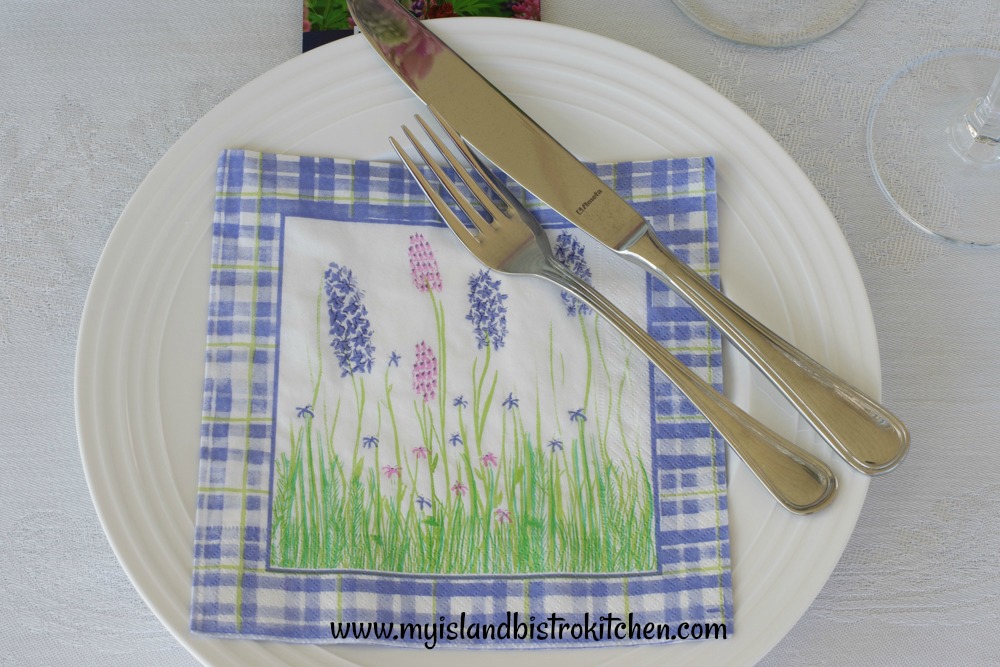
The lupine napkins shown in the photo below coordinate with the lupine theme. Knowing that, if I tried to form them into a napkin fold, I would lose the pretty lupine design, I simply laid one over each plate. That’s the beauty of using simple, crisp white plates – they form a great clean canvas for other decorative (and useful) elements of a tablesetting.
Lupine Napkins
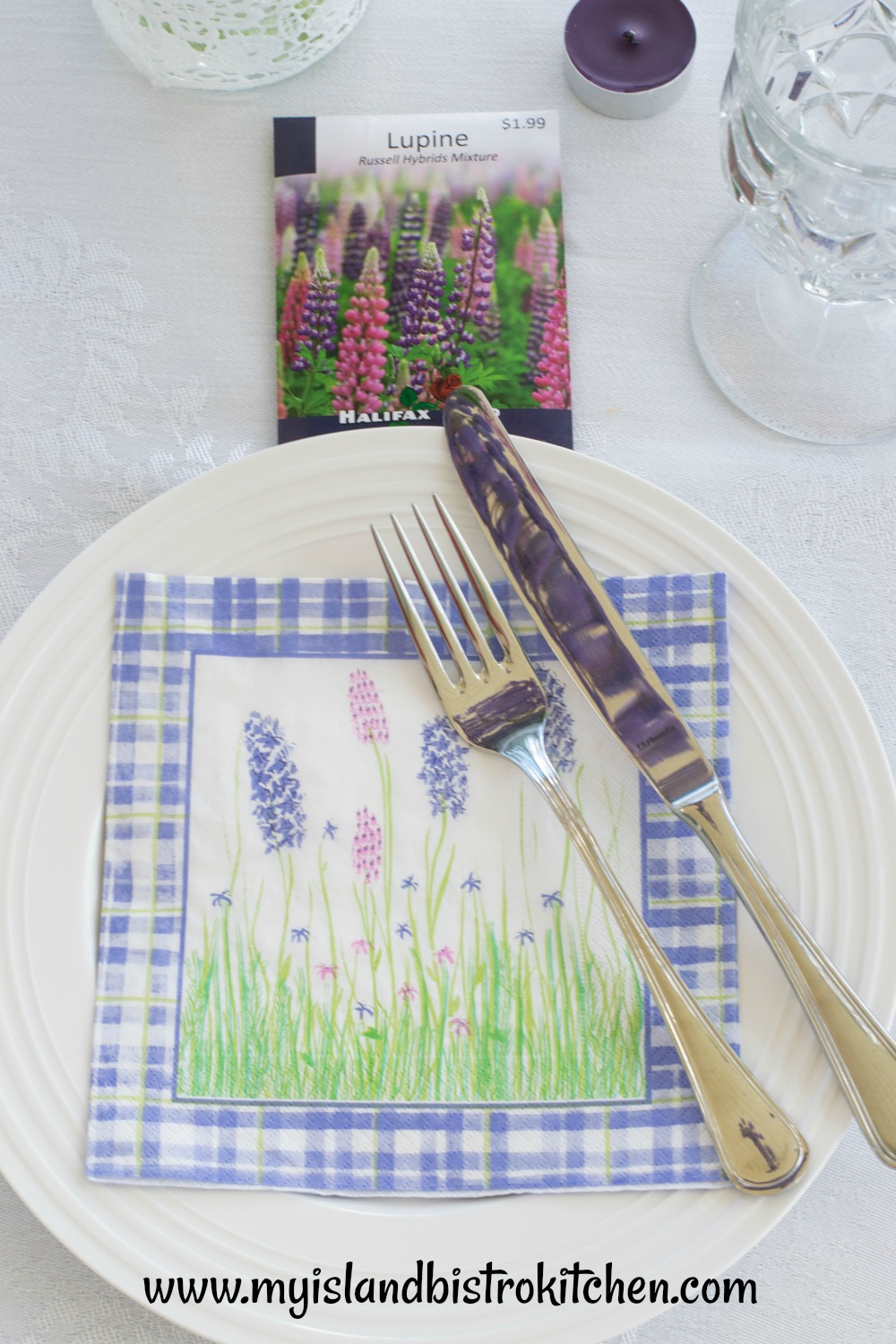
When dining outside, contending with the weather elements can always be a challenge and, on PEI and living near the water, summer breeze is a common factor. Using the cutlery to hold the napkin in place does double duty: It secures the napkin and also lends a casual look and feel to the placesetting. Al fresco dining is meant to be casual so go ahead and break the rules of formal tablesettings!
While lupines grow wild on the Island, many visitors like to take home packages of the lupine seeds to plant in their gardens. These colorful seed packages make a nice take-home gift for guests at an early summer dinner.
Lupine Placesetting
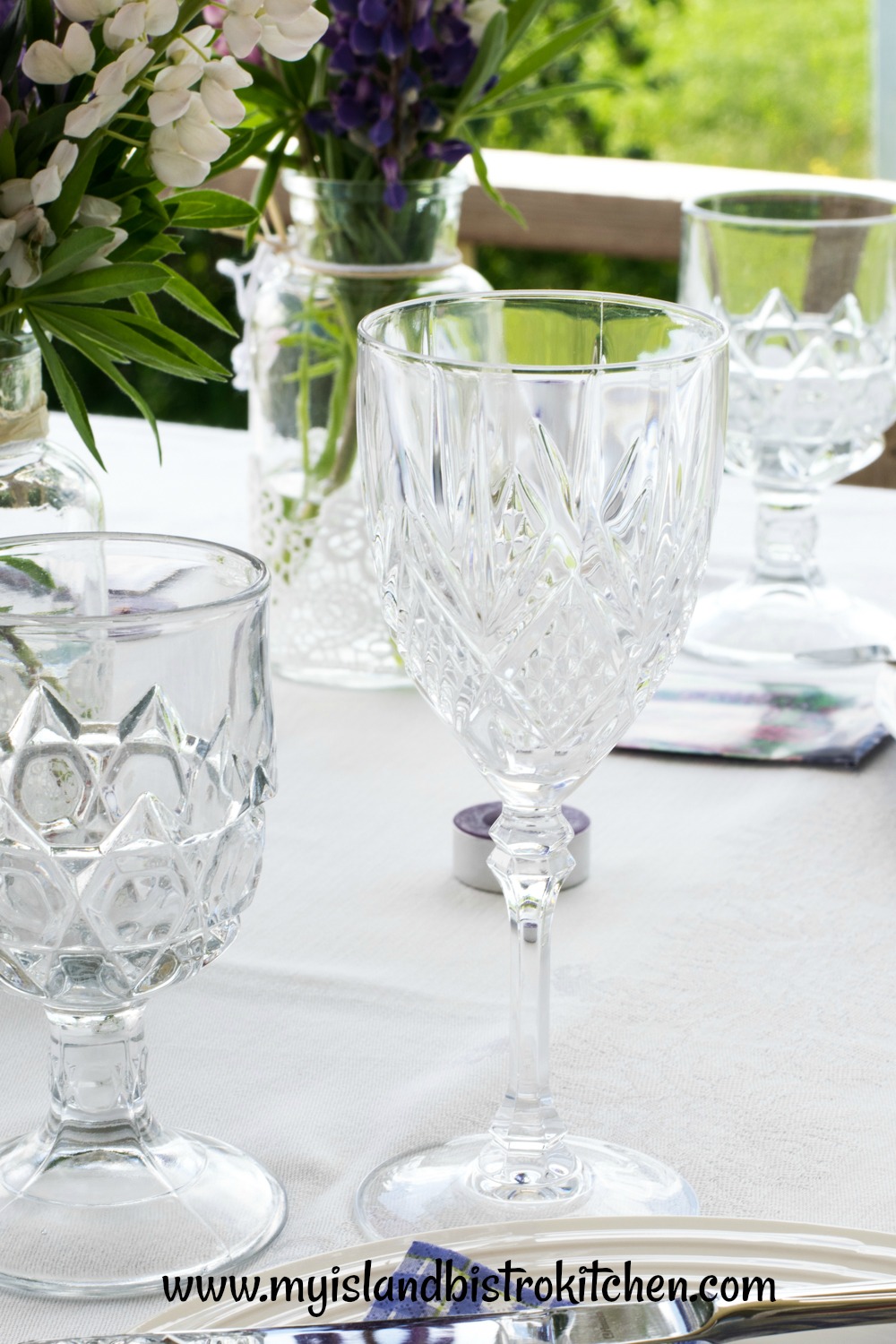
The sparkle and shine of glass that has lots of cuts adds to a table on a bright summer’s day. Glass will always add a light and airy look to a tablescape.
Glassware
I hope you have enjoyed a glimpse into my al fresco tablesetting that features the famous lupines of Prince Edward Island.
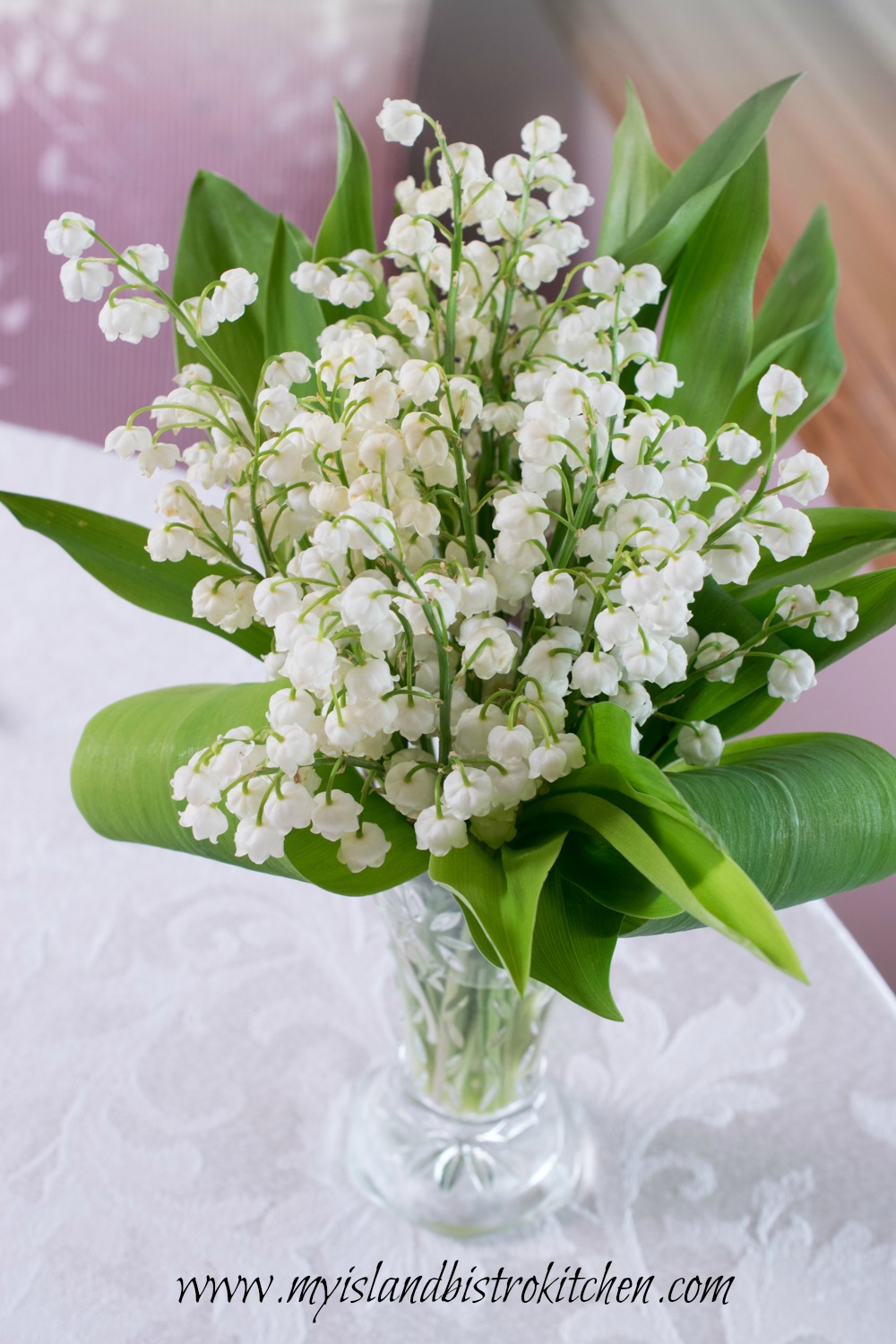
The sweet little Lily of the Valley, with its dainty bell-shaped flowers, has long been a favorite flower of mine. Many, many years ago, a very dear friend of mine had a cottage on the shores of Rosebank (now Stratford), PEI. Every spring, I’d make the trek to the cottage to pick a couple of bouquets of these fragrant flowers and there would be a posy on the dining room table and another on my desk at work. I was thrilled when the offer came for me to dig up a clump of the Lily of the Valley roots from the prolific crop by the cottage front step. I transplanted them at our family home where they still bloom today. Three builds later and transplants of the lilies have taken place at each property, all derived from the same clump of Lilies that came from the Rosebank cottage. When I see the Lilies bloom each spring, I am reminded of sweet memories of a quaint little cottage long ago and its owner. Continue reading Lily of the Valley Afternoon Tea→
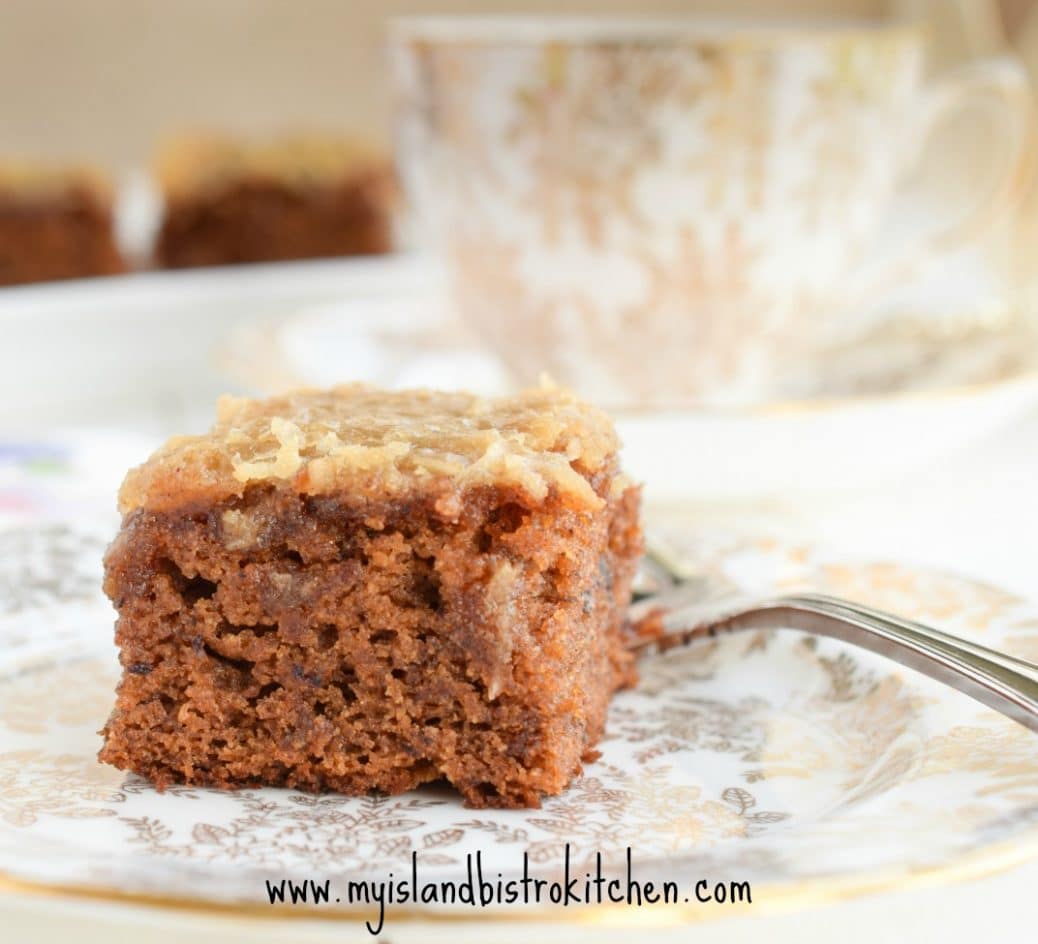
In an earlier posting, I shared my recipe for the regular gluten version of Queen Elizabeth Cake to coincide with Queen Elizabeth II’s actual birthday on April 21st. Today, I have a special treat for my food blog followers who must follow a gluten-free diet! I have adapted my regular version of this cake to make it gluten-free. It has passed my testing standards so I am pleased to share the recipe for this wonderfully moist and tasty Gluten-free Queen Elizabeth Cake that is made with very simple, basic ingredients. In fact, I’d even go so far as to suggest that it would be quite difficult to be able to tell that this version is gluten-free and, in my view, it certainly rivals its gluten version cousin in taste, texture, and overall quality. Continue reading Gluten-Free Queen Elizabeth Cake→
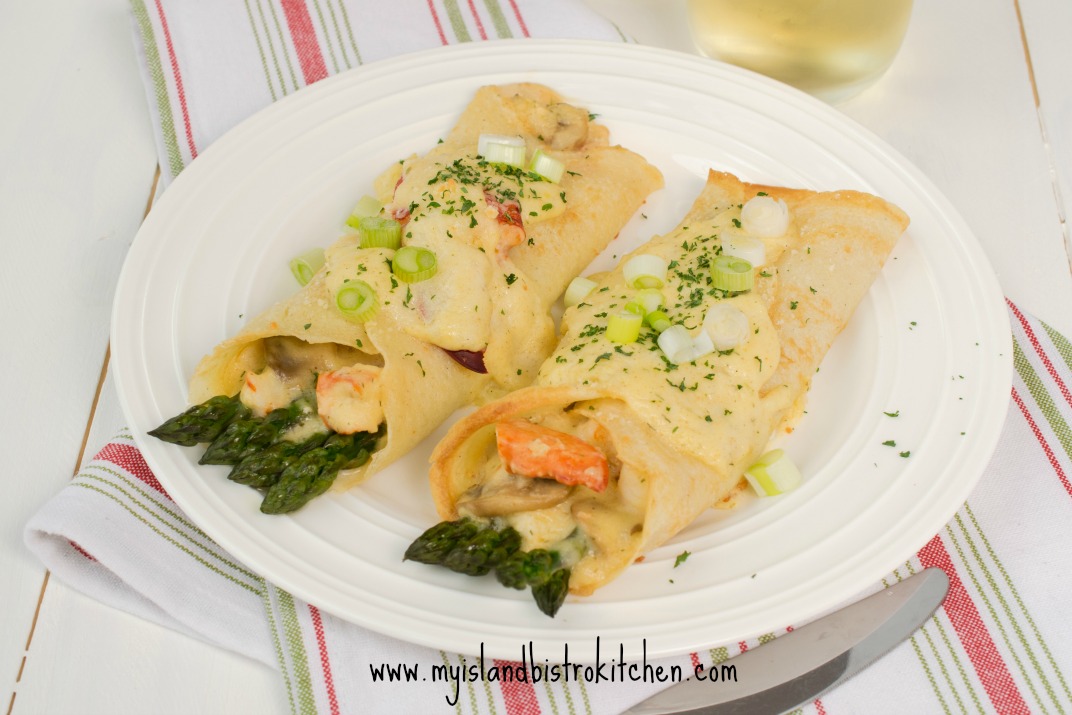
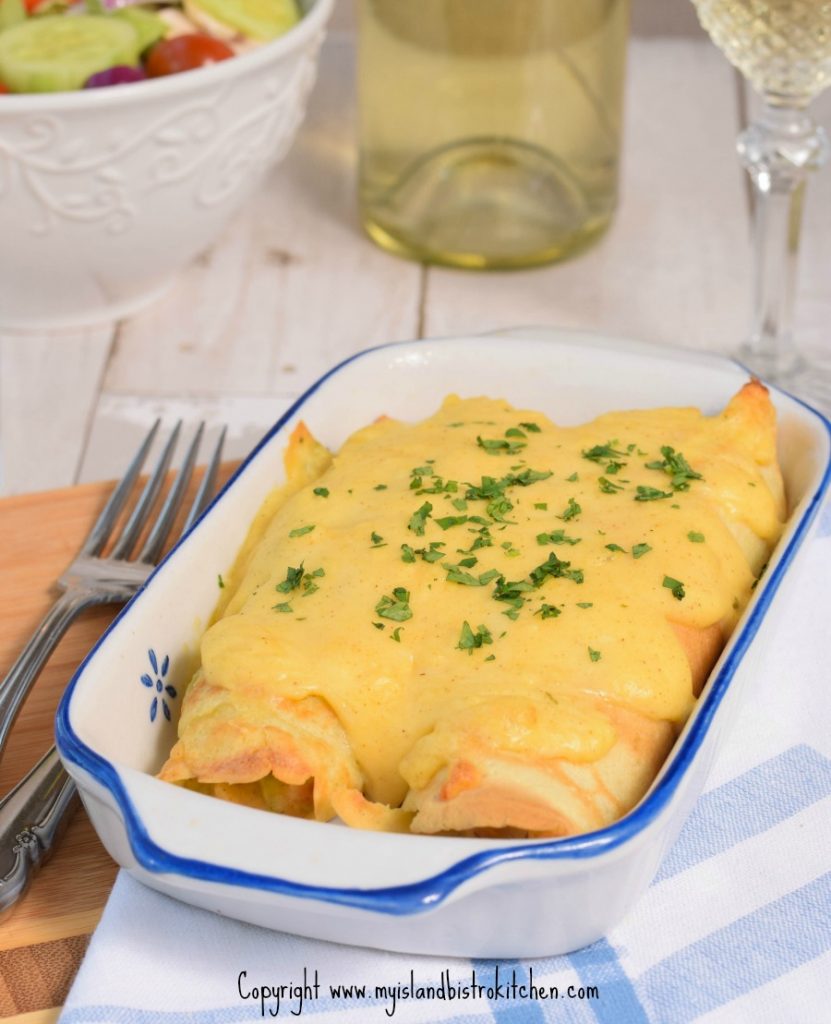
Springtime in Prince Edward Island on Canada’s east coast means it’s lobster season so it’s a great time to make these delectable lobster and asparagus crepes that combine two of the season’s special treats! Continue reading Lobster and Asparagus Crepes→
Setting Day on Prince Edward Island can only mean one thing…..it heralds the opening of the spring lobster fishery and a fresh feed of PEI lobster from the cold waters that surround our Atlantic Canada region will follow soon after! Continue reading Setting Day on Prince Edward Island Can Only Mean One Thing→
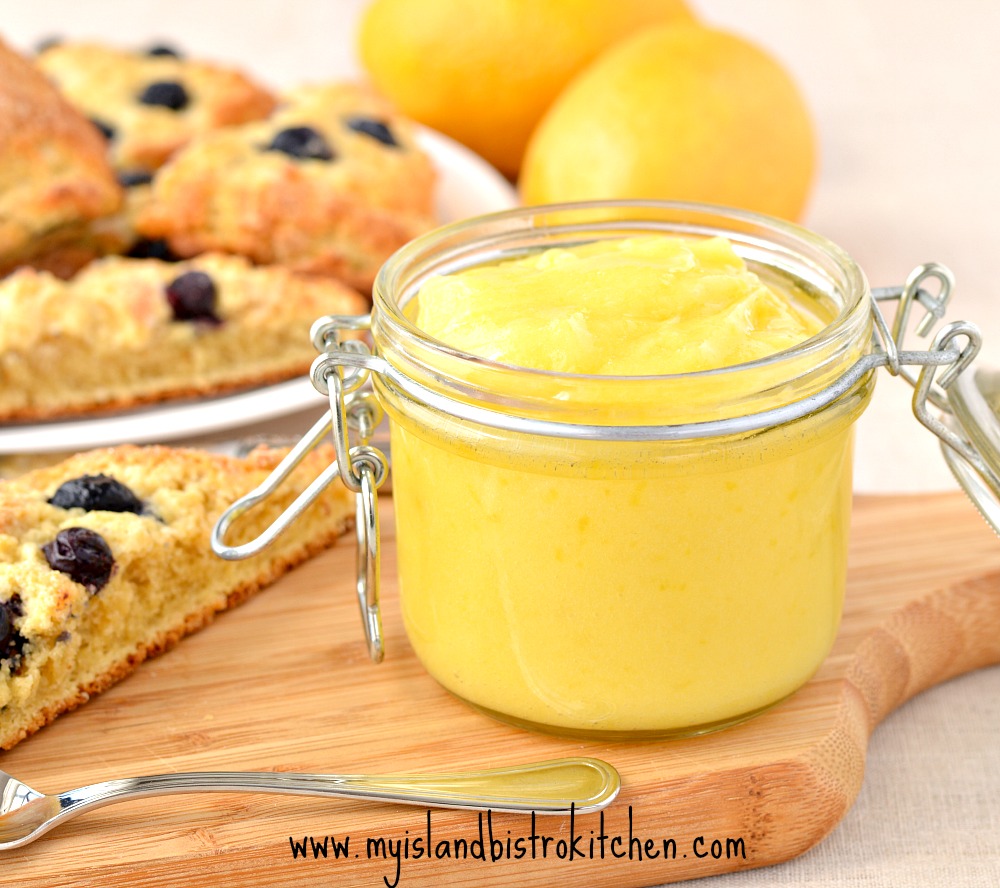
I adore lemon curd – luscious lemon curd – that wonderful balance of lemon’s acidity and tartness with the sweetness of sugar. I love it so much that it’s a staple in my refrigerator. Continue reading Luscious Lemon Curd→
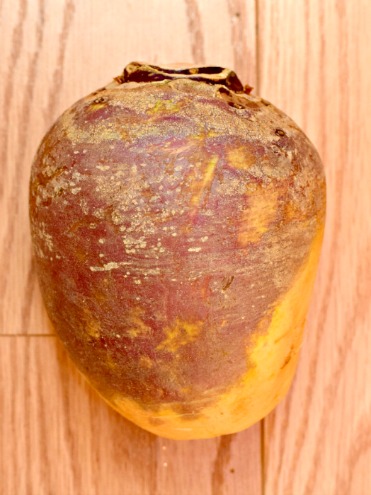
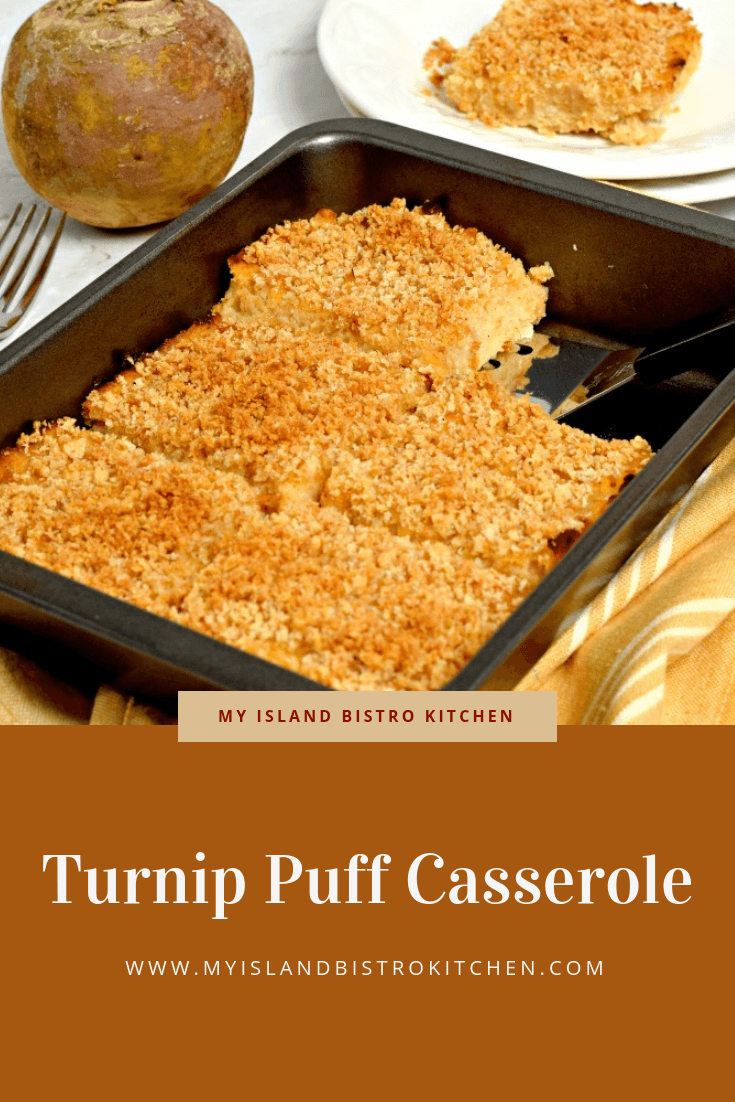
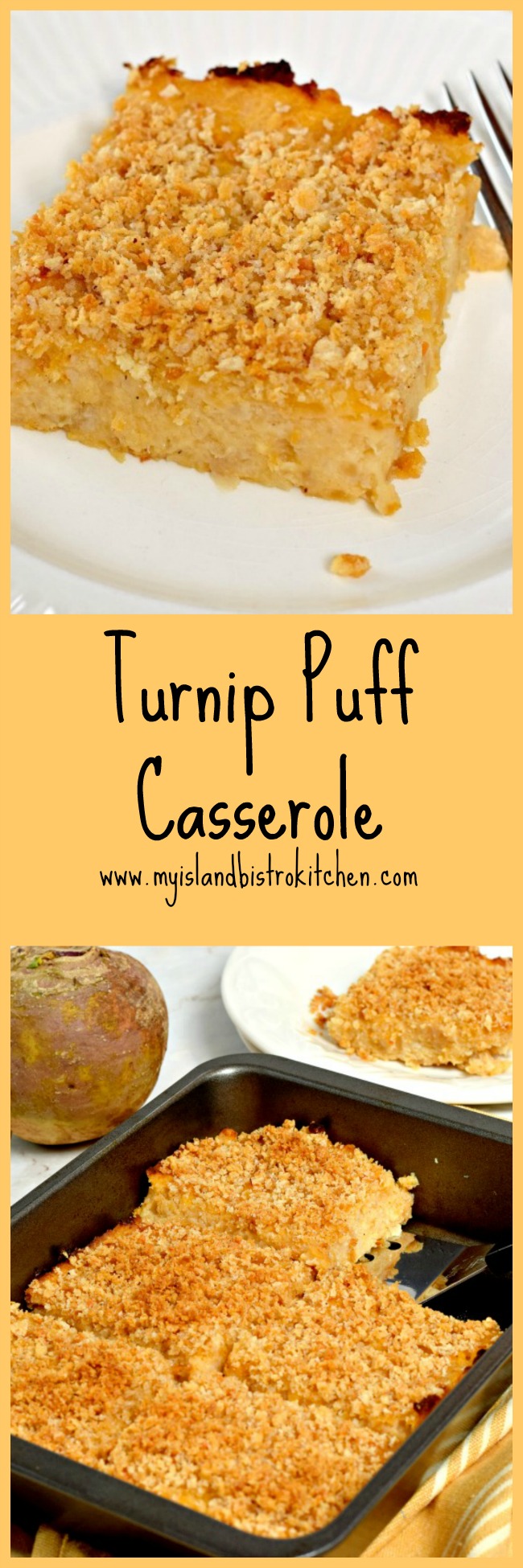
This turnip puff casserole is really a rutabaga puff casserole because, in fact, it is actually made with rutabaga, not turnip. However, all my life, I have known the root vegetable in the photo below as a “turnip”. Besides, I think turnip puff casserole sounds better than rutabaga puff casserole!
Rutabaga
Now, even though turnips and rutabagas are kissing cousins in the mustard plant family, there are some key differences between the two.
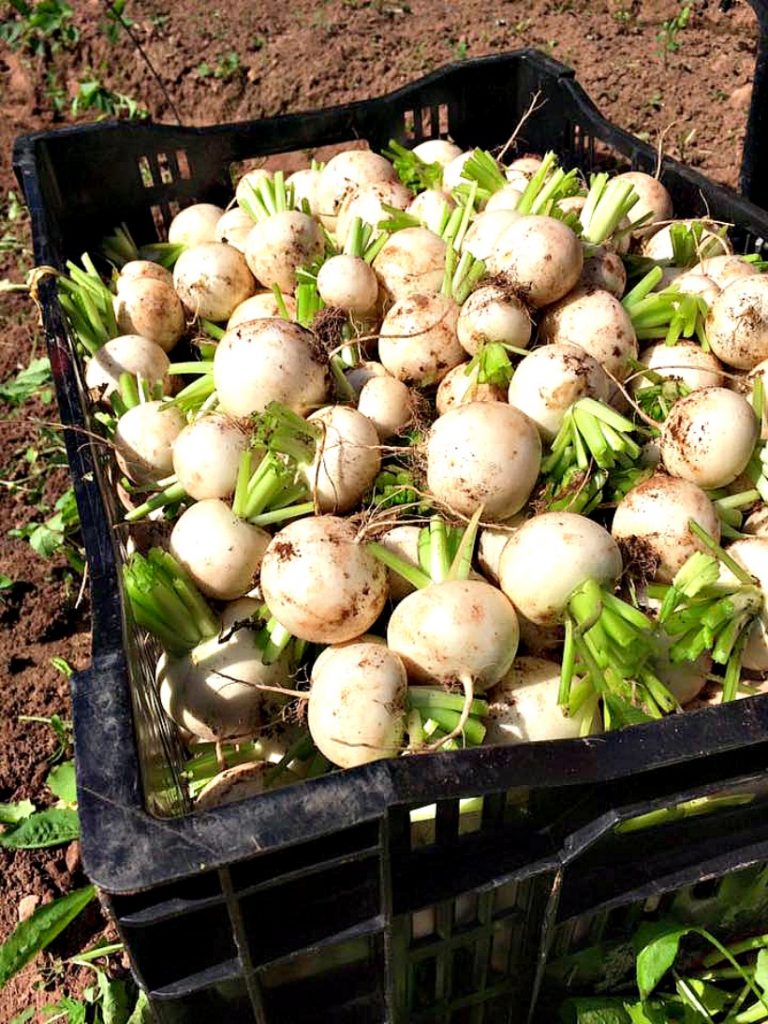
Turnips (Photo Courtesy Just a Little Farm, Bonshaw, PEI)
Turnips (shown in the photo above) are much smaller than rutabagas. They are usually anywhere from 2″ – 4″ in diameter compared to the much larger rutabagas that are typically 6″ or even more in diameter.
Rutabagas are much sweeter and turnips more bitter. Rutabagas have yellow flesh whereas turnips have white flesh. Rutabagas will have thicker outer skins than turnips and their exterior color will have a purple top and yellowy-beige bottom whereas turnips will have a white or white/purple outer skin. Rutabagas require much longer to grow and are more tolerant to cold than are turnips which is why you will often see turnips advertised as “summer” turnips. Because of their tolerance for the cold, rutabagas are often referred to as a “cold crop” and my grandparents always claimed the rutabagas (that they referred to as turnips) were no good until there had been a good frost before they were harvested. In fact, my grandmother always said the earlier they were harvested in the fall, the more bitter they were which is why, in the fall, she always added a small amount of sugar to the cooked rutabaga as she mashed it.
We often serve the golden-colored mashed rutabaga as a side vegetable to many meals but, sometimes (especially for special occasions), it’s nice to kick this side dish up a notch which is what I do when I make this turnip puff casserole. A rutabaga weighing approximately 1 lb, 7 oz will be required for this recipe. To the cooked rutabaga that is mashed really well to the texture of purée, I add some applesauce and brown sugar for sweetener, some onion to make it just a little bit savory, along with some cheese to boost the flavor. A hint of nutmeg and garlic provide additional flavor. An egg is added to bind the ingredients together and baking powder is added for leavening – hence the “puff” part of this side dish.
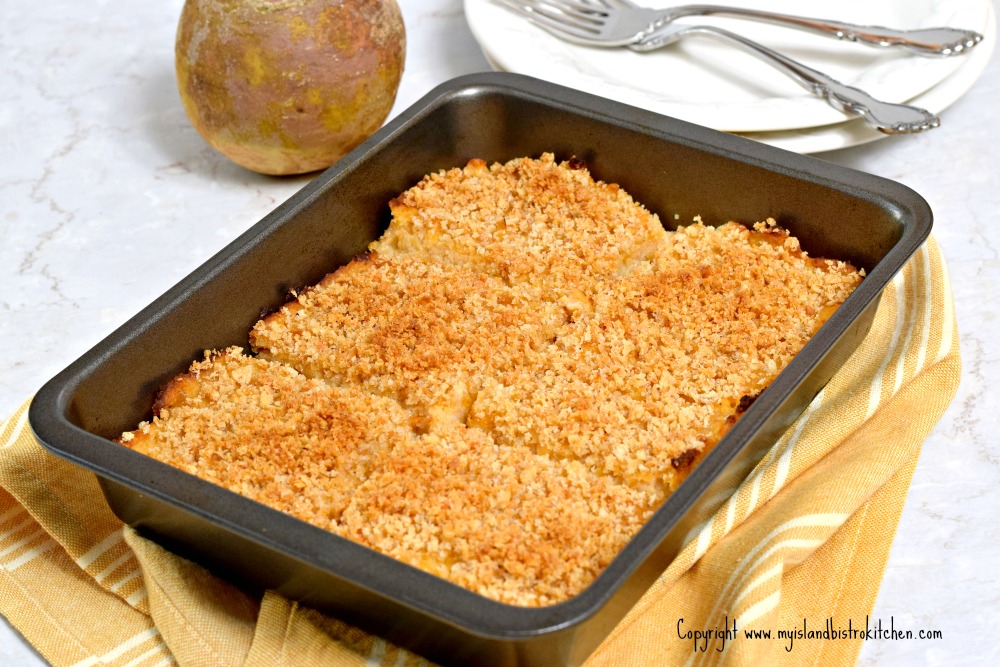
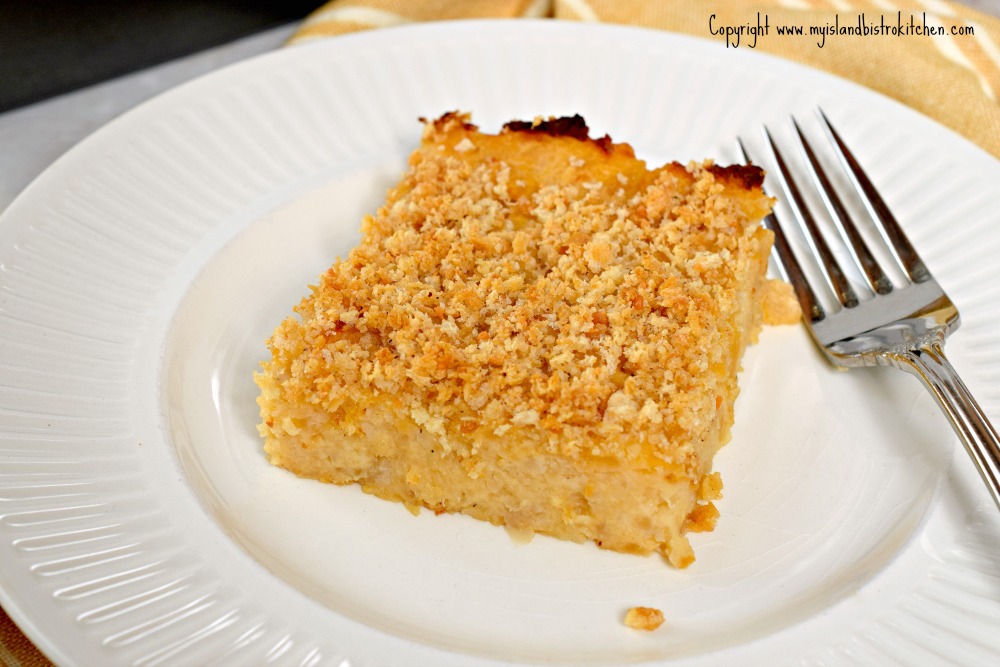
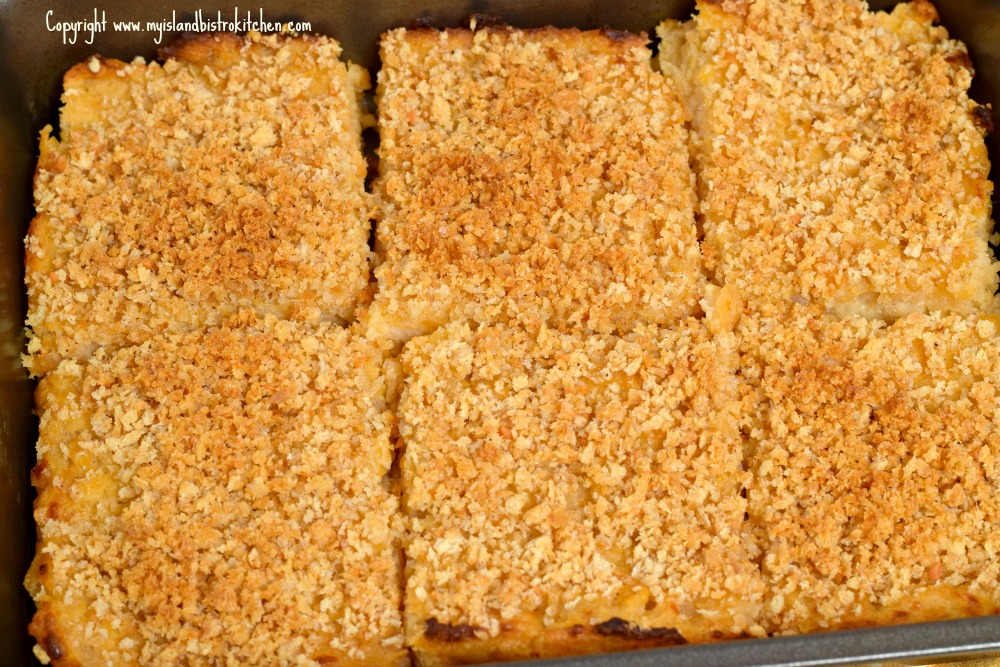
Turnip Puff Casserole
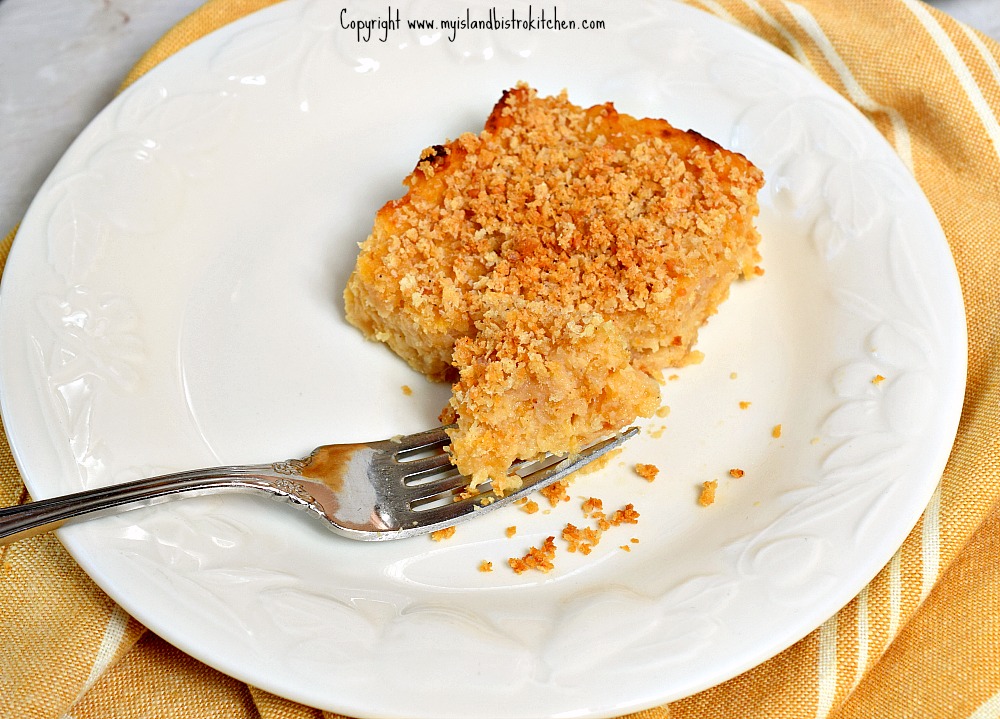
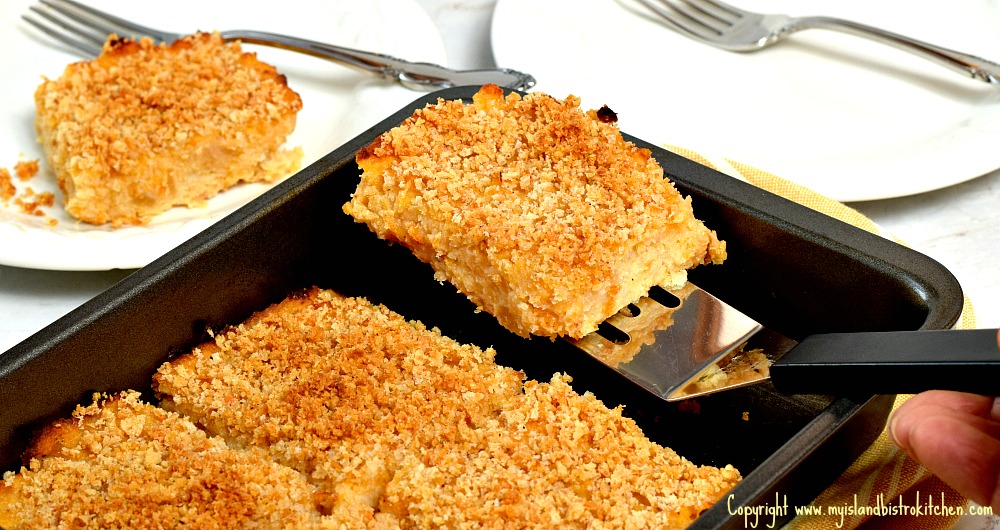
Now, I call this a “casserole” and, for photo demonstration purposes, have photographed a piece of it as a stand-alone on a plate. However, this is not a casserole I would make as a main meal entrée. Rather, it is a vegetable side dish so, instead of serving a scoop of mashed rutabaga with dinner, I cut out pieces of this casserole and serve it alongside other vegetables such as potatoes, carrots, and peas.
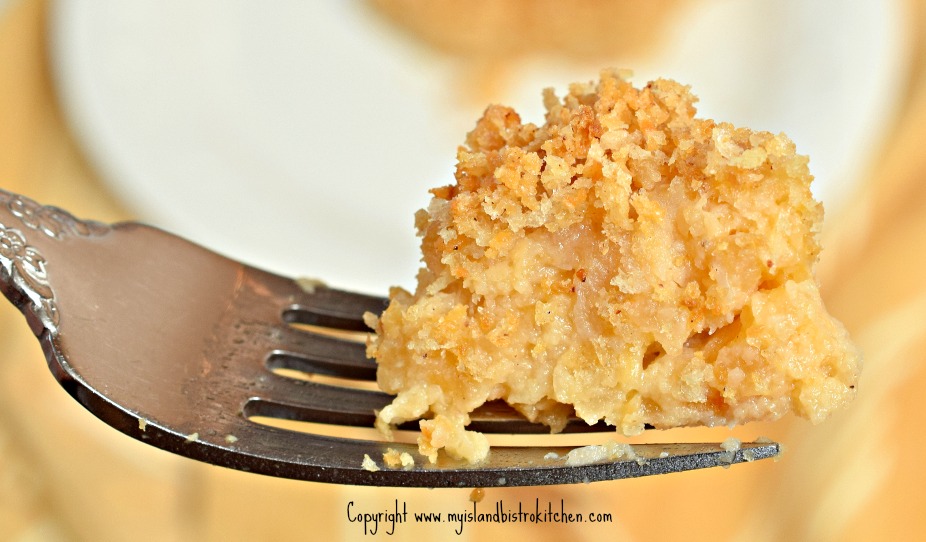
Turnip Puff Casserole
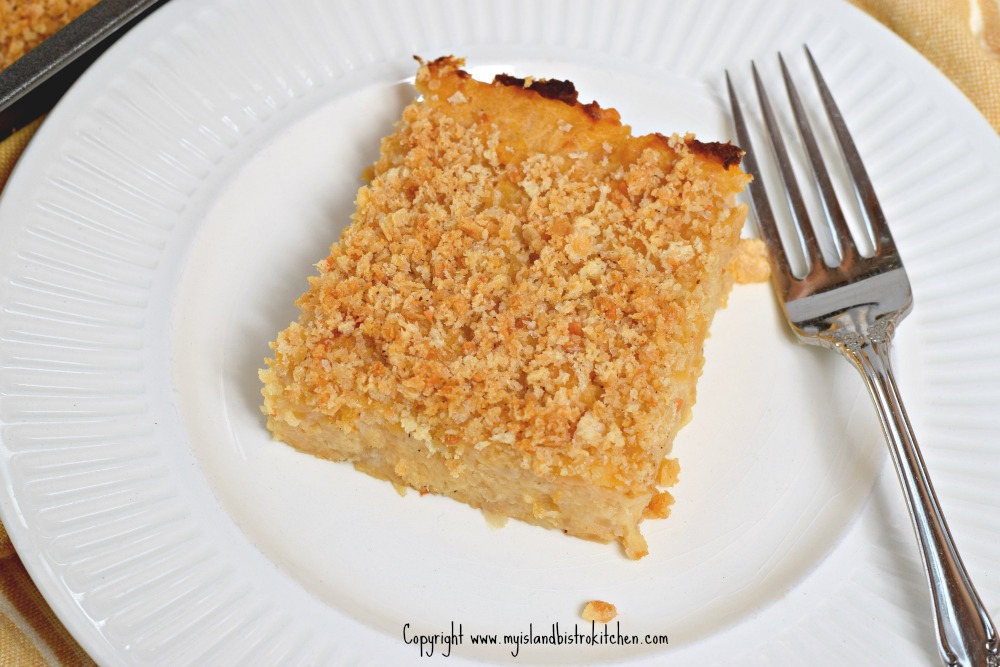
A casserole or baking pan with about a 1.5-quart capacity (or slightly less) is required for this casserole. I find the 6″x8″ baking pan that I have for my toaster oven works perfectly. I would not use a deep casserole dish for this recipe as it would not cut out well for serving purposes so use a shallow baking pan. This recipe will provide six standard-sized serving portions, the size shown in the photographs. If you are serving several other side vegetables for a dinner, or serving this buffet-style, smaller pieces may suffice…..but it’s tasty so don’t be surprised if there are requests for second helpings!
Turnip Puff Casserole
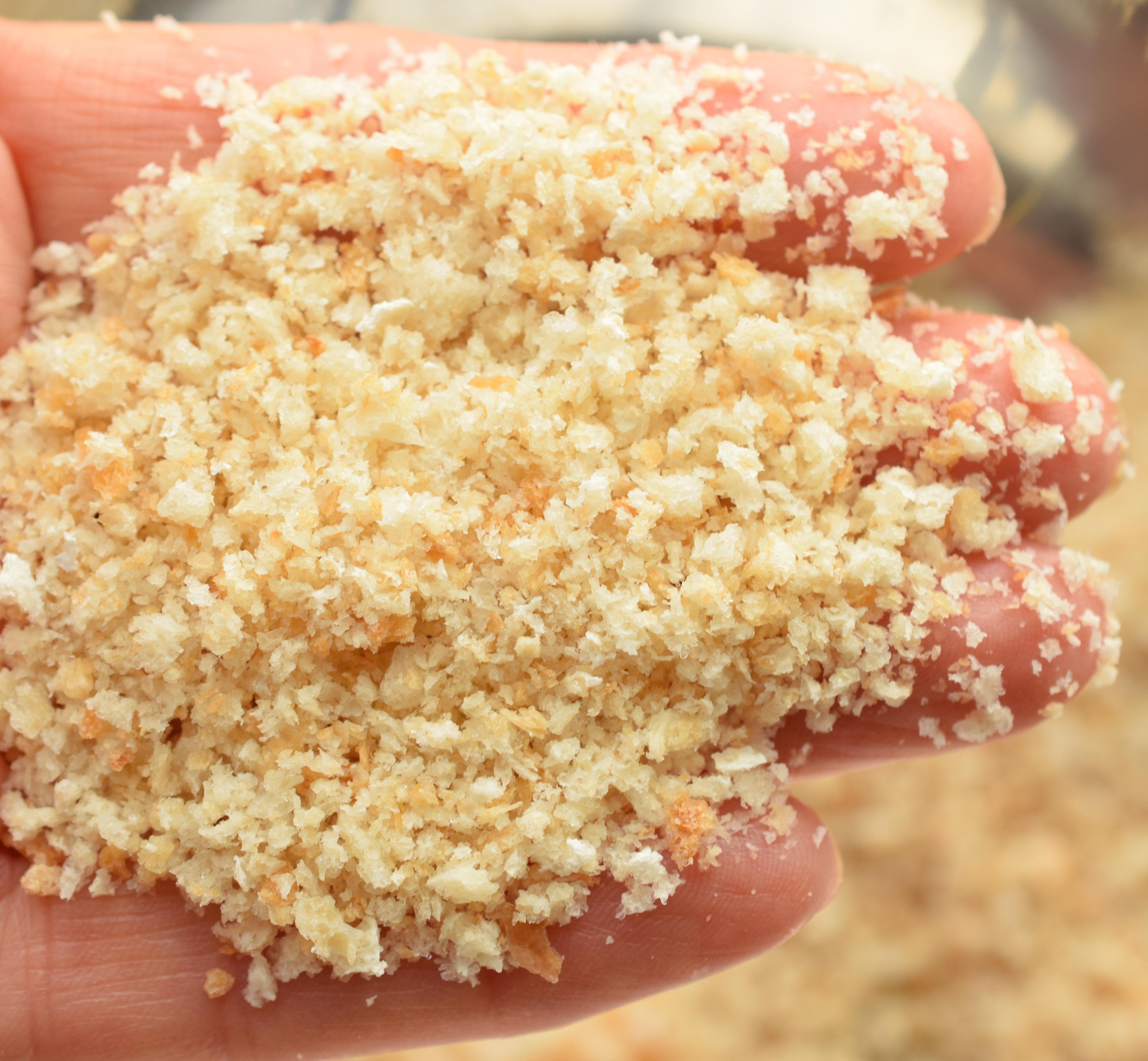
For the breadcrumb topping, I use crumbs that are not super fine as are found in commercial boxes or bags of crumbs. These are ones I crumb (in the food processor) from bread crusts and they are the consistency as shown in the photo below – not super-fine but not overly chunky.
Bread Crumbs
Bake this casserole in the oven for 30-35 minutes, just until the breadcrumb topping is lightly browned. Let stand for about 10 minutes before cutting into squares and serving.
Turnip Puff Casserole
This recipe is easily adapted to be gluten-free — simply replace the breadcrumbs called for in the recipe with those that are gluten-free and use gluten-free all purpose flour.
Turnip Puff Casserole
While this dish may be served at any time of the year, it is especially good at Easter, Thanksgiving, and Christmas with roast poultry, beef, or pork. This casserole may be made several hours in advance and refrigerated until needed.
½ cup fine bread crumbs
2 tsp finely grated Parmesan cheese
Pinch nutmeg
1½ tbsp melted butter
Method:
Preheat oven to 350°F. Grease a 6”x8” baking pan.
In medium-sized saucepan, combine the mashed rutabaga, applesauce, grated onion, butter, and egg. Mix well.
In small bowl, combine the brown sugar, nutmeg, garlic salt, baking powder, flour, Parmesan and cheddar cheese, and salt and pepper, to taste. Stir well into the rutabaga mixture. Transfer to prepared baking pan.
In small bowl, combine the bread crumbs, Parmesan cheese, and nutmeg with the melted butter. Sprinkle crumbs over rutabaga mixture. Bake, uncovered, for approximately 30-35 minutes, until lightly browned.
Serve hot as a side dish to any hot meal in which turnip/rutabaga would typically be served.
Yield: Apx. 6 servings
If you have made this recipe and enjoyed it and/or wish to share it with your friends and family, please do so on social media but be sure to share the direct link to this posting from my website.
Connect with My Island Bistro Kitchen on Social Media
Follow “the Bistro” on Pinterest at https://www.pinterest.ca/peibistro/ and pin the Pinterest-ready photo found at the end of this post to your favorite Pinterest boards.
1 tbsp all-purpose flour (or gluten-free all purpose flour)
2 tbsp finely grated Parmesan cheese
2 tbsp finely grated cheddar cheese
Salt and Pepper, to taste
½ cup fine bread crumbs
2 tsp finely grated Parmesan cheese
Pinch nutmeg
1½ tbsp melted butter
Instructions
Preheat oven to 350°F. Grease a 6”x8” baking pan.
In medium-sized saucepan, combine the mashed rutabaga, applesauce, grated onion, butter, and egg. Mix well.
In small bowl, combine the brown sugar, nutmeg, garlic salt, baking powder, flour, Parmesan and cheddar cheese, and salt and pepper, to taste. Stir well into the rutabaga mixture. Transfer to prepared baking pan.
In small bowl, combine the bread crumbs, Parmesan cheese, and nutmeg with the melted butter. Sprinkle crumbs over rutabaga mixture. Bake, uncovered, for approximately 30-35 minutes, until lightly browned. Serve hot as a side dish to any hot meal in which turnip/rutabaga would typically be served.
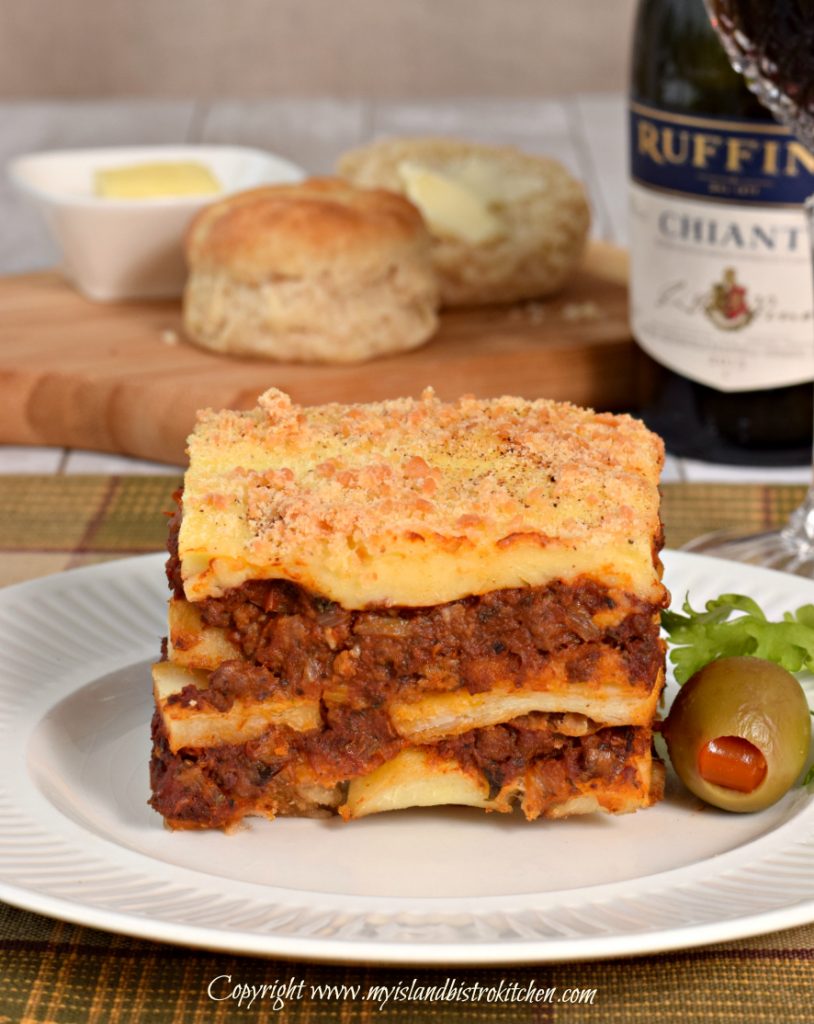
I have been invited by www.thinkbeef.ca to participate, as one of ten food bloggers from across Canada, in the Rethink Beef Global Recipe Swap Campaign to promote recipes using ground beef. Each blogger was asked to develop a recipe (using ground beef) that is inspired by his or her cultural background or a culinary adventure experienced. Each blogger was paired with another and the two exchanged their own recipe for the other to try. This posting involves showcasing my own recipe as well as a recipe from my swap partner, Jason Lee, who writes the blog, “Shut Up and Eat”.
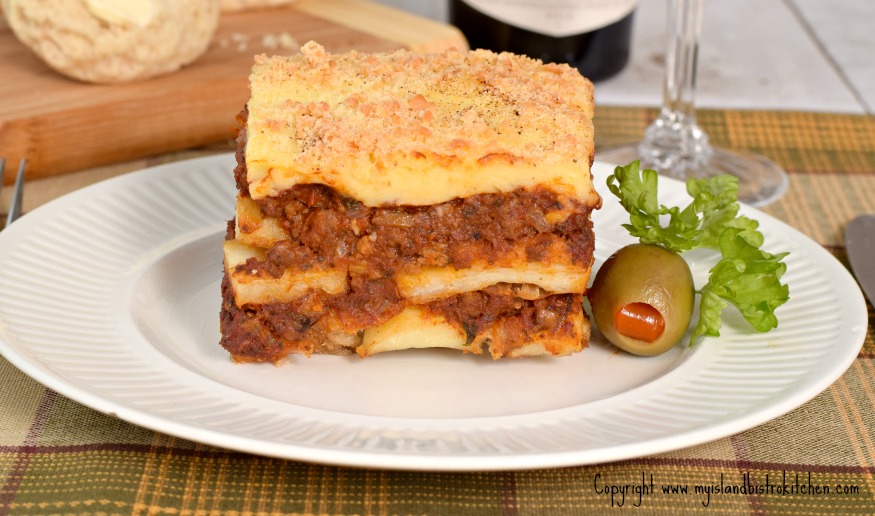
Moussaka
I frequently use ground beef in recipes and am never at a loss to come up with meal ideas to use this versatile meat. The recipe I have chosen is Moussaka. This is a one-dish meal typically characterized by ground meat, eggplant, and tomato sauce with a white sauce on top. So, I will begin with a discussion on why I chose Moussaka to feature ground beef, followed by some hints and tips on making this Greek-inspired dish, and will end with my experience cooking my recipe swap partner’s Beef and Coriander Dumplings inspired by his Chinese heritage. This posting has two recipes from two different cultures but both use ground beef as the main ingredient. Continue reading Rethink Beef Global Recipe Swap Campaign: Moussaka→
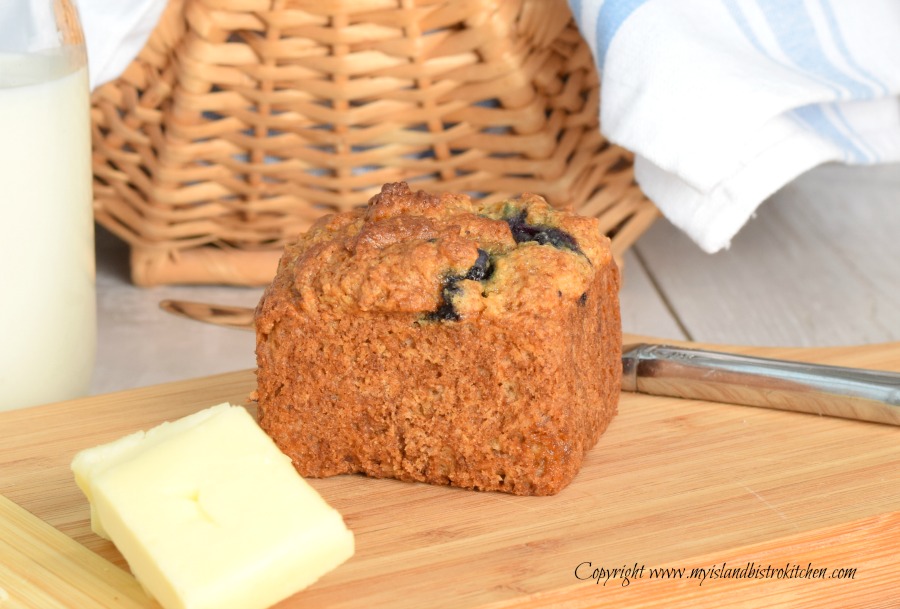
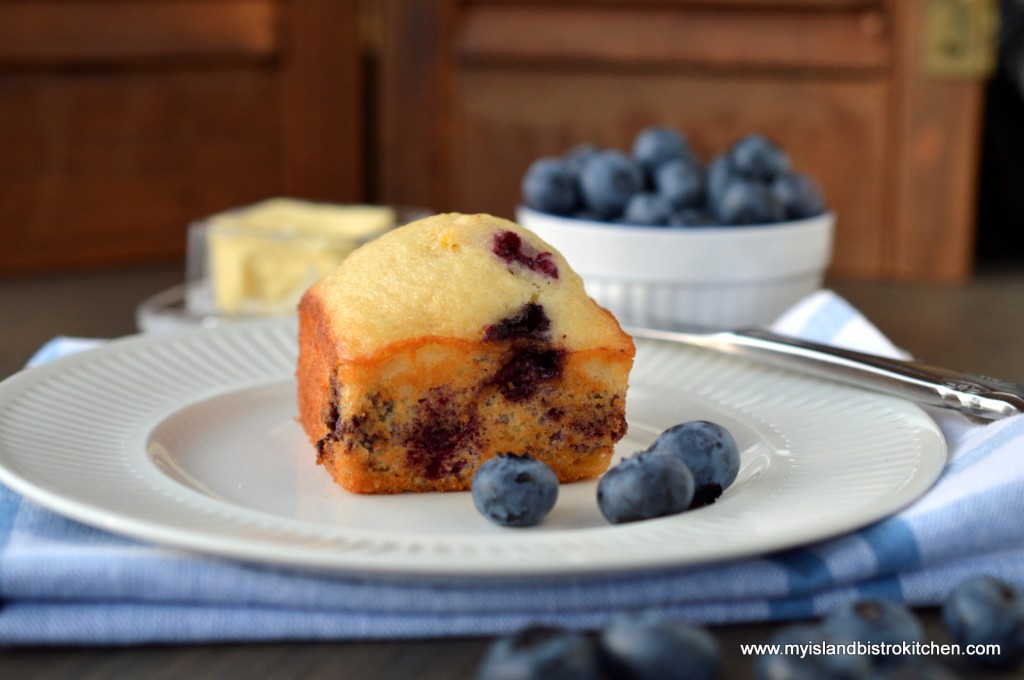
Blueberry muffins are a favorite and, while I have a “go-to” recipe for blueberry muffins that calls for regular gluten flour, I did not have a recipe for Gluten-free Blueberry Muffins. So, I set about developing one of my own and this is the result. My aim was to create a bistro, or deli-style, muffin and I am pleased with the end result. Continue reading Gluten-free Blueberry Muffins→
Crepes filled with delectable fillings are one of my favorite meals. Chicken and Mushroom Crepes with Cheese Sauce are a real treat and a lot easier to make than one might think. At one time considered the fare of stylish restaurants and bistros, they can actually be very easily made at home. Continue reading Chicken and Mushroom Crepes→
Today, I am sharing my newly-developed recipe for Ham Lentil Soup that is made from a leftover ham bone, broth, and ham. Continue reading Ham Lentil Soup Recipe→
I am a huge fan of cooking with the intent of having leftovers for several meals. It’s great to have cold leftover turkey, ham, or roast beef but, after a couple of days, well, it can get a little monotonous. I don’t like to throw out food so the alternative is to find other creative ways to use the leftovers and stretch the food budget. Sometimes, as in the case of a large family, perhaps the leftovers don’t span far enough unless they are used in a way that extends them.
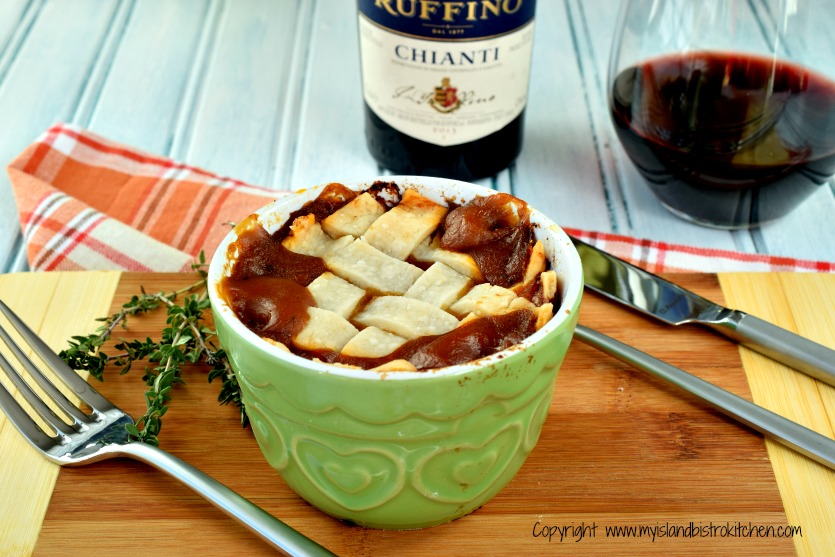
So, whether it’s a case of having leftover meat you’re tired of or not having enough left to plate as straight cold meat slices to make another meal, my recipe for Beef Pot Pie will be the answer for leftover roast beef. Just make sure you make an extra 1 1/3 cups of gravy when preparing that roast beef dinner so you will have enough gravy to make this recipe. Continue reading The Bistro’s Beef Pot Pie→
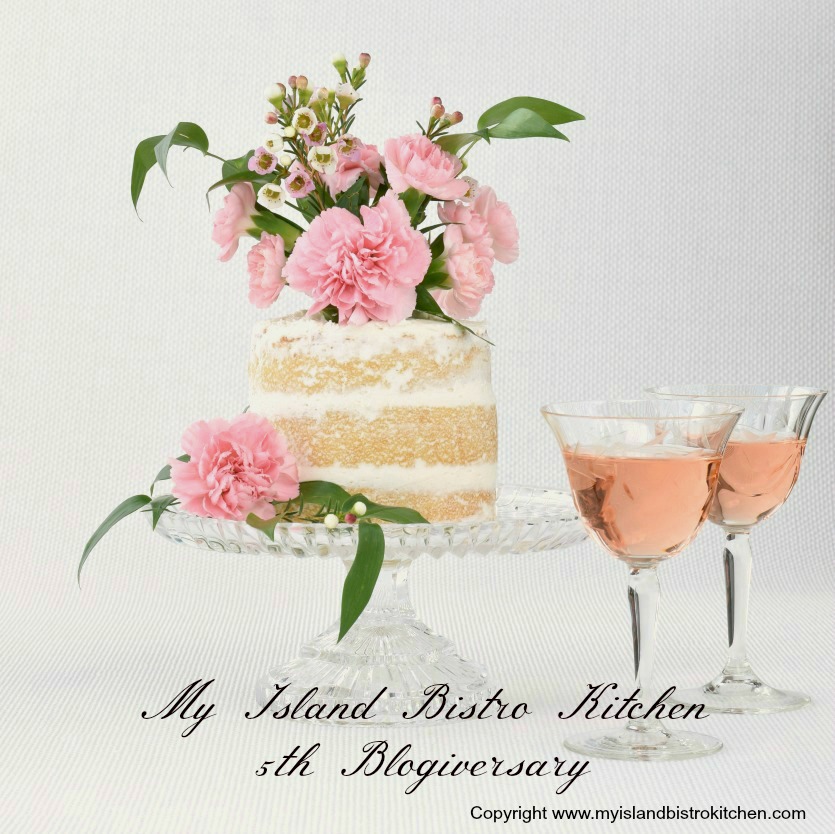
Five years ago today, January 18, 2012, I established my food blog, My Island Bistro Kitchen. Where did those five years go – they have just flown by! Time flies when you’re having fun, they say! So, today, I celebrate my 5th blogiversary!
I attempt to keep the recipes I develop and share real — nothing too wild and wacky. I am mindful of the different levels of culinary skills and food budgets that followers may have. While I do try to provide some newer, upscale recipes, it has been my experience over the past five years that the most popular recipes tend to be the traditional dishes that call for common ingredients and are not overly complicated or time-consuming to make. Where possible, I try to use locally produced food ingredients from right here in Prince Edward Island. And, for added interest, I continue to include stories about Island food producers and local culinary events.
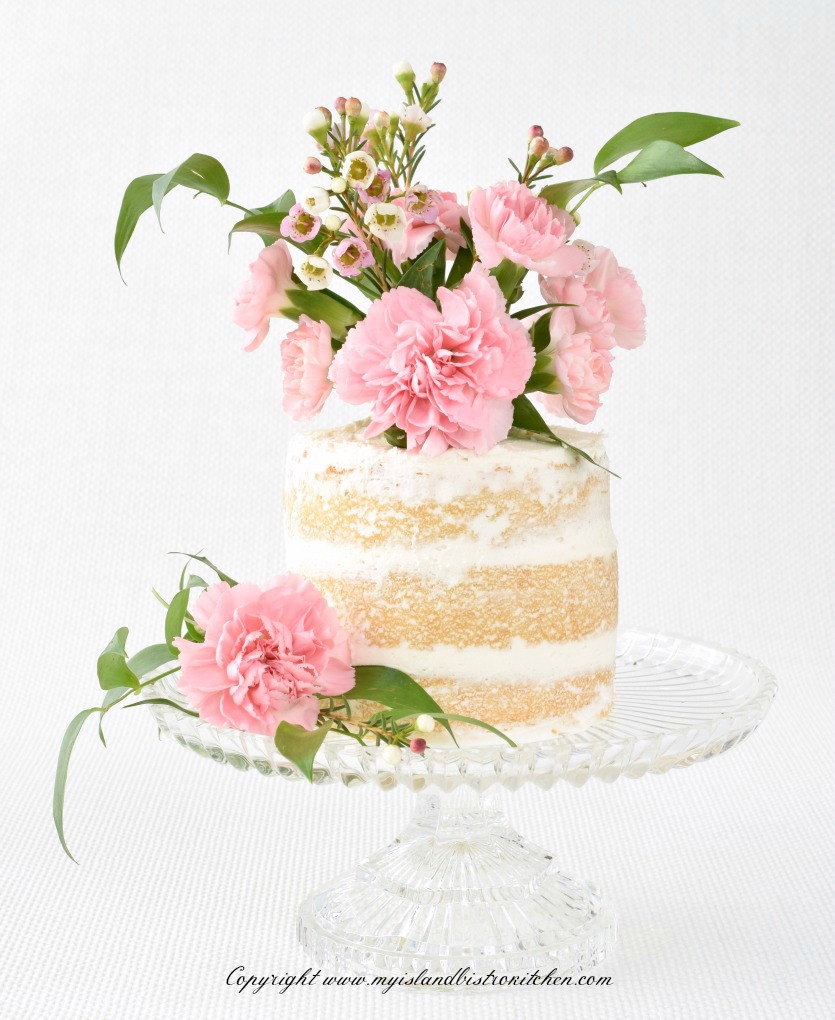
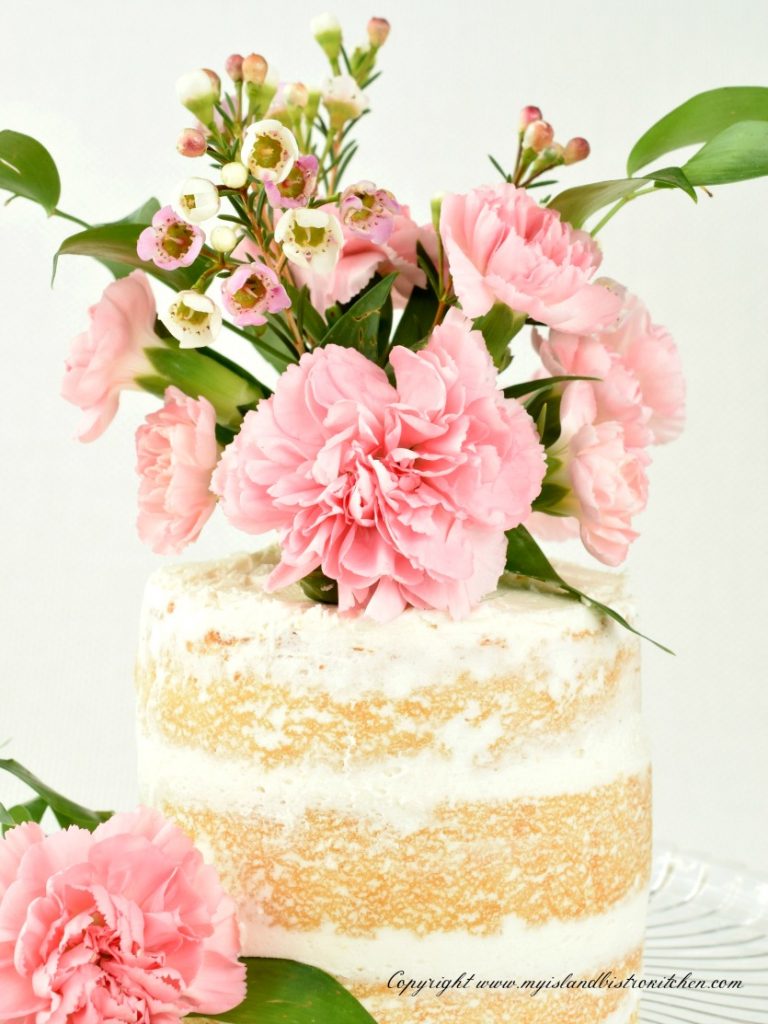
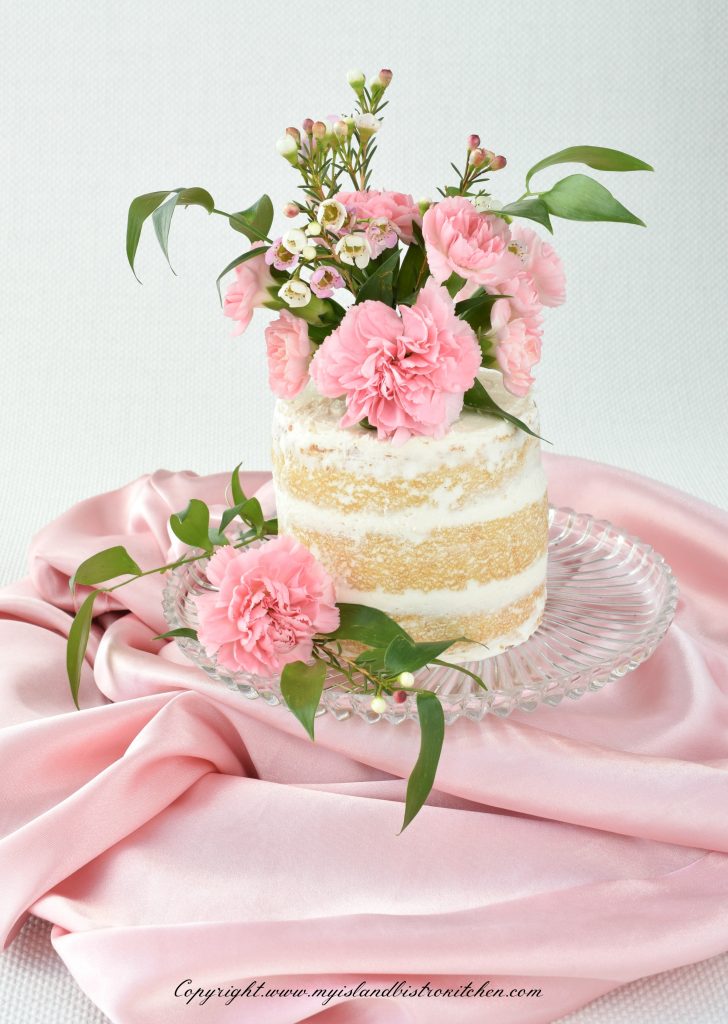
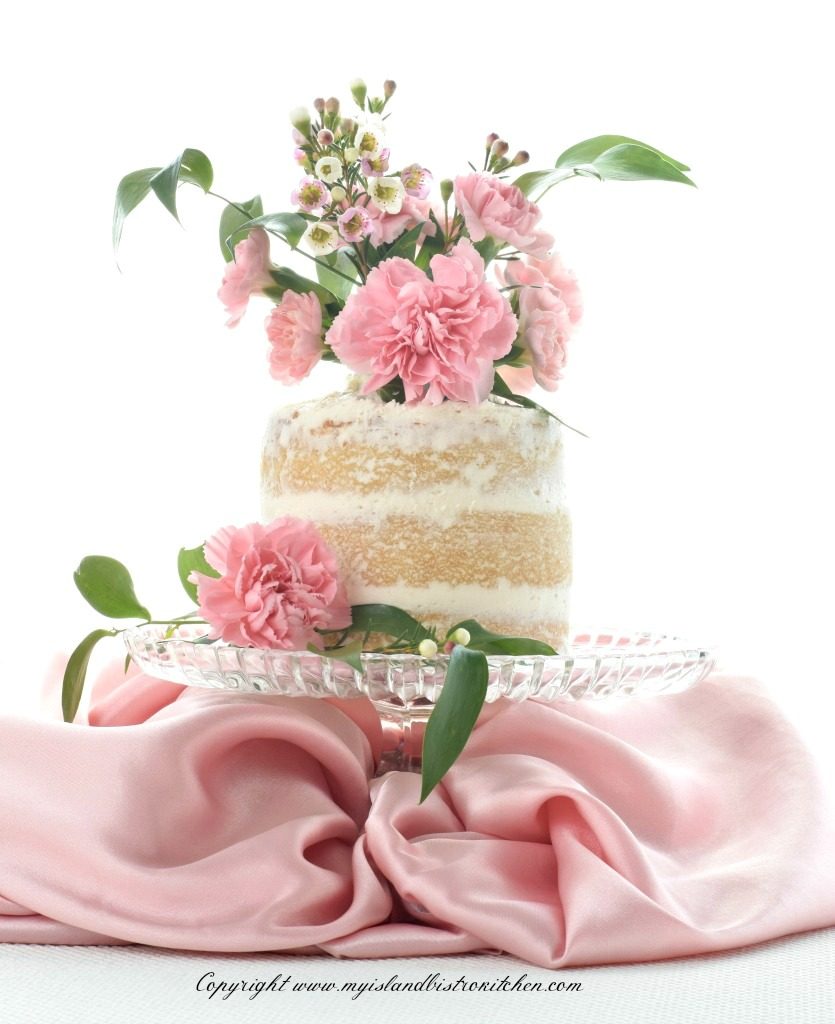
To celebrate my five-year anniversary, I have made a cake and decorated it in the trendy “naked cake” style. Naked cake means that very little, if any, frosting is used on the sides of the cake allowing much of the cake itself to be visible. In fact, even less frosting is used on one of these cakes than I would normally use to crumb coat a cake I would completely cover with frosting! The absence of a lot of frosting allows the texture, color, and filling in the cake to show. This is a style currently favored by many brides, probably for its romantic and casual look and feel. This style also looks very nostalgic and has a vintage air about it.
Naked cakes are very non-pretentious and, in my opinion, do not require a lot of cake decorating skill. If you can spread butter on bread, you can decorate a naked cake! Perfection is not a goal in the application of minimal frosting that characterizes this style of cake! The rustic look allows a cake topper to stand out and be the focal point because there is no fancy frosting or a cake covered in piped roses or frosting ruffles to compete for the limelight. Garnishes for these types of cakes usually involve real or natural elements such as berries, fruit, or as I have done with this cake, fresh flowers. Sometimes, chocolate or caramel is drizzled over the top and down the sides of the cake.
Cakes decorated in this style have a very natural look to them. In fact, with dark-colored cakes and a slim swipe of white frosting, I think they almost look a bit like birch bark. When used on lighter toned cakes, the effect can resemble a white wash look.
This is a good type of decorating to use if the cake is for someone who does not like a lot of frosting that is the hallmark of traditionally-decorated celebratory cakes. In fact, some naked cakes sport only frosting on the top of the cake and in between the layers. Now, those are real naked cakes!
The disadvantage of this style of decorating is that the cake can dry out rather quickly. When completely frosted, the frosting acts as a seal, to help keep the cake moist. Without complete coverage of frosting, care must be taken that the cake does not dry out. I recommend frosting the cake just before serving or, if it must be done in advance, store it in an airtight cake storer/caddy.
The “naked cake” is not a new style as it has been around for a few years now but it is a cake decorating style that has gained traction and this trend shows no signs of disappearing any time soon. While it is not a style for everyone’s taste, it is an option to add variety to cake decorating.
Thank you to those faithful followers of My Island Bistro Kitchen food blog who have been with me from the start. Thanks also to those who have joined along the way. If you are new to “the Bistro”, a hearty warm welcome! I hope all will continue to follow “the Bistro” into the future as I have more great recipes in the hopper and under construction and some stories in the plans!
To view other cakes and cupcakes that have been part of my earlier blogiversaries, click on the links below.
I am a big believer in meal planning and follow it regularly. I recommend meal planning for several reasons:
Eliminates last minute meal planning – that’s when you leave work with no idea what’s for dinner and, suddenly, as you pass a supermarket with a deli or prepared food section or a fast food outlet and, well, you know the story – that becomes dinner.
Saves money and reduces food waste – have a plan in mind for using leftover meat such as ham, turkey, or roast beef. For example, use the leftover meat in sandwiches, casseroles, and/or soups. These are great ways to stretch the food dollar and eliminate food waste.
Healthier way to eat – You will eat less pre-packaged foods that often have way too many preservatives, additives, and other unhealthy ingredients. Meal planning means you are in control, to the extent possible, of what is in your food.
Less stress – Once you have a plan in place for meals for the week, you don’t have to stress each day over what to make for meals.
The keys to good meal planning are:
Make meals with ingredients you know your family will like – doesn’t have to be fancy, new, or creative. Sometimes, the old faithful comfort foods are the best.
Make the meal plan on the weekend and formulate the shopping list BEFORE you go to the supermarket and then stick to the plan, avoiding distractions of already-prepared or frozen entrées that supermarkets display to tempt shoppers.
Make your To-Do list for the meal preparation for the week – for example, if you are making baked beans on Saturday, get those beans soaking overnight on Friday evening.
Read each recipe carefully to ensure you will have all the ingredients and that the method is easy to understand and do-able in the time in which you have to do the food preparation.
Watch the supermarket sales flyers. Know your favorite dishes and buy ingredients for them when they are on sale. You’ll be more likely to stick to a meal plan if you already have most or all of the ingredients for a recipe on hand.
Plan around what’s in season. One of my favorite soups is cream of cauliflower which freezes well (provided whole milk, not fat-reduced, is used). I make several batches of this soup each fall when the locally-grown cauliflower is in season. I would not make it, however, in January with imported cauliflower that has traveled thousands of miles for days and is highly priced. Good meal planning needs to take place, on an ongoing basis, throughout the year.
Here is my suggested meal plan for the upcoming week, focusing primarily on dinners with some suggestions for a couple of lunches making the most of a boiled picnic ham. I’ve provided a list of the main ingredients that, for the most part, would probably involve a shopping trip to the supermarket for most. However, as always, read each recipe thoroughly and carefully to create your own shopping list as I have not listed what I consider to be “staple” items like milk, butter, eggs, spices, etc. Click on the green hotlinks to access the recipes.
MONDAY
Blueberry Muffins – These are great breakfast or coffee break muffins and they freeze very well. Nice treat to start off the week! Shopping List: Blueberries (fresh or frozen), orange juice, orange rind
Blueberry Muffins
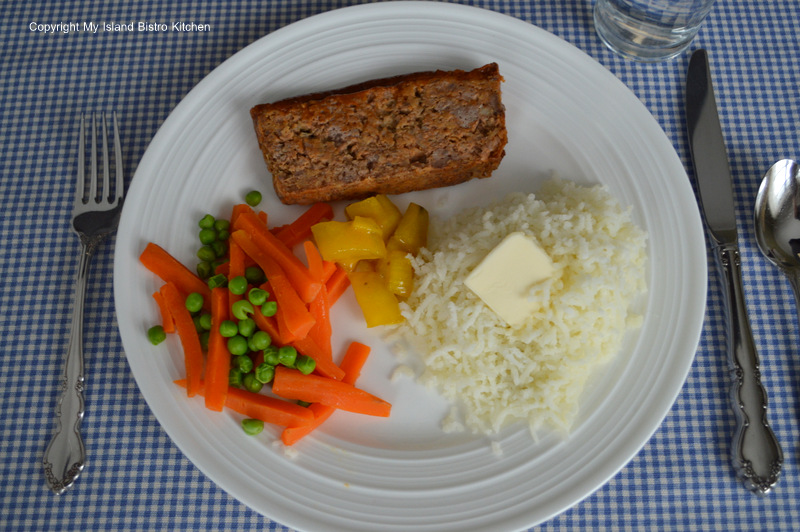
Dinner:Meatloaf
Serve with mashed or riced potatoes and your favorite side of veggies. Homemade mustard pickles go great with meatloaf!
Shopping List: Ground beef, onion, prepared mustard, tomato soup, dry onion soup mix, graham wafer crumbs, fine bread crumbs, garlic powder, vegetables of choice
Meatloaf with Riced Potatoes and Mixed Vegetables
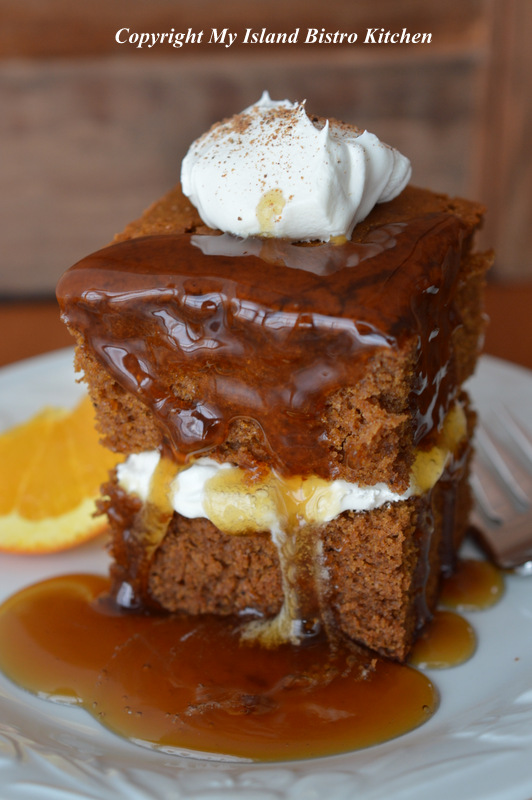
Dessert: Gingerbread
At least once every winter, I have to have a dose of this yummy comfort food! Drizzle with brown sugar sauce for an extra-special treat! Shopping List: Applesauce, molasses, coffee
Gingerbread with Whipped Cream and Brown Sugar Sauce
TUESDAY
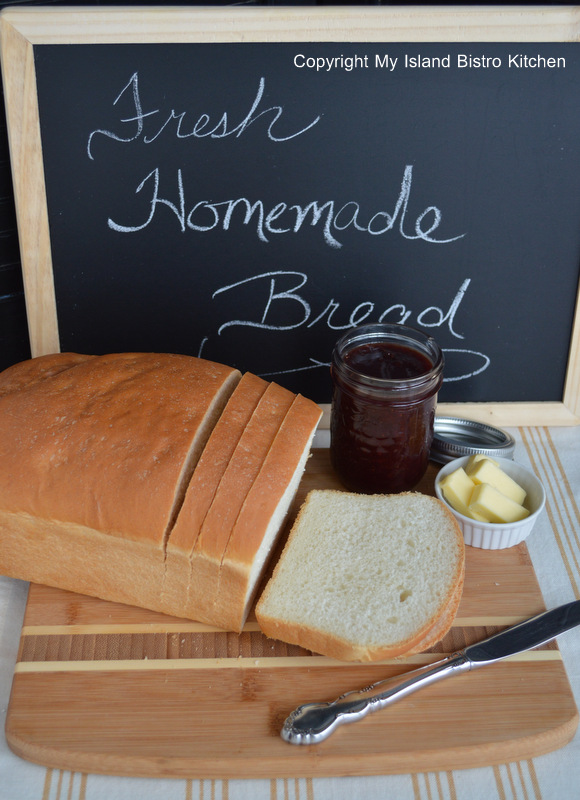
Homemade White Bread – This is always such a treat! This bread will be super good with the ham sandwiches this week! Shopping List: All-purpose flour, dry yeast, milk, butter/shortening
Homemade White Bread
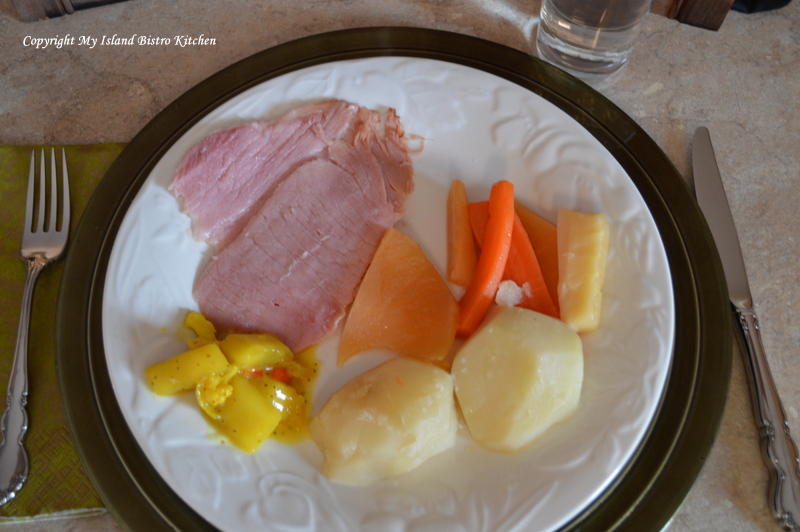
Dinner: Old-fashioned Boiled Ham Dinner – This is truly dinner-in-a-pot and is my definition of “comfort food”! The meat and vegetables are all cooked in the same broth in the same pot. Make sure you cook enough veggies for Wednesday night as this always tastes even better the second day. Easy to heat the vegetables in the microwave and, poof, you have two nights’ meals prepared in one effort. You’ll want those mustard pickles or mustard beans with this dinner! Shopping List: Smoked pork picnic shoulder (ham), parsnips, carrots, rutabaga (turnip), potatoes
Boiled Ham DInner
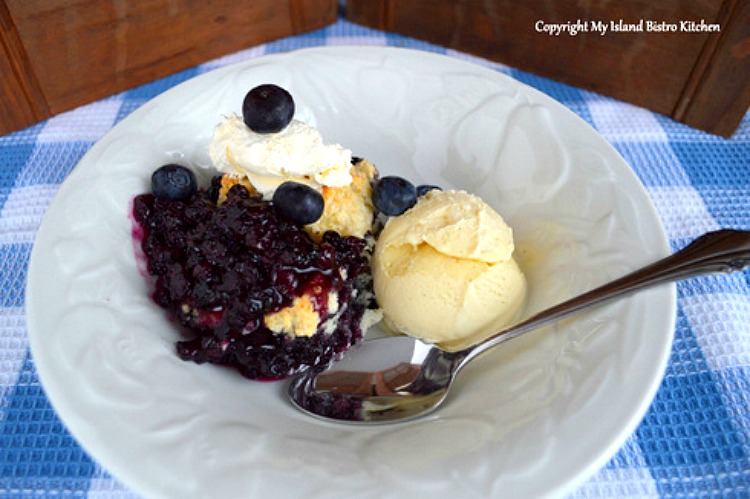
Dessert:Blueberry Grunt
This is such an incredibly yummy dessert – serve it with your favorite vanilla ice cream! Shopping List: Blueberries (fresh or frozen) and lemon rind, vanilla ice cream
Blueberry Grunt
WEDNESDAY
Lunch: Ham Sandwiches made with homemade white bread! Don’t forget the mustard!
Dinner: Leftover boiled ham dinner from Tuesday.
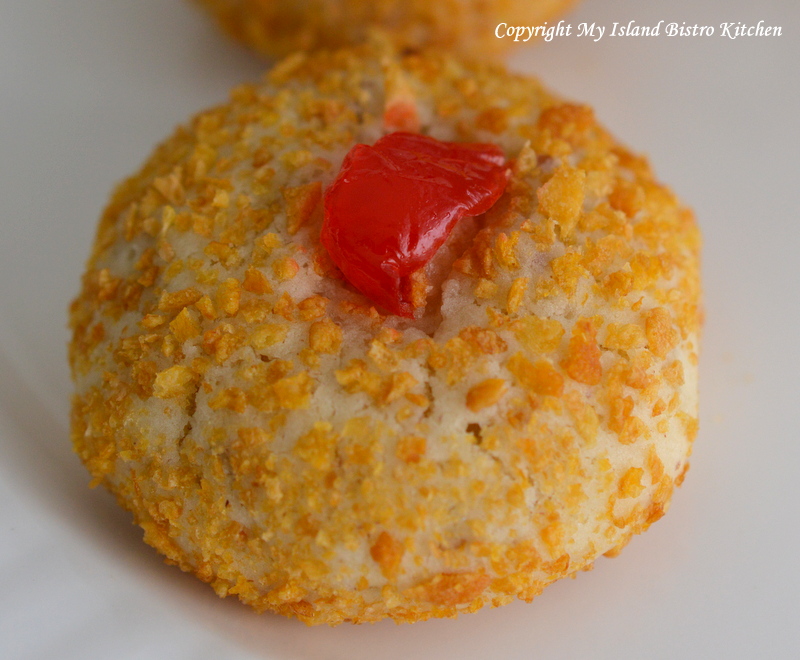
Dessert:Cherry Wink Cookies Shopping List: Dates, cornflake crumbs, maraschino cherries
Shopping List: Sweet pickle relish, Dijon mustard, maple syrup, celery, red pepper, mayonnaise, Havarti cheese
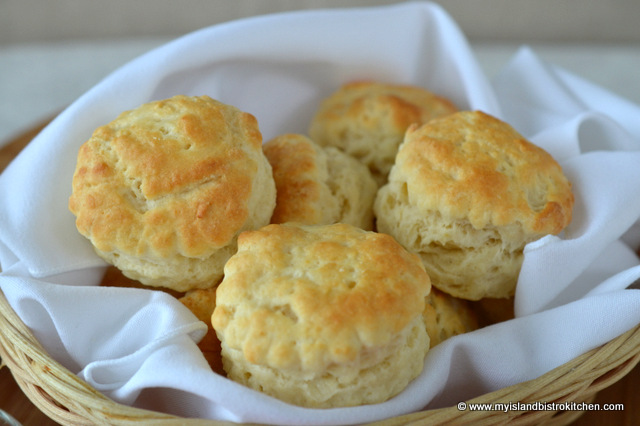
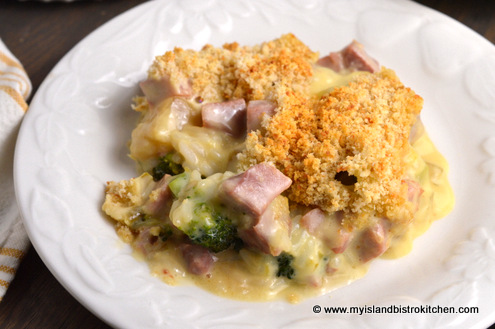
Dinner:Hawaiian Fiesta Casserole – this is a great way to use up left-over cooked ham and stretch its use. Serve these with those tasty biscuits and perhaps a green salad! Shopping List: Rice, cream of celery soup, sour cream, liquid chicken bouillon, broccoli, canned pineapple chunks, Parmesan cheese, fine bread crumbs, leftover cooked ham, and ingredients for a green salad and dressing
Dinner:Mac ‘n Cheese with a green salad and homemade tea biscuits Shopping List: Elbow macaroni, liquid chicken bouillon, cheddar cheese, Parmesan cheese, salad ingredients and dressing
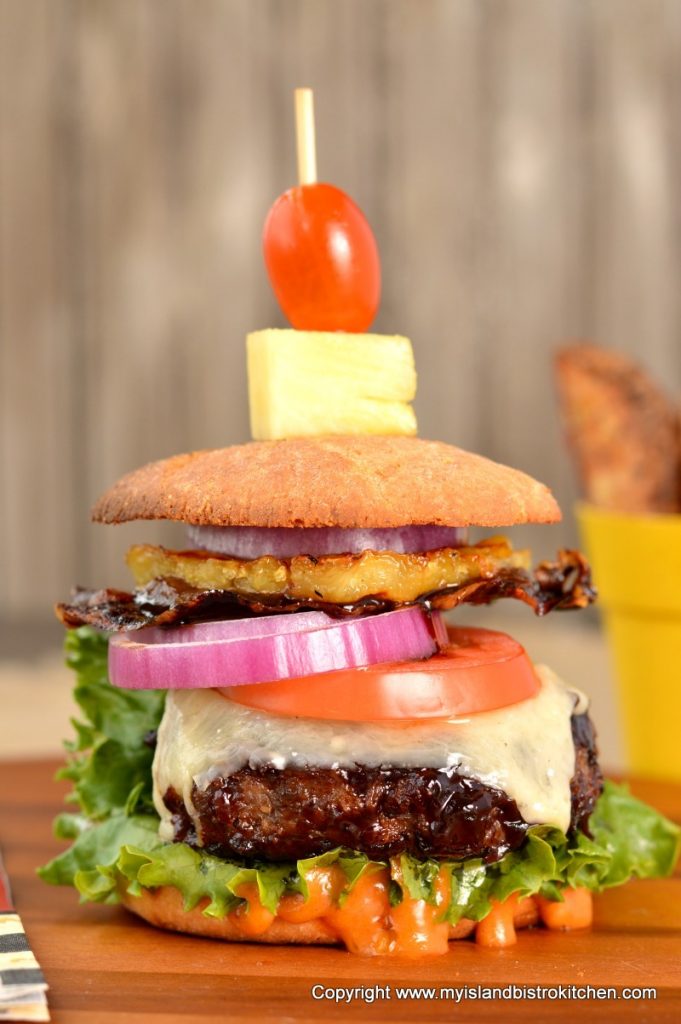
Dinner: Bistro Burgers with Home Fries Shopping List: Ground chuck, mayonnaise, maple syrup, ketchup, rhubarb relish, Dijon mustard, sour cream, onion salt, Parmesan cheese, Blueberry BBQ sauce, dry onion soup mix, bread crumbs, Cheddar cheese slices, red onion, tomato, prosciutto, fresh pineapple, bread and butter pickles, hamburger rolls, potatoes (for home fries)
“The Bistro Burger”
Dessert: Leftover Coconut Cream Pie
Meal planning can be a challenge, especially with high food prices, ingredient availability (particularly in winter for fresh local ingredients) and, of course, for those who are busy and time-challenged. However, with having a plan in place and establishing a routine for meal preparation, it is a way to eat better, save money, reduce food waste, and eliminate the stress of last-minute meal preparation that can sometimes result in unhealthy food choices. For those with children, it’s a good way to help them make good food choices and engage them in meal preparation by assigning them tasks to help with the work of making meals.
For my Week 2 Meal Plan, click here.
For my Week 3 Meal Plan, click here.
For my Week 4 Meal Plan, click here.
For my Week 5 Meal Plan, click here.
For my Week 6 Meal Plan, click here.
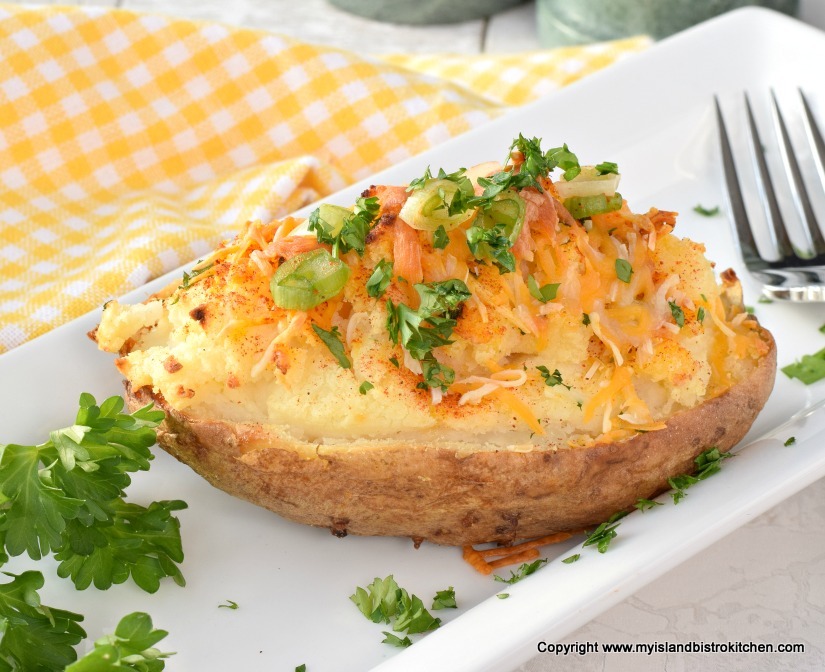
When you live in Prince Edward Island, Canada, where potatoes are one of the main agricultural crops, you find lots of ways to serve potatoes. Twice-baked Potatoes, or stuffed baked potatoes, are one of my all-time favorites. I make up big batches of these and freeze them so they are always on hand, ready to be popped in the oven for dinner. Continue reading Twice-baked Potatoes Recipe→
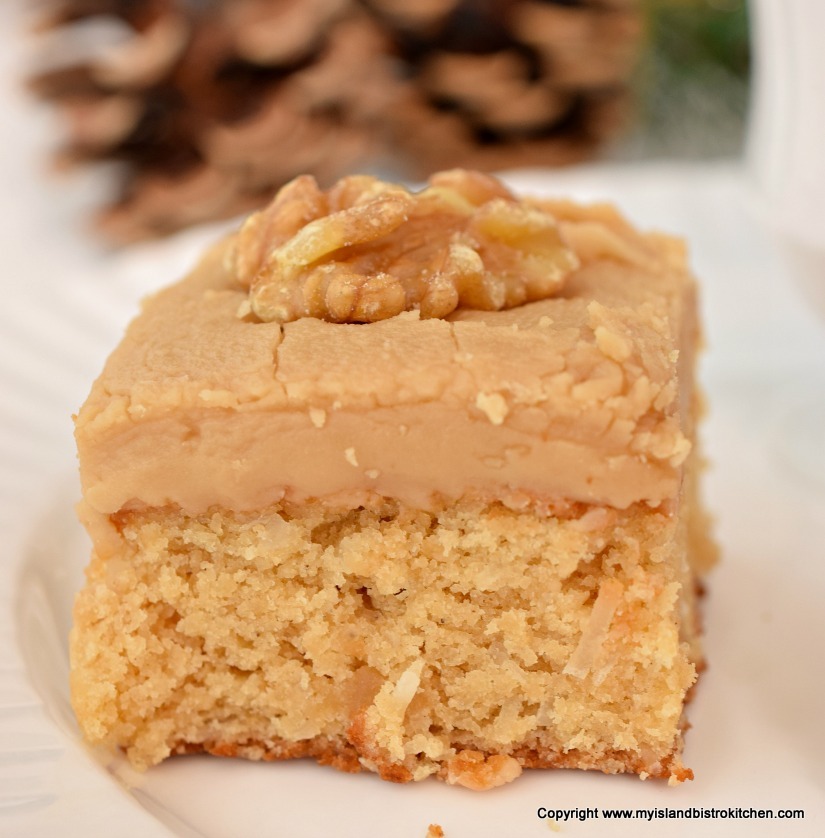
If you like brown sugar fudge, you’ll love this Gluten-free Brown Sugar Fudge Square! With a cake-type base, it’s the fudge icing that makes this square and takes it from plain to yummy. It’s like having cake and candy at the same time! Continue reading Gluten-free Brown Sugar Fudge Square→
Turkey Chowder is the perfect way to use up leftover turkey. It’s a welcome tummy-warming and tasty chowder for cold winter days and is a real treat after skiing, a long winter walk, snowshoeing, or coasting on the snow-covered hills. Serve with warm rolls or biscuits straight from the oven for an extra special treat. Continue reading Turkey Chowder Recipe→
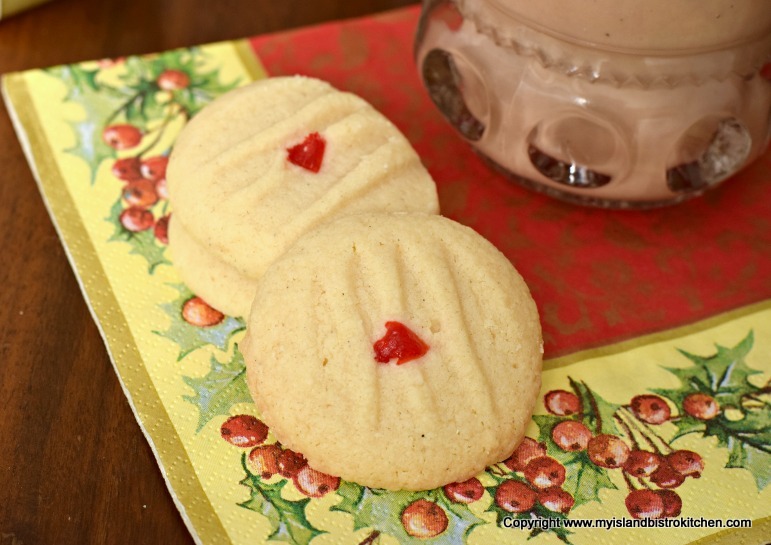
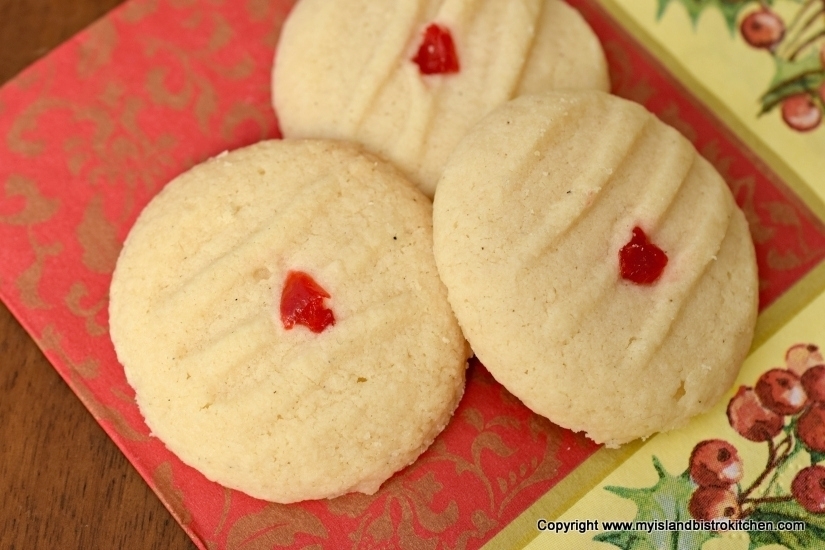
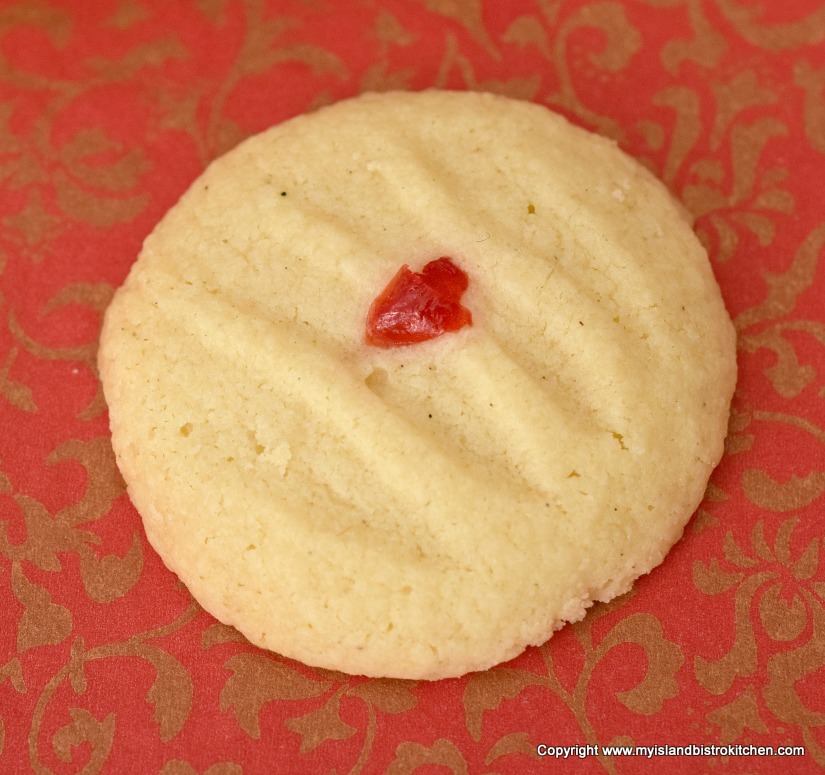
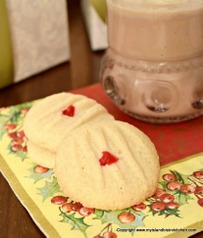
These gluten-free melting moments cookies prove that being on a gluten-free diet does not mean one has to compromise on favorite sweet treats!
I use a 1-to-1 gluten-free baking flour, such as Bob’s Red Mills brand, for these cookies. I also add a small amount of very finely ground almonds to the batter as this lends a tenderness to the cookie crumb which justifies the name of the cookies because they do melt in the mouth!
Gluten-free Melting Moments
These cookies are very easy to make. Mix up the dough. Pinch off small amounts of the dough and form into small balls. Place on parchment-lined baking sheets and flatten with the tines of a fork. Bake. It’s really no more complicated than that!
Gluten-free Melting Moment Cookie
[Printable recipe follows at end of posting]
Gluten-Free Melting Moments
Ingredients:
½ cup butter, softened at room temperature
¼ cup icing sugar (aka confectioner’s sugar or powdered sugar)
¼ tsp pure vanilla
½ cup 1-to-1 gluten-free baking flour
¼ cup finely ground almonds
¼ cup cornstarch
Method:
Preheat oven to 325°F. Line baking sheets with parchment paper.
Cream butter. Add the icing sugar and cream well with the butter. Mix in vanilla.
In separate bowl, whisk the flour, ground almonds, and cornstarch together. Add to the creamed mixture and blend until well incorporated.
Form dough into small round balls (apx. 5/8 oz dough per ball). Place balls on prepared baking sheets, about 2“ apart, and flatten each ball with the tines of a fork. Decorate with small bits of maraschino cherries, if desired.
Bake for approximately 15-18 minutes, just until edges of cookies start to tint a golden tan color. Don’t over-bake. Let cool on baking sheet for 2-3 minutes then transfer cookies to wire rack to cool completely.
These melt-in-your-mouth gluten-free melting moments cookies have a tender crumb and delicate butter and almond flavor.
Ingredients
½ cup butter, softened at room temperature
¼ cup icing sugar (aka confectioner’s sugar or powdered sugar)
¼ tsp pure vanilla
½ cup 1-to-1 gluten-free baking flour
¼ cup finely ground almonds
¼ cup cornstarch
Instructions
Preheat oven to 325°F. Line baking sheets with parchment paper
Cream butter. Add the icing sugar and cream well with the butter. Mix in vanilla.
In separate bowl, whisk the flour, ground almonds, and cornstarch together. Add to the creamed mixture and blend until well incorporated.
Form dough into small round balls (apx. 5/8 oz dough per ball). Place balls on prepared baking sheets, about 2“ apart, and flatten each ball with the tines of a fork. Decorate with small bits of maraschino cherries, if desired.
Bake for approximately 15-18 minutes, just until edges of cookies start to tint a golden tan color. Don’t over-bake. Let cool on baking sheet for 2-3 minutes then transfer cookies to wire rack to cool completely.