When we think of picnics, we most often think of lunch time or dinner events. Rarely, do we think of a breakfast picnic and yet it’s probably one of the easiest picnic meals to pack!
Breakfast Picnic on the Beach
Recently, I suggested we pack up a continental breakfast and head to the beach for a morning picnic. We had just been to a nearby blueberry U-pick so, naturally, blueberries were included in the picnic.
High Bush Blueberries
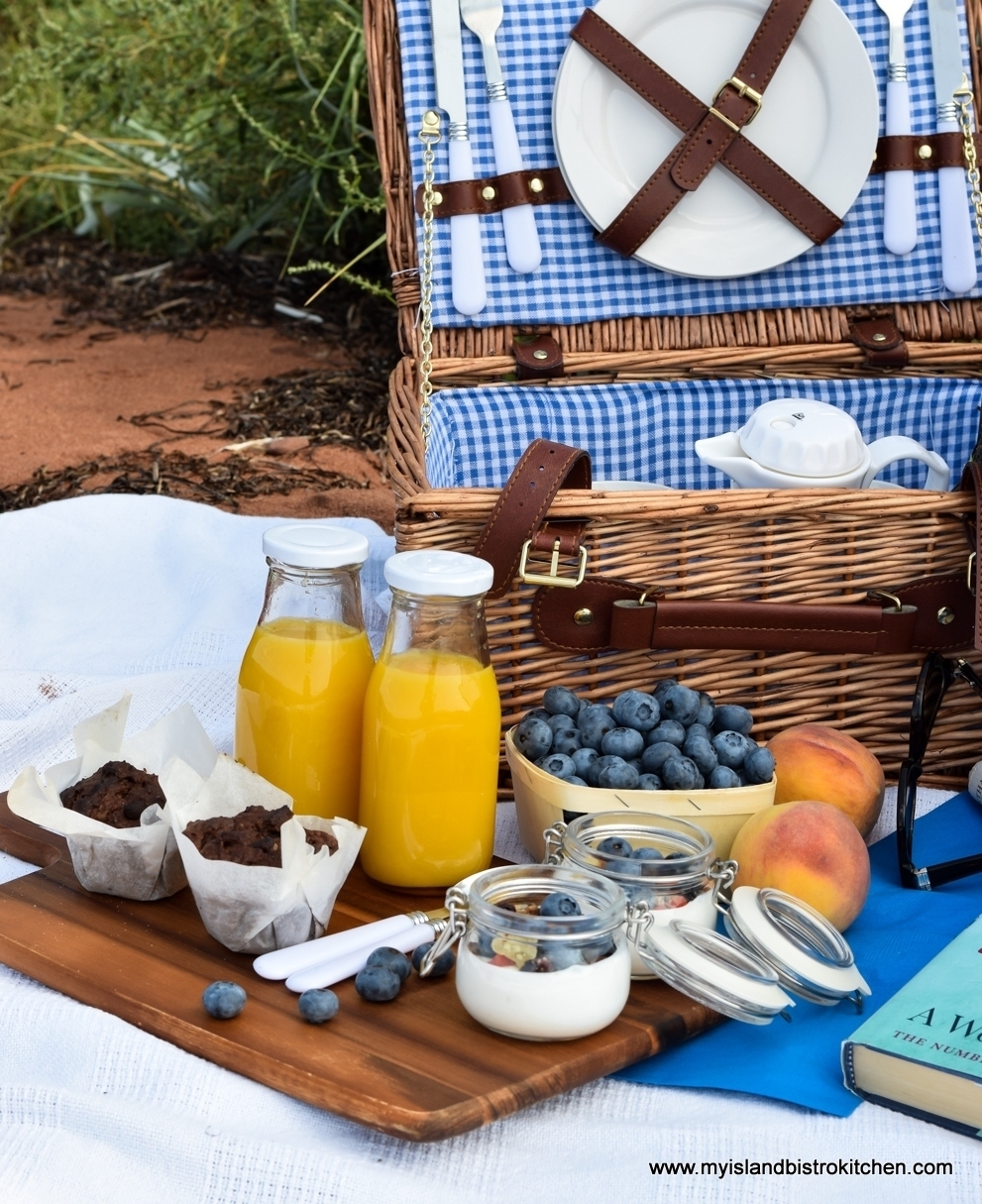
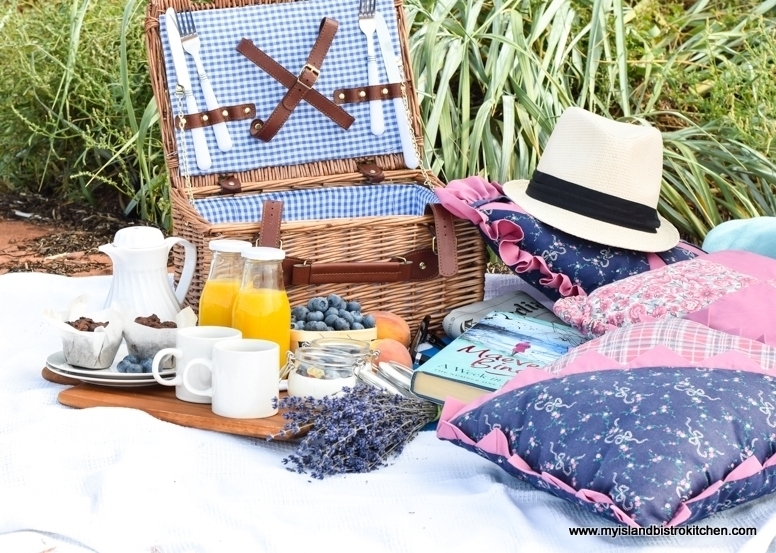
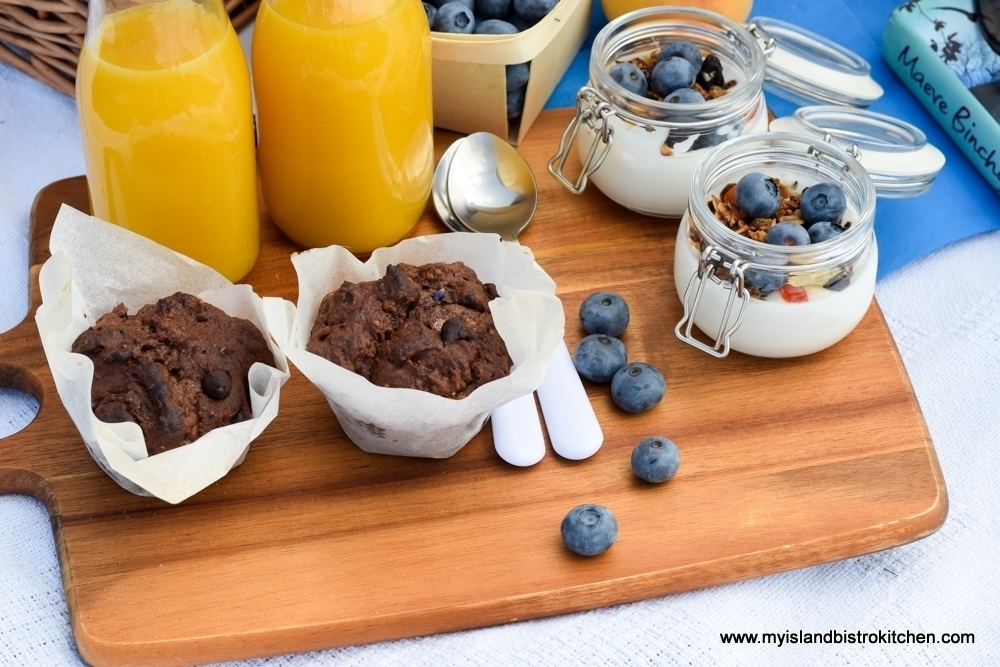
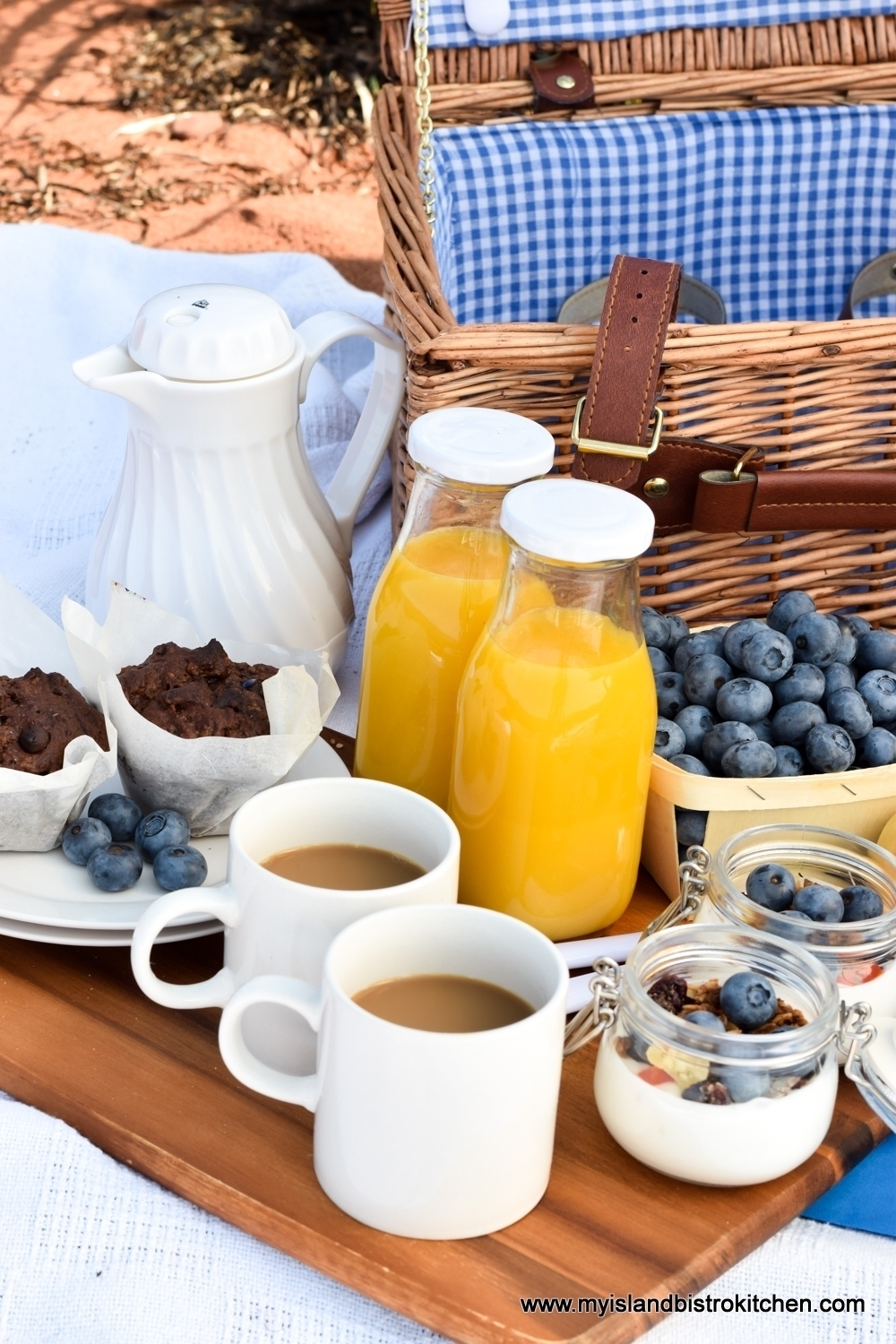
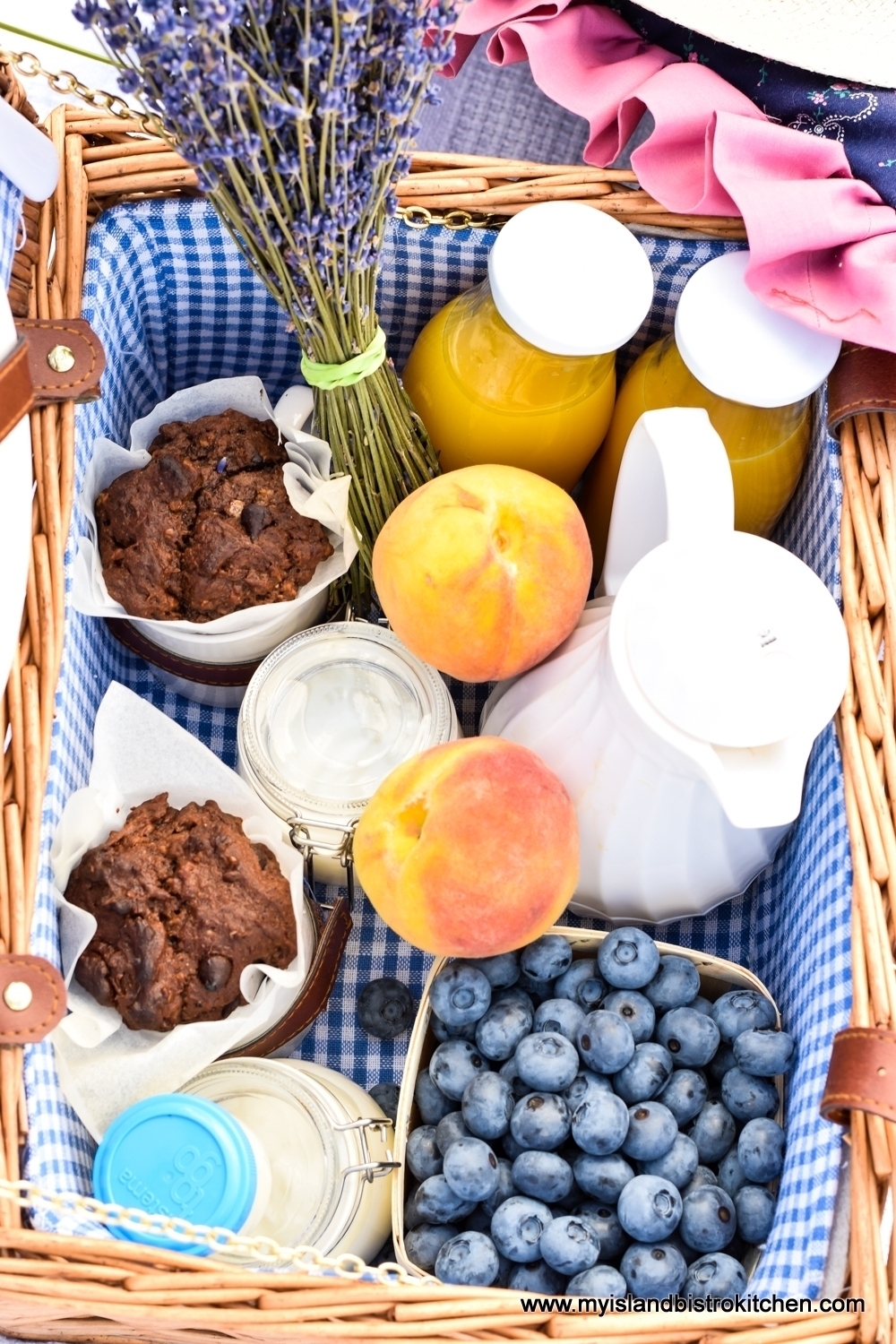
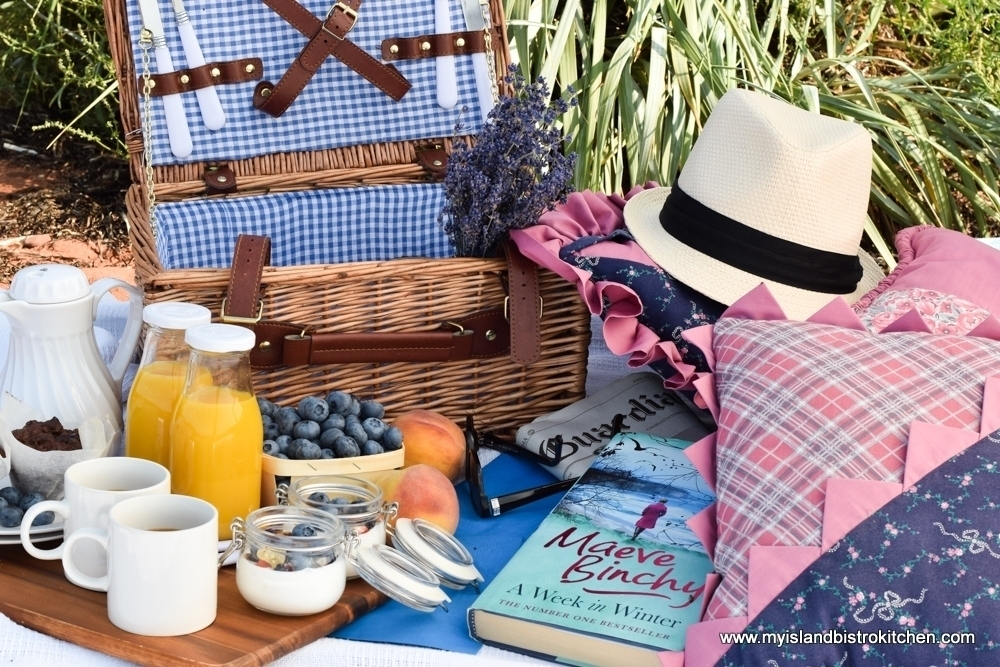
The menu was simple. Orange juice, Greek yogurt topped with homemade granola and fresh blueberries, homemade muffins, peaches, and coffee.
Breakfast Picnic Fare
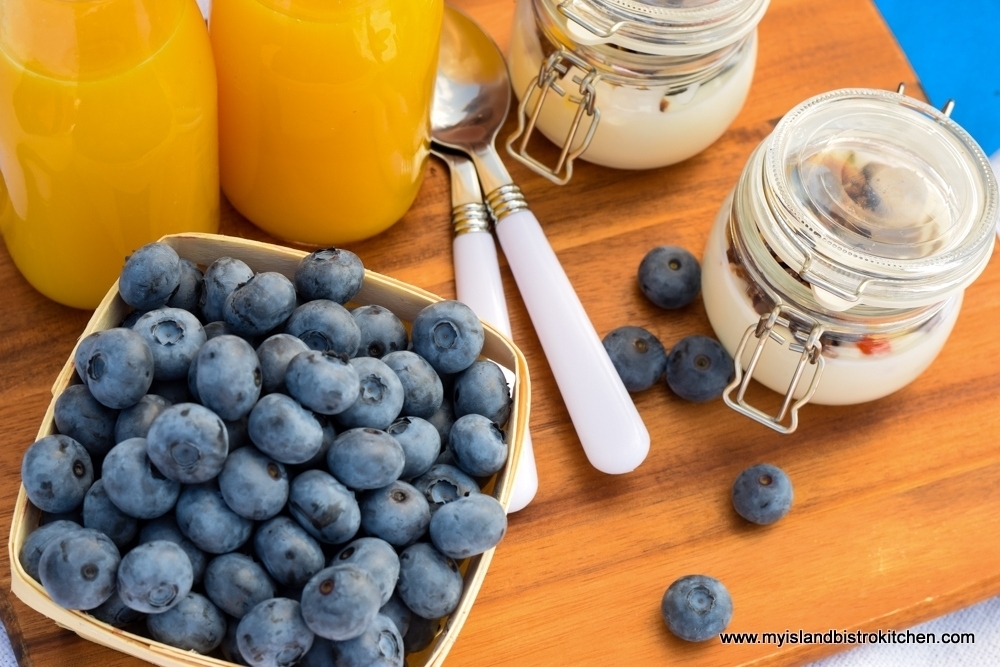
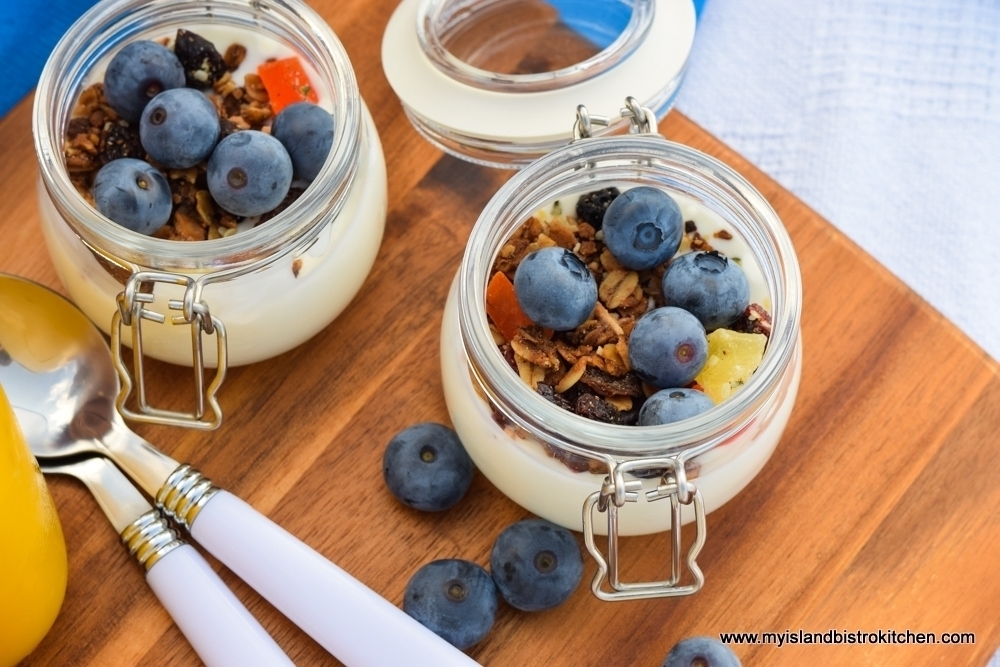
I love these little multi-purpose jelly jars. They are perfect for yogurt parfaits!
Yogurt Breakfast Parfaits
A breadboard makes an easily transportable platform upon which to set the food. I find, with beach picnics and an uneven sand base, it can be a bit of a challenge to keep the food from tipping over and spilling. However, the breadboard provides a stable, level surface eliminating the problem.
Continental Breakfast at the Beach
All that needs to be added is the quintessential coffee! I have a small thermos/coffee butler that holds exactly two cups of coffee and is great for these types of events.
Breakfast Picnic at the Beach
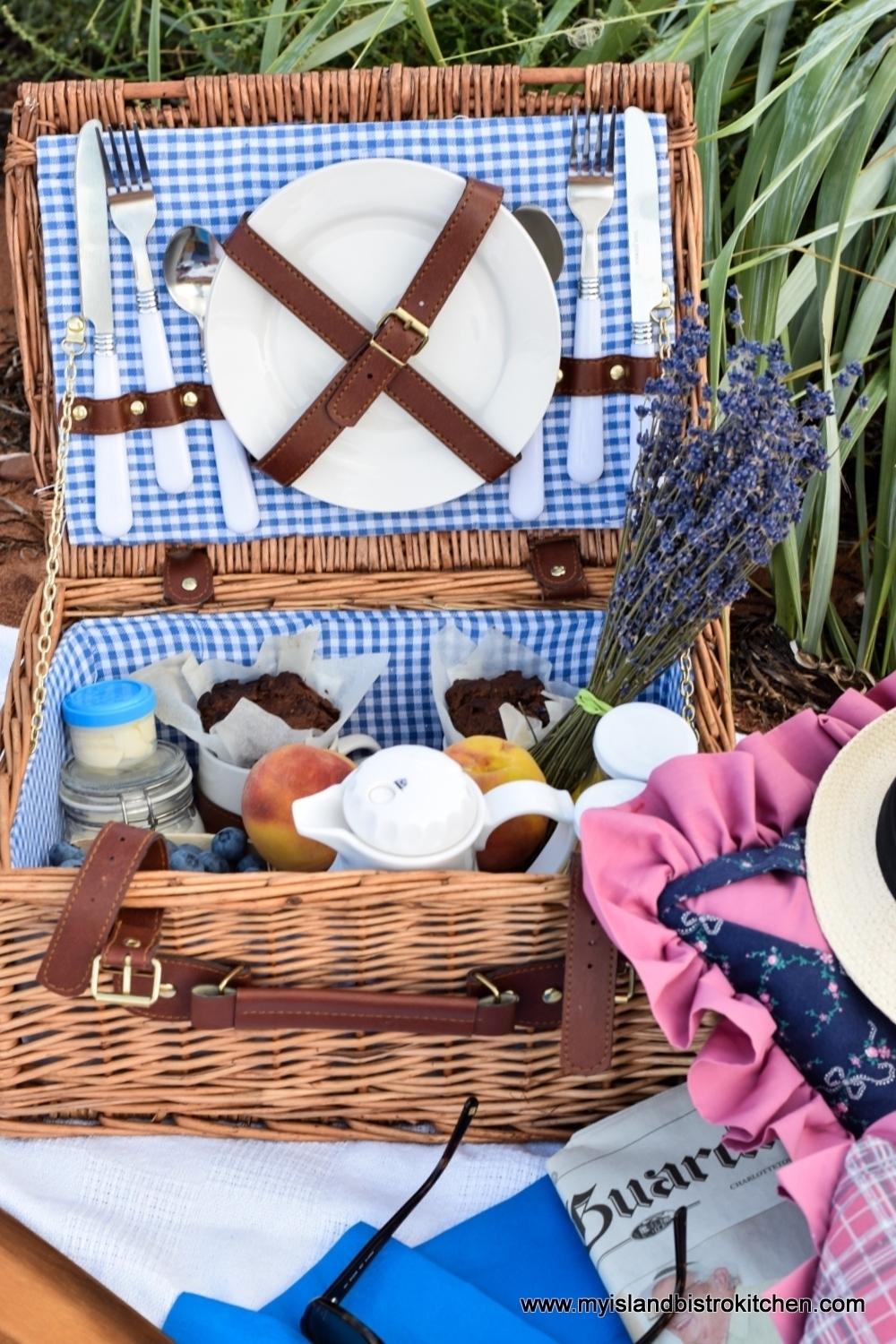
I love my wicker picnic baskets and this one came equipped with the plates, mugs, and cutlery.
Wicker Picnic Basket
Let’s take a peek inside the picnic basket!
Breakfast in a Basket
A good book for one and the morning newspaper for the other found their way to the picnic, too! No need to take along lawn chairs – an old blanket and a couple of comfy pillows will suffice.
Breakfast is Read!
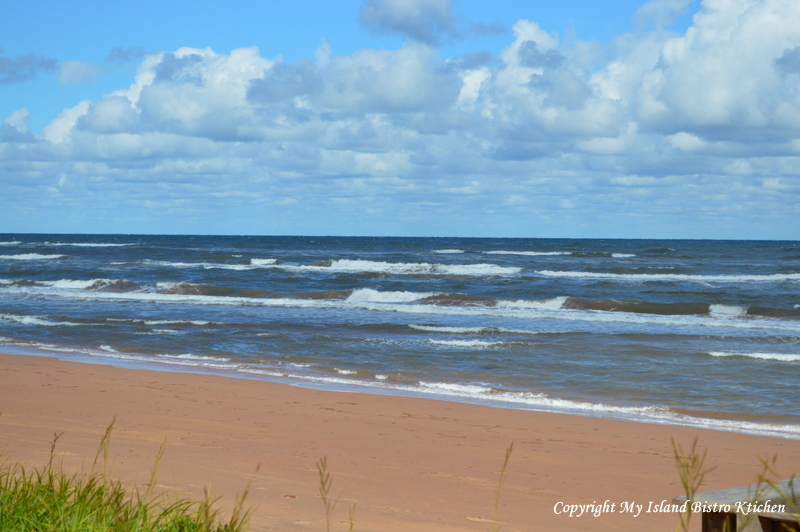
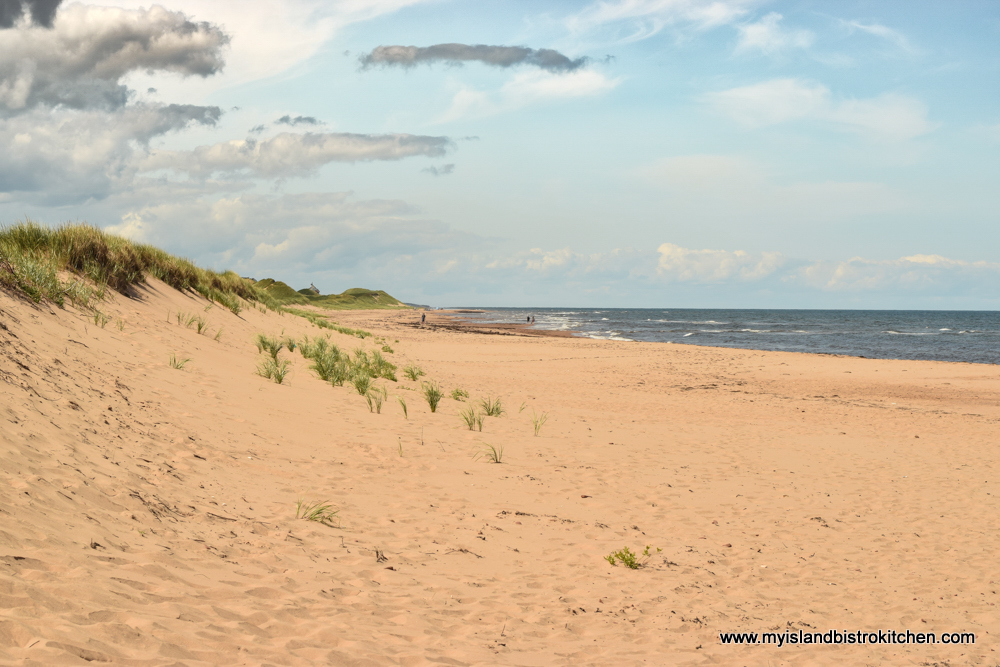
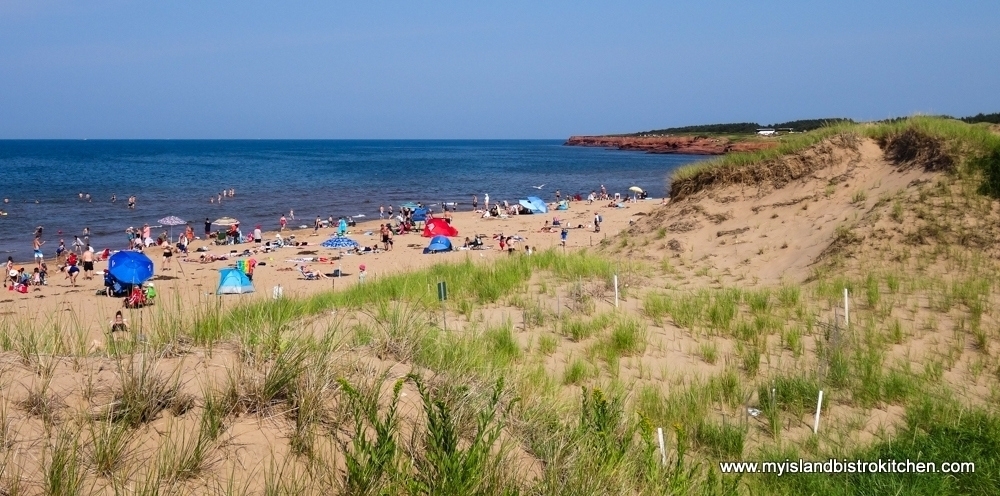
Our summers are short here in Prince Edward Island so we make the most of the lovely fine days and our close proximity to the beach. What better way to savour the last days of summer than to pack a breakfast picnic and head to the beach to enjoy breakfast with a view like this! Self-imposed time-outs can be a good thing!
It’s hard to think of summer without thinking of ice cream. Those hot, sultry summer days just seem to beg for an ice cream fix.
Here, on PEI, we have no shortage of ice cream venues to choose from. Whether you are a soft-serve ice cream fan or a hard ice cream aficionado, you’ll find lots to choose from. After a summer of research (full disclosure – the waistline may have been harmed by this initiative!), here’s the scoop on my favorite places on the Island for hard ice cream and for soft-serve ice cream. Readers will note that opinions expressed are my own based on personal experience at all venues mentioned below. None of the establishments knew I was sampling their products for this review. This is not a sponsored post and I received no compensation in any form for my reviews.
My review is broken down into two parts – hard ice cream and soft-serve ice cream. Readers will note that I was not reviewing every product sold by dairy bars and ice cream parlours. Rather I was reviewing two very specific products – hard ice cream and soft-serve ice cream. This to say that, for example, a dairy bar that specializes in, or is most known for, its soft-serve ice cream, may also serve other frozen products such as hard ice cream, too. In that example, if I was reviewing their soft-serve product, that’s all I was reviewing from that particular dairy bar. Likewise, if a business is known primarily for its hard ice cream but also sells, for example, frozen yogurt or sherbet, I only reviewed their hard ice cream product(s). Of those I sampled in 2018, what follows were my top favorites.
For Best Hard Ice Cream
Two locations that specialize in the production of the traditional hard ice cream stood out for me:
COWS Inc.
Creamery Location: 12 Milky Way (397 Capital Drive), Charlottetown, PEI (11 Canadian locations + 1 in Beijing, China)
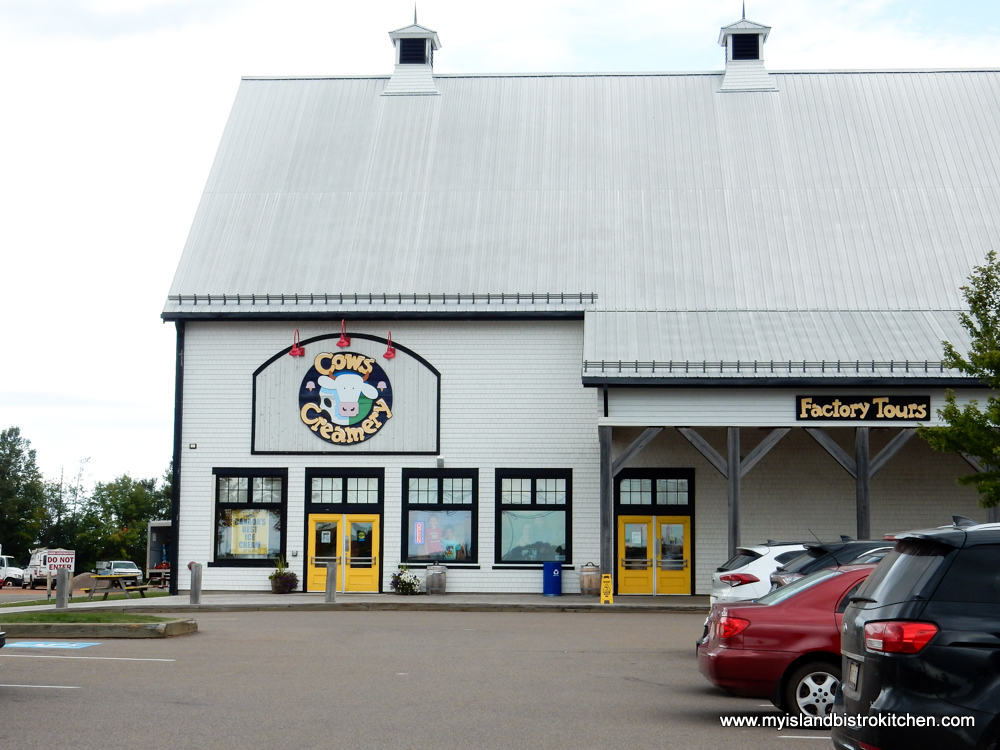
COWS Creamery, PEI
Churning out delectable flavours since 1983, the flagship creamery is located on the aptly-named “Milky Way” just off of one of the famous roundabouts outside Charlottetown. This venue is open year-round so locals do not have to go through withdrawal due to seasonal closures (phew!). Other COWS locations, however, may be seasonal.
The Truck That Says It All!
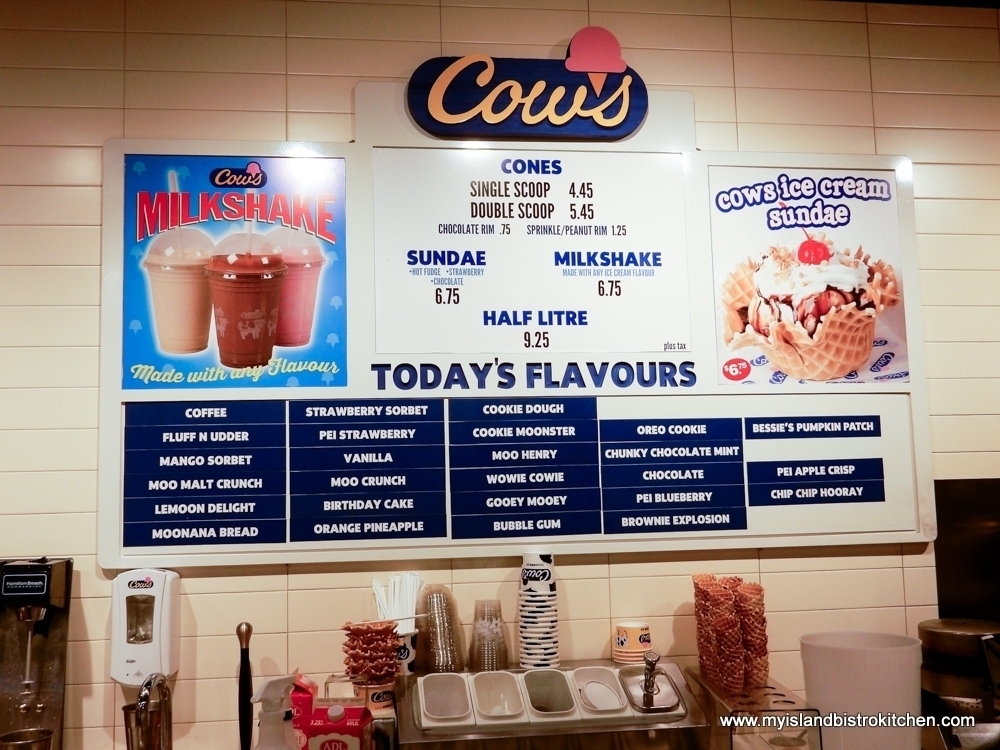
Apart from the high-quality ice cream (yup, 16% butter fat), COWS is legendary for its creative and unique ice cream flavour names often involving a play on words related to anything “cow” – like Cownadian Maple, Fluff ‘n Udder, Messie Bessie, and Moo Crunch, for example.
COWS Ice Cream Flavours
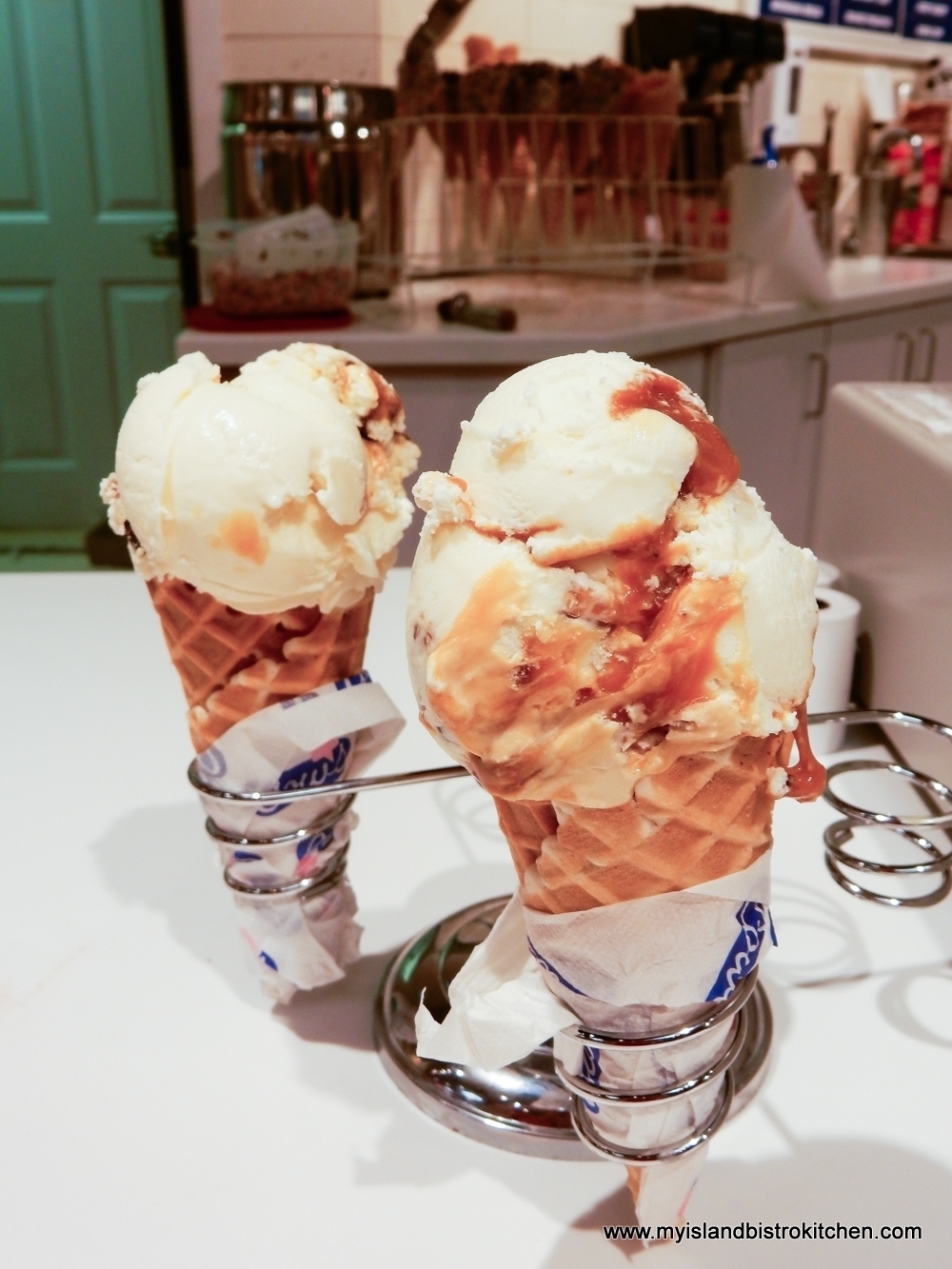
When I visit a COWS location, I go in with the best intentions to try a new flavour but, once I’m standing in front of the display case, I inevitably choose “Wowie Cowie”, a delectable concoction of vanilla ice cream, English toffee marble, chocolate flakes, and Moo Crunch. Ice cream is available in dishes or cones but their handmade waffle cones are hard to pass up! In my view, the cones are part of the “udderly” wonderful COWS ice cream experience!
COWS’ Wowie Cowie Ice Cream
There is no indoor seating at this COWS location though there are some nearby picnic tables outside. Some COWS locations may have indoor seating available. Tours of the creamery at this location are also available.
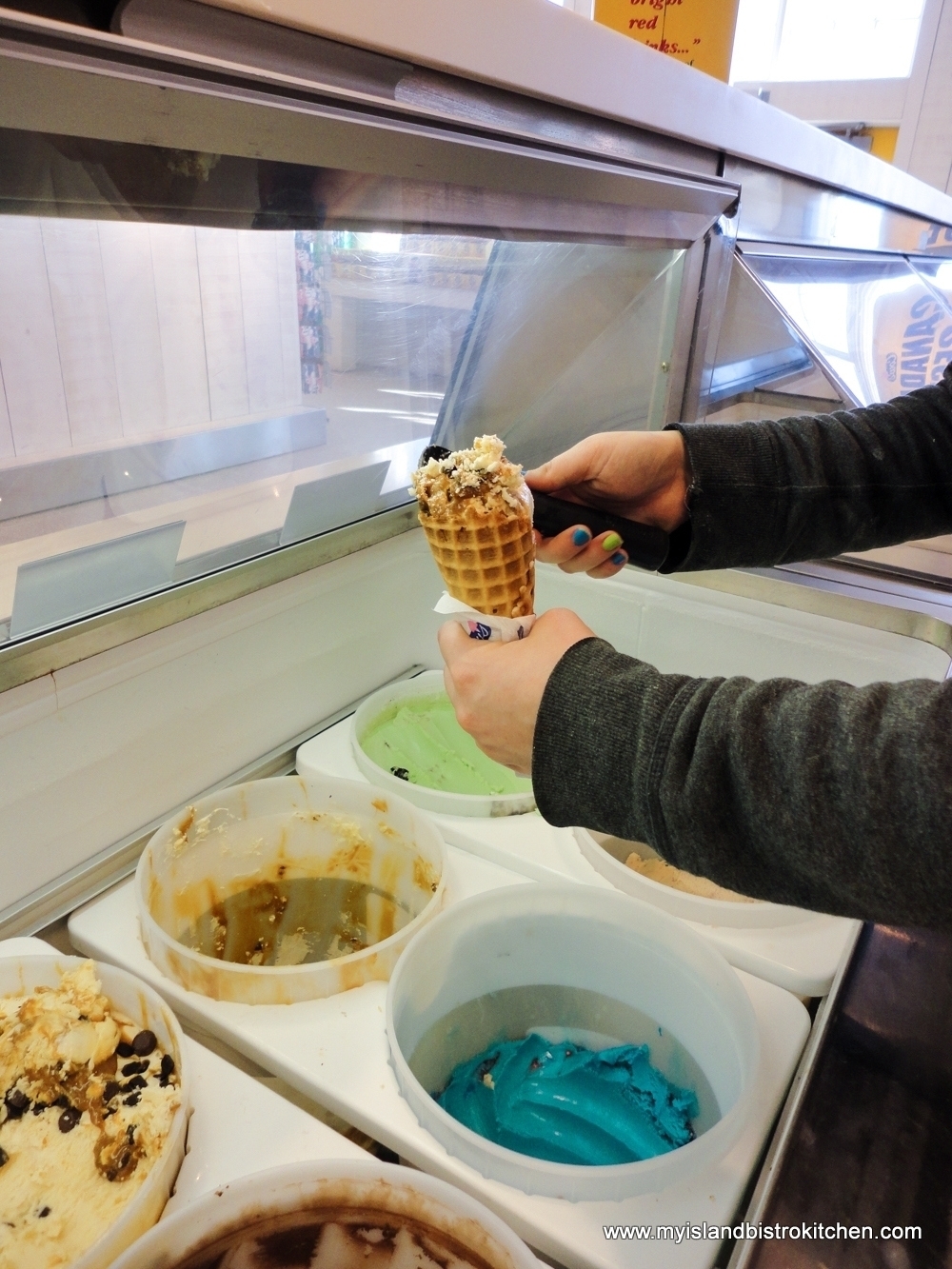
Scooping COWS Ice Cream
One of the things that makes COWS ice cream extra special is that it is available exclusively at COWS stores so heading to a COWS outlet just makes the experience that much extra special because you know you can’t buy it at the local supermarket. You can check out the story I earlier wrote on COWS here.
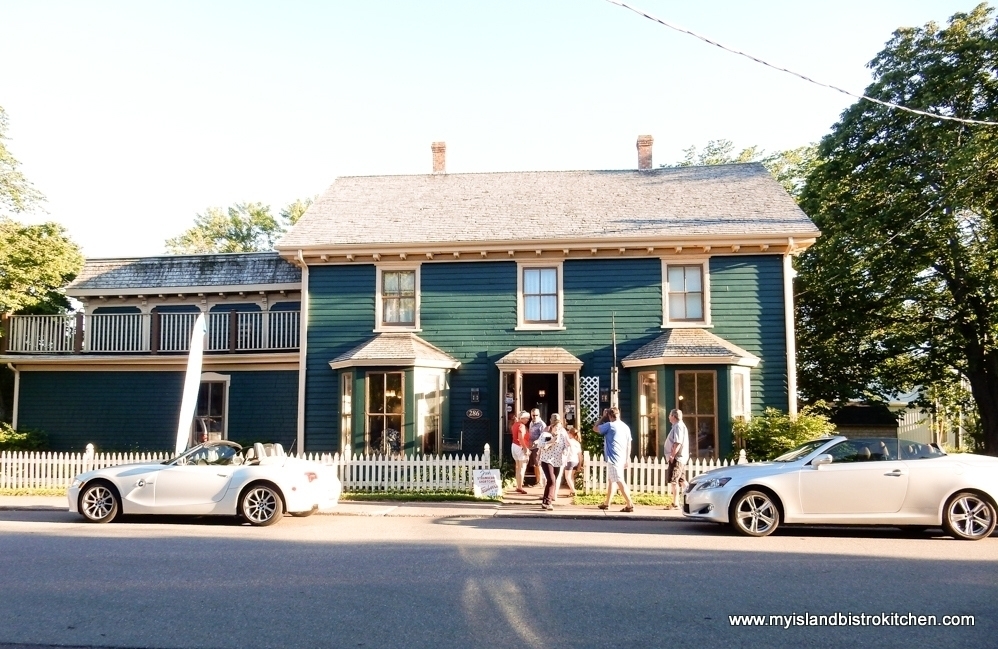
Holman’s Ice Cream Parlour
286 Fitzroy Street, Summerside, PEI
Holman’s Ice Cream Parlour, Summerside, PEI
The newbies on the Island ice cream scene, this family-owned and operated ice cream parlour opened its doors in 2016 and is quickly earning a reputation for high quality homemade ice cream.
Located in a heritage home, known as the Holman Homestead, in Summerside, this ice cream parlour has fast become a favorite stop for ice cream aficionados. Much of the charm of the historical property has been maintained and gives an air of stepping back in time to a vintage ice cream parlour.
Holman’s Ice Cream Parlour, Summerside, PEI
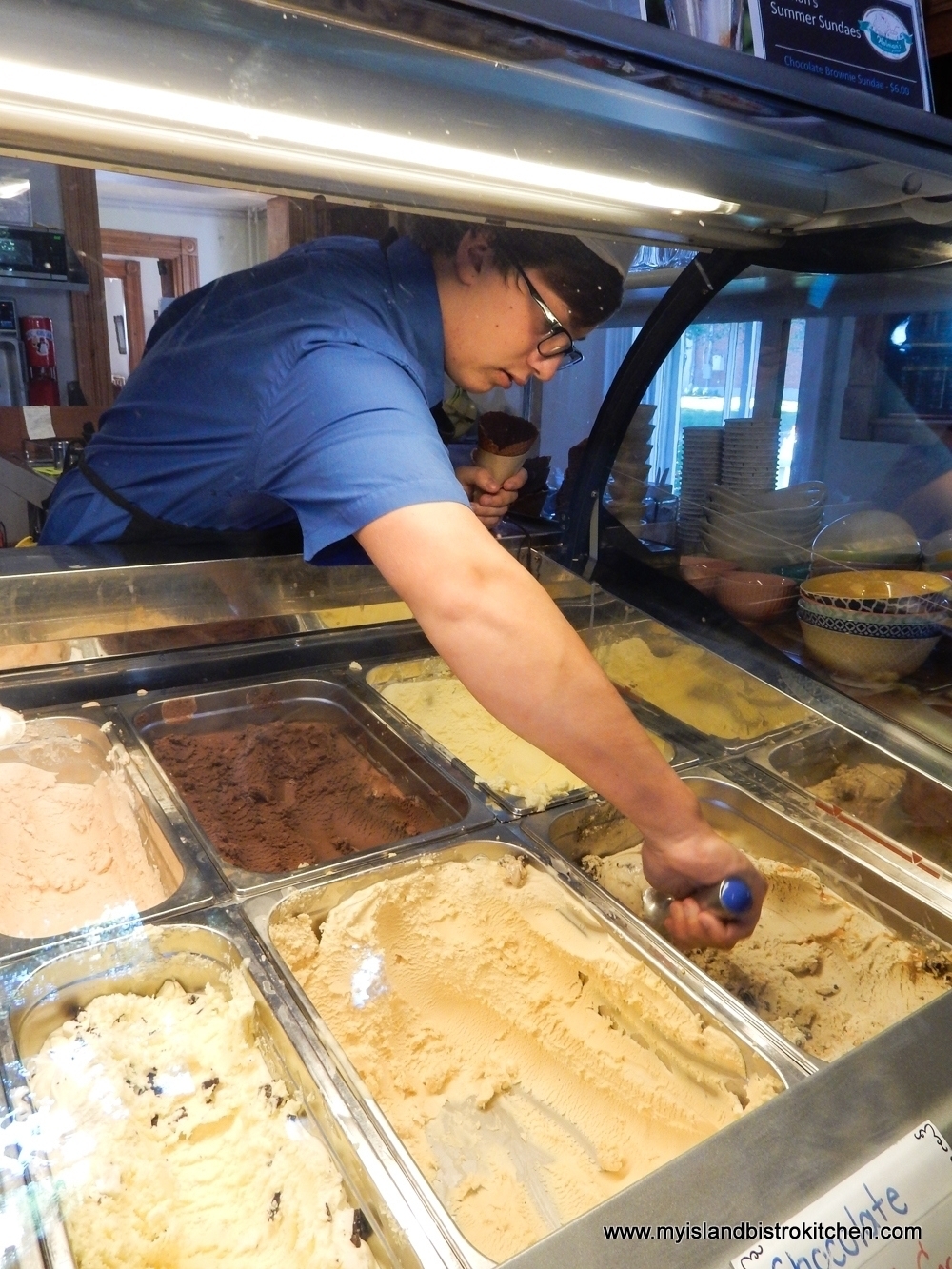
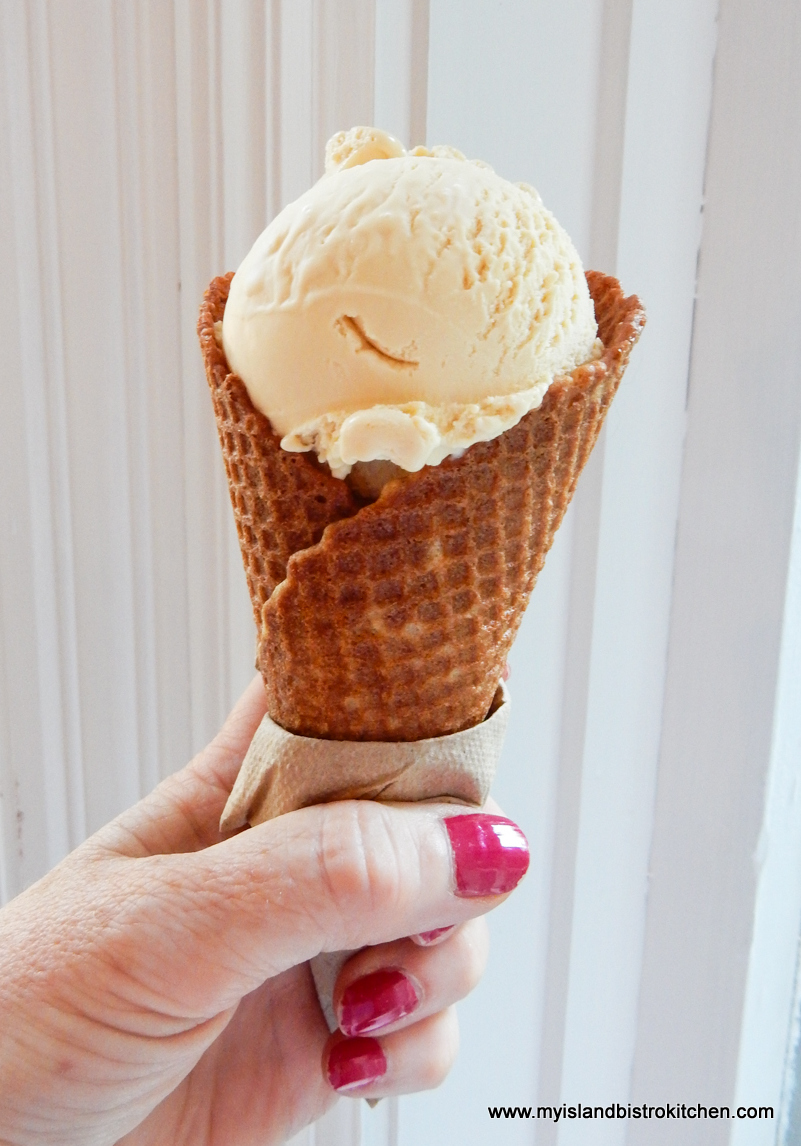
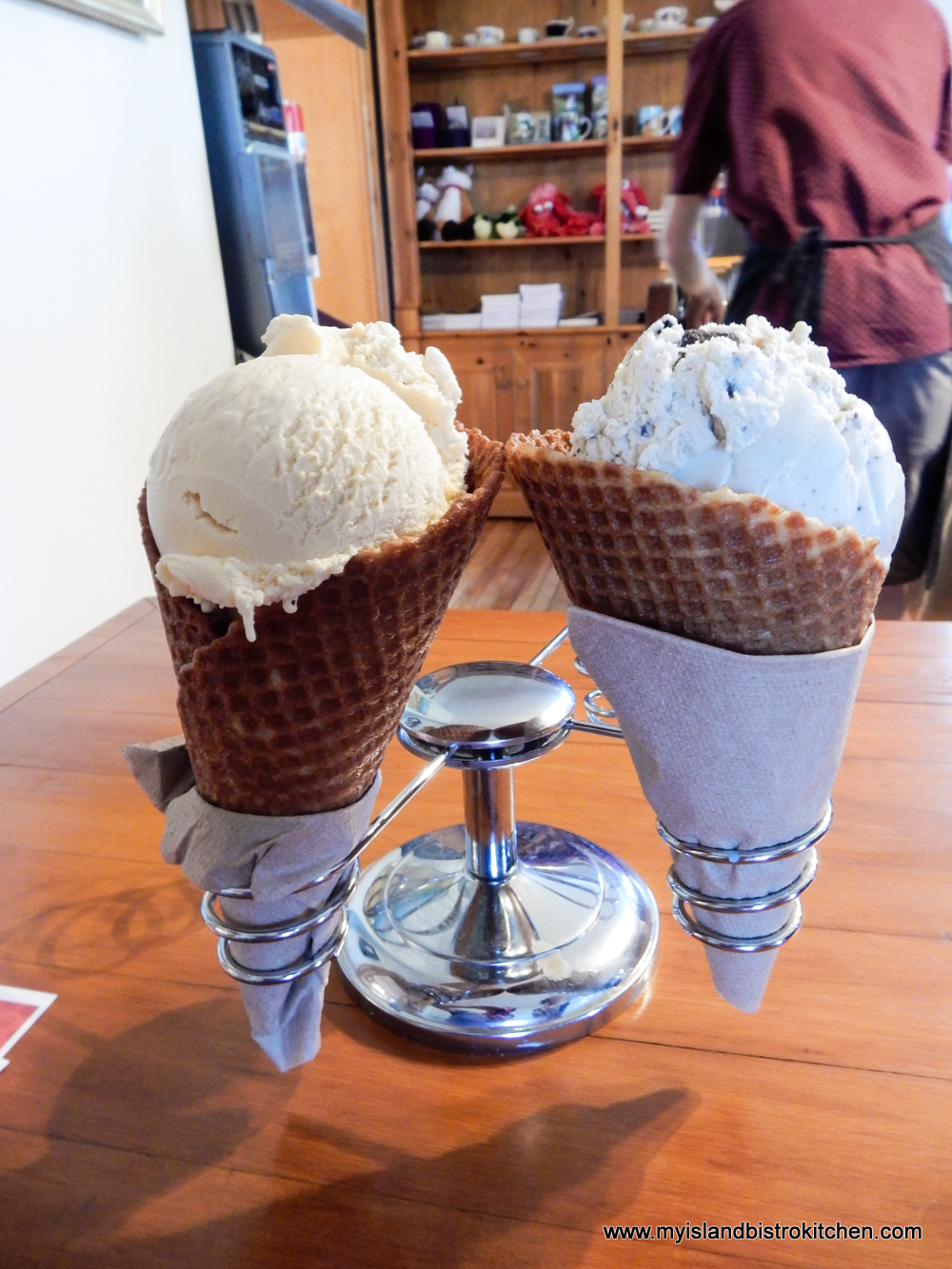
The premium homemade hard ice cream, manufactured on the premises, is made with all-natural ingredients. Several flavours of ice cream are available – my favorite is the Salted Caramel though I have heard rave reviews of their Cookies and Cream variety.
Ice cream is available in cones or dishes but, as you walk up the sidewalk toward the house, you can catch the tantalizing waft of the waffle cones being made – it’s hard not have one of those cones and they don’t disappoint!
At Holman’s Ice Cream Parlour, Summerside, PEI
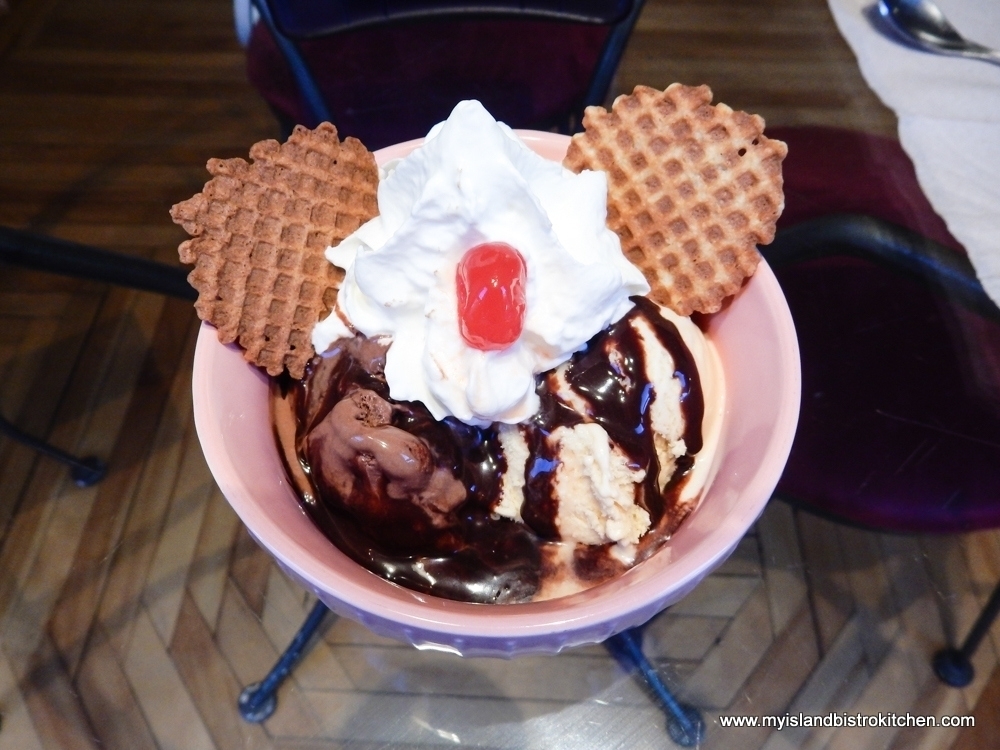
The parlour also offers sundaes, banana splits, and soda fountain floats made with their homemade ice cream.
Ice Cream Sundae at Holman’s Ice Cream Parlour, Summerside, PEI
They also make sherbets and have at least one variety of ice cream made with sheep’s milk. Service is provided by friendly staff. Eat inside or, on lovely weather days, enjoy the ice cream in the garden. The ice cream from Holman’s is made all the more special because it is only available at their Ice Cream Parlour and you won’t find it in the frozen dairy section of any supermarket. Open seasonally. (Hint – In my view, it’s worth the drive to Summerside just to have an ice cream at Holman’s! Just sayin’, this might have happened on more than one occasion….for research purposes, of course, you know….just sayin’…..)
For Best Soft-Serve Ice Cream
Two locations that are known primarily for their soft-serve ice cream particularly caught my attention.
Sunny’s Dairy Bar – New Discovery 2018
559 Water Street, Summerside, PEI
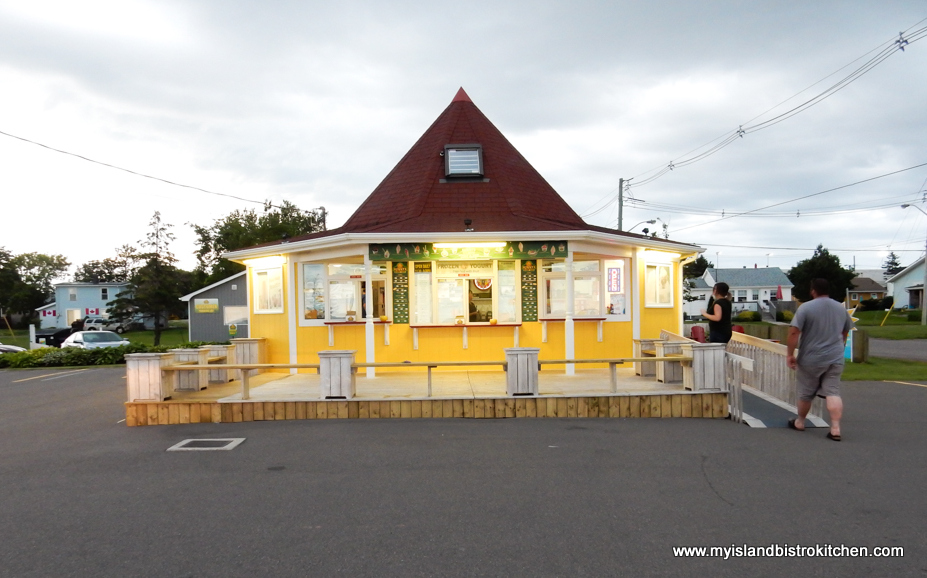
Sunny’s Dairy Bar, Summerside, PEI
This dairy bar came recommended to me by a couple of folks who thought I should check it out. Can soft-serve ice cream really be all that different from one place to another? Yes, it can and Sunny’s proves it!
Opened in 2011, in the west end of Summerside, this is a traditional style dairy bar in that you place your order at the window and take your ice cream back to your vehicle or to the Green Shore Park across the street. There is no indoor seating.
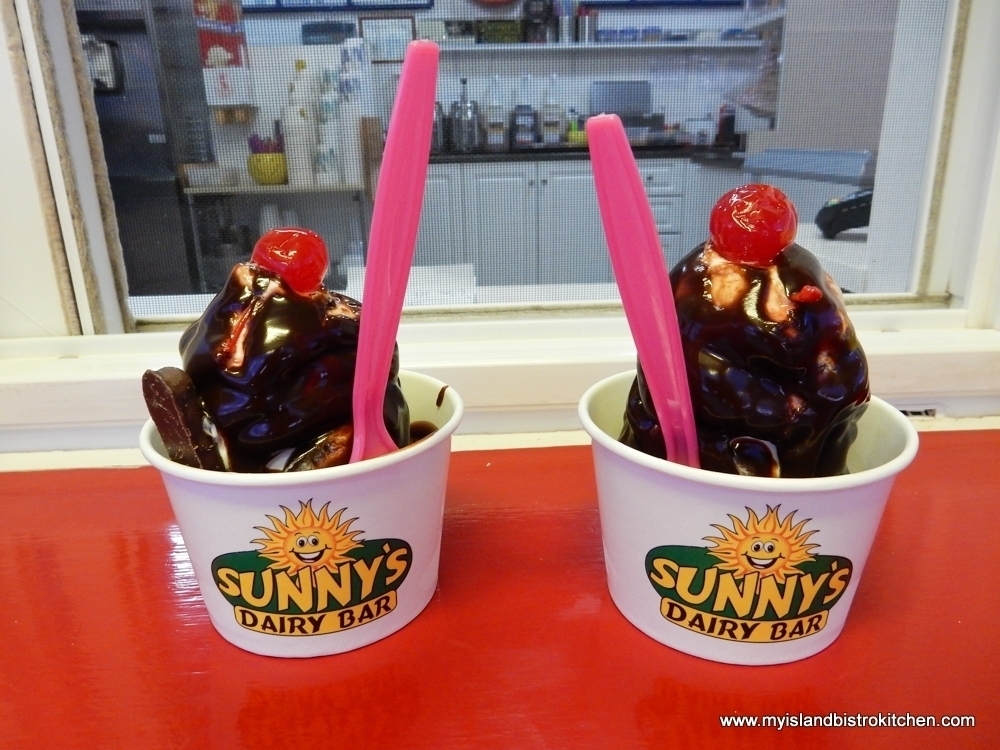
This dairy bar was a new discovery for me this year and I will be back! I opted for a Hot Fudge Sundae, my all-time favorite. The ice cream was the creamiest and richest I have ever had and the hot fudge topping was, well …. sublime!
Hot Fudge Sundae at Sunny’s Dairy Bar, Summerside, PEI
Sunny’s has a long list of ice cream treats on its menu, too numerous to mention here. Portion sizes are very generous. I ordered a small sundae and, as can be seen in the photo, it is a very generous helping! Open seasonally, this is definitely a place to check out for ice cream in Summerside!
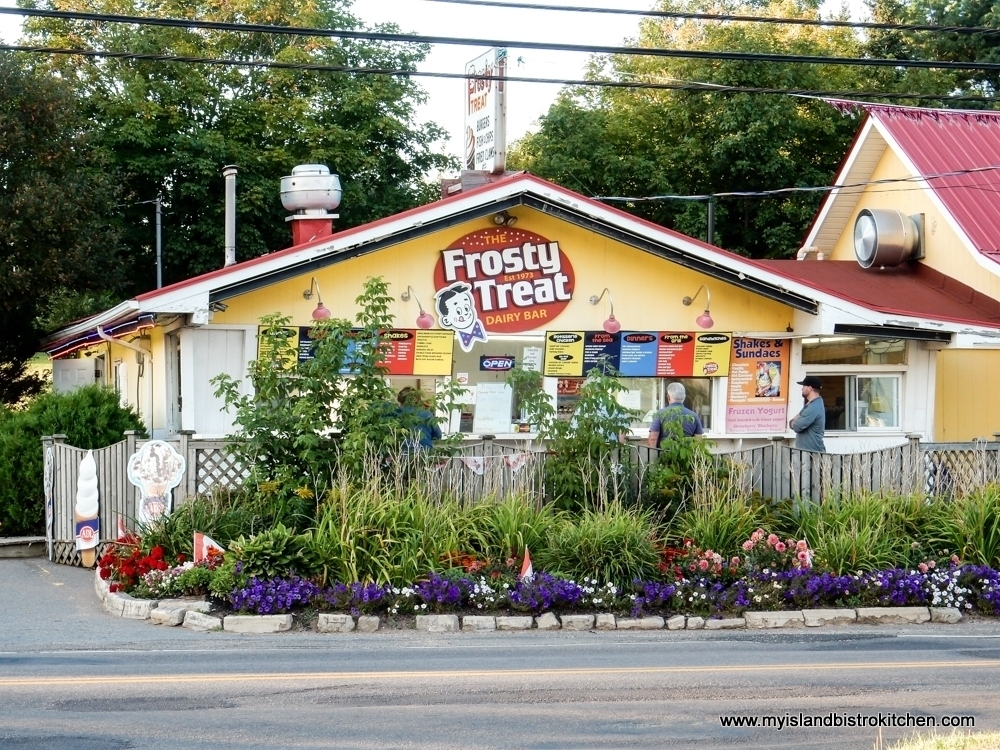
Frosty Treat Dairy Bar
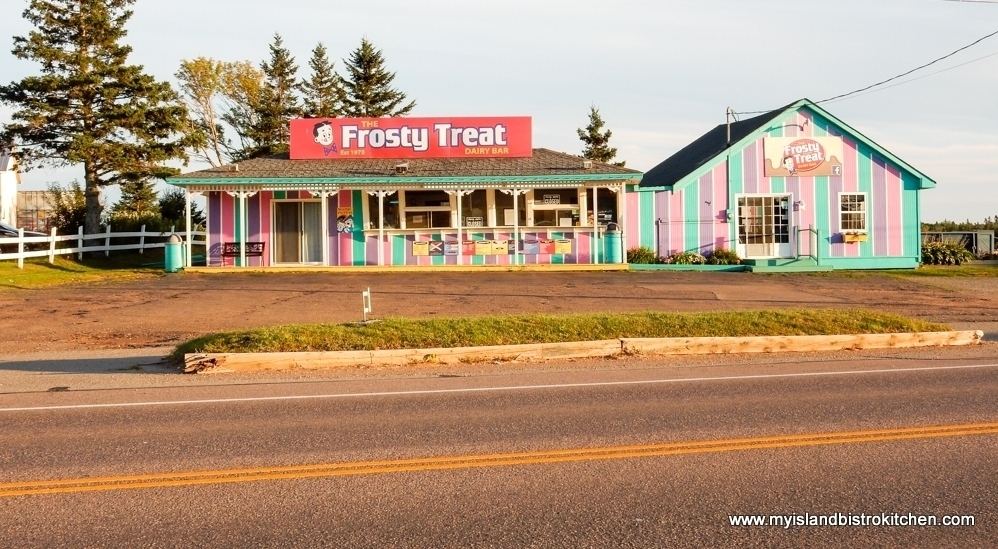
Two (2) locations – Original at 109 Victoria Street West and new one in 2018 at 25010 Veteran’s Memorial Highway, both in Kensington, PEI
Frosty Treat Dairy Bar #1 in Kensington, PEI
A long-time favorite with Islanders, this traditional-style dairy bar is well known for its catchy TV ads “Don’t Drive By! Drive In!” For many Islanders, it will come as no surprise as to why Frosty Treat made my list of “go-to” places for yummy ice cream in PEI. Frosty Treat has been synonymous with great soft-serve ice cream for many years and the frequent line-ups at the dairy bar window on hot summer days and evenings attest to this.
This popular ice cream bar serves up creamy soft-serve ice cream that will satisfy any craving for soft swirly ice cream. Other ice cream treats are also available on Frosty’s menu.
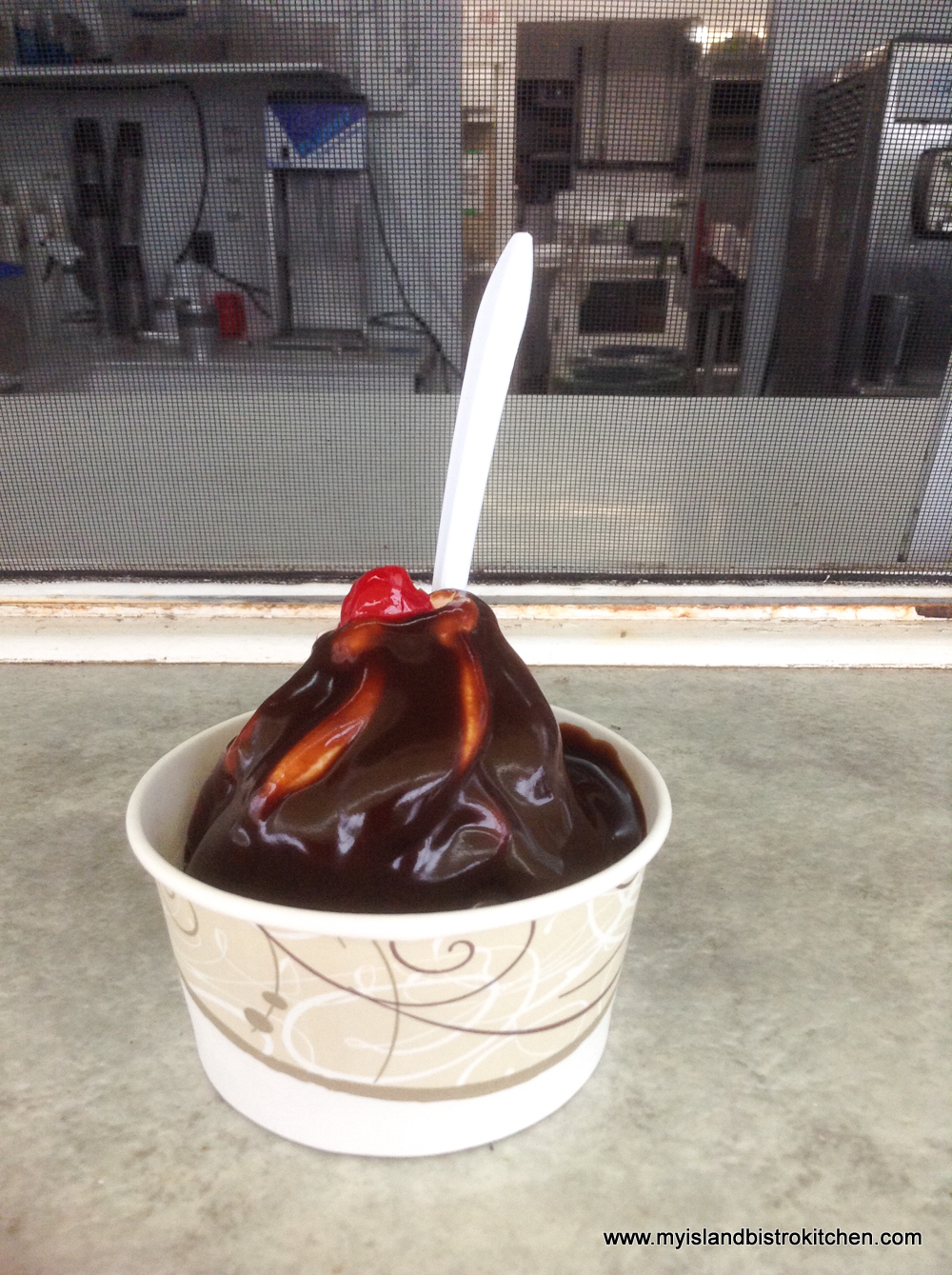
Frosty Treat has been a summer tradition for us for many years. Their Hot Fudge Sundae, in particular, is a perennial favorite. Open seasonally.
Hot Fudge Sundae from Frosty Treat Dairy Bar, Kensington, PEI
If you are in the Kensington area, “don’t drive by, drive in” to one of the Frosty Treat locations for a cool ice cream treat.
Frosty Treat #2 Location in Kensington, PEI
Special Mention
Somerset Ice Cream Bar – New Discovery 2018
2 Somerset Street, Kinkora, PEI
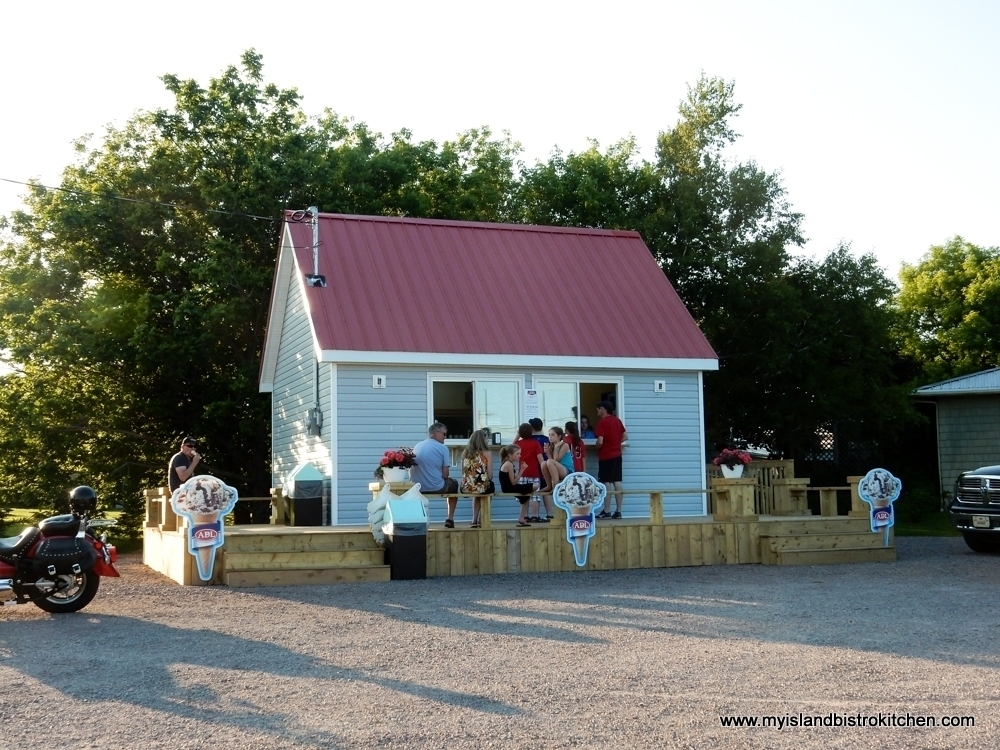
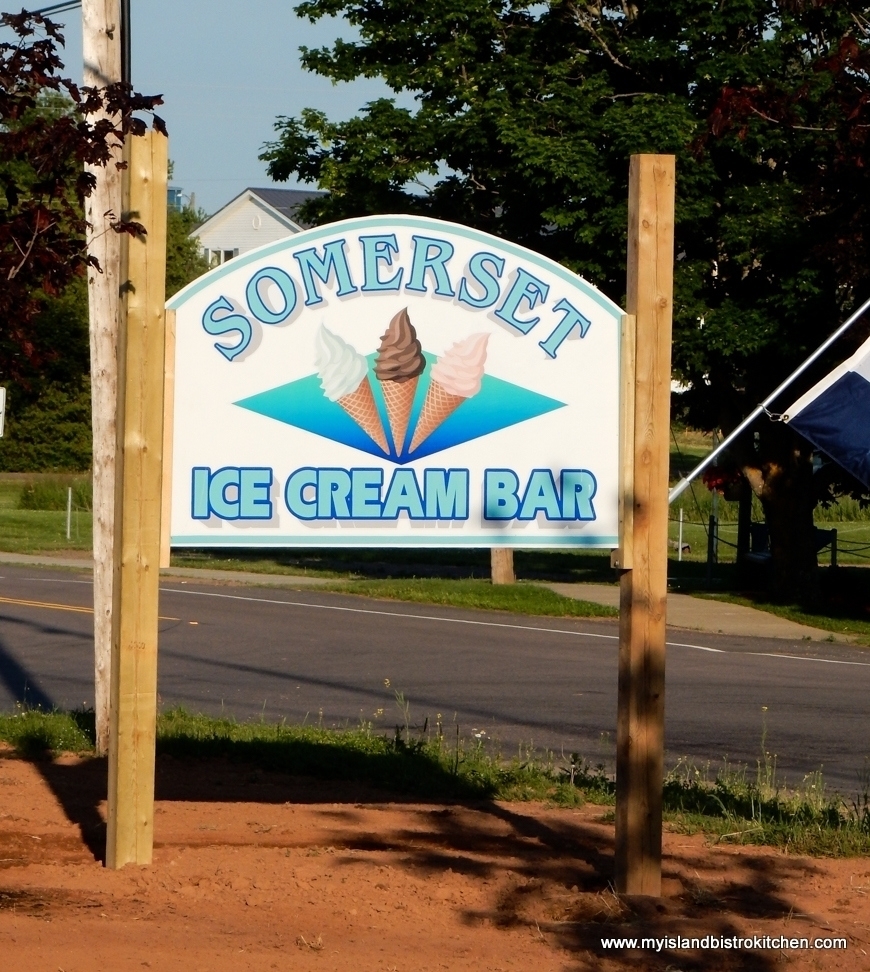
Somerset Dairy Bar, Kinkora, PEI
Located in the small rural village of Kinkora, midway between Charlottetown and Summerside, the Somerset Ice Cream Bar opened for business in summer 2018. What makes this ice cream bar unique, and what earned it a special mention in this article, is that its owner and operator is a young entrepreneur, still in high school (yes, you read that right)!
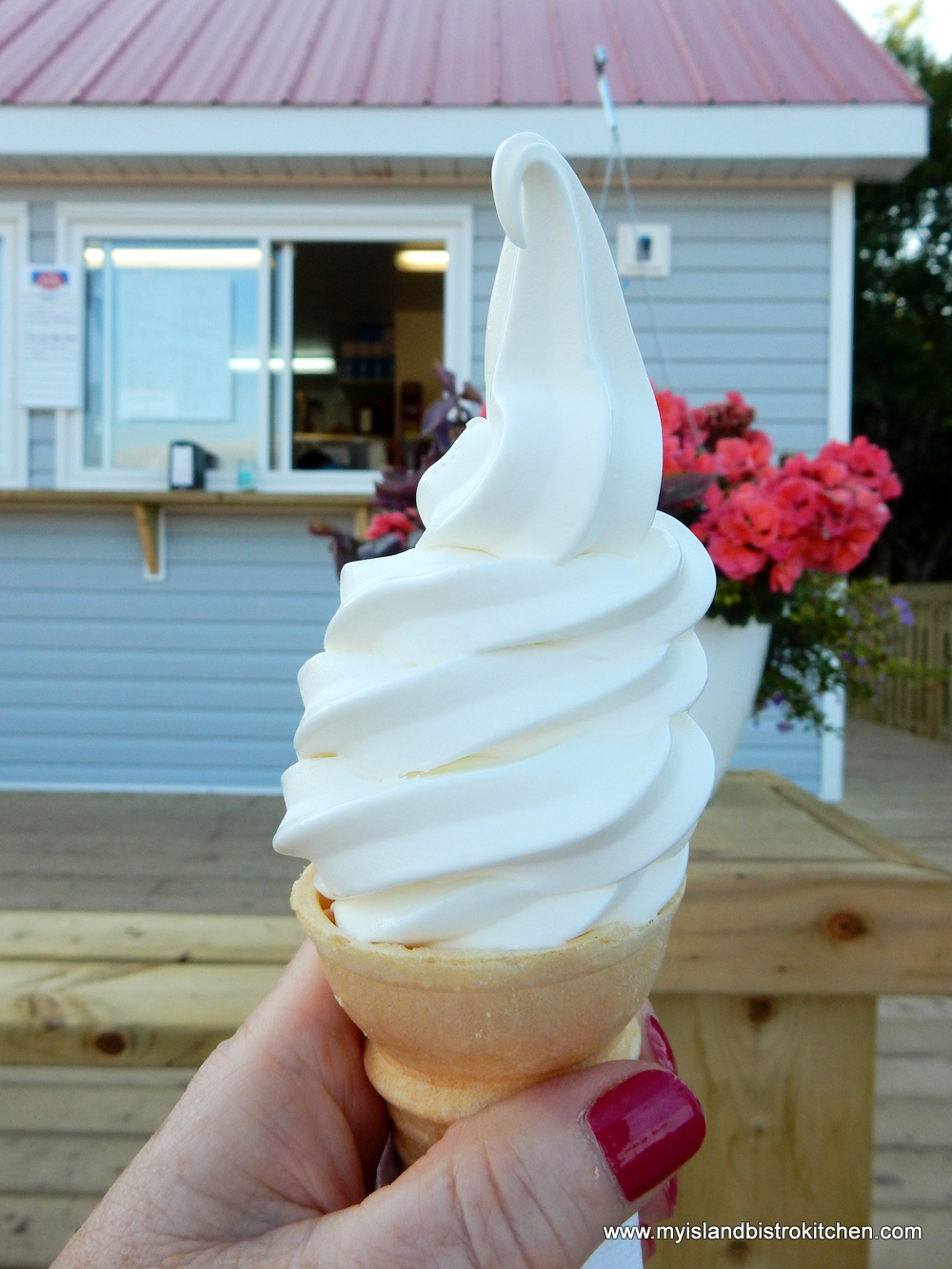
Ice Cream from Somerset Dairy Bar, Kinkora, PEI
Many cones of generous-sized portions of creamy swirled soft-serve ice cream were served out of this new dairy bar this past summer. In traditional dairy bar style, orders are placed at the window. There is no indoor seating but there are benches on the deck around the dairy bar and limited picnic table seating. Open seasonally.
If you are traveling Rte 225 between Summerside and Charlottetown, make it a plan to stop for a tasty treat at this ice cream bar.
So, this is what the waistline could handle this summer! Again readers will note that some of these establishments also serve other types of ice cream and ice cream related treats. However, the purpose of my exercise this summer was to simply find great establishments that specialized in, or were best known for, either hard ice cream or soft-serve ice cream. Others may have differing opinions on my choices but, based on my personal experience on the days I visited the venues, I had great ice cream and service at each of these five (5) venues this year. In my view, you can’t go wrong with an ice cream treat from any of these five (5) venues. All establishments have active social media accounts (and some have websites) that you can check out for more information and hours and season of operation.
We thoroughly enjoy our home province of Prince Edward Island! Our special Island is small enough that we can get to know all parts of it quite well. In summer, especially, we do a lot of day trips all around the Island. Most times, for our day excursions, I pack a picnic lunch and we head off for the day. Sometimes, I have a particular picnic destination in mind and have a good idea if there will be a park nearby that would be suitable for a picnic and, other times, it’s totally by chance where we land at picnic time. Apart from the opportunity to dine outdoors in our all-too-short summer season here on Canada’s Atlantic Coast, transporting our own meal means we can eat wherever we are whenever we are hungry without having to try and be at a certain location where there is a restaurant which may, or may not, be able to accommodate dietary needs.
Our recent day trip took us to the north shore area of the eastern part of the Island. I love PEI lighthouses – the iconic red and white structures are dotted here and there all around the coast of the Island. I had been searching to find the St. Peter’s Bay Lighthouse for some time and was determined to find it this year. So, this was our primary destination on this particular day trip.
St. Peter’s Harbour Lighthouse, PEI
It wasn’t particularly easy to find this elusive lighthouse but, with assistance of an acquaintance who provided directions, I was able to locate it. Access is via a single lane red clay road with a canopy of trees. The adventure was indeed worth it!
After we enjoyed the vista surrounding the lighthouse, not to mention the beautiful beach, we decided it was time to find a place to set out our picnic.
Beach by St. Peter’s Bay Lighthouse, Morell, PEI
I knew of the small park by the water in nearby St. Peter’s Bay where I had had a picnic before (click here to view those photos). What I didn’t recall was the lovely gazebo at this site. This find was a blessing since the temperature had soared to 28C by this time and it was way too hot to eat out in the open with no shelter!
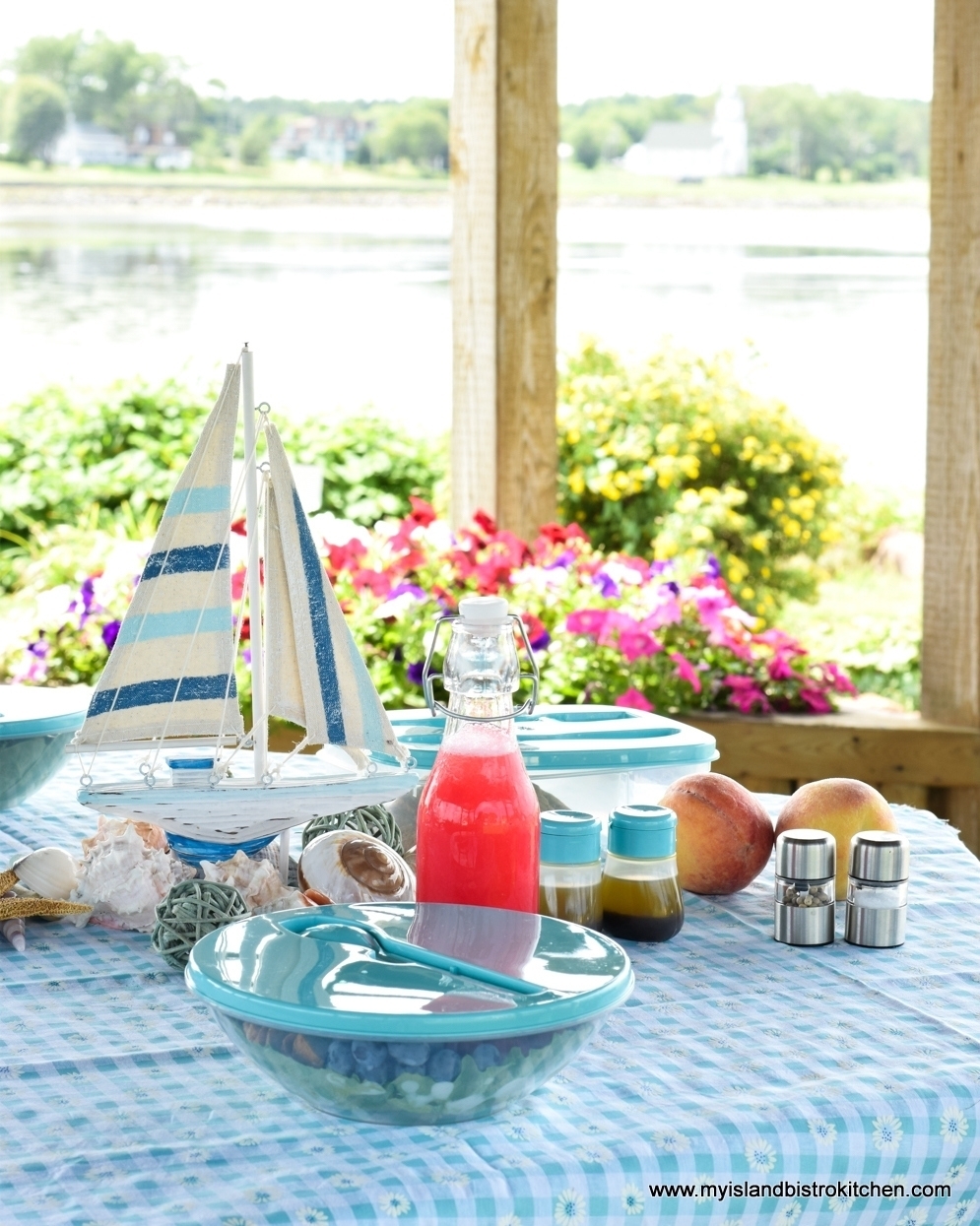
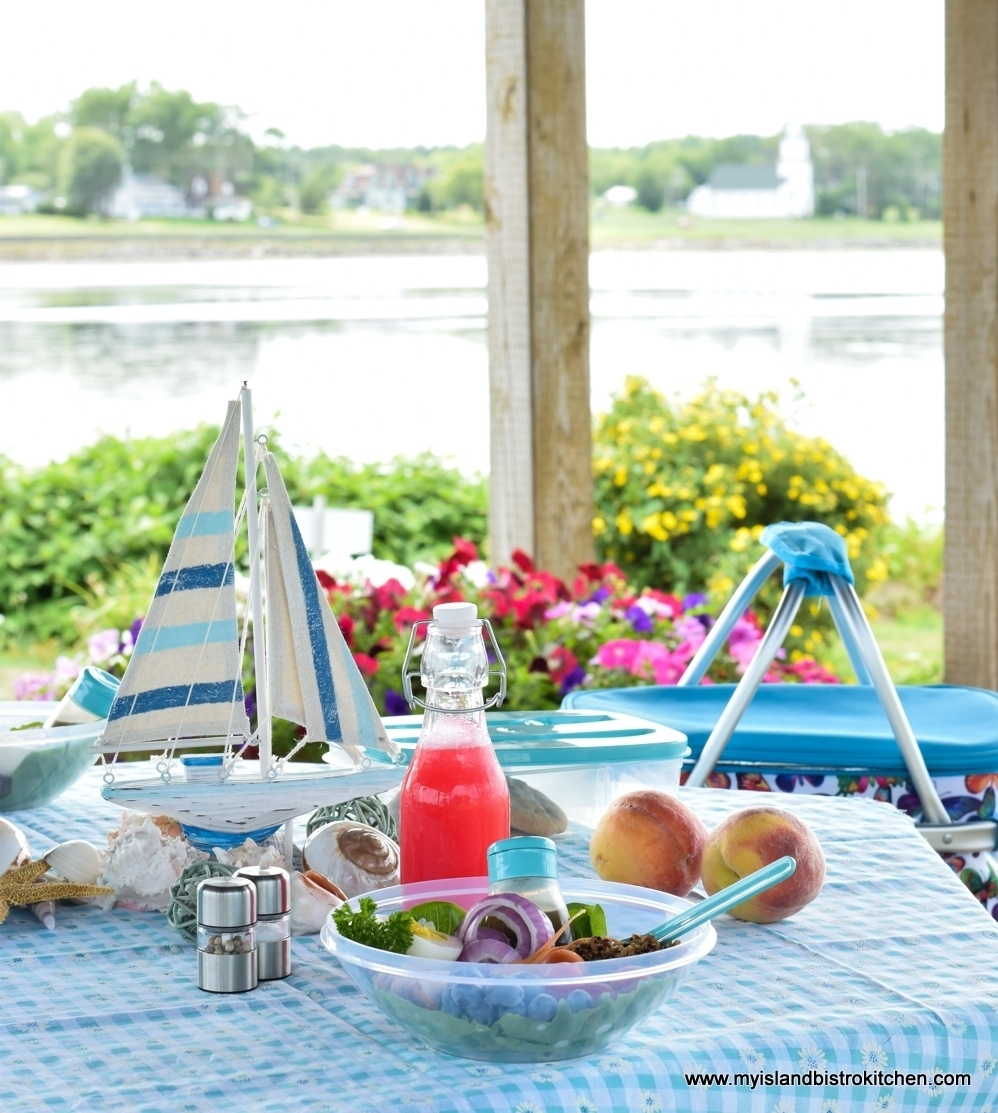
When we arrived, we found the large gazebo unoccupied so immediately went about setting out our picnic lunch. Someone had planted beautiful flowers in boxes around the gazebo and that formed a ready backdrop that I could not have planned or hoped for. Bonus! See how gorgeous the flowers look in the photo below and how they fortuitously match my color scheme and complement the color of the lemonade!
Picnic in a Gazebo
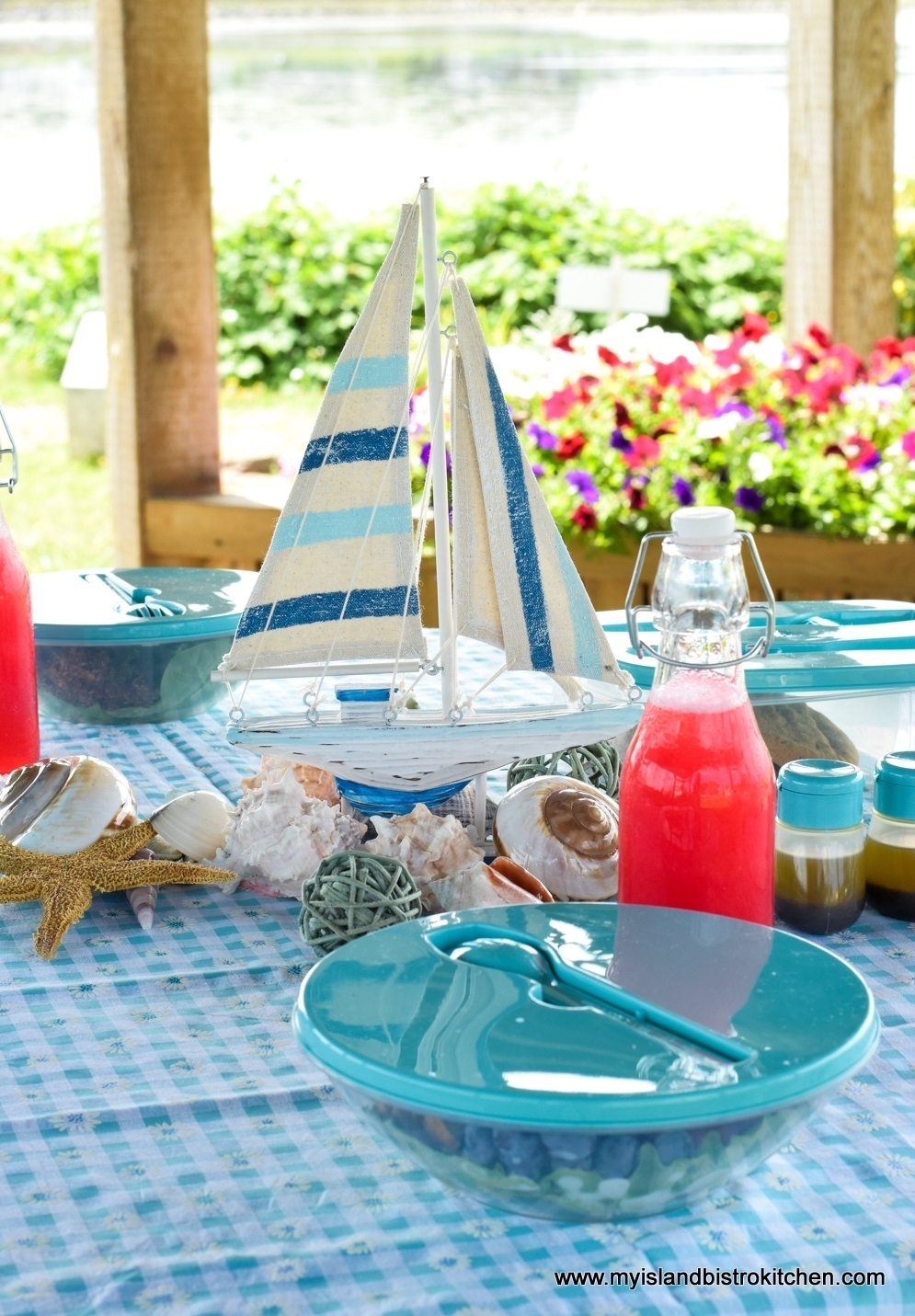
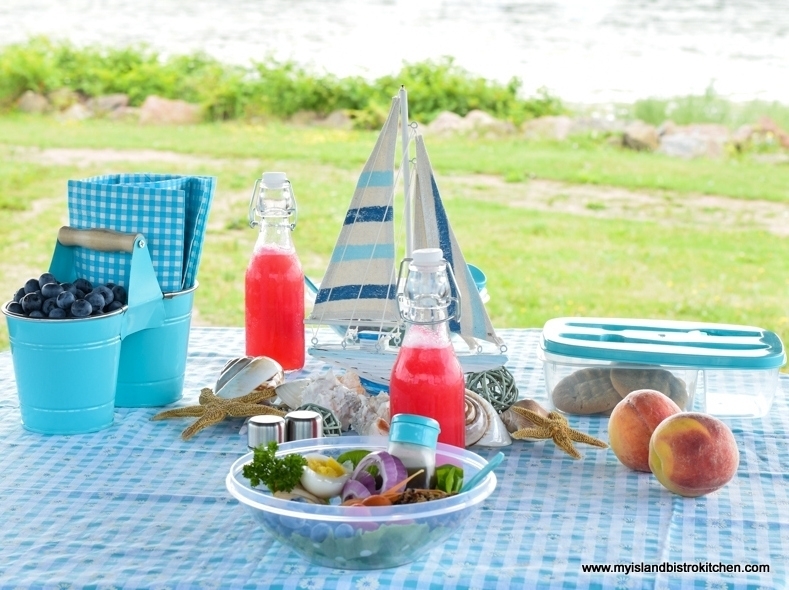
The color theme of my picnic was turquoise, always a summery color. The burst of hot pink in the drink certainly adds a punch of color!
Picnic Salad Bowls
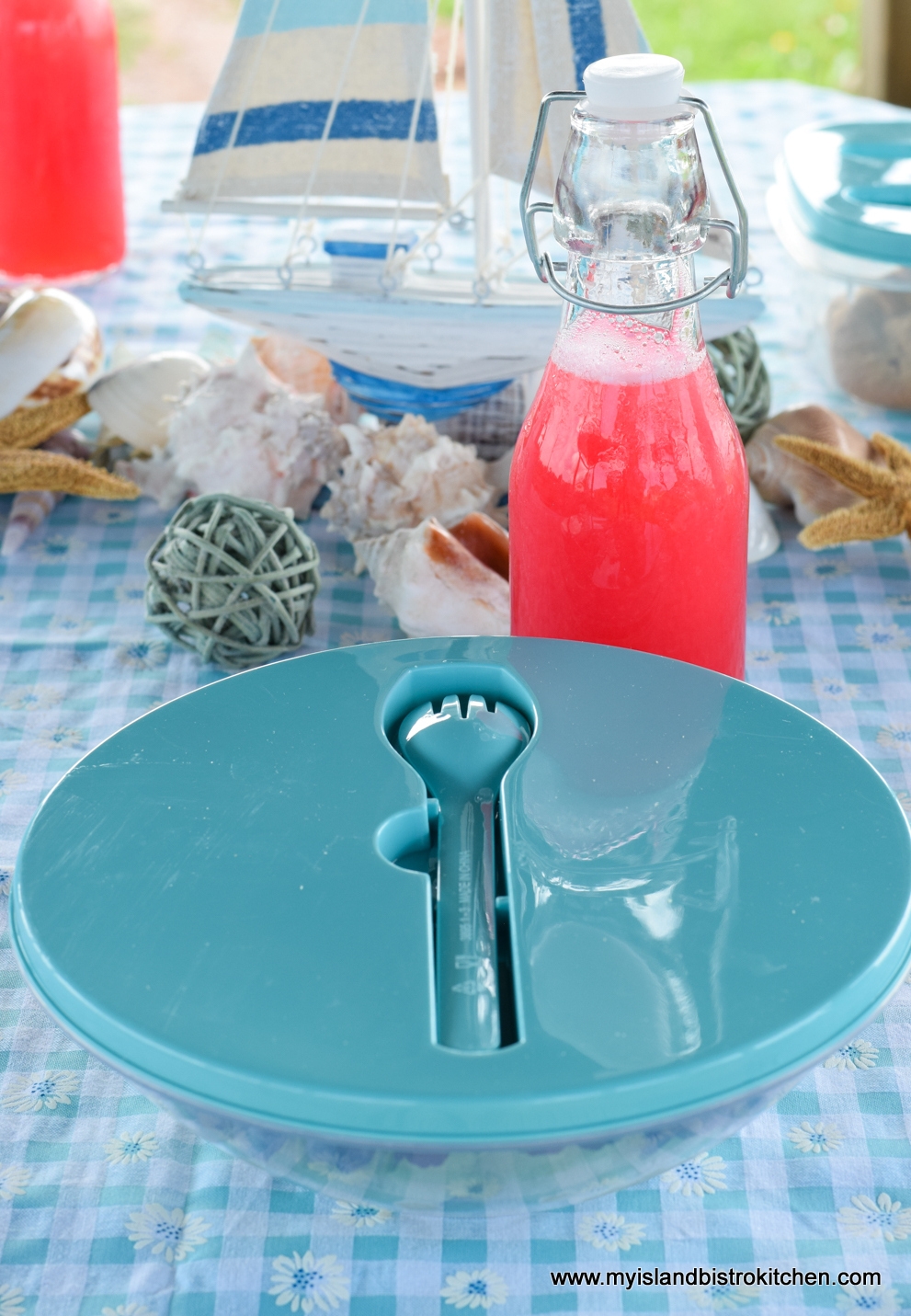
I found the bowls, matching small salad dressing containers, and rectangular dishes at Walmart. Not only are they all color-coordinated in turquoise blue but the dishes come with the needed cutlery built in, a real bonus because there is no need to remember to bring cutlery separately.
Turquoise-themed Picnic
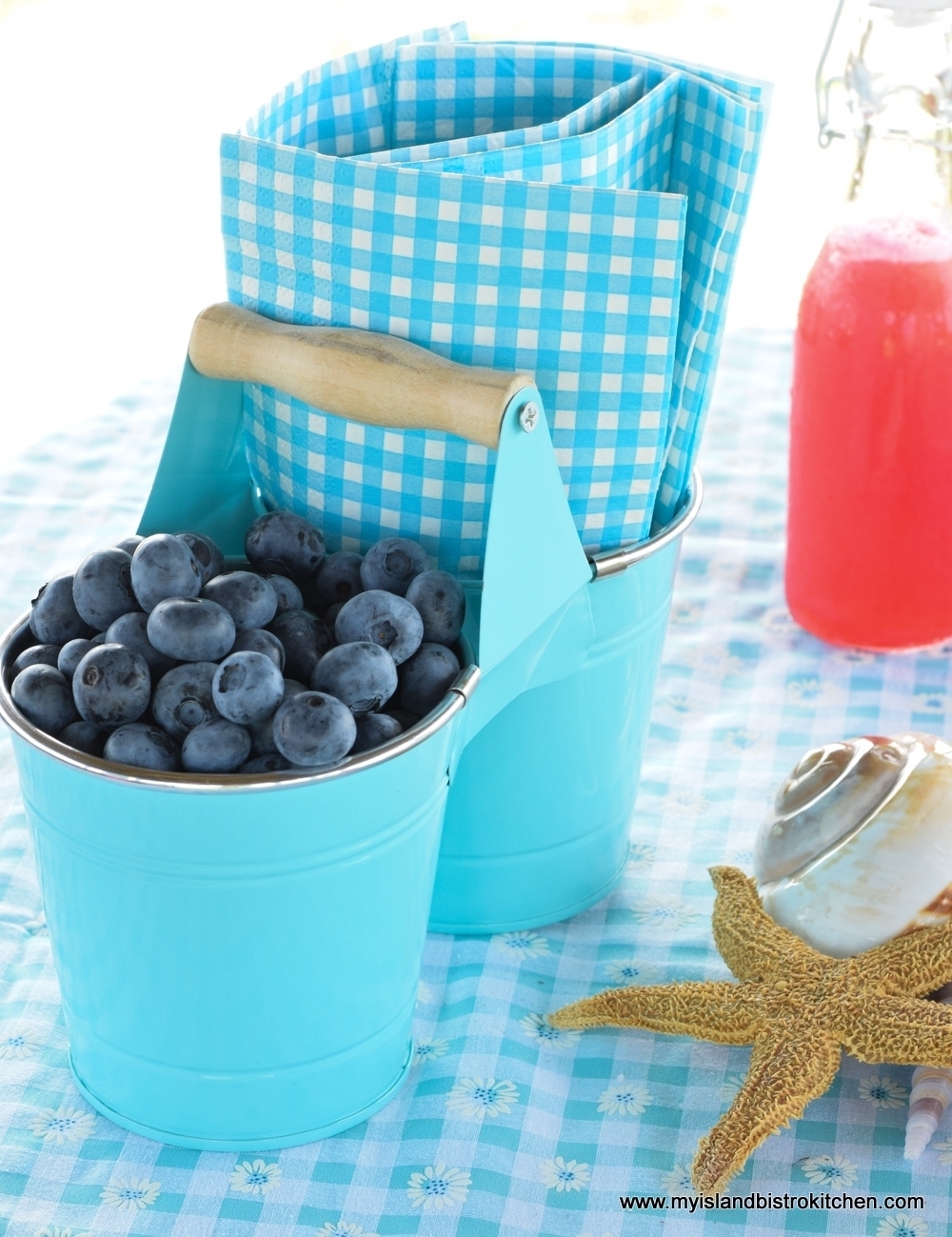
The bowls match my insulated picnic basket. A blue-checked tablecloth and checkered napkins, already part of my picnic arsenal, were found to match as well.
Turquoise and Blueberry Blue Details
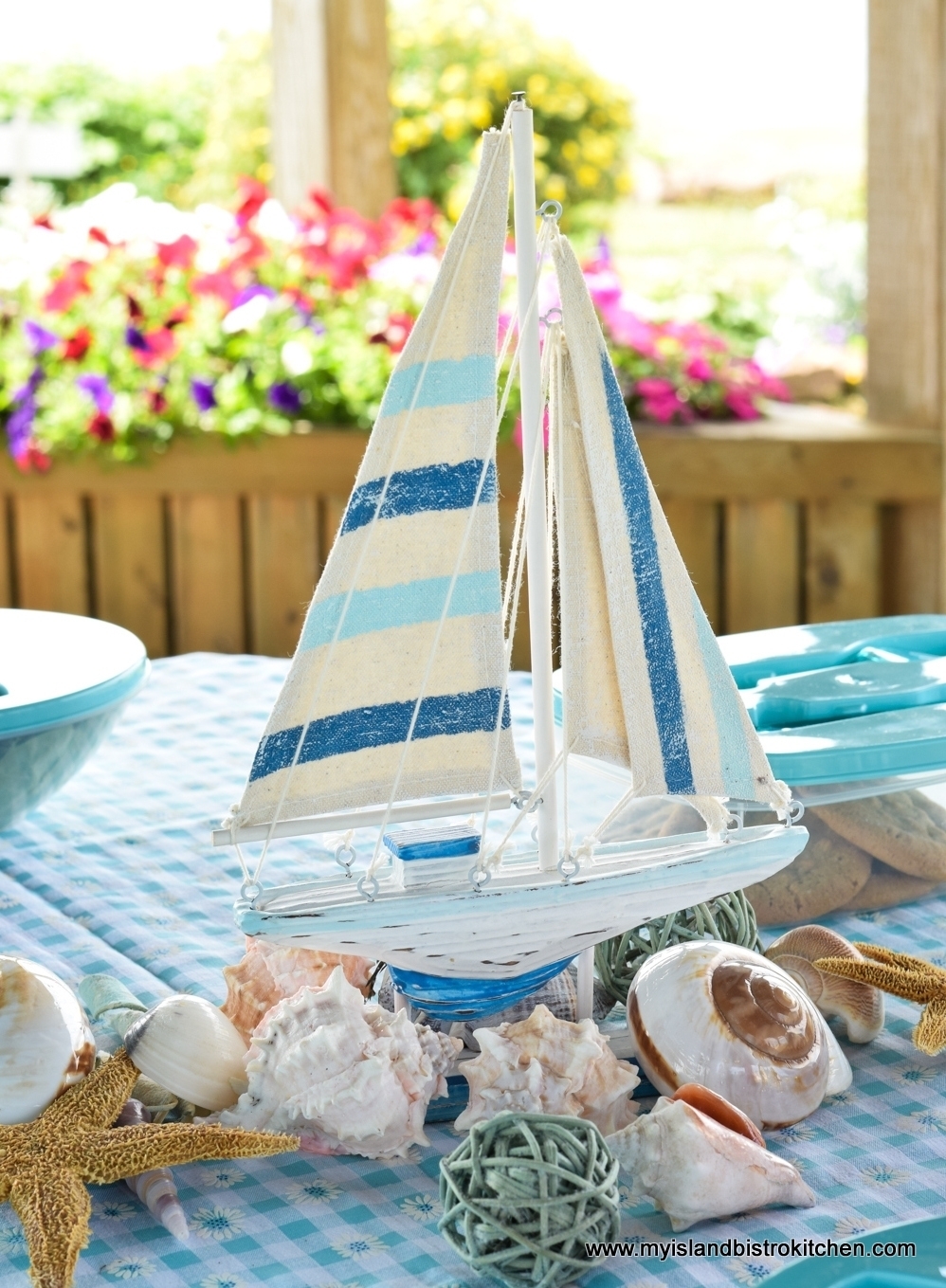
A small model sailboat in matching colors and a collection of shells formed the centerpiece for my tablescape. I figure if I am going to dine outside, I might as well go all the way and set the table attractively! It makes for a more fun and memorable picnic.
Sailboat and Shells Tablescape
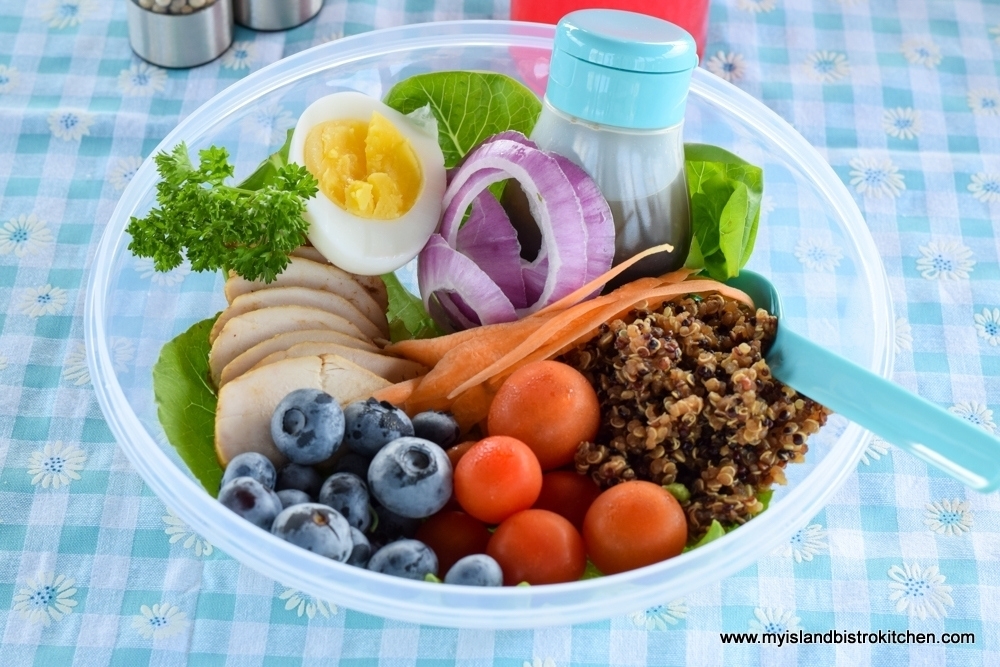
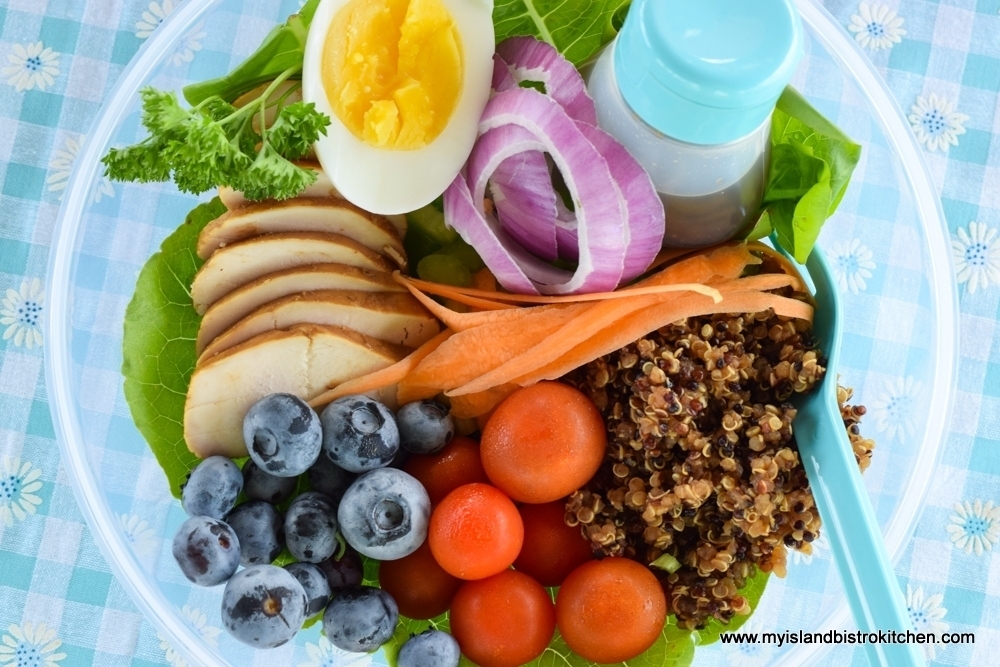
For lunch, I prepared my version of a picnic buddha bowl, ensuring it contained contents that would travel. There is no one right way to make a buddha bowl but, typically, they contain some kind of grain (preferably high fibre), veggies and fruit, a protein source, and greens. I began by layering the bowl with lettuce from our garden. Our garden has been a good producer this year so the cherry tomatoes, celery (it’s there but it’s hiding in the photo), and carrots are garden-fresh. The grain I chose to use was a tri-colored quinoa. To make the meal more substantial and to add some protein, I included a half hard boiled egg in each bowl. The addition of the red onion gives a flavor and color boost. I love how colorful and healthy this salad is!
Main Meal Picnic Salad
I often brine and roast boneless skinless chicken breasts for various uses and they are perfect sliced for a main meal salad or as added protein in a buddah bowl.
Picnic Salad
Some freshly picked blueberries from the Tryon Blueberries U-pick added a bit of color, texture, and sweetness to the salad. A simple balsamic dressing was all that was needed to finish the salad. This type of meal is great for a picnic. The meal is completely prepped at home and contained in a bowl with the dressing added at the time of serving. The meal travels well – I use several ice packs in my insulated picnic basket to keep the food good and cold. At meal time, it is simply a matter of removing the cover from each diner’s bowl and the meal is ready to go. Clean-up is super easy because the covers pop back on to the bowls and the utensils fit inside the bowls so there are no messy plates and utensils.
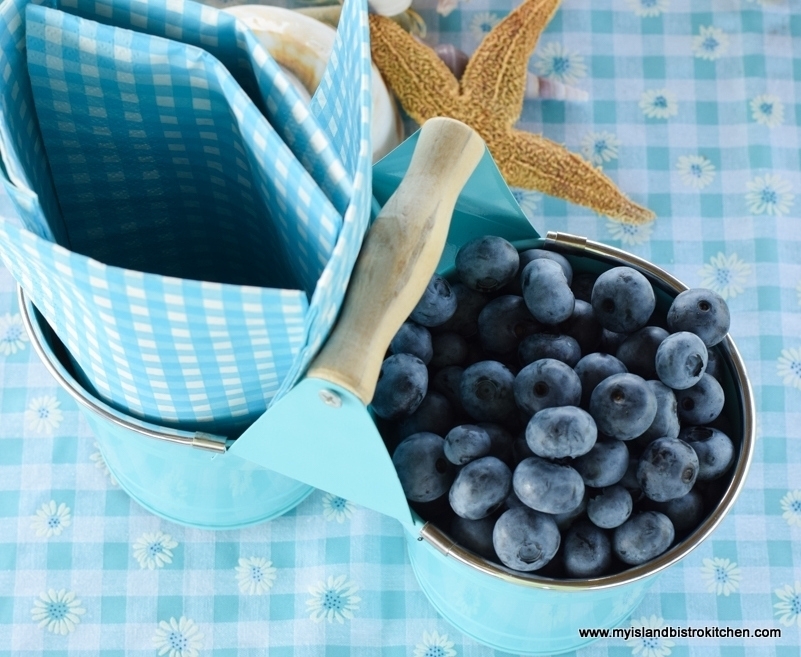
These high bush blueberries are great snacking berries and I often pack them in my picnic basket when the berries are in season. Today, their blue color matches my color scheme, too!
High Bush Blueberries
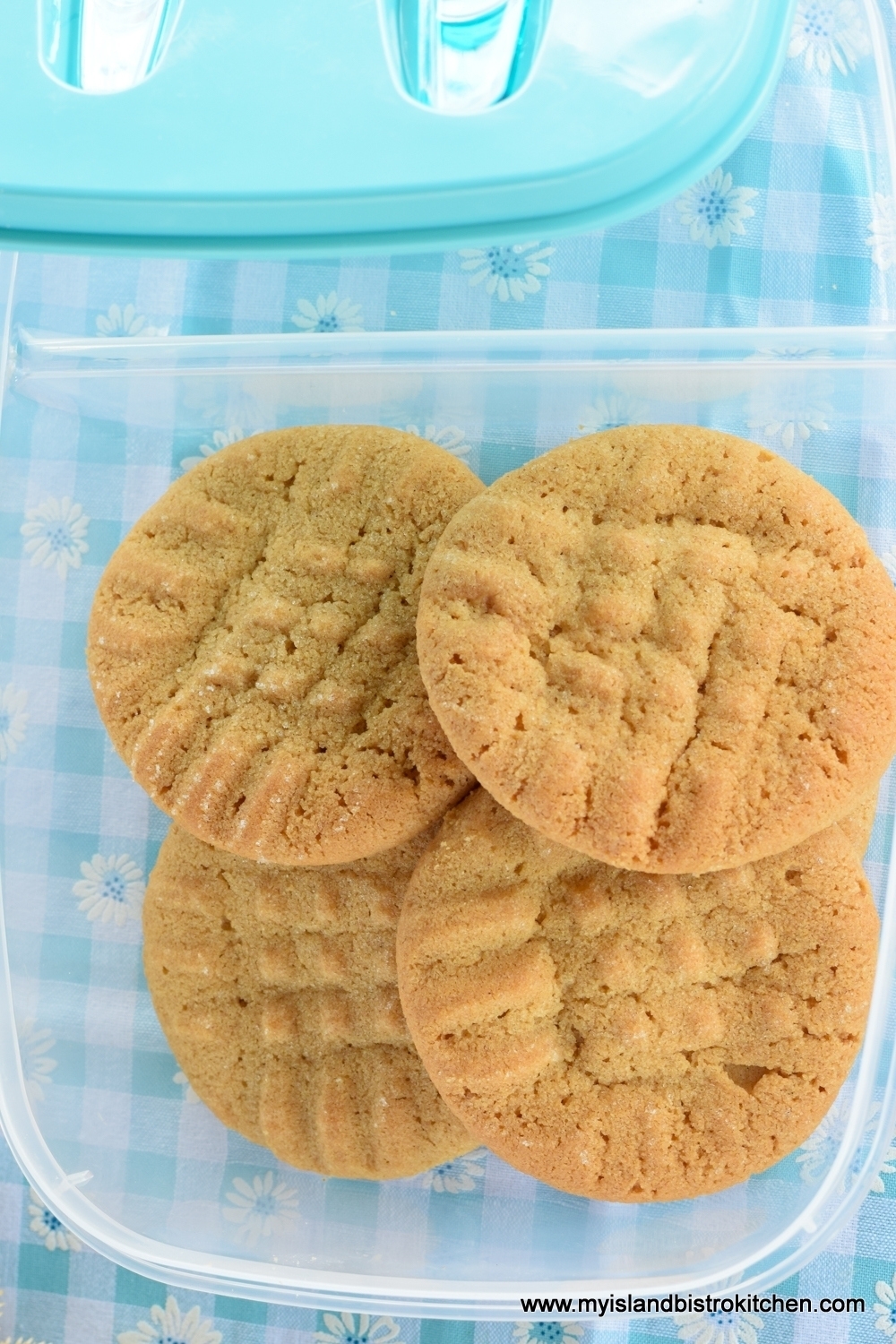
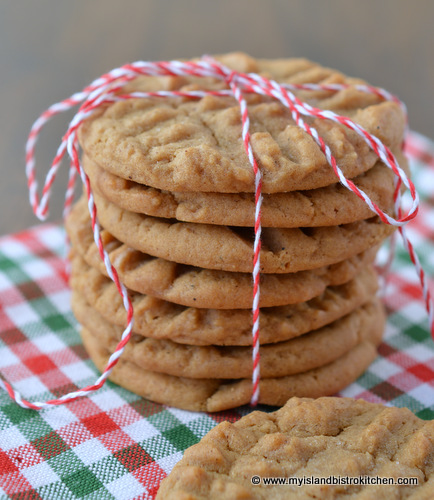
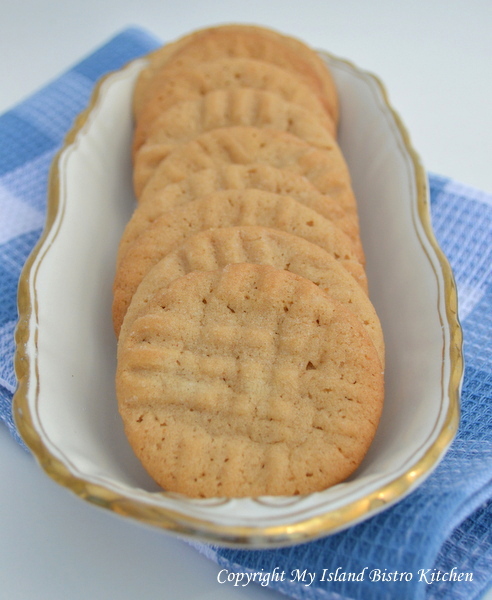
Peanut butter cookies are always a great stand-by picnic treat. They are easy to make, easy to transport, and satisfy the sweet tooth. For my recipe, click here.
Peanut Butter Cookies
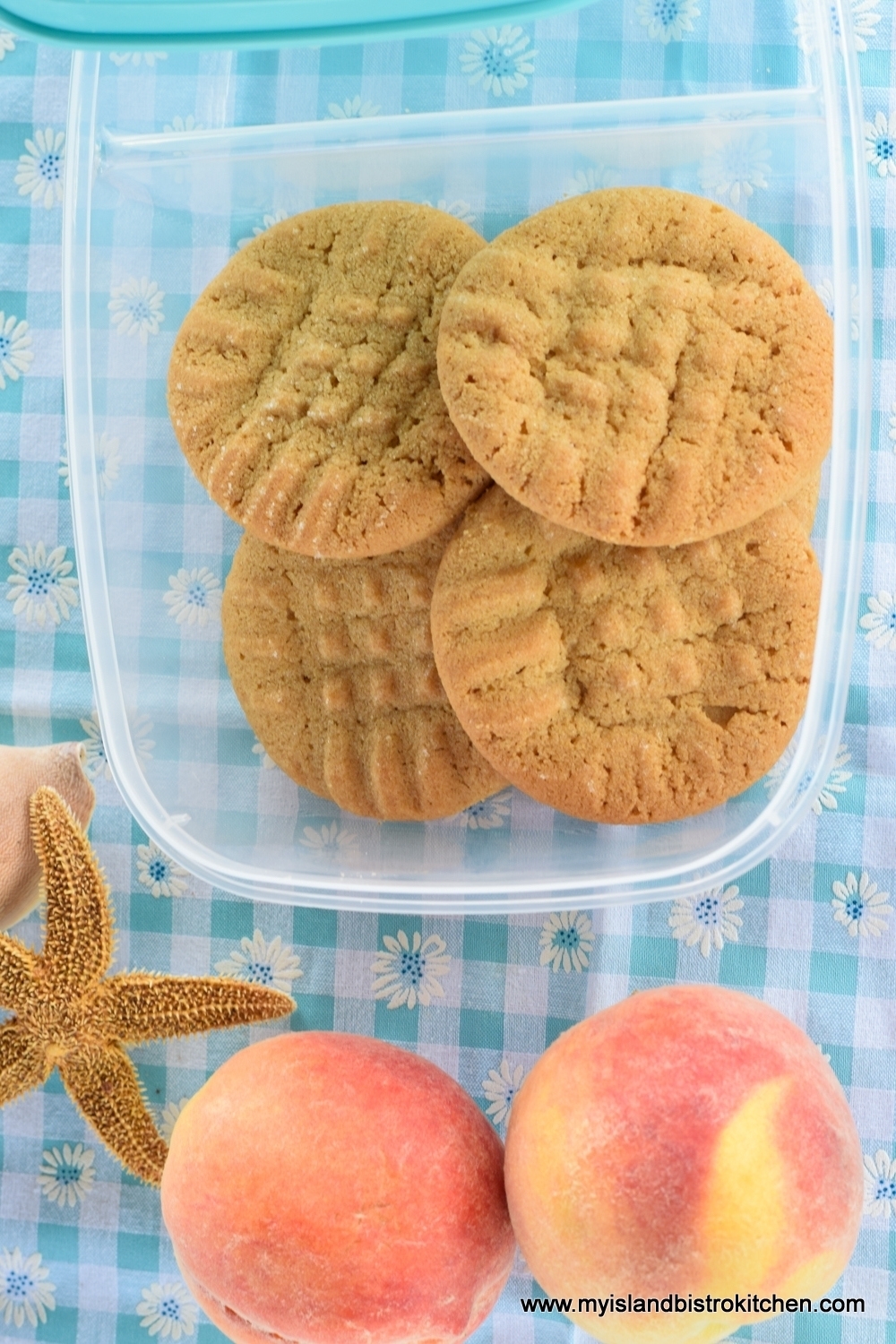
Peaches are also a great fruit to take along on picnics. I love to incorporate the flavors of summer into my picnic menus.
Peaches and Cookies
I love the little bottles in the photo below. When I made the rhubarb lemonade earlier in the summer, I froze some in these bottles to have it ready for picnics. The bottles help to keep the food cool as we travel and they quickly finish thawing completely when removed from the cooler as the picnic is being laid out. This is a super tasty (and colorful) summer drink – you can access my recipe by clicking here.
Picnic in St. Peter’s Bay, PEI
I hope you have enjoyed a peek into my picnic in the gazebo in St. Peter’s Bay, PEI! The Island has many picturesque places suitable for picnics and each comes with its own unique view.
Pin Me To Pinterest!
Picnic in St. Peter’s Bay
For other picnic inspiration from My Island Bistro Kitchen, check out these:
“Bounty of the Sea” Cooking Class at The Table Culinary Studio in New London, PEI
Tucked away on the Graham’s Road (Route 8), in the picturesque rural community of New London, Prince Edward Island, you will find The Table Culinary Studio that offers short (between 3.5 and 4.5 hours) cooking classes that focus primarily on cooking with fresh, local Island foods. This experience is a great way to learn about the Island food culture.
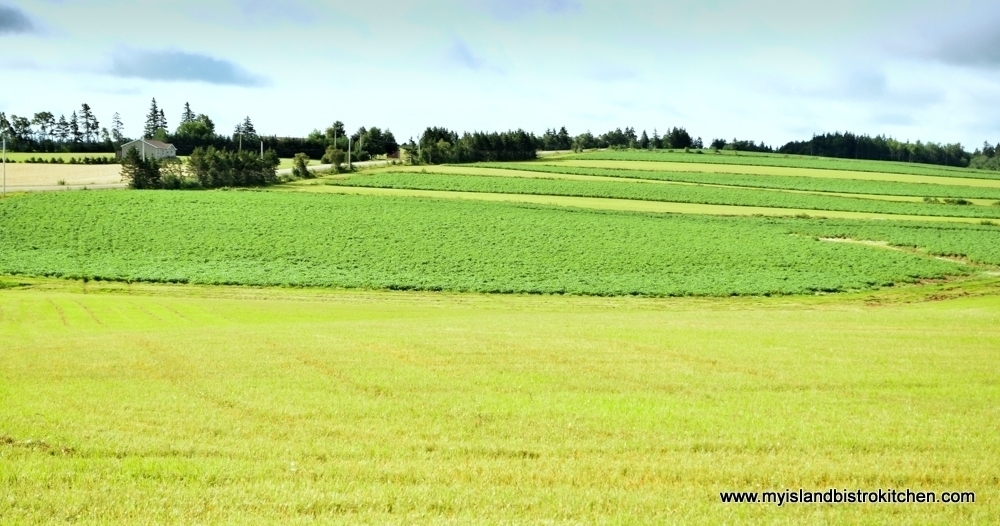
The Gently Rolling Hills of New London, PEI
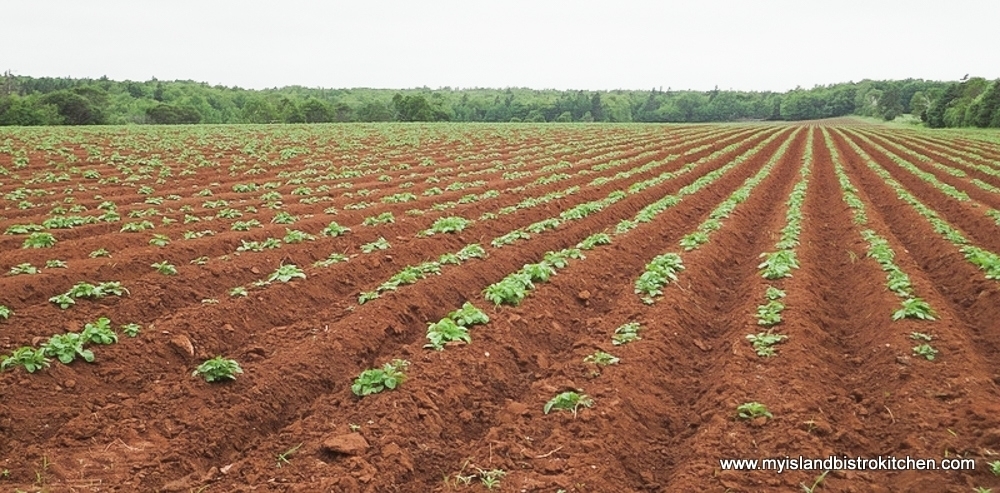
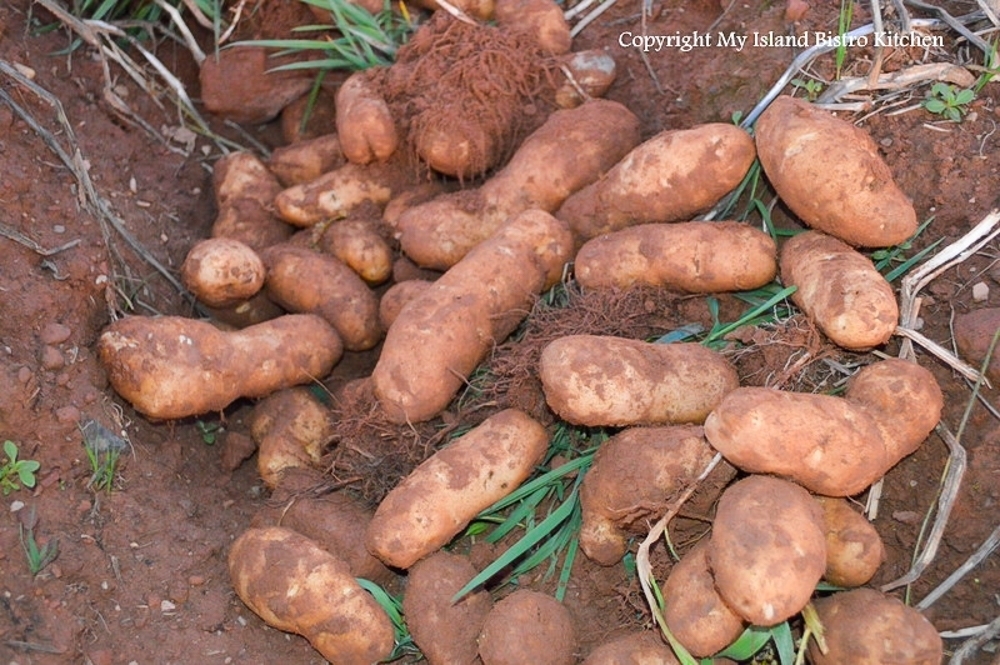
The rural setting is quintessential PEI. Fields in shades of green contrasted with the Island’s iconic red soil take visitors to the heart of some of the Island’s most fertile farm land.
Field of Potatoes in PEI’s Red Soil
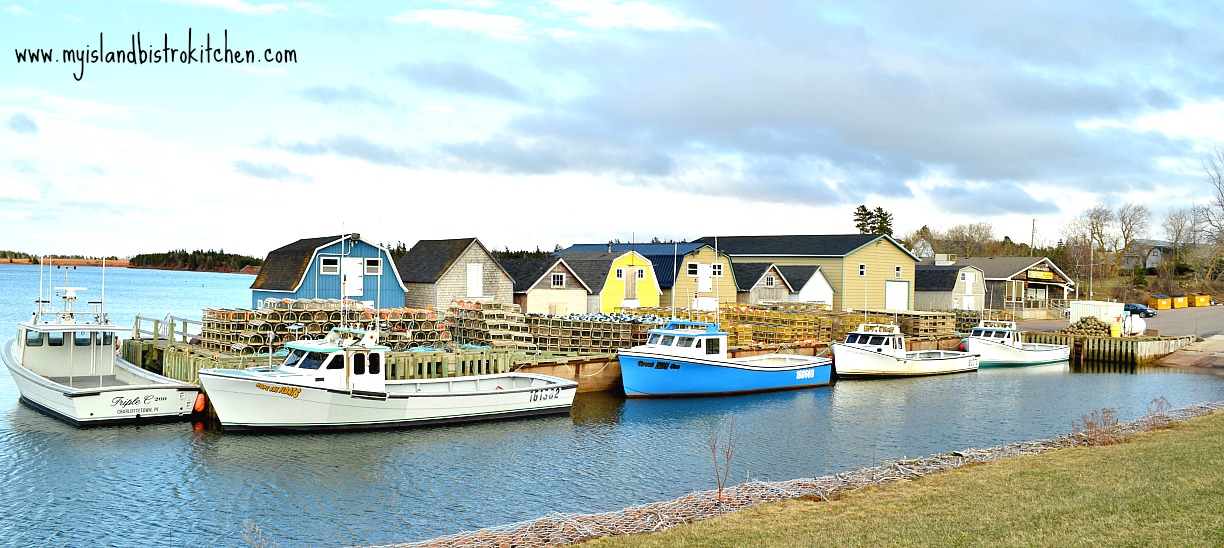
Just down the road is New London Harbour, home to a small lobster fishing fleet and the grounds for other seafood like oysters, quahogs, and mussels. Not far away, quality food can be sourced from dairy and beef farms, organic farmers, beekeepers, cheesemakers, and garlic growers. Could there be a more authentic location for a PEI culinary studio!
Lobster Boats at New London Harbour, PEI, Canada
While it is no secret that PEI has lovely scenery to enjoy, spectacular beaches and golf courses, and many attractions to keep visitors busy exploring our Island, many come to the Island knowing that PEI offers great food from the land and sea.
Cavendish Beach, PEI
Our potatoes, oysters, mussels, and lobster, in particular, are shipped all over the world and these Island products are well known, respected, and sought after for their high quality.
PEI Potatoes
So, what better way to experience the Island foods first hand than to take a short cooking class to learn more about them and how they can be prepared.
The Table Culinary Studio (formerly Annie’s Table) has been in operation since 2012, offering an array of short cooking classes on a myriad of topics. Under new ownership in 2016, The Table, with owner/chef Derrick Hoare at the helm, continues with the tradition of engaging culinary aficionados in ways to prepare local Island foods such as lobster, oysters, mussels, scallops, beef, cheese, and so forth. The focus is very much on using fresh local ingredients that are in season and, by extension, acquainting participants with the rich Island food culture.
The Table offers a number of hands-on cooking classes that include (at the time of writing) Bounty of the Sea, Black Gold (cured garlic), Farm to Table, Marilla’s Table, Hive to Table, Let Them Eat Beef, Oyster Obsession, Say Cheese, Vivacious Vegan, Applelicious, Artisan Bread, Gluten Free Gourmet, and Helping Hands. The Table operates seasonally from May to October to coincide with the Island’s tourism season. Several of the cooking classes involve field trips to farms and other local food producers to see, first-hand, how food is grown or produced and to pick up some local ingredients to bring back to The Table to be used in the class that follows. This form of experiential tourism provides the opportunity for the learners to create wonderful memories of their vacation time in PEI, connect directly with PEI food producers, and to learn more about the Island’s food culture and the role that farming, fishing, and other food production play in the Island’s economy and way of life.
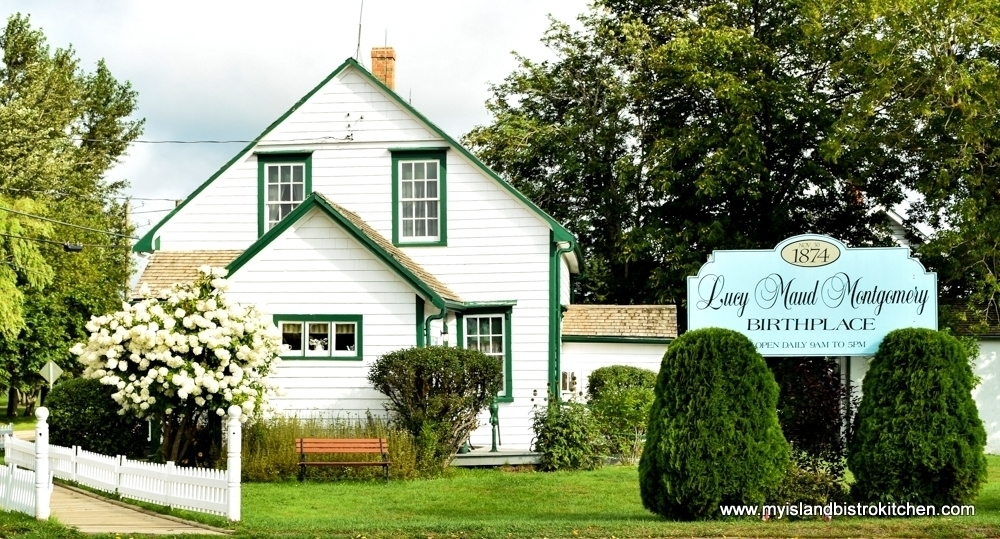
I recently participated in the “Bounty of the Sea” cooking class at The Table which is located within walking distance to the house in which famed Island authoress Lucy Maud Montgomery was born and not far by vehicle to the resort municipality of Cavendish.
Birthplace of authoress Lucy Maud Montgomery, New London, PEI
But, before I take you on the adventure with me, here is a brief description of the venue and what a cooking class is like at The Table.
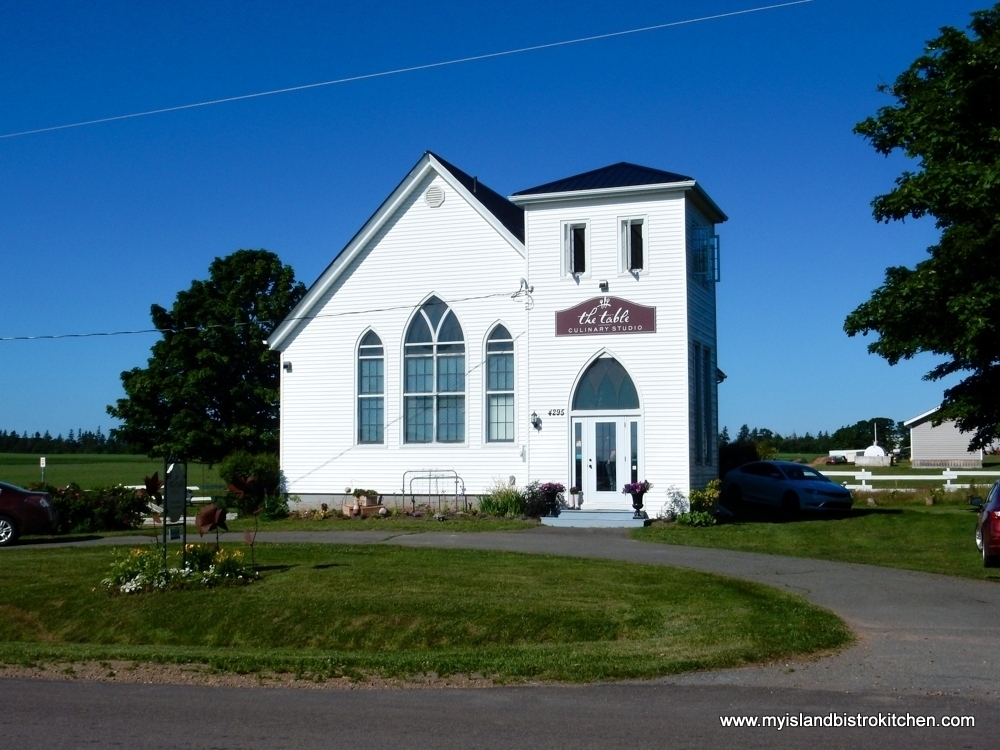
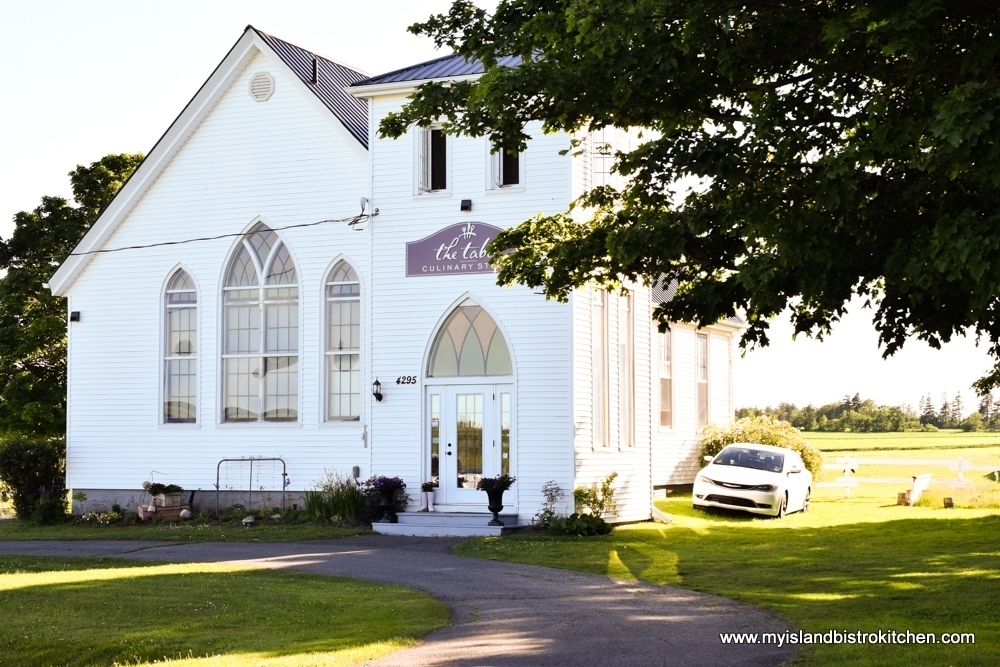
The Table Culinary Studio, New London, PEI
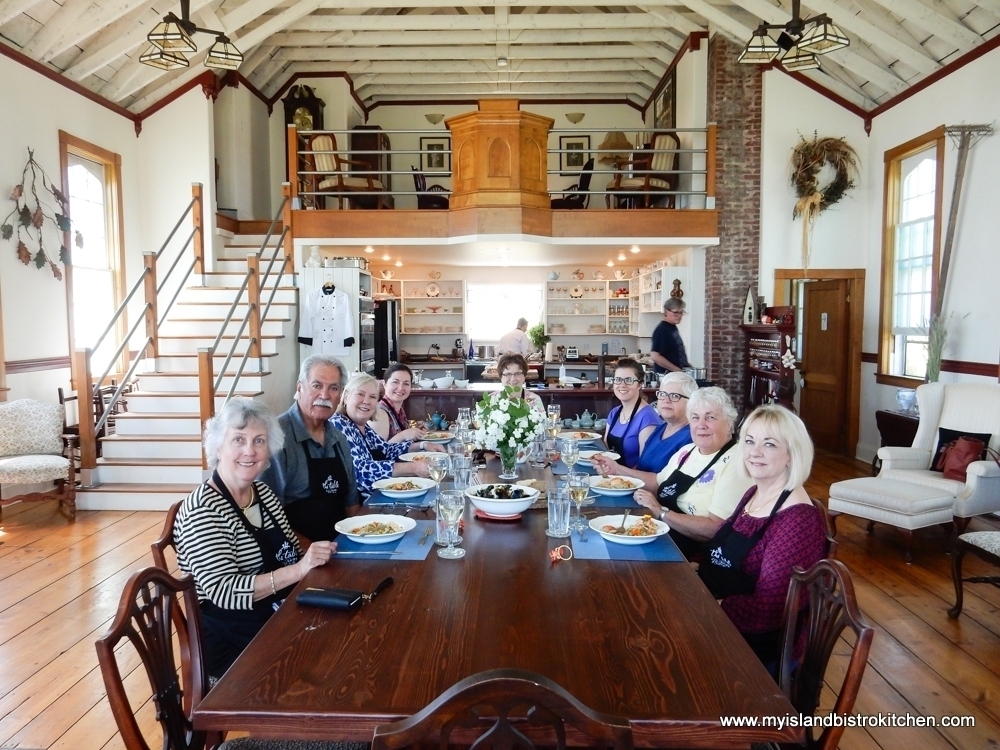
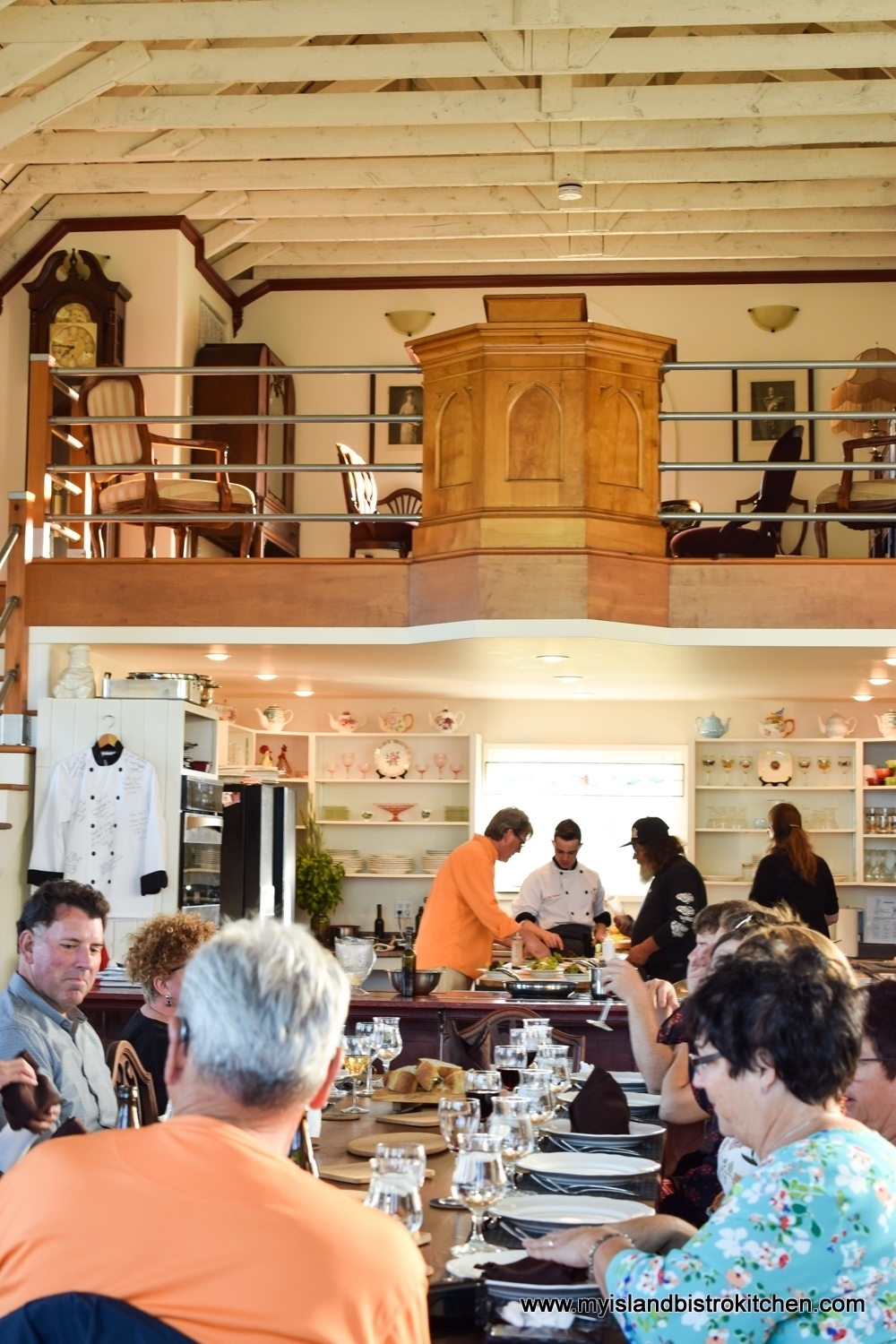
What makes this culinary studio unique is its venue. It is located in a small white repurposed country church, very typical of so many seen in several Island communities. Inside the church, the pews have been removed and, in their place, is a large harvest table where, in a few hours time, class participants will gather to enjoy the lavish spread of the morning’s cooking. The church’s altar has been elevated to a loft setting and the building is tastefully furnished.
Students Gather at the Harvest Table Following a Cooking Class at The Table Culinary Studio in New London, PEI
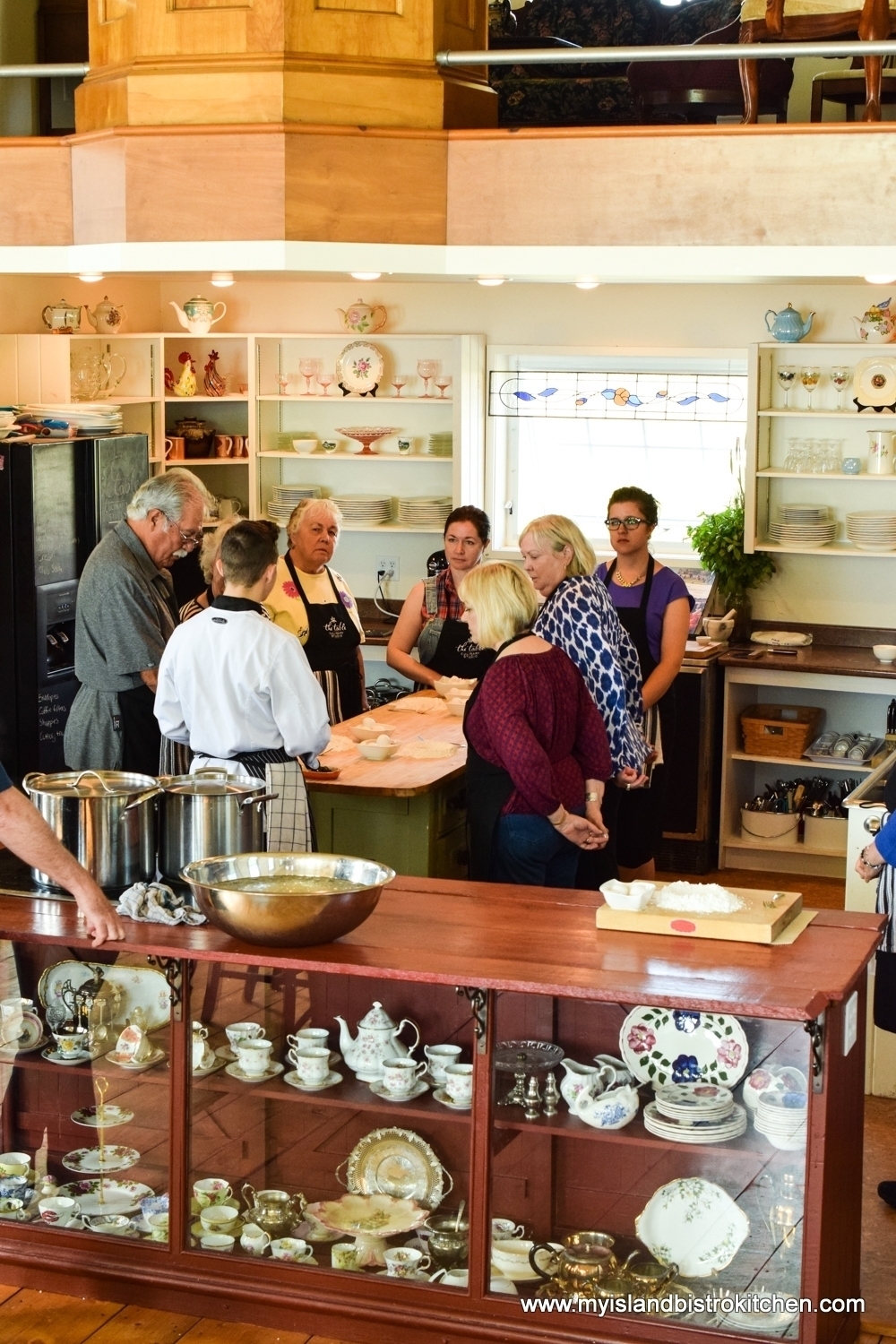
The original altar and choir loft locations have been transformed into an open teaching kitchen.
The Kitchen at The Table Culinary Studio, New London, PEI
Class size is small and intimate – only a maximum of 10 participants per cooking class. This ensures that each person has a front row view as the culinary team teaches the cooking or baking techniques in the open-style kitchen. It also allows for participants to be actively engaged and participating in the cooking or baking activities.
The Table Culinary Studio, New London, PEI
The culinary team consists of owner/chef Derrick Hoare, Executive Chef Michael Bradley, and Events Coordinator Christine Morgan. The atmosphere is unhurried and very sociable. Strangers become friends over the commonality of food. With a growing hunger for knowledge about where one’s food comes from and how it is grown, produced, or harvested, cooking classes appeal to most age demographics and skill levels. No need to worry if you are not an experienced or accomplished cook – the classes offer something for everyone, including a scrumptious meal after the class in the beautifully appointed old country church.
So, now on to my adventure as a participant in The Table’s “Bounty of the Sea” cooking class. After morning coffee upon arrival, everyone got suited up with their aprons and side towels.
At The Table Culinary Studio in New London, PEI
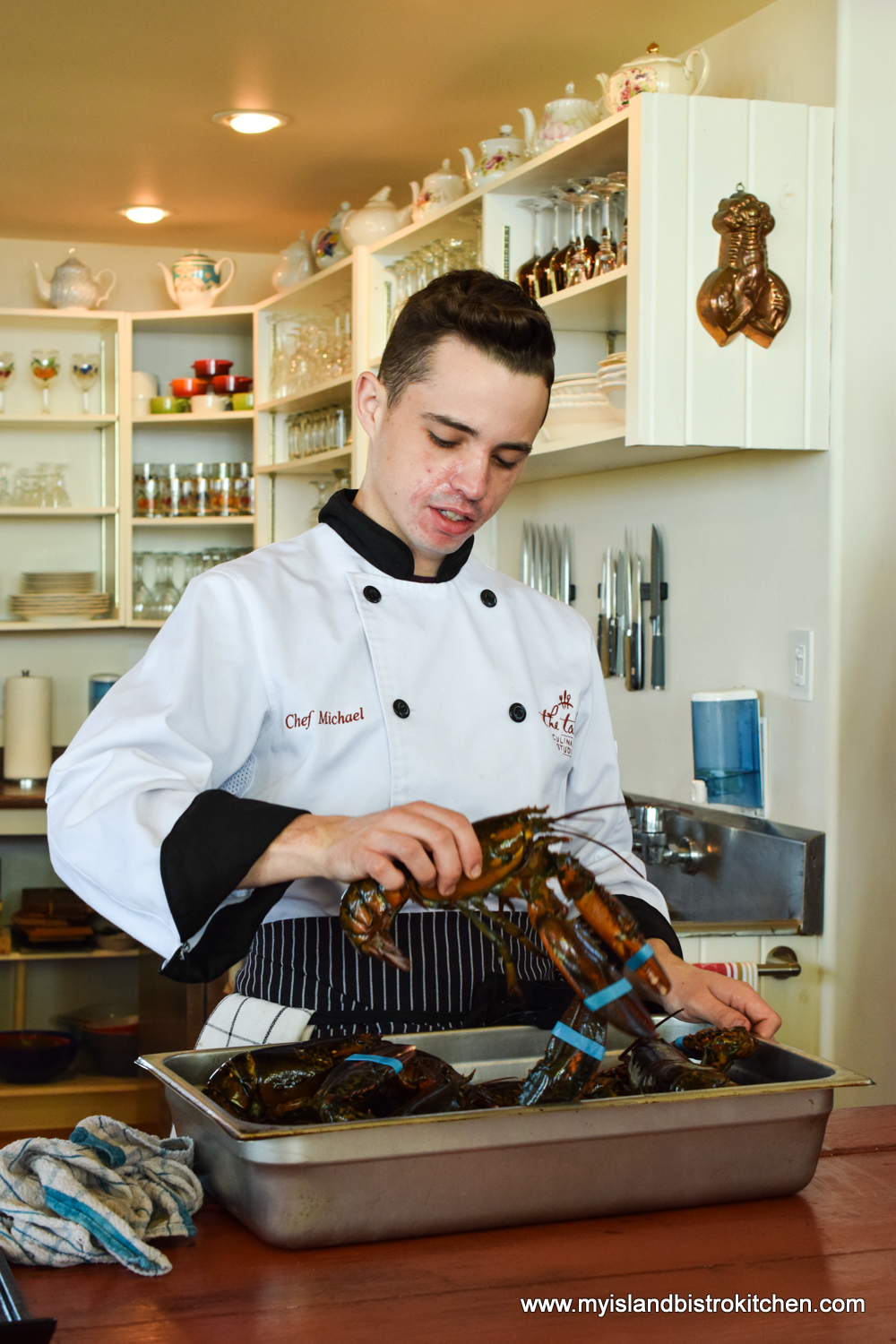
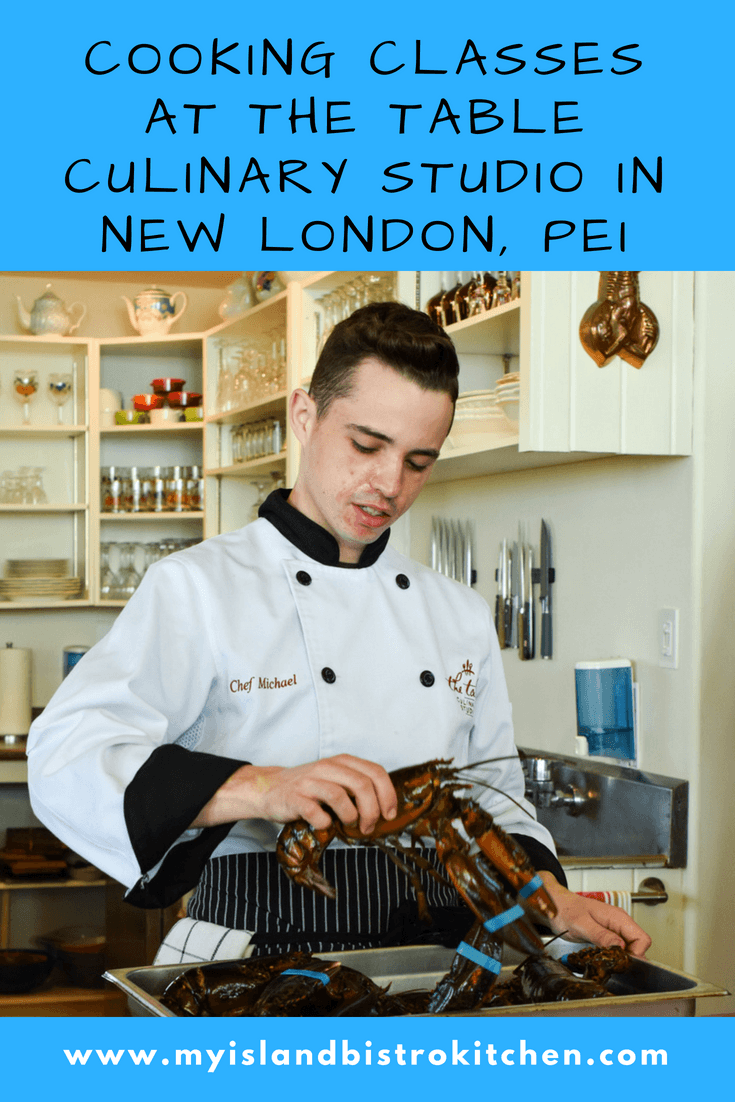
The class began with Chef Derrick giving a brief talk on lobster fishing on PEI, recounting his own experiences going out on a fishing boat to learn, first-hand, about lobster fishing on the Island. Chef Michael then gave a short biology lesson on how to identify the gender of a lobster.
Executive Chef Michael Bradley at The Table Culinary Studio in New London, PEI
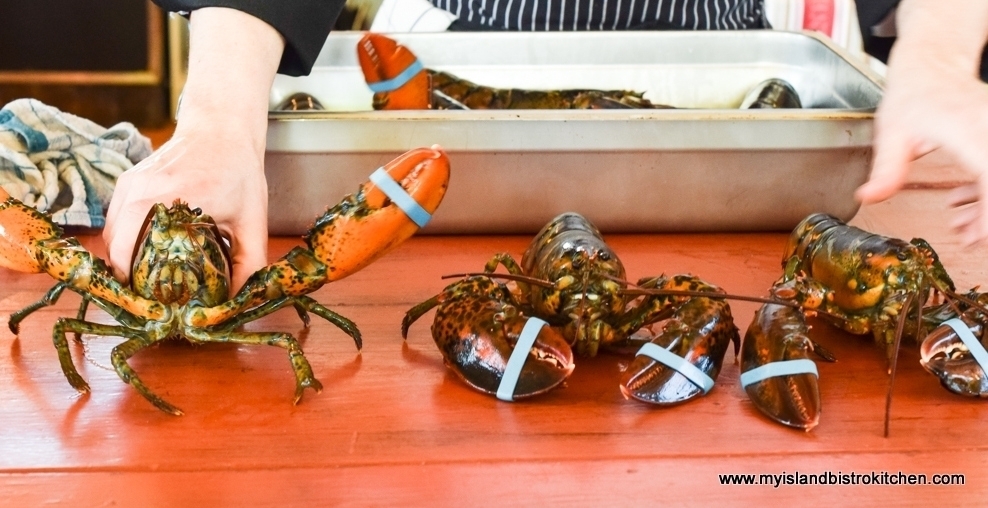
It’s a good thing those lobsters were banded because, if you find yourself in the unfortunate situation of having a finger caught in the claws of one, you are likely to end up with a broken finger – they’re strong!
Fiesty Lobsters
Everyone was given a lobster and instructed on how to carefully de-band them before placing them in hot water to be cooked.
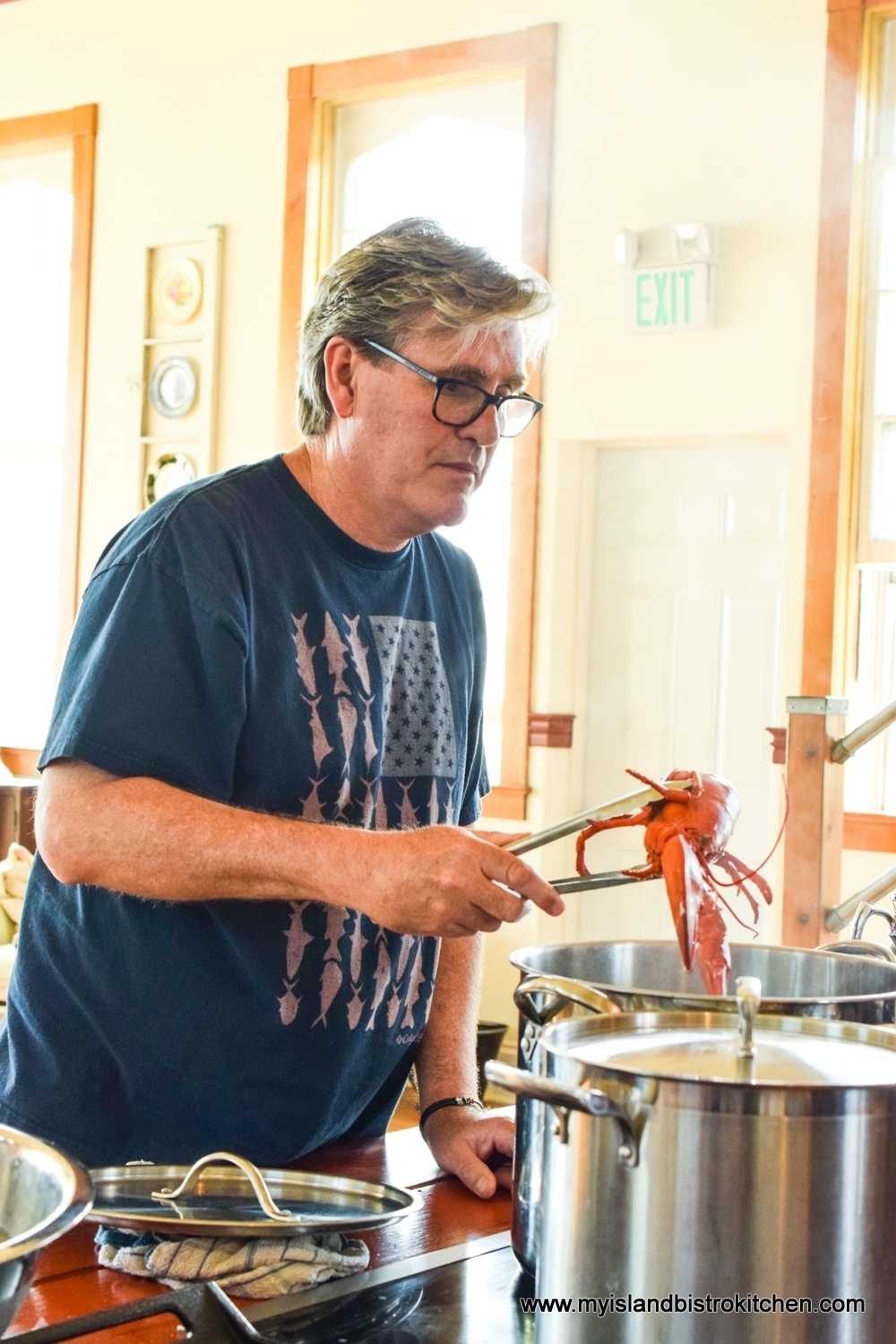
Chef Derrick kept a watchful eye on the lobsters so they were removed from the pot at just the right time.
Derrick Hoare, Owner/Chef at The Table Culinary Studio in New London, PEI
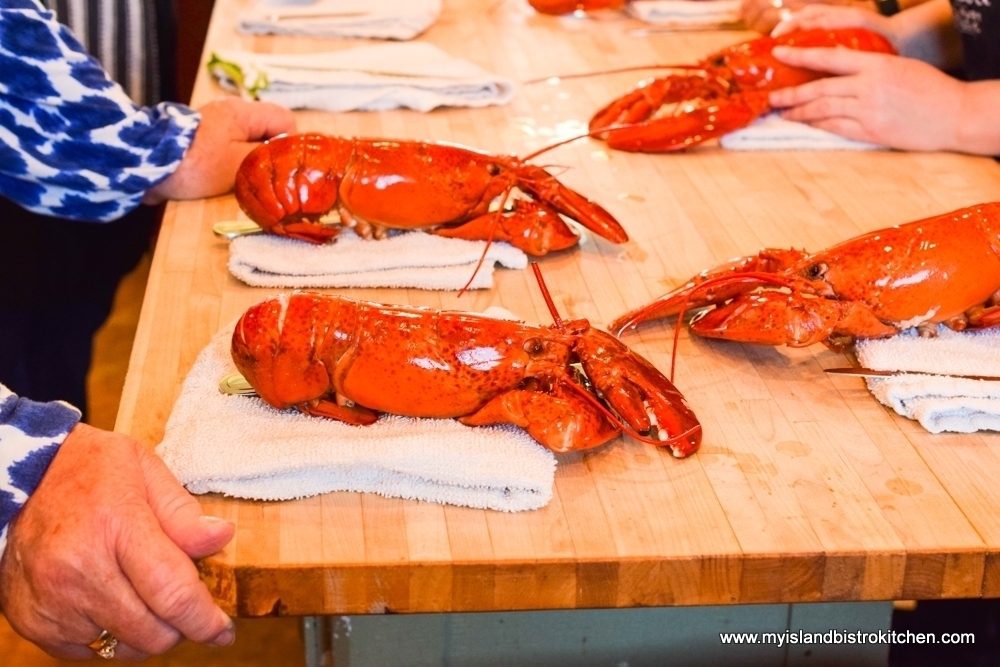
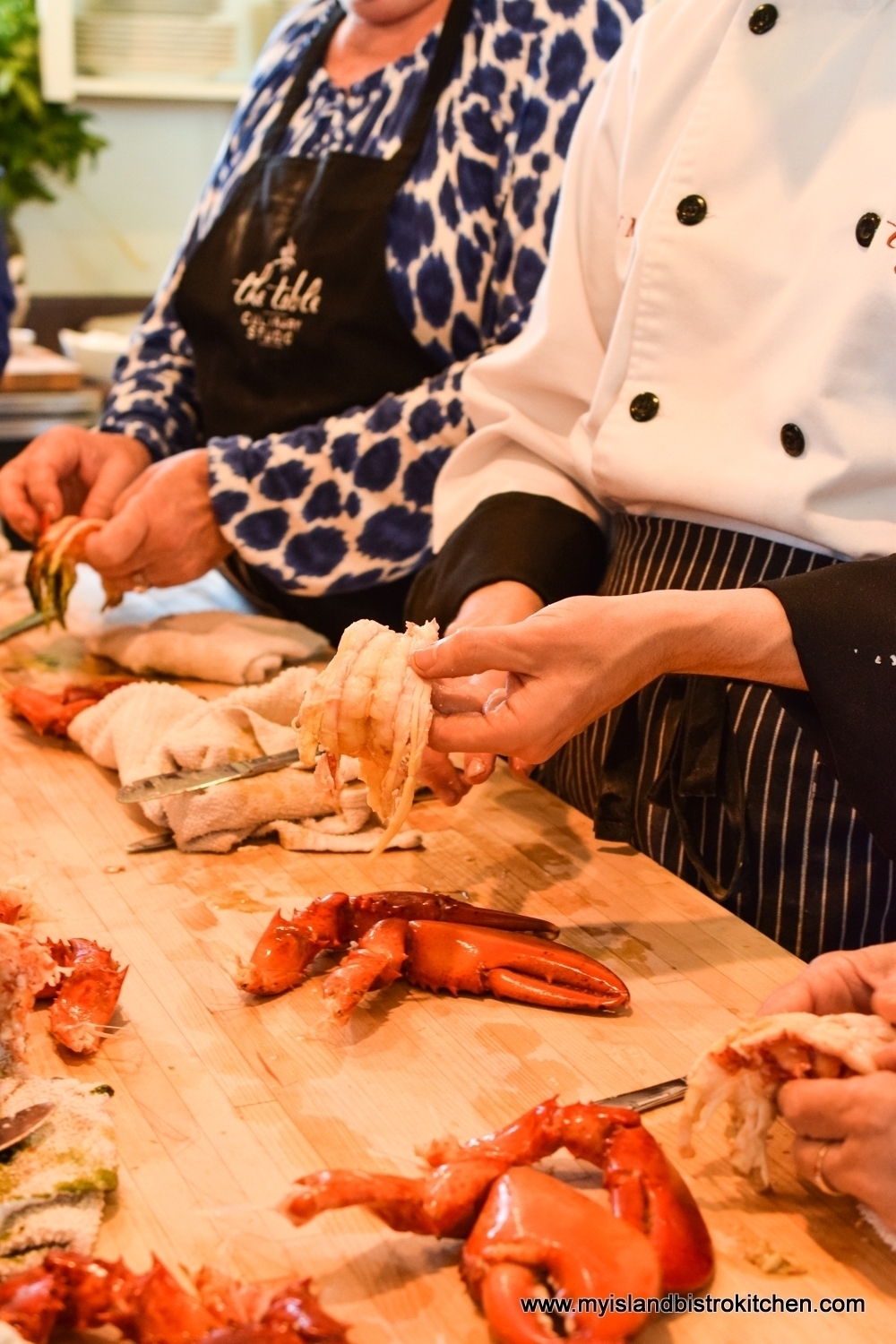
Next came the lesson on how to crack open a lobster.
Cooked Lobster
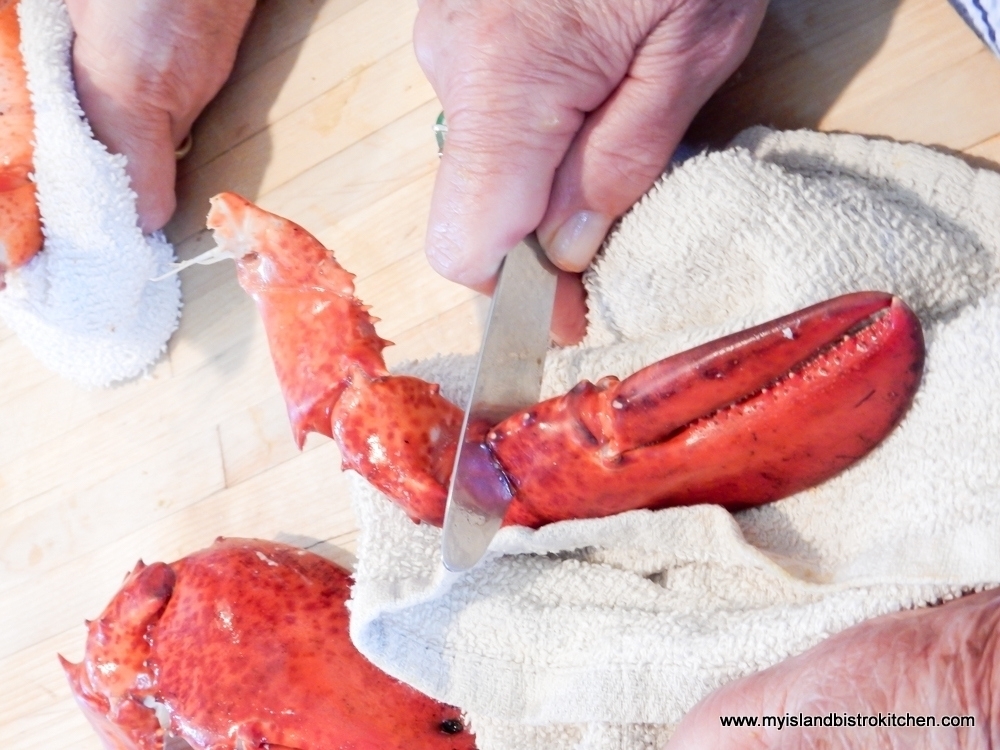
Chef Michael capably gave instructions as each student cracked open a lobster to reveal the succulent meat inside.
Meat from the Lobster
Yes, a basic table knife will do the trick!
Cracking Open Lobsters
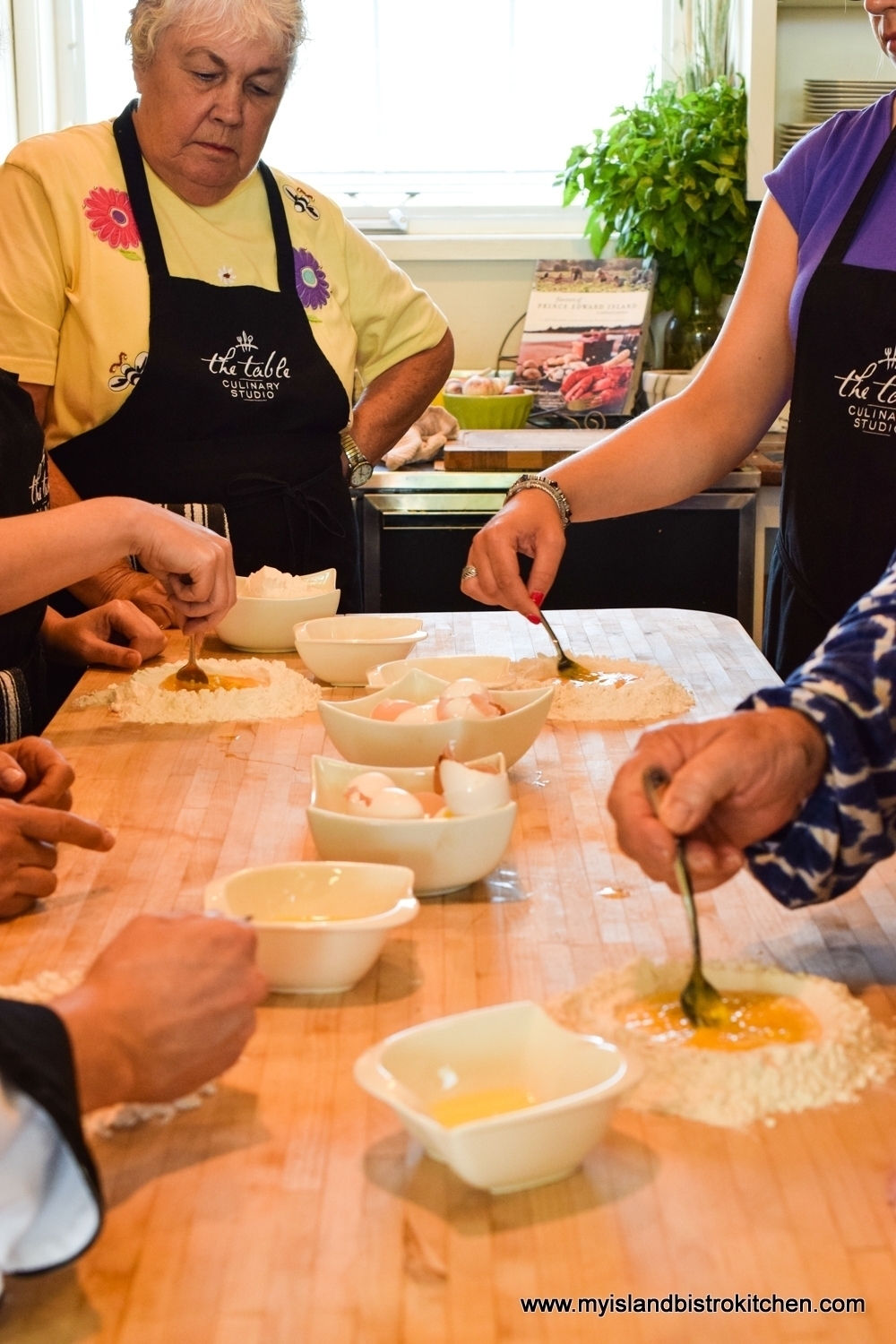
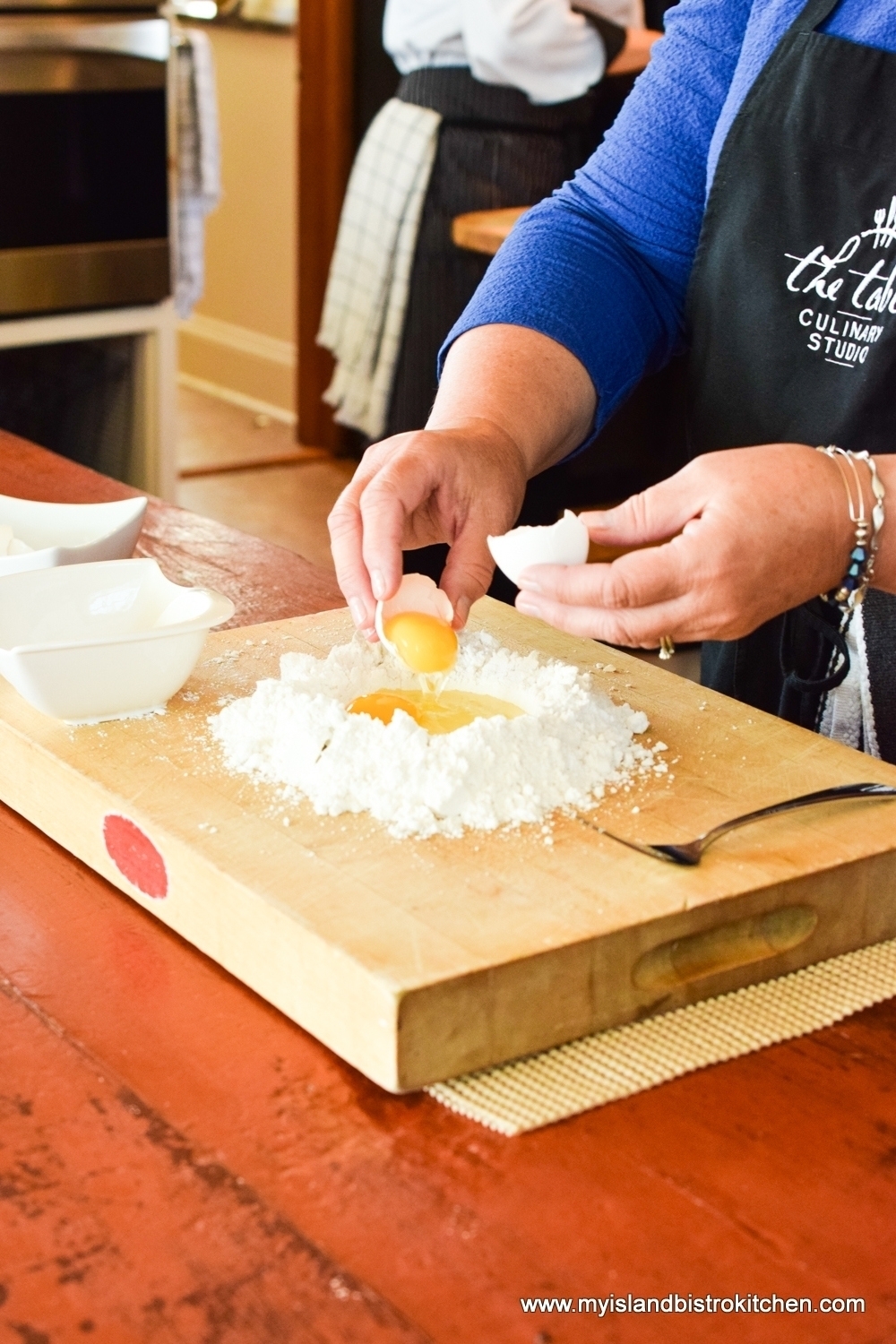
Having never made homemade pasta before, I was particularly interested in the procedure.
Making Homemade Pasta at The Table Culinary Studio in New London, PEI
The Table is very accommodating to class participants who have dietary restrictions. On this day, there were two participants who were gluten-intolerant so a separate station on an adjacent workspace was set up for them to make the gluten-free pasta and Chef Michael alternated between the two groups giving information and instruction on pasta making.
Making Gluten-Free Pasta at The Table Culinary Studio in New London, PEI
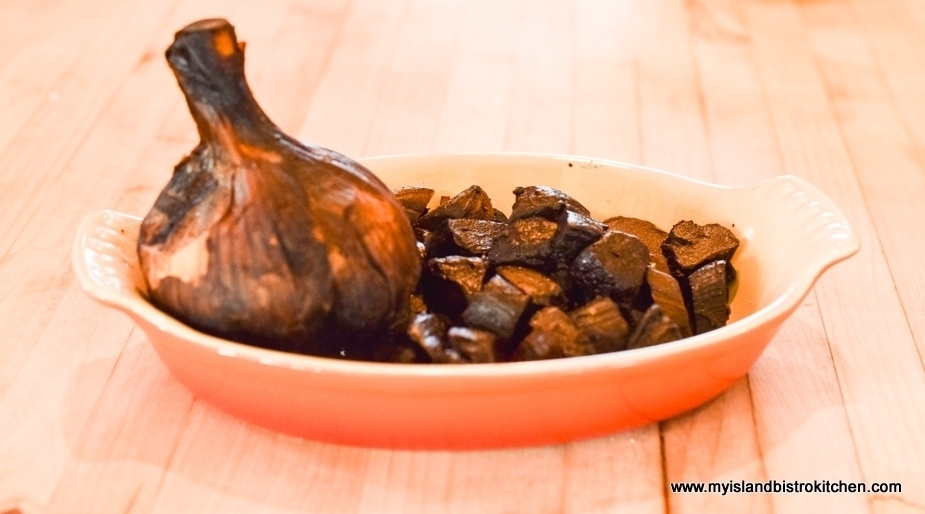
Black garlic from nearby Eureka Garlic, not far from Kensington, was used in the pasta to give a unique flavour. If you have never tasted black garlic, it’s not nearly as garlicky as you might think – I personally think it tastes like a cross between a fig and a prune. You can check out my story here on Eureka Garlic. The chopped black garlic was kneaded into the pasta dough.
Black Garlic from Eureka Garlic near Kensington, PEI
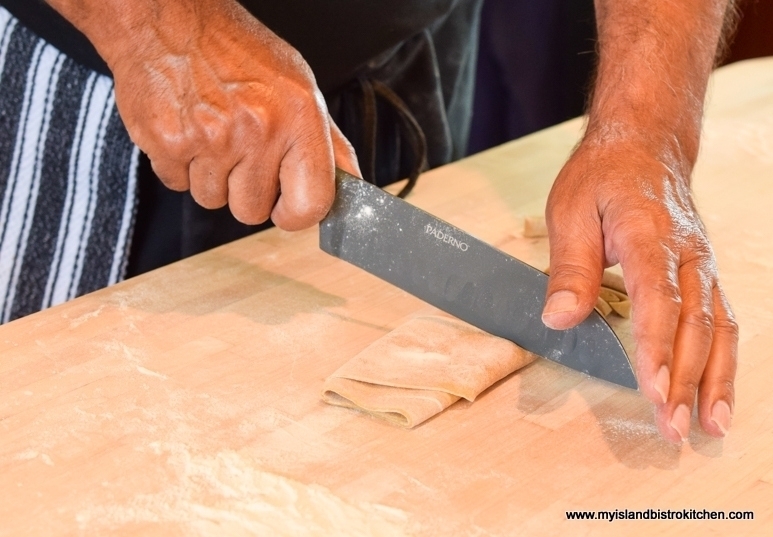
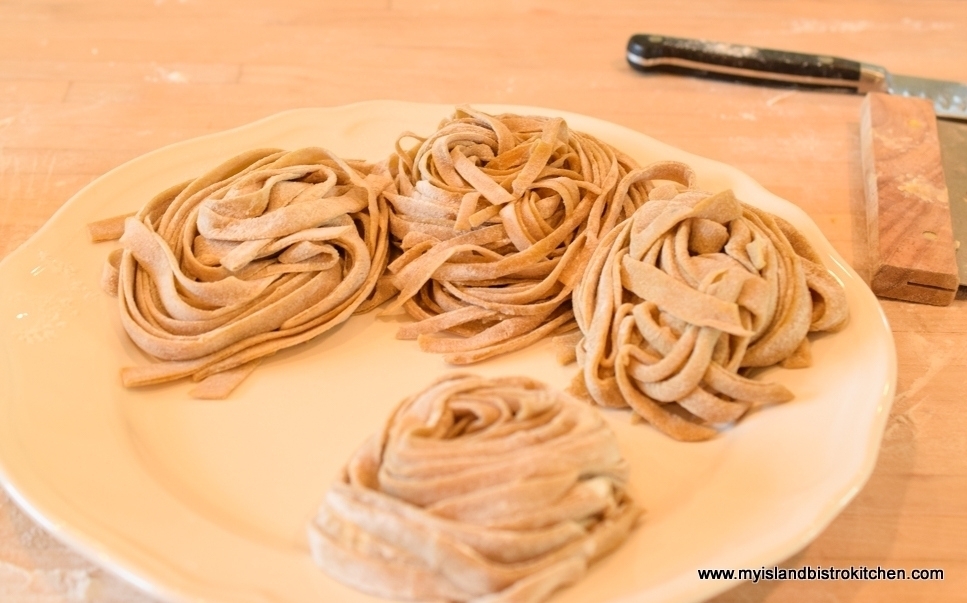
The pasta dough was cut and gathered into circles ready to be dropped into the cooking pot.
Cutting the Pasta DoughHomemade Pasta Ready for Cooking
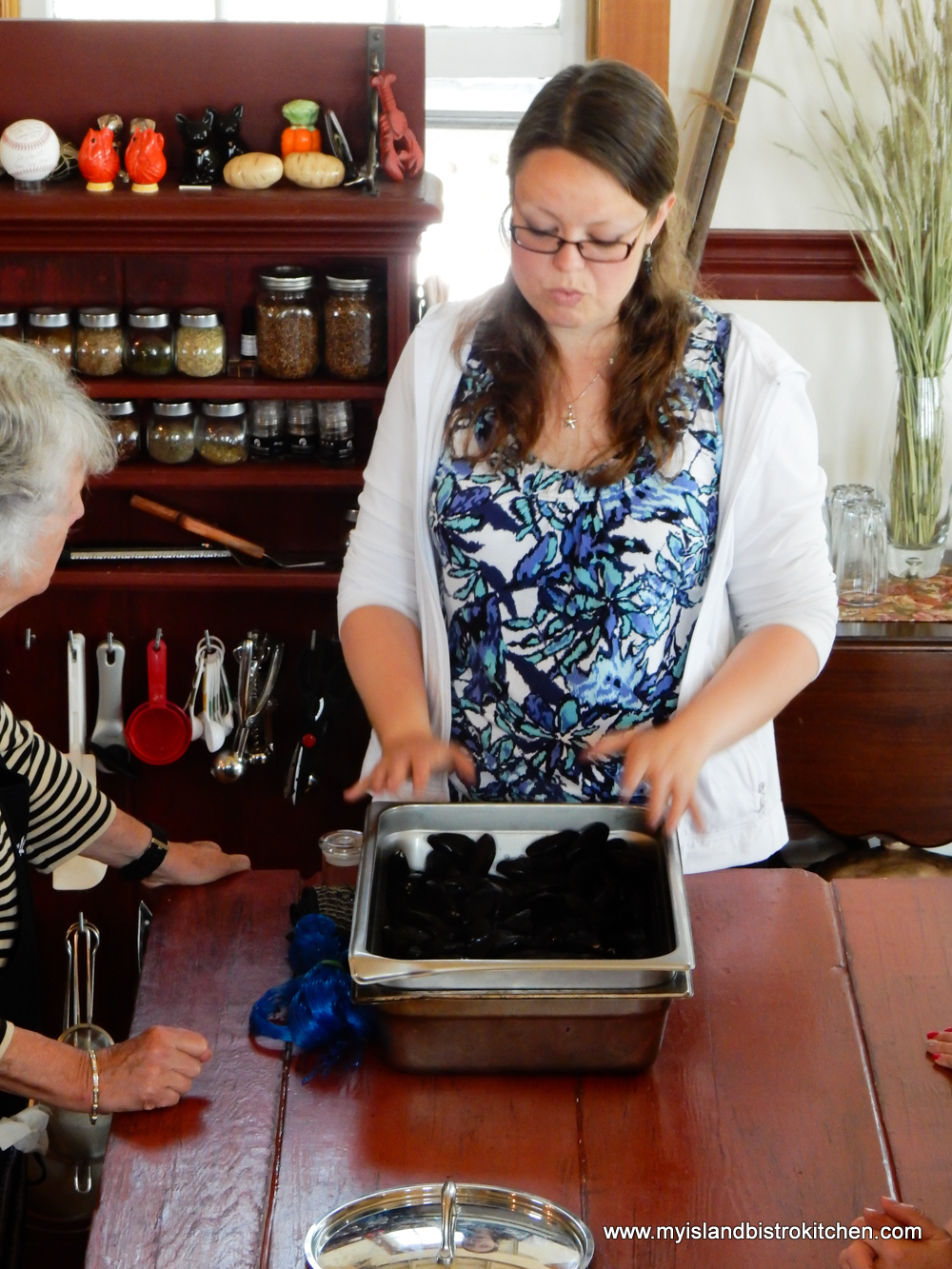
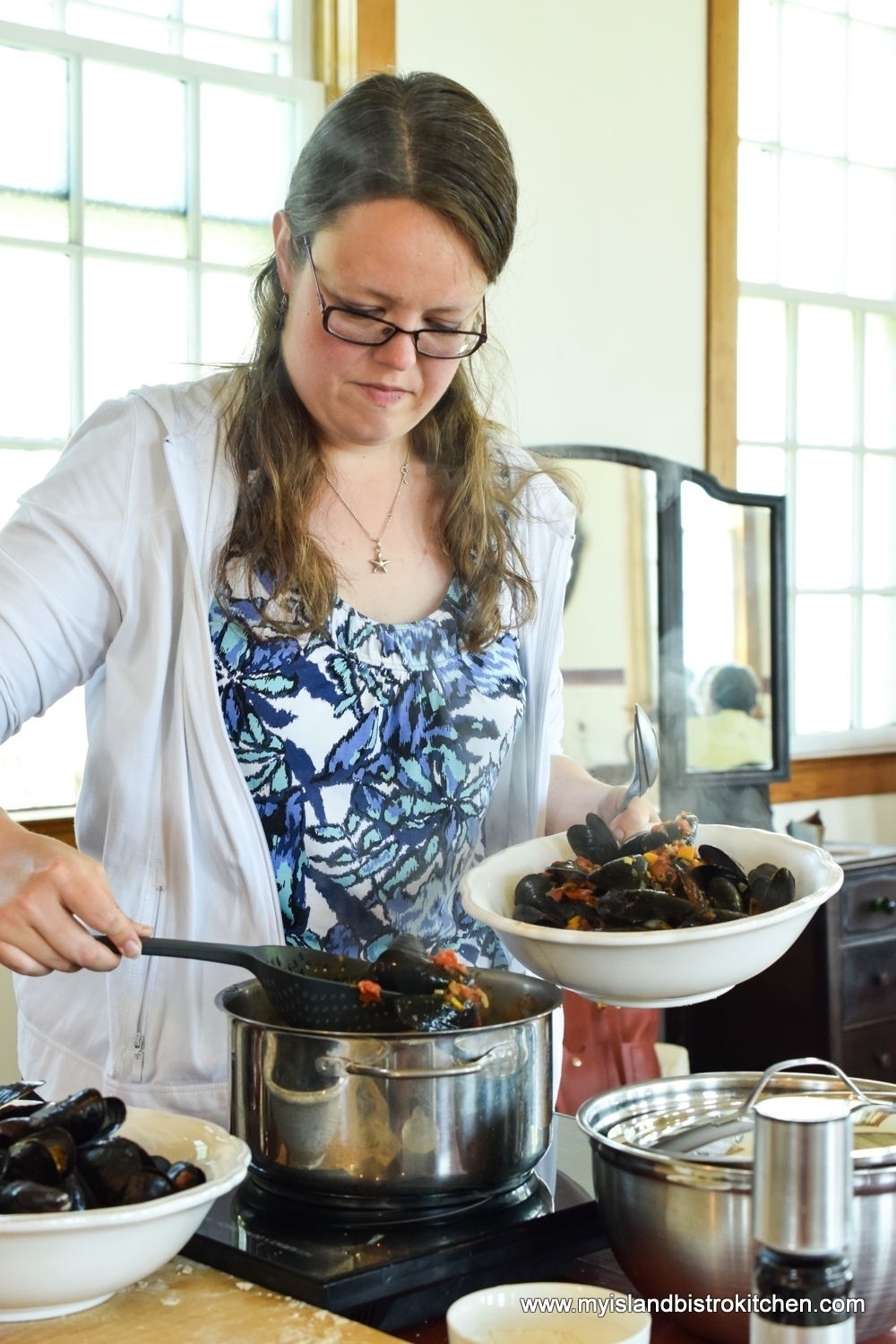
With the pasta made, we took a brief break from the food prep to listen to Christine explain how mussels are grown and harvested on PEI.
Christine Morgan Explains How PEI Mussels are Grown and Harvested
PEI mussels are world famous and they are shipped all over the world. Mussels are a common food to serve at many events, year-round, on PEI. They are easy to prepare and ever-so-tasty dipped in melted butter!
Christine Morgan Serves Up Steamed PEI Mussels at The Table Culinary Studio in New London, PEI
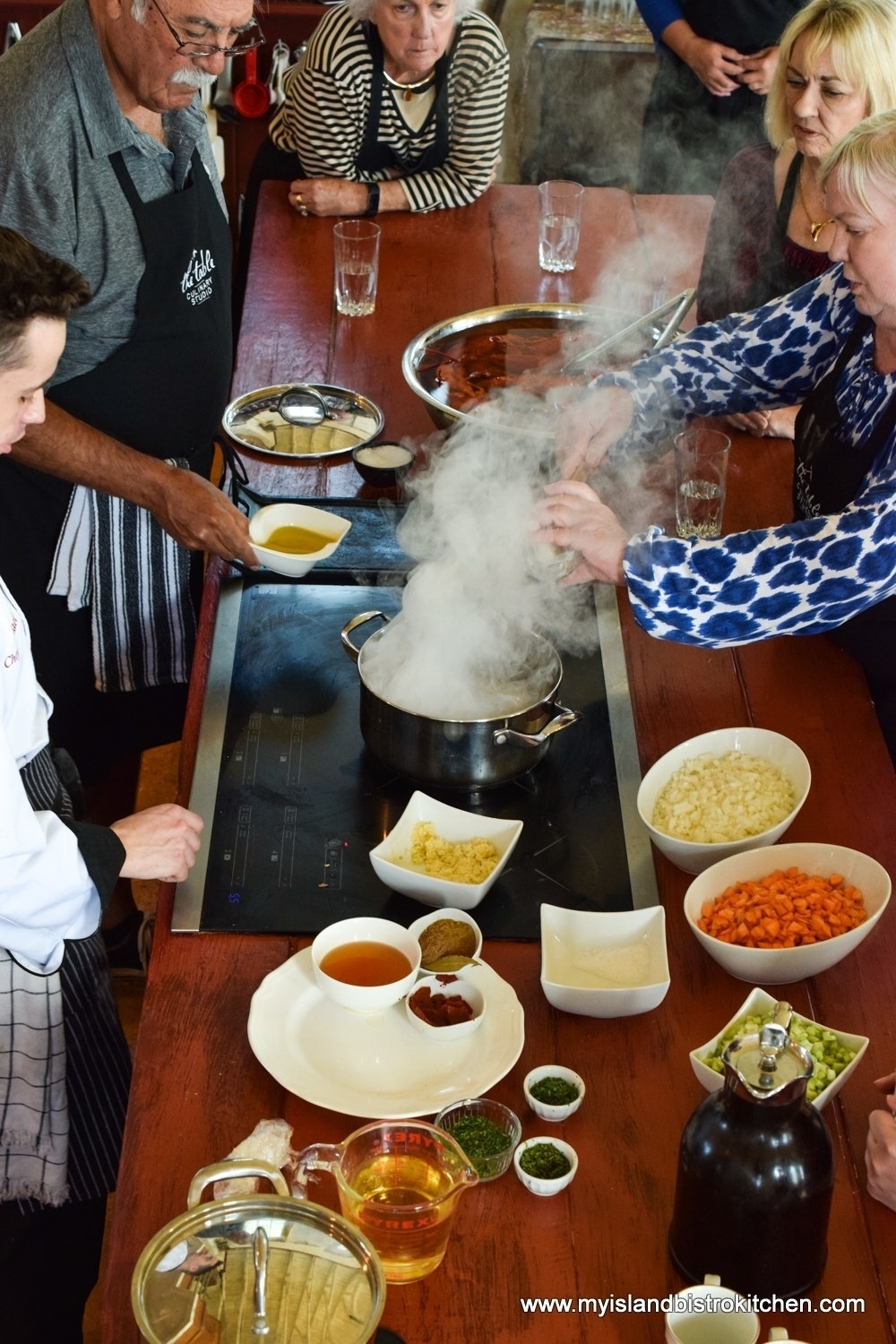
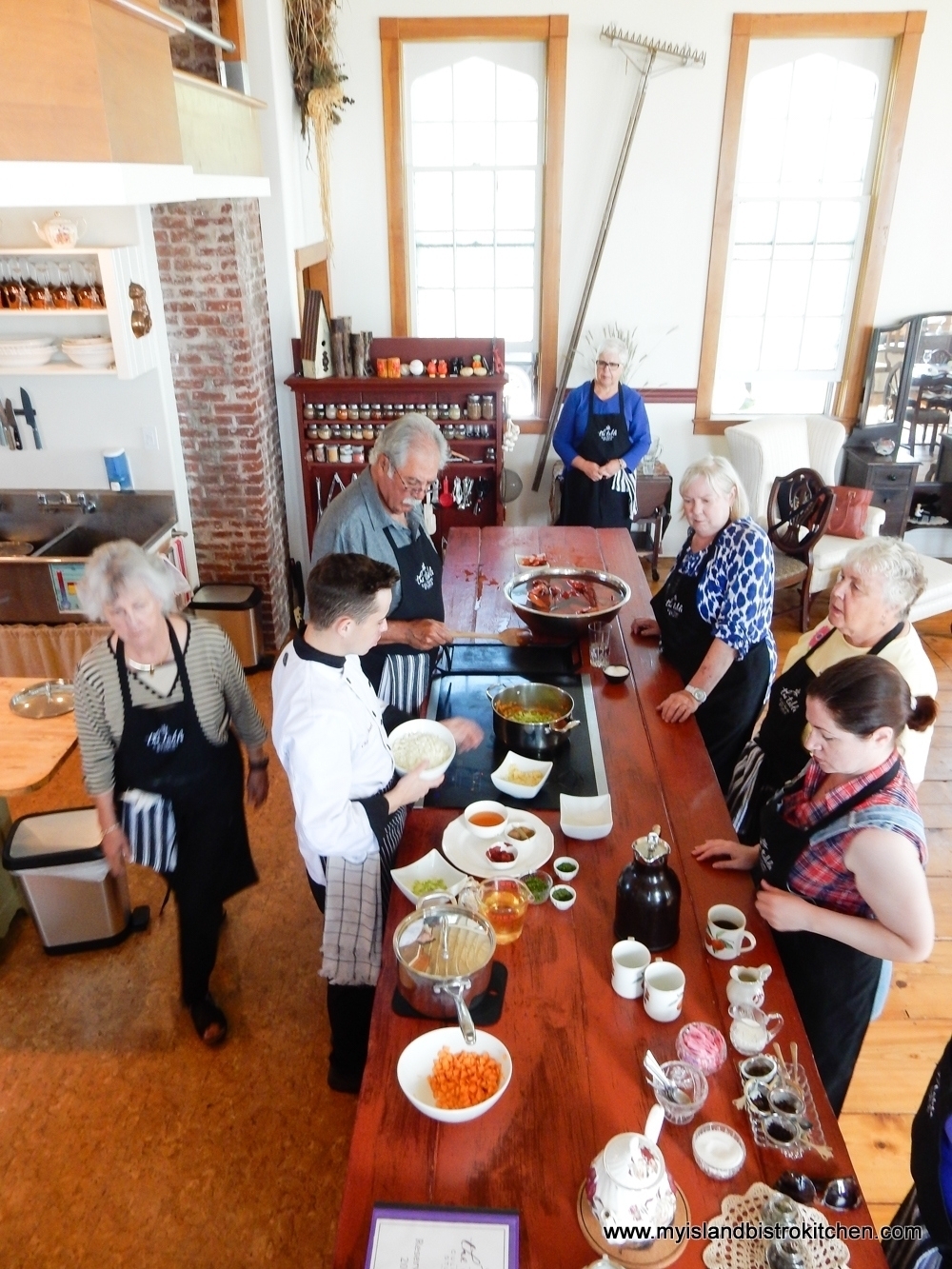
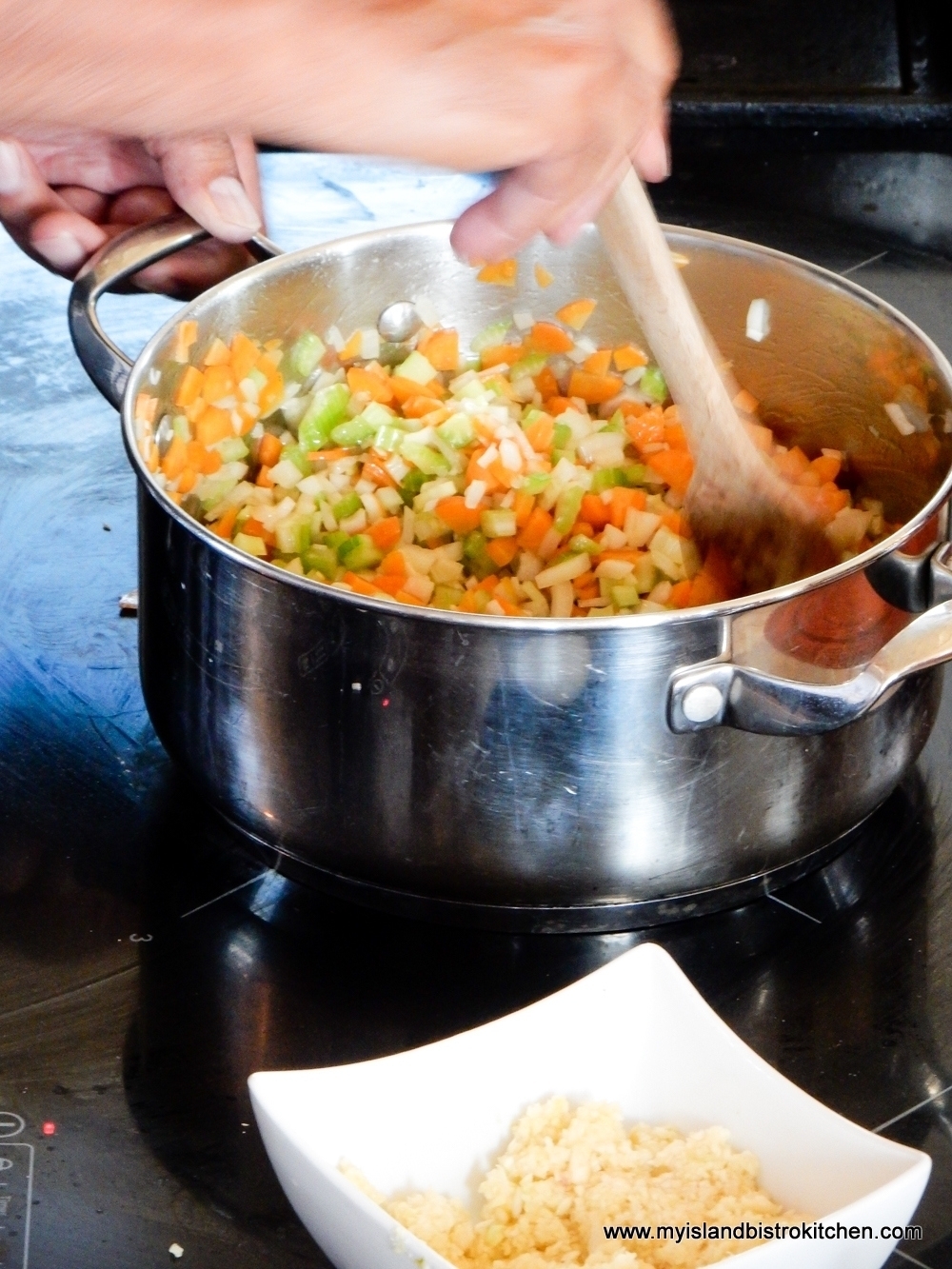
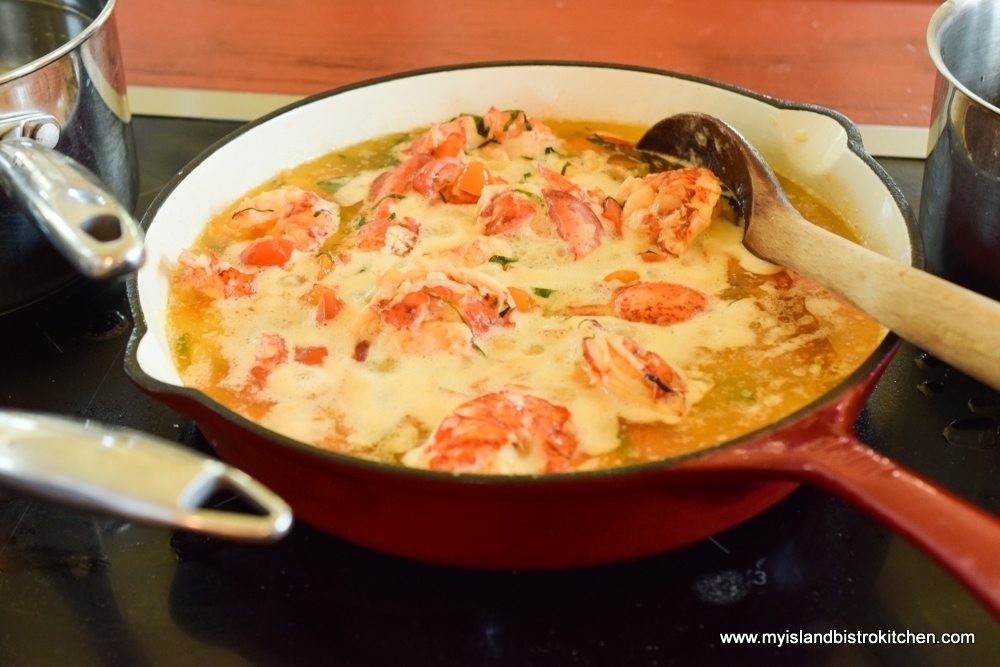
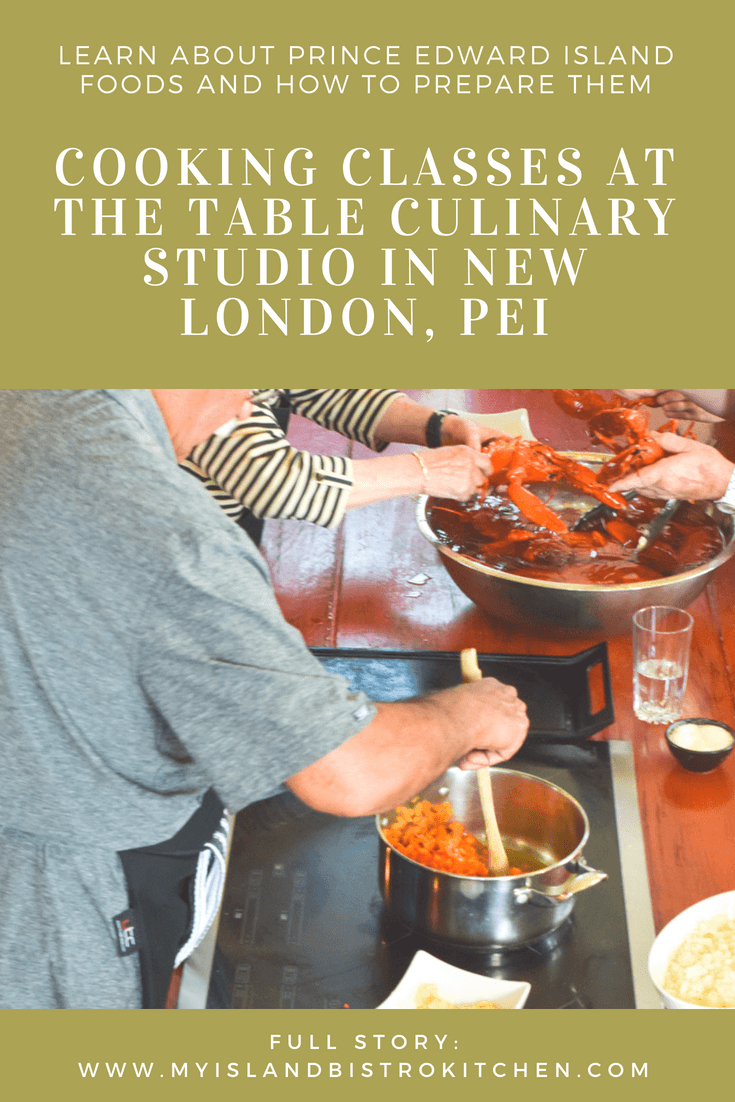
Chef Michael then guided the group in making Lobster Bisque. Once the Mirepoix started cooking, you can only imagine how tantalizing the scent was as it wafted through the old church building.
Stirring the Mirepoix for the Lobster Bisque at The Table Culinary Studio, New London, PEI
Ohhhh, that lobster is going to make a dandy lunch – can’t you just taste it!
Lobster Bisque in the Making at The Table Culinary Studio, New London, PEI
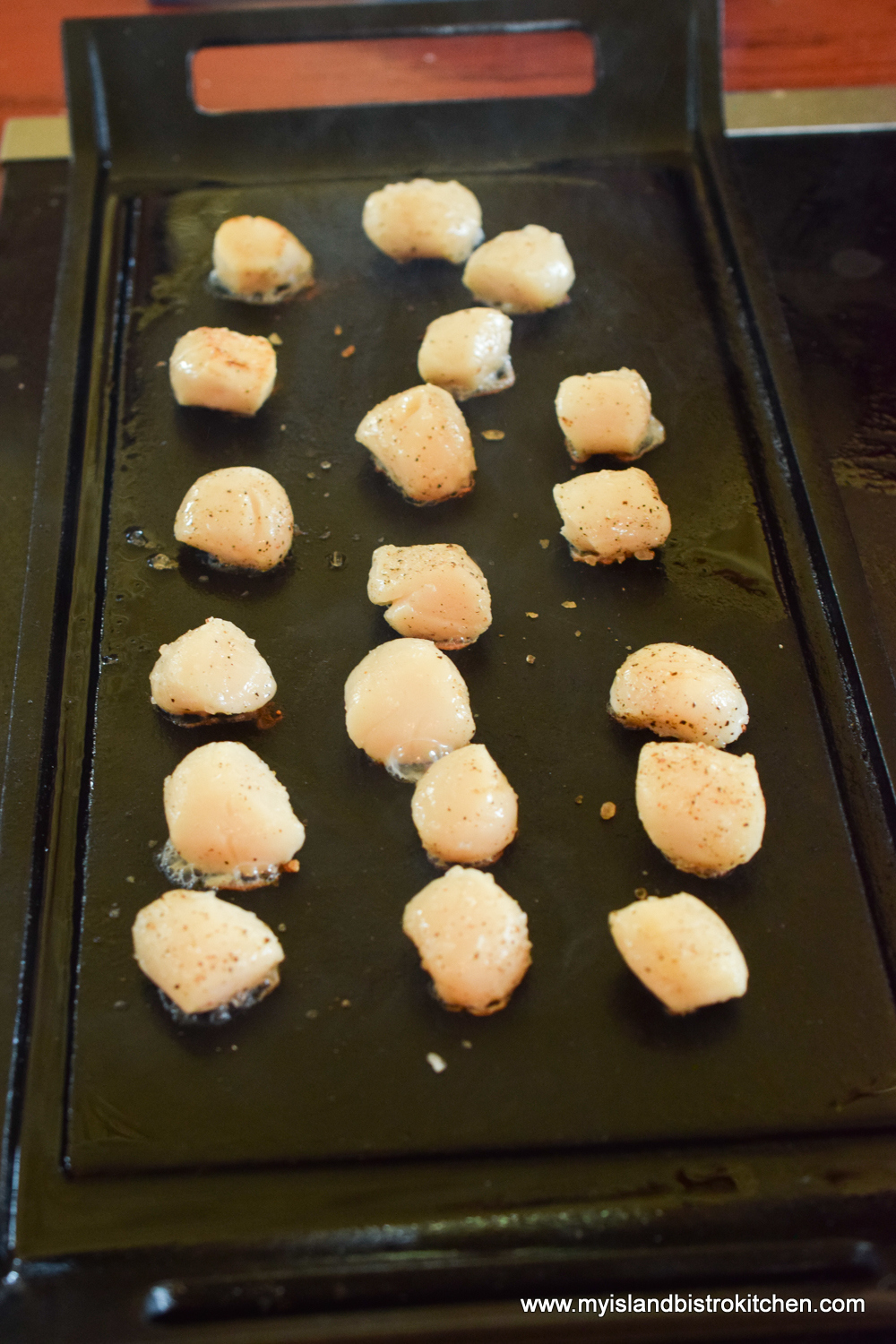
The third seafood that we learned to cook was scallops, those tasty little morsels!
Cooking Scallops at The Table Culinary Studio in New London, PEI
The morning went super fast and, before we knew it, it was time for lunch to be served by the culinary team.
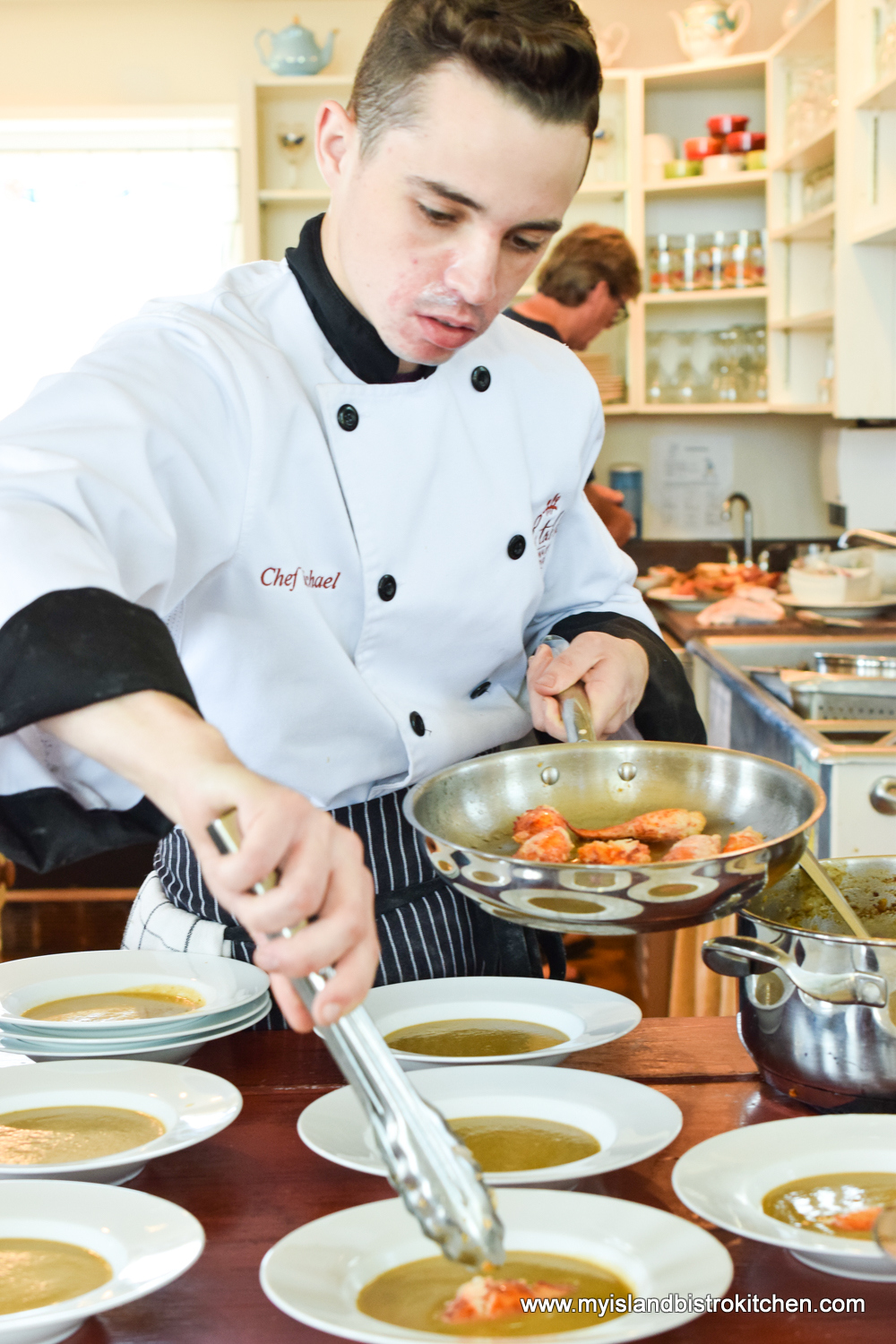
Chef Michael Bradley of The Table Culinary Studio Preparing the Bowls of Lobster Bisque for Serving
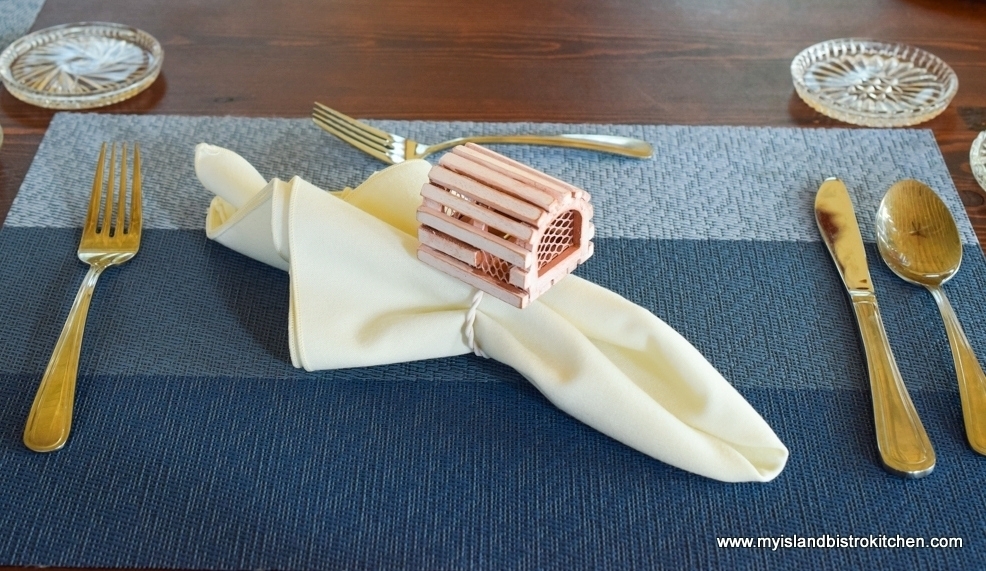
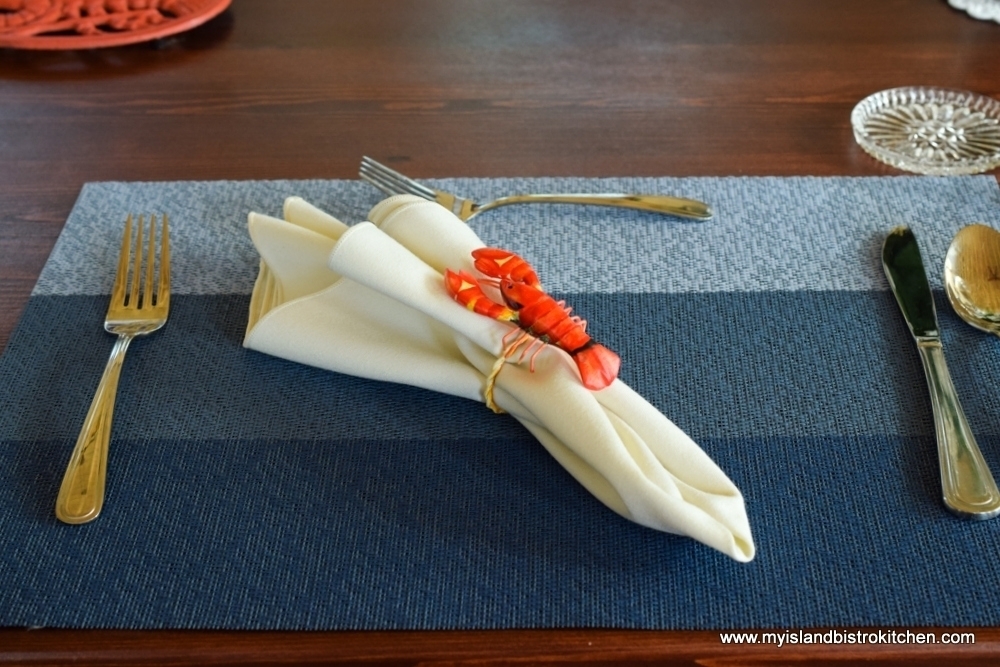
The table was beautifully set (those of you who follow my food blog regularly know how I love well-set tables). The napkin at each place setting had either a small lobster trap or lobster napkin ring.
Place Setting at The Table Culinary Studio, New London, PEI
These napkin rings tied in well with the theme of the morning’s class – “Bounty of the Sea”.
Place Setting at The Table Culinary Studio, New London, PEI
How inviting does this look! Wouldn’t you love to sit in at this table!
At The Table Culinary Studio in New London, PEI
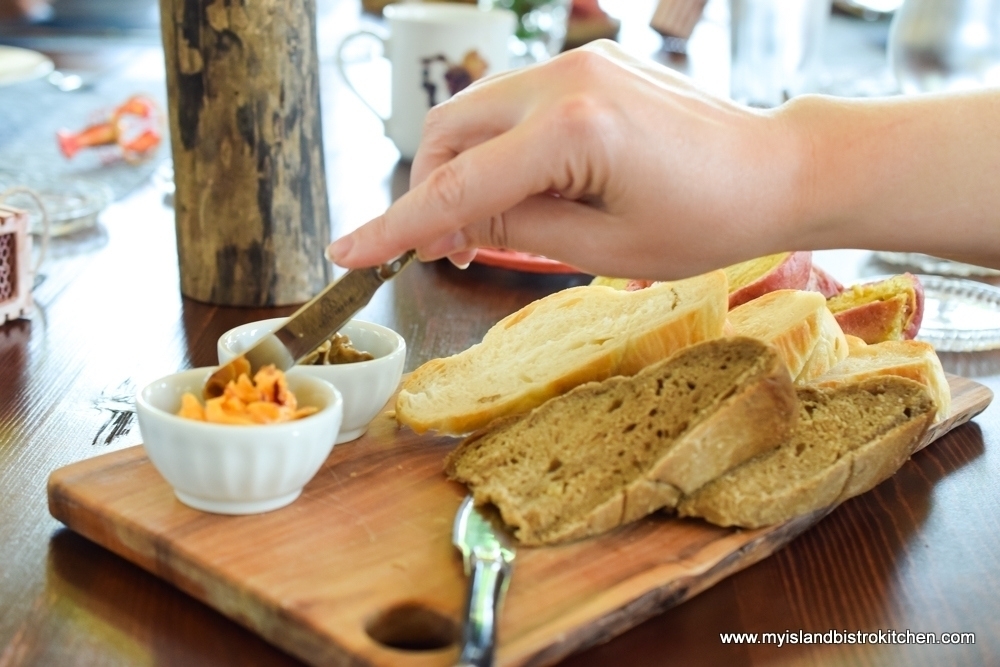
Fresh homemade sourdough bread was on the table.
Homemade Sourdough Bread
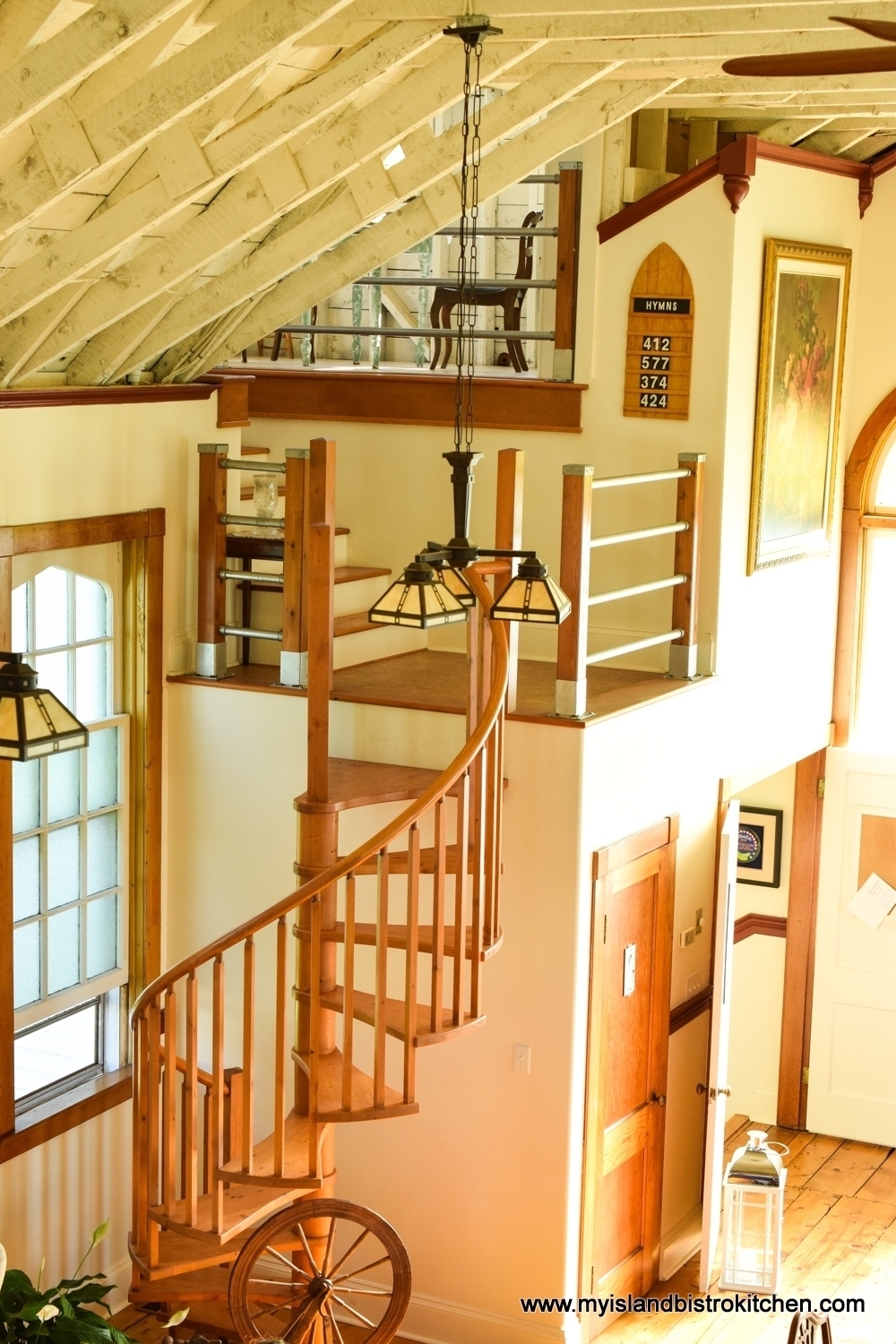
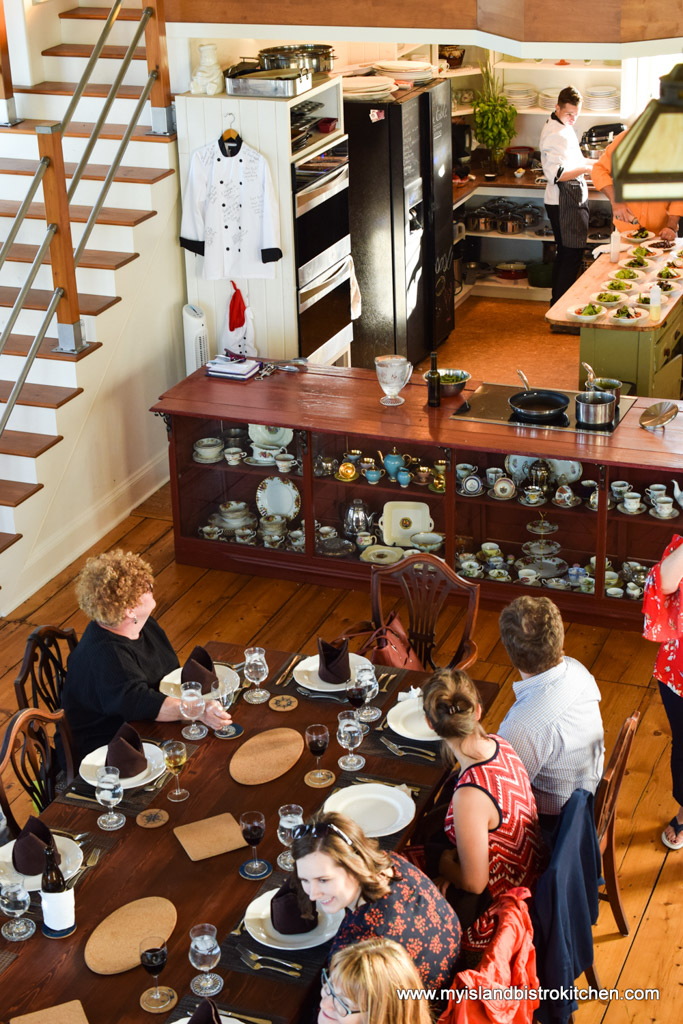
The landing at the top of the spiral staircase in the church provided a great vantage point for photography.
Spiral Staircase at The Table Culinary Studio, New London, PEI
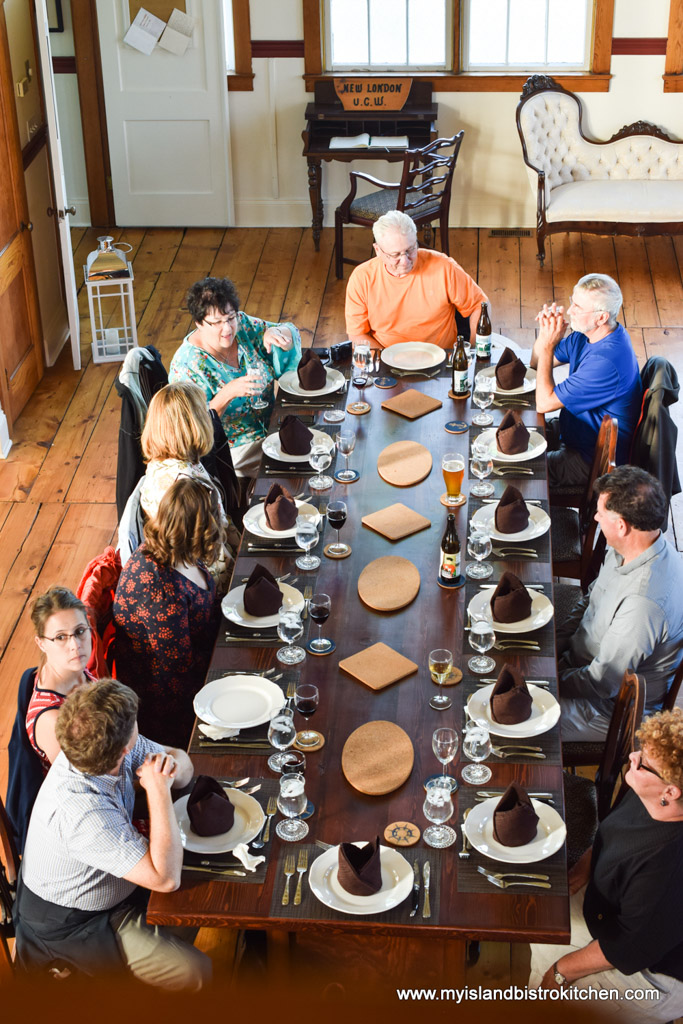
The group assembled at the big harvest table which is the focal point in the middle of the studio. This 12’ table was hand-crafted from old attic boards extracted from the house which The Table’s former owner restored just up the road at New London corner.
Class Lunch at The Table Culinary Studio in New London, PEI
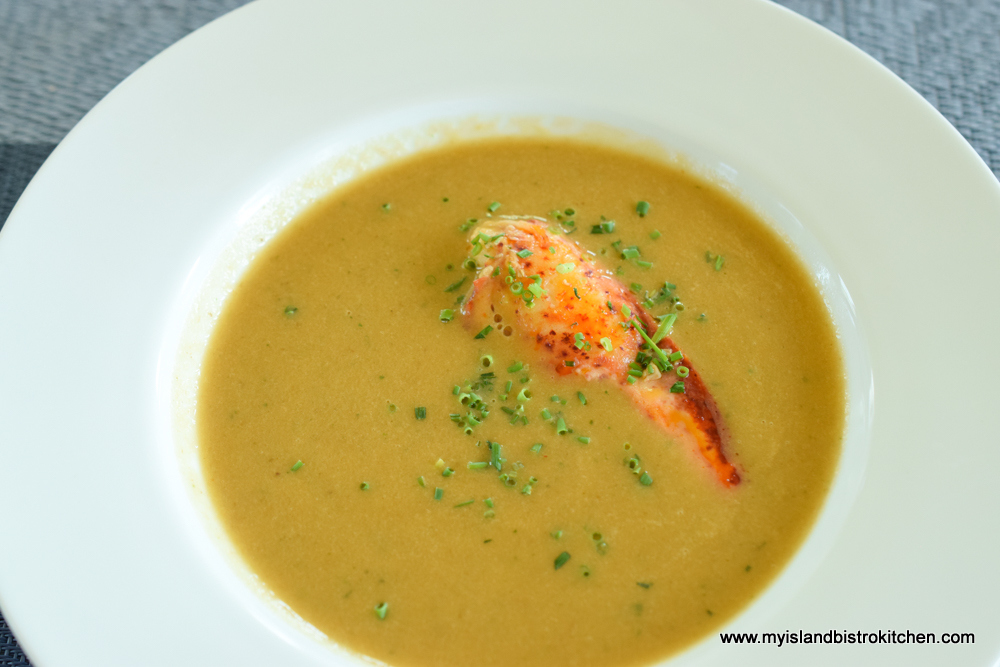
How great does this lobster bisque look with that succulent lobster claw! It tasted even better!
Lobster Bisque
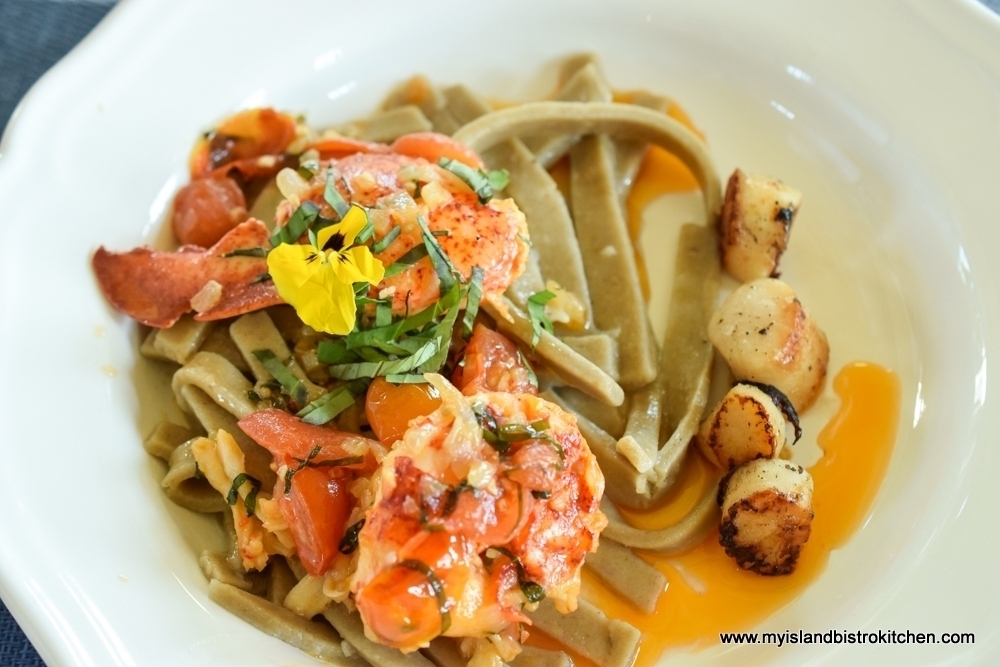
We were very anxious to taste the homemade pasta and it did not disappoint! The pasta in the photo below is gluten-free.
Homemade Pasta Topped with Lobster and Scallops at The Table Culinary Studio in New London, PEI
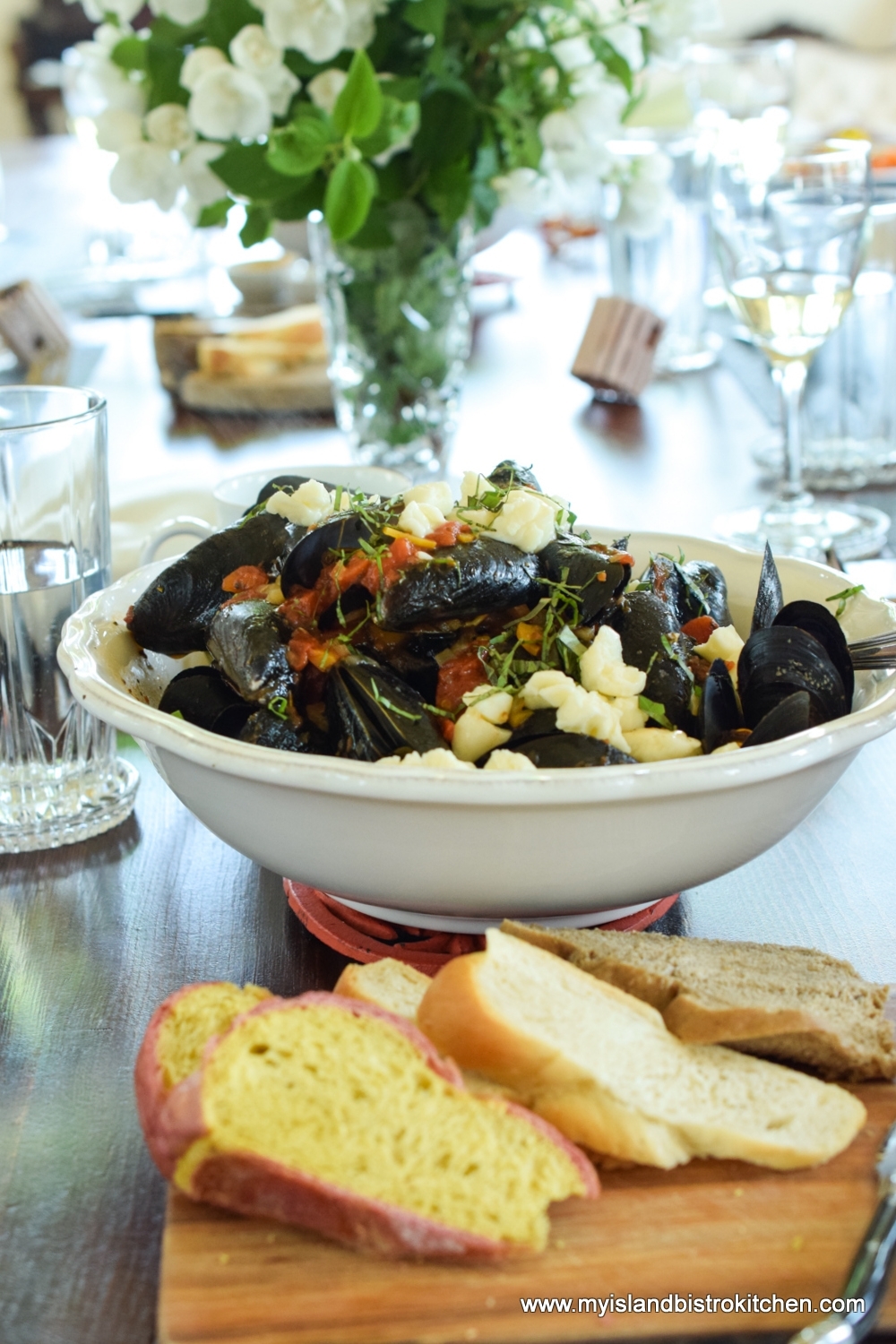
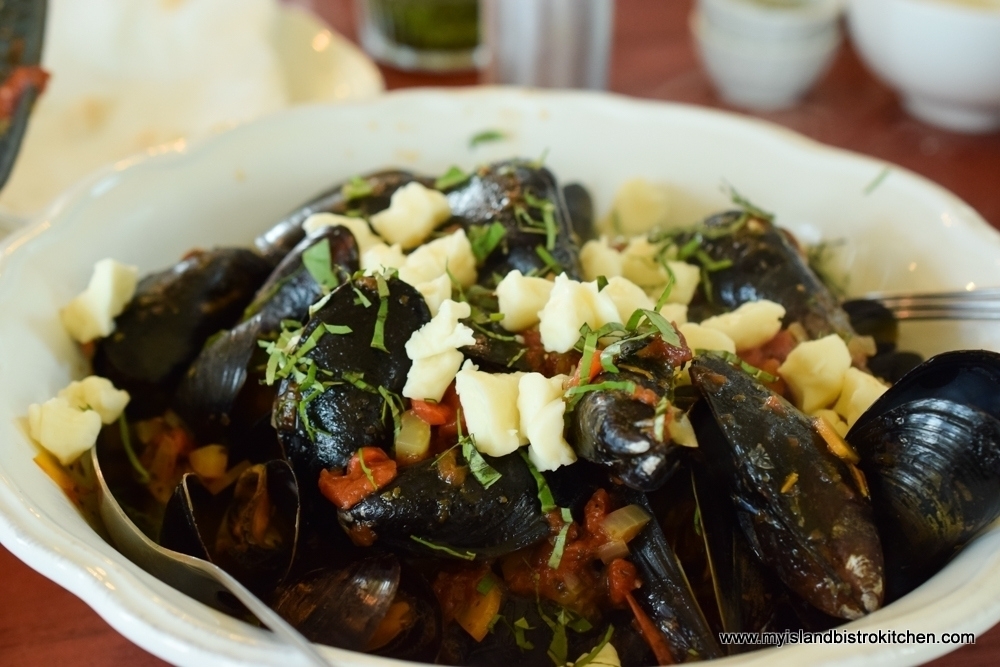
This was accompanied by big bowls of PEI mussels with squeaky cheese topping melting down through the mussels. If you are a mussel lover, these are hard to resist!
PEI Mussels with Butter at The Table Culinary Studio in New London, PEI
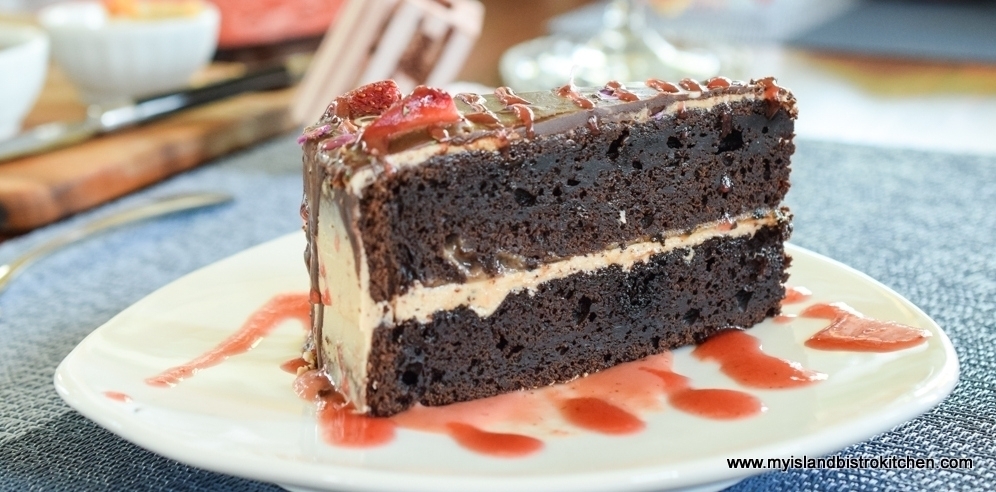
And as if we weren’t stuffed enough, out came dessert. The dessert in the photo below is a chocolate beet cake.
Chocolate Beet Cake at The Table Culinary Studio, New London, PEI
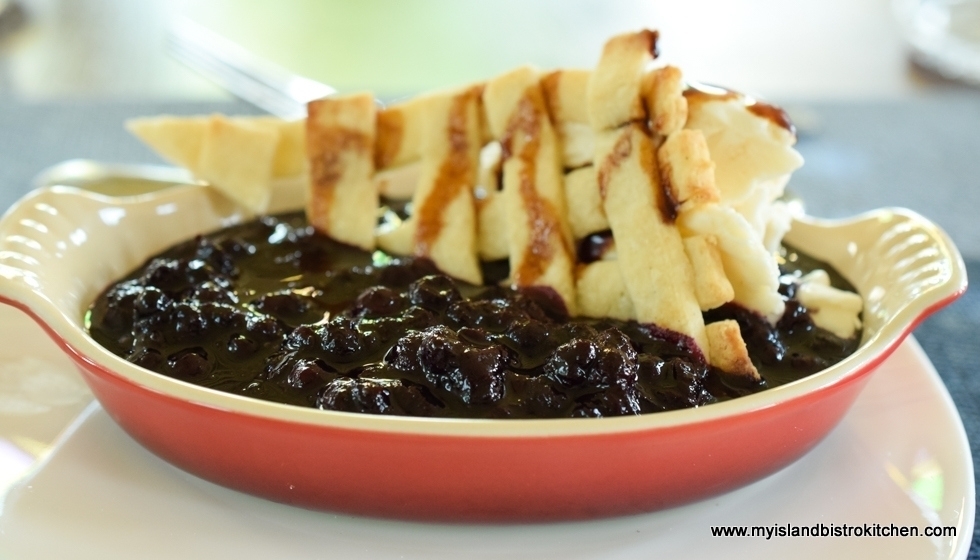
And, for the gluten-free dessert, it was a deconstructed blueberry pie which I can attest was simply yummy!
Gluten-free Deconstructed Blueberry Pie – The Table Culinary Studio, New London, PEI
The Table is set with the right ingredients – small class size, fresh local Island foods, quality instruction, hands-on cooking, a shared meal, and a charming venue with a history of its own. If you are looking for an authentic and affordable cooking experience to allow you to more deeply engage with the local food scene and pick up some cooking tips and skills, check out course offerings at The Table. With the short half-day classes, visitors can have the best of both worlds – a cooking experience to learn more about local PEI foods in the morning followed by a delicious lunch and then the rest of the day free to explore other Island adventures and sights. For more information on cooking classes and prices, visit The Table Culinary Studio website at: http://www.thetablepei.ca/classes
The Table also offers fine dining in the evening (reservations required). Click here to read my recent story on The Table’s North Shore Surf and Turf Dinner.
Pin Me To Pinterest!
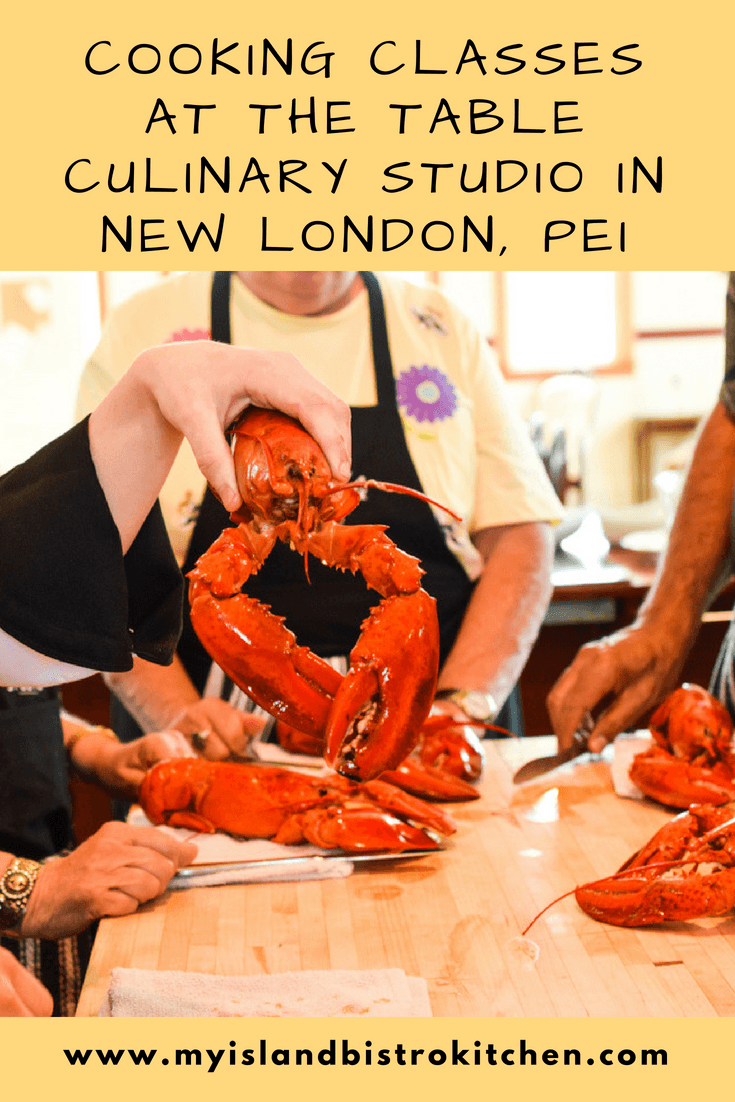
Cooking Classes at The Table Culinary Studio in PEICooking Classes at The Table Culinary Studio in New London, PEICooking Class at The Table Culinary Studio in New London, PEI
Connect with My Island Bistro Kitchen through the following social media channels:
My thanks to The Table Culinary Studio for the opportunity to experience their “Bounty of the Sea” cooking class and for the fine hospitality. My participation in the class was complimentary for the purpose of conducting a review of the “Bounty of the Sea” cooking class. However, this in no way influenced my opinions of the class experience. All opinions expressed in this review are purely my own.
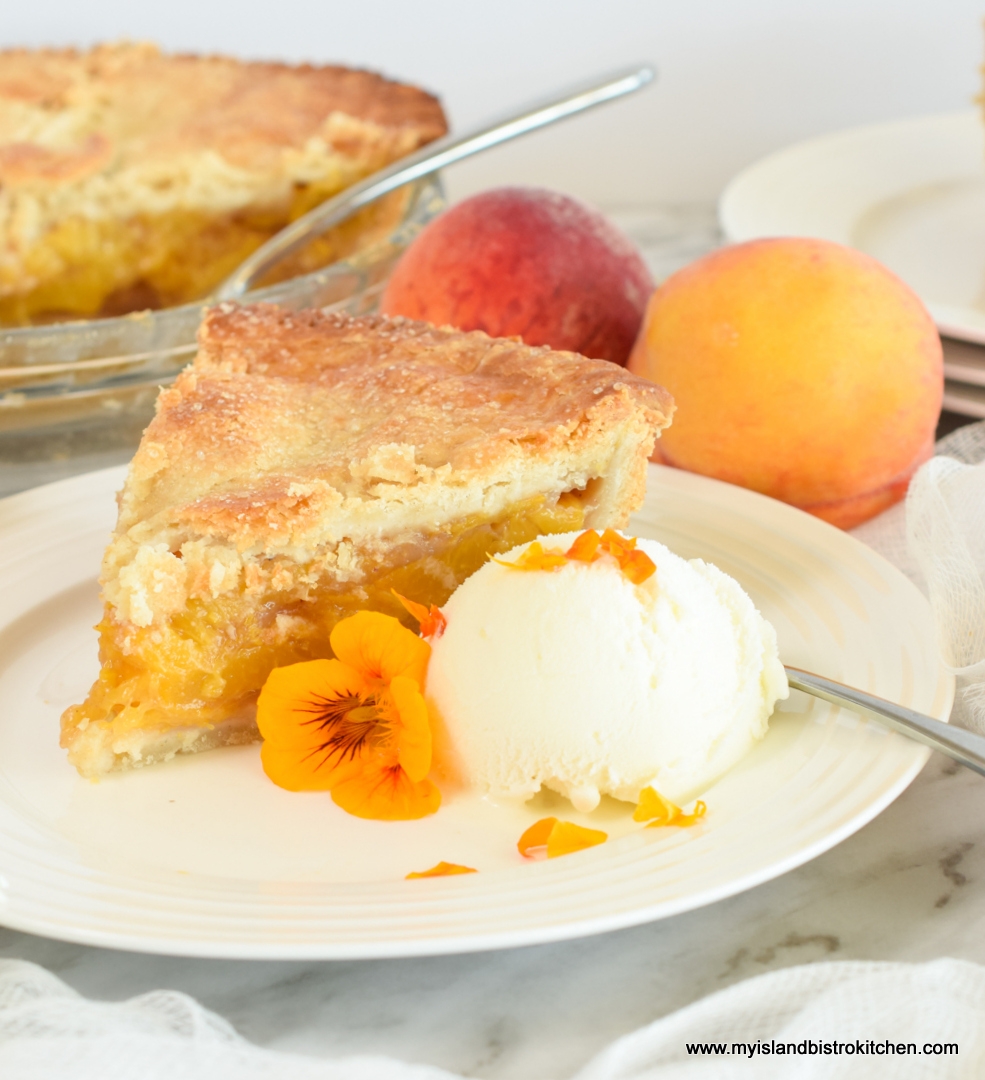
One of the things I most look forward to in summer is all the fresh produce. I especially love all the seasonal fruits and berries because they make grand pies and pastry making is one of my favorite baking activities. In August, we eagerly await the wonderful peaches that come from the Niagara region – the baskets of large yellow/orange plump, juicy peaches. One of the first things I make with the fresh peaches is a Classic Peach Pie. Continue reading Classic Peach Pie Recipe→
Dill pickles are one of the easiest pickles to make. Cold-packed into hot sterilized jars, this recipe transforms tiny 3” – 4” cucumbers into tangy pickles that, for any dill lover, are the quintessential pickles to accompany many sandwiches and burgers. Continue reading How to Make Dill Pickles→
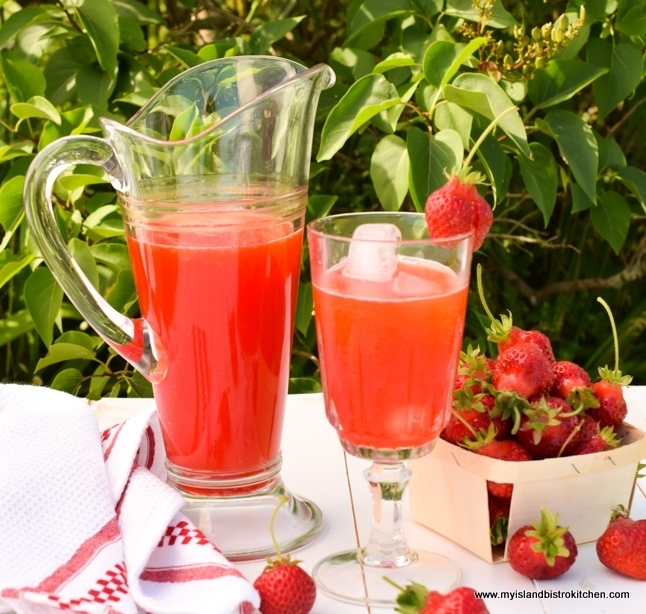
One of the wonderful things about lemonade is that it can be served simply as is or it can be flavoured with fruits in season such as I am doing today by making Strawberry Lemonade. How fabulous is that natural red color in the lemonade! Continue reading Sensational Strawberry Lemonade Recipe→
One of the things most of us enjoy about travel is the opportunity to sample foods local to a region. It’s part of the charm of a place and makes for great vacation memories. At one time, vacationers went to a destination, did some sightseeing, took in some typical tourist attractions (amusement parks, museums, beaches, etc.), and ate at whatever restaurant they happened upon at meal time. Today’s travelers, generally speaking, are more interested in diversified travel experiences than they are simply going to a place so they can check it off their bucket list of places they have been. Many seek out adventures that allow them to participate in activities, experience the uniqueness and authenticity of a place, mingle with the locals, and learn more about local foods and ways to prepare them.
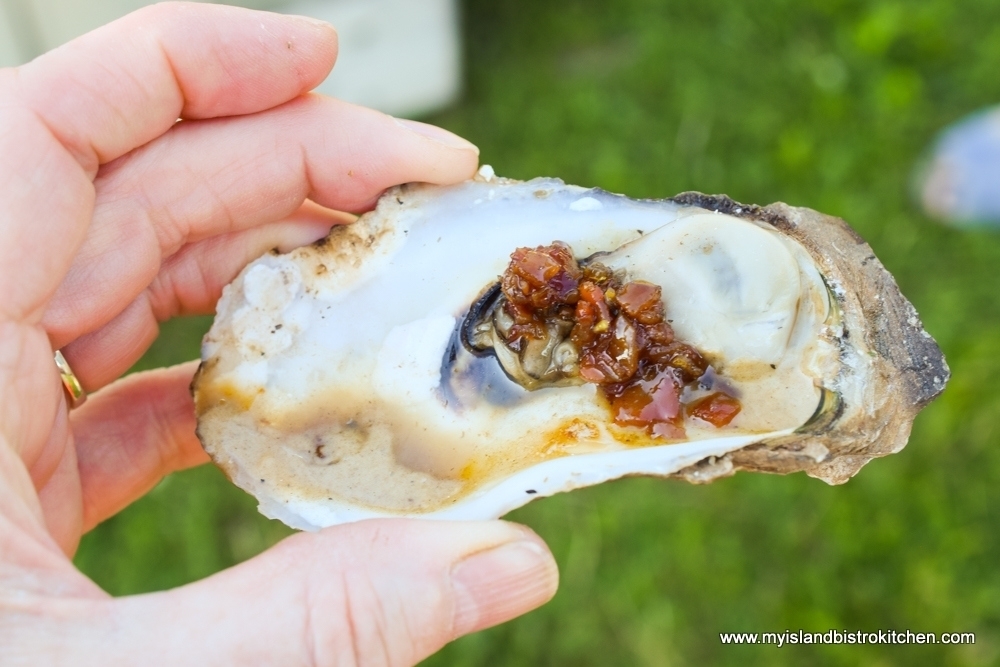
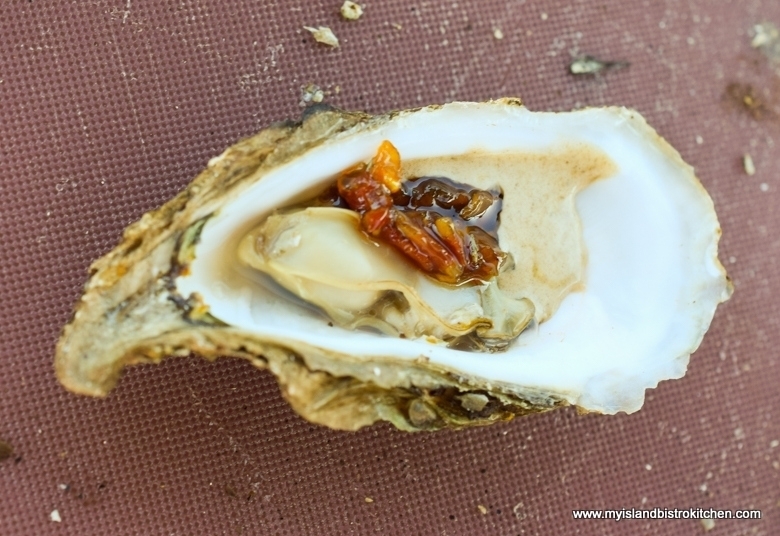
Grilled PEI Oysters Topped With A Black Garlic Cream Sauce and Bacon Jam (at The Table Culinary Studio, New London, PEI)
One of the best ways to learn about a place and its culture is through its local food. In fact, many travelers choose destinations based on the local food scene, food festivals and events, unique dining experiences, and opportunities to participate in culinary classes. Many, therefore, seek out experiences that allow them to connect more fully with a region and what better way to do that than through food, especially if it is experiential cuisine where you learn something about the foods you are eating.
I was recently a guest at the North Shore Surf and Turf Dinner at The Table Culinary Studio which hosts themed communal-style dinners featuring Prince Edward Island foods throughout the summer months. Today, I am going to share my dining experience at The Table with you.
The Table Culinary Studio, New London, PEI
The Table Culinary Studio is the successor of Annie’s Table Culinary Studio which was started by Annie Leroux in 2012. You can click here for my story on Annie’s Table Culinary Studio. Current owner, Derrick Hoare (himself a trained chef), had been a long-time summer resident on PEI for many years, was retiring from his career in the health care profession, and was looking for his next adventure. He contemplated buying a traditional restaurant in PEI but decided that was not his style. When Annie’s Table became available for sale, Derrick liked the concept Annie had begun so he bought the business which he began operating in 2016. In addition to keeping the tradition of offering short culinary courses, he added themed evening dining to the menu and renamed the business to The Table Culinary Studio.
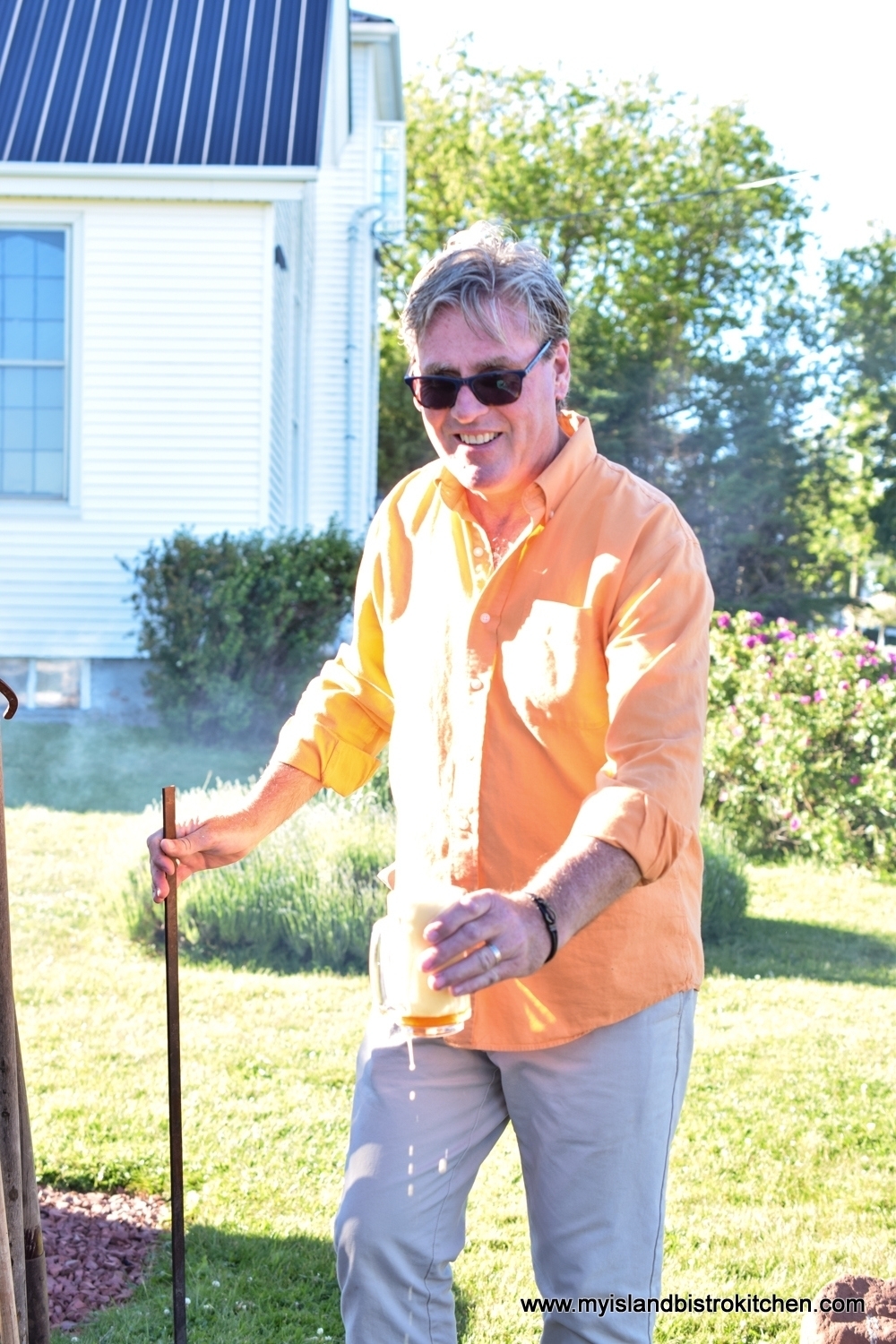
Derrick Hoare, Owner/Chef at The Table Culinary Studio, New London, PEI
Set in the small rural community of New London, not far from the resort municipality of Cavendish (the hometown of the fictional Anne of Green Gables – you may have heard of her!), you will find The Table on Route 8 or, as the locals would simply say, the Grahams Road.
At The Table Culinary Studio in New London, PEI
With a backdrop of green fertile rolling countryside, The Table is located in a repurposed former United Church that is tastefully furnished with quality antiques. Several of the elements of the decommissioned church have been incorporated into the décor, including the pulpit that now occupies a prominent position overlooking the dining hall.
Interior of the Re-purposed Country Church that is now The Table Culinary Studio
The entire venue is open concept so diners can watch the culinary team prepare the meal. This unique dining experience will make you feel like you are more at an intimate dinner party with a private chef catering than at a restaurant.
At The Table Culinary Studio, New London, PEI
Open seasonally, seven nights a week, for themed dinners that feature local Island foods that come from the land and the sea, The Table can accommodate up to 18 guests an evening, one seating only. Tickets for the dinner must be reserved in advance (by phone or email) and the menu for each evening is a set menu – you eat whatever is being prepared that night which takes the pressure off of studying a menu and trying to decide what to have. Drinks are at extra cost and are payable at the end of the evening along with the dinner.
The themed dinners range from the Traditional Island Feast to the Island Dinner Party to Isle and Fire to the North Shore Surf and Turf and all focus on fresh local foods harvested or fished nearby. Seating is at one long harvest table in the middle of the old church and food is served family style which is to say that the main meal, on large platters, arrives at the table and guests pass the platters around, serving themselves. There are no individual tables.
At the Surf and Turf Dinner at The Table Culinary Studio in New London, PEI
It seems only fitting that communal dining would be the style of dining at The Table given that it is in a decommissioned church. Communal dining dates back to biblical times – you know, the breaking of bread together. The concept of individual tables for dining did not start until a long time after these origins. Some may find it requires some stepping out of the comfort zone to attend a dinner with strangers all seated at the same table but, when you think about it, church and community potluck dinners have been around for ages and they are traditionally served at long communal tables where you don’t necessarily know the people seated around you. We do a lot of cruising and have never requested a table for two in the ship’s dining room simply because we like to meet new people and inject some new conversation into meal times when traveling. So, sitting down to a meal alongside people I have not met before is quite comfortable and familiar for me. After all, the chances are that they are all food enthusiasts, too!
One of the lovely parts of this type of experiential dining is that you get to interact with those preparing the meal. In contrast, if you go into a traditional style restaurant, you are seated, have limited contact with the wait staff, and most likely never see the chefs let alone have any direct contact with them. At The Table, there are lots of opportunities to communicate directly with the owner/chef Derrick, executive chef Michael Bradley, oyster shucker George Dowdle, and The Table’s event planner, Christine Morgan. Together, this is the culinary team at The Table.
The Table benefits from having a talented and enthusiastic young chef. With over ten years of experience in professional kitchens, Chef Michael Bradley is a graduate of the Culinary Institute of Canada in Charlottetown. Chef Michael has been at The Table from the beginning, starting as an intern and working his way up to become the executive chef.
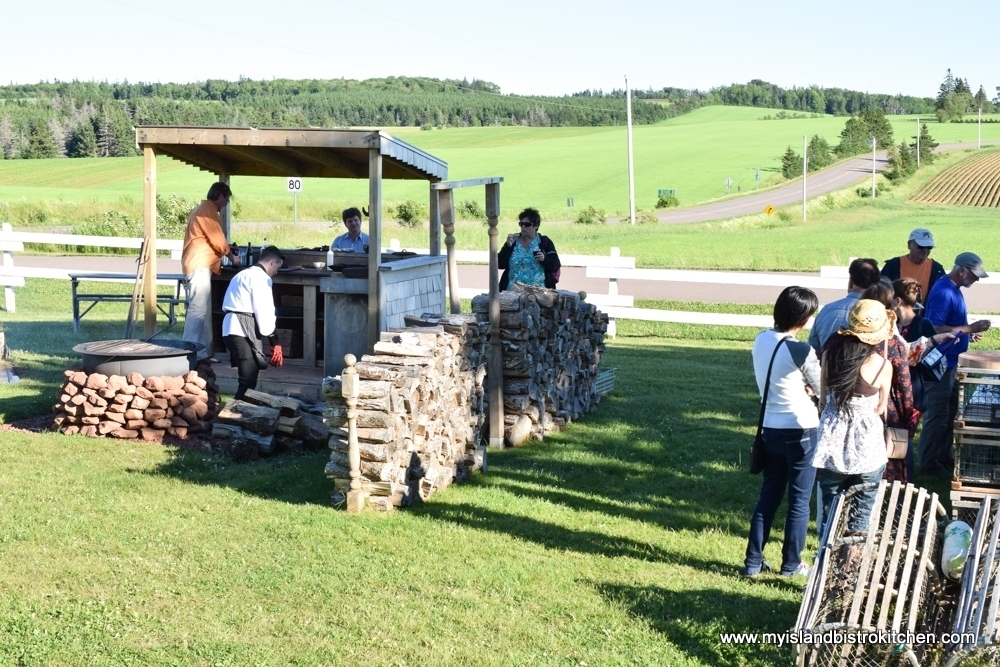
Outdoor Reception at the Surf and Turf Dinner at The Table Culinary Studio, New London, PEI
I truly felt like I was at someone’s private dinner party. It was a perfect sunny summer evening as guests arrived for the event which started on the side lawn of the church. When I arrived, local aquaculturalist, George Dowdle, was busy shucking oysters that he had fished from the nearby Southwest River only hours before the dinner.
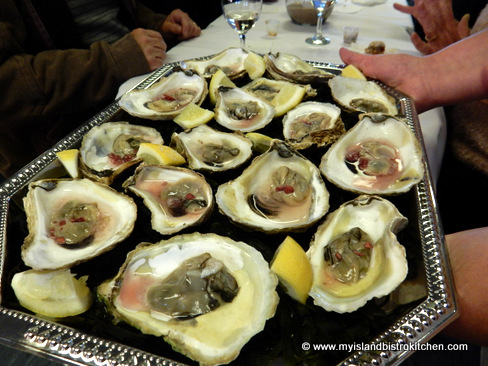
Guests soon became preoccupied with consuming the fresh raw oysters which were served with a choice of three sauces: Asian Thai, Lemon Herb, and Pomegranate Herb. It wasn’t long before everyone felt comfortable and at home with each other as the conversations quickly turned to discussions about the food.
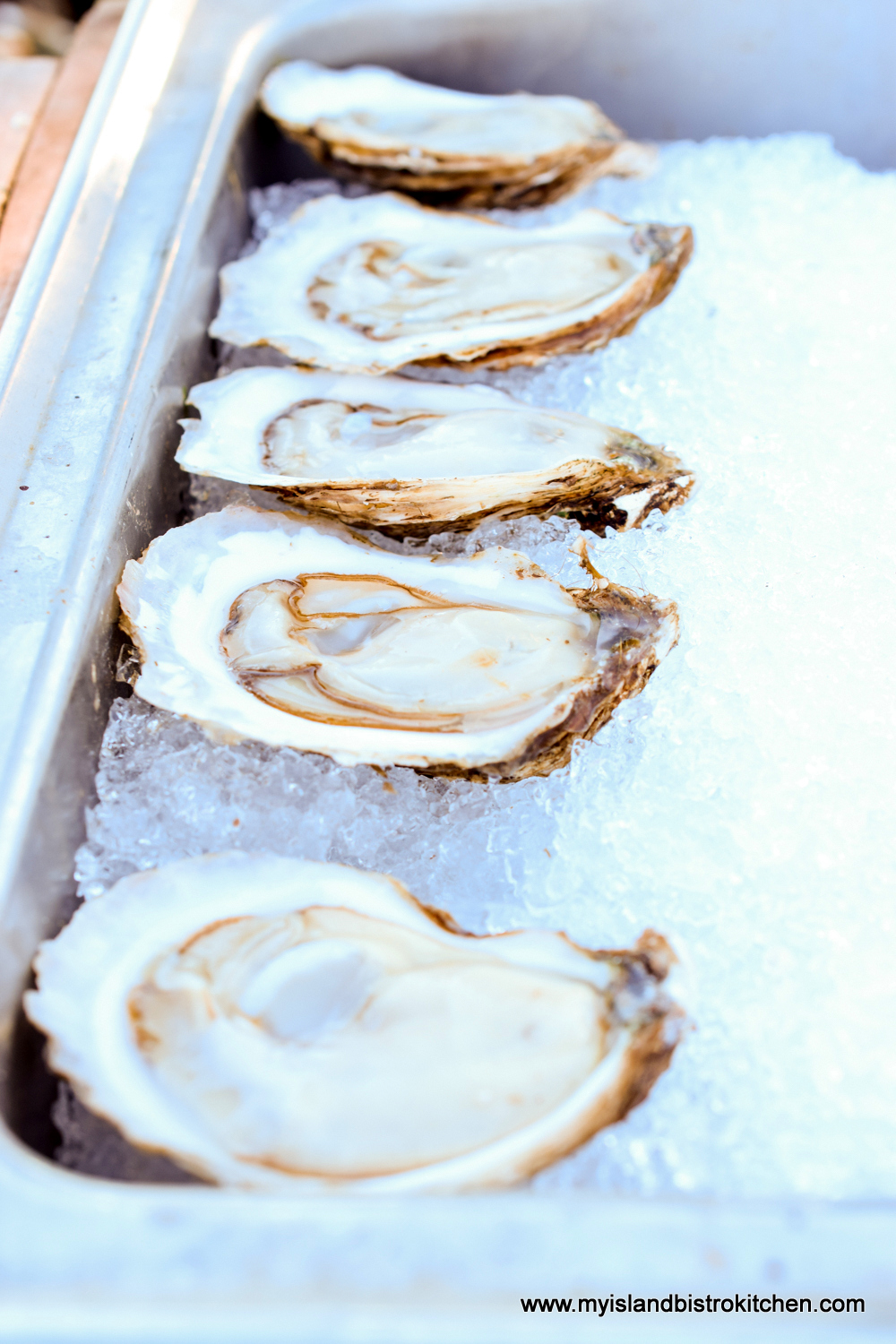
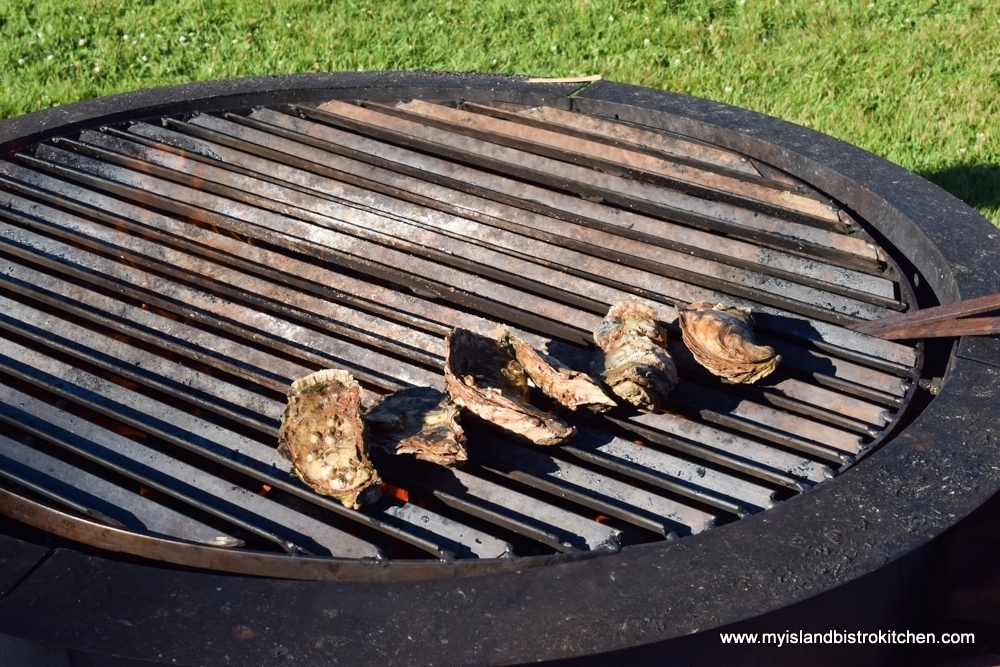
Freshly Shucked Oysters at The Table Culinary Studio, New London, PEIPEI Oysters on the Grill at The Table Culinary Studio, New London, PEI
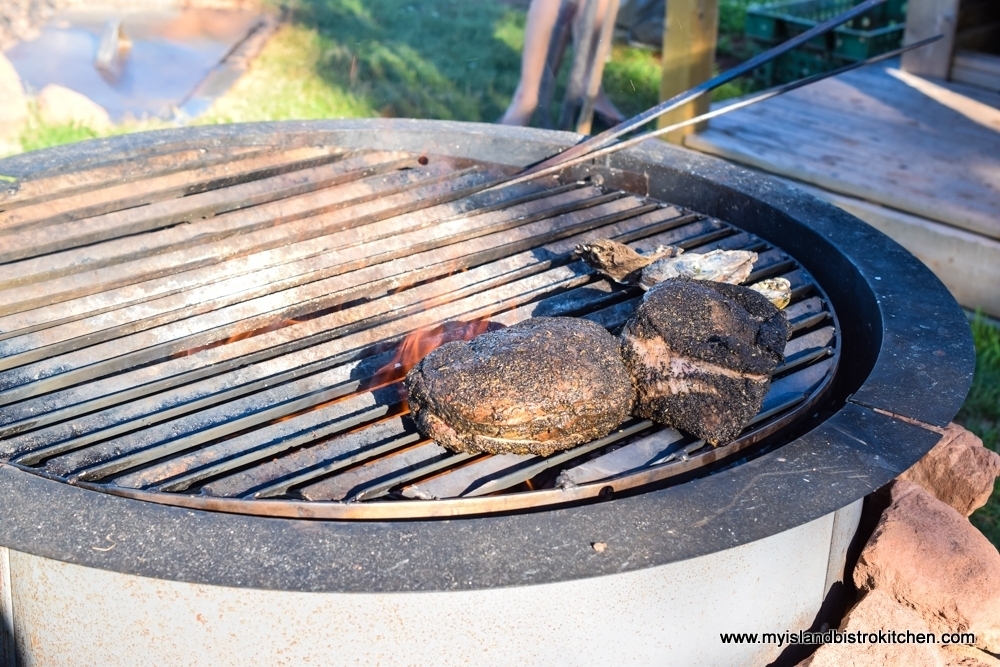
Not quite into slurping raw oysters? Chef Michael also has a unique way of serving grilled oysters. He first puts the oysters on the open fire grill to warm them up, then shucks them and tops them with a black garlic cream sauce and bacon jam, then puts them back on the grill to re-heat them. Simply sublime!
PEI Oysters Hot off the Grill and Served with Black Garlic Cream Sauce and Bacon Jam
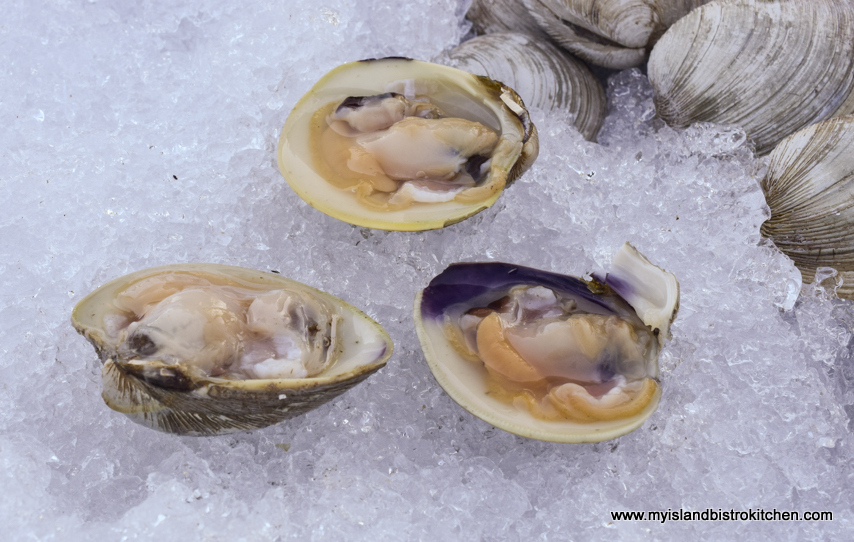
While clams sometimes take a back seat in popularity to mussels and oysters, The Table includes them as part of the meal.
PEI Clams (at The Table Culinary Studio, New London, PEI)
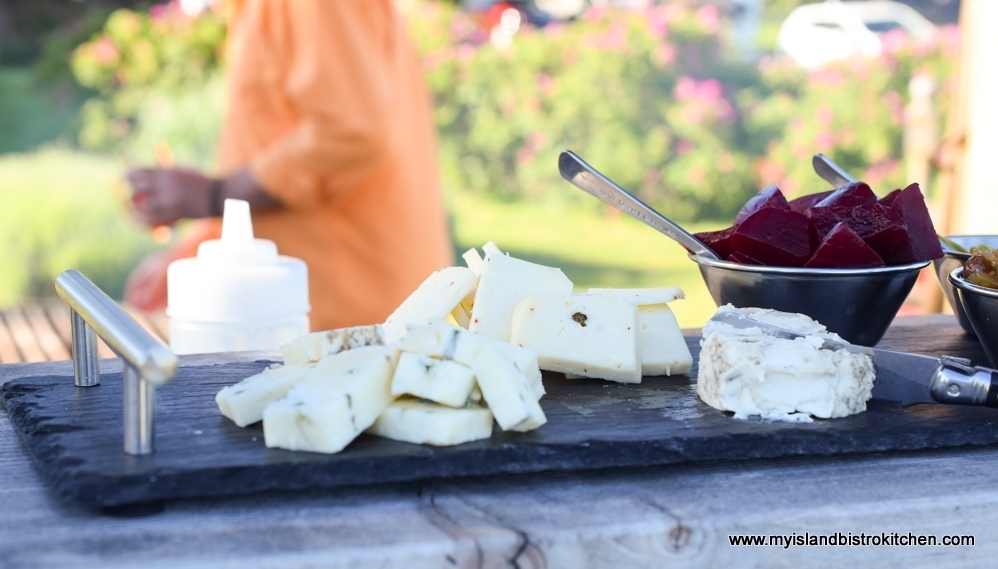
When we had our fill of oysters, out came the cheese and charcuterie trays.
Cheese Tray at The Table Culinary Studio, New London, PEI
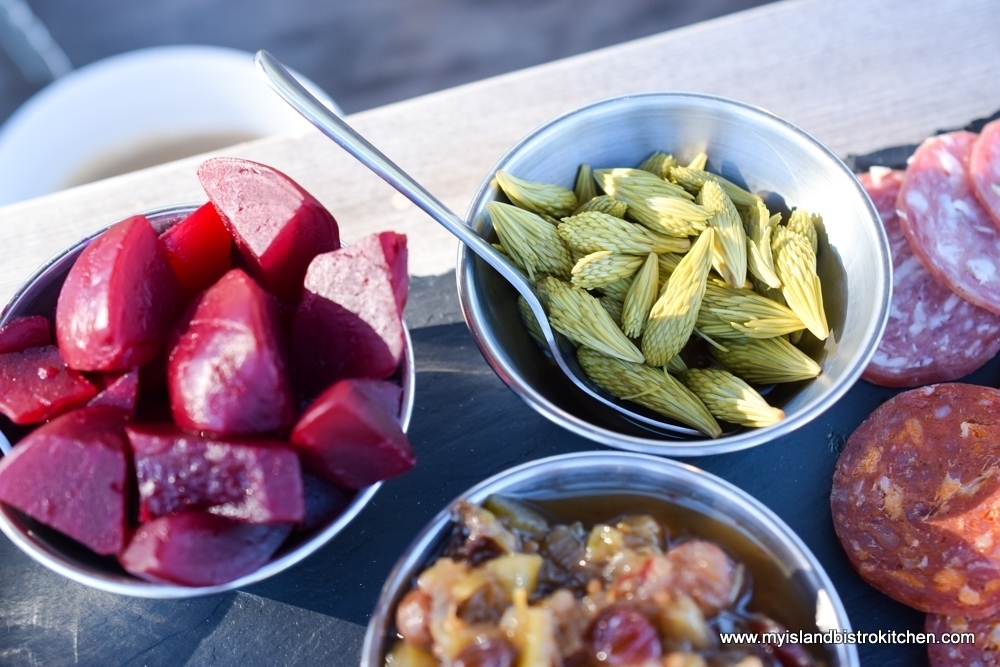
On this evening, The Table served their own homemade black garlic crackers alongside an assortment of cheeses from Ferme Isle St Jean in Rustico and Glasgow Glen Farm in New Glasgow. This was rounded out by pickled beets, pickled carrots, pickled spruce tips, and rhubarb chutney (all made in-house at The Table).
Condiments on the Charcuterie Tray at The Table Culinary Studio, New London, PEI
While guests were busy noshing on the appetizers, Chef Michael was preparing the sirloin tip roast with a black garlic espresso rub. Cooked over an open fire, you can only imagine how tantalizing the scent was!
Grilling the Sirloin Tip Beef Over an Open Fire at The Table Culinary Studio, New London, PEI
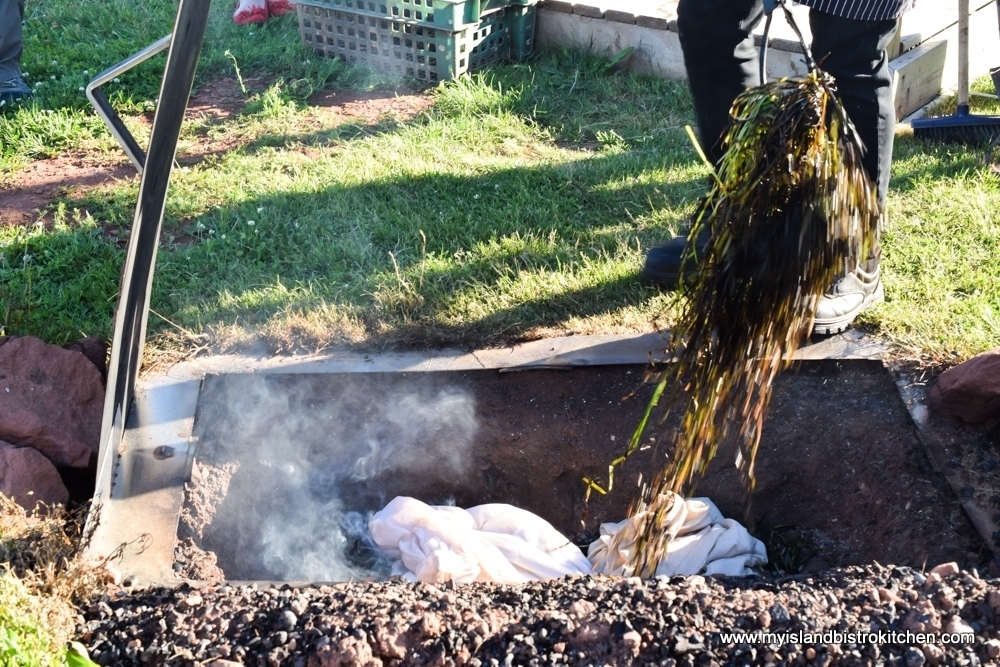
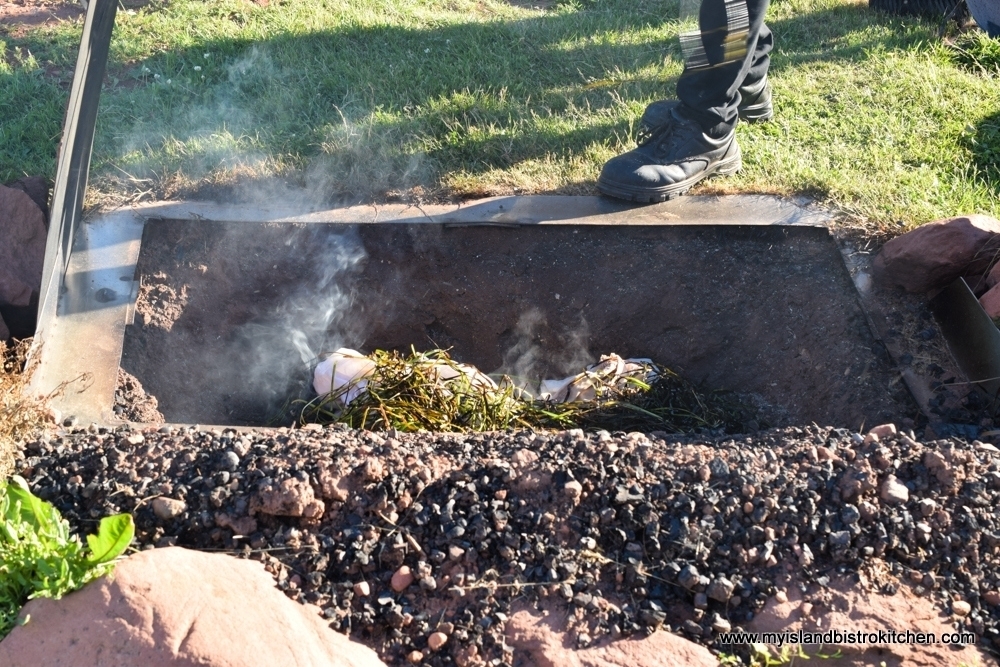
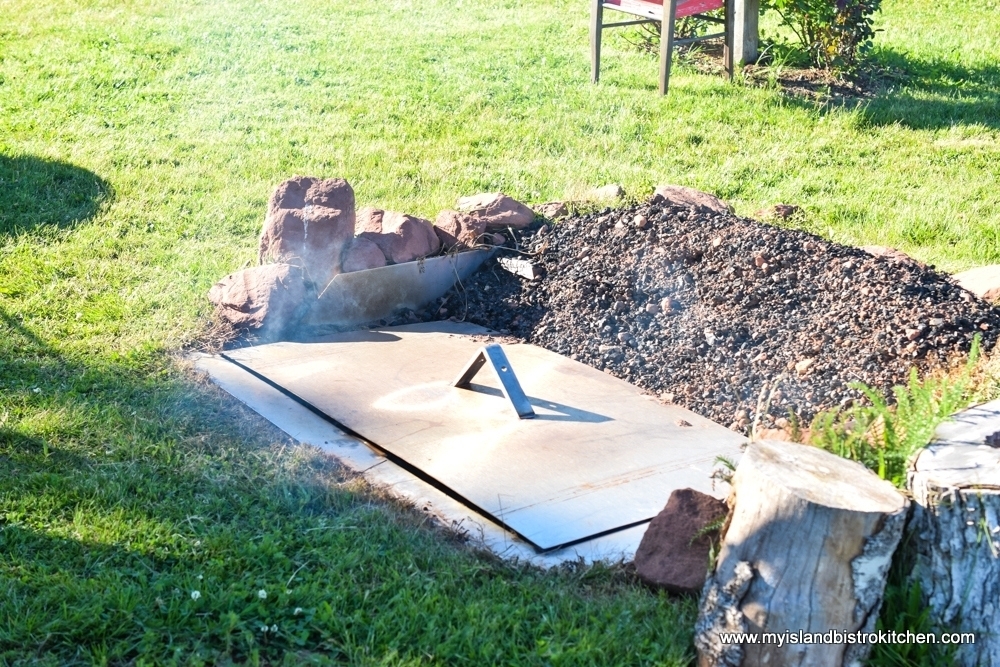
Then, Chef Michael demonstrated how they cook the mussels in a fire pit with seaweed and smoke. The mussels are placed in wet pillowcases which give the moisture the mussels need to open.
Placing Bags of Mussels in the Fire Pit at The Table Culinary Studio, New London, PEICovering Bags of PEI Mussels with Seaweed for Cooking in the Fire Pit at The Table Culinary Studio in New London, PEIFire Pit for Cooking Mussels at The Table Culinary Studio in New London, PEIFire Pit for Cooking Mussels at The Table Culinary Studio in New London, PEI
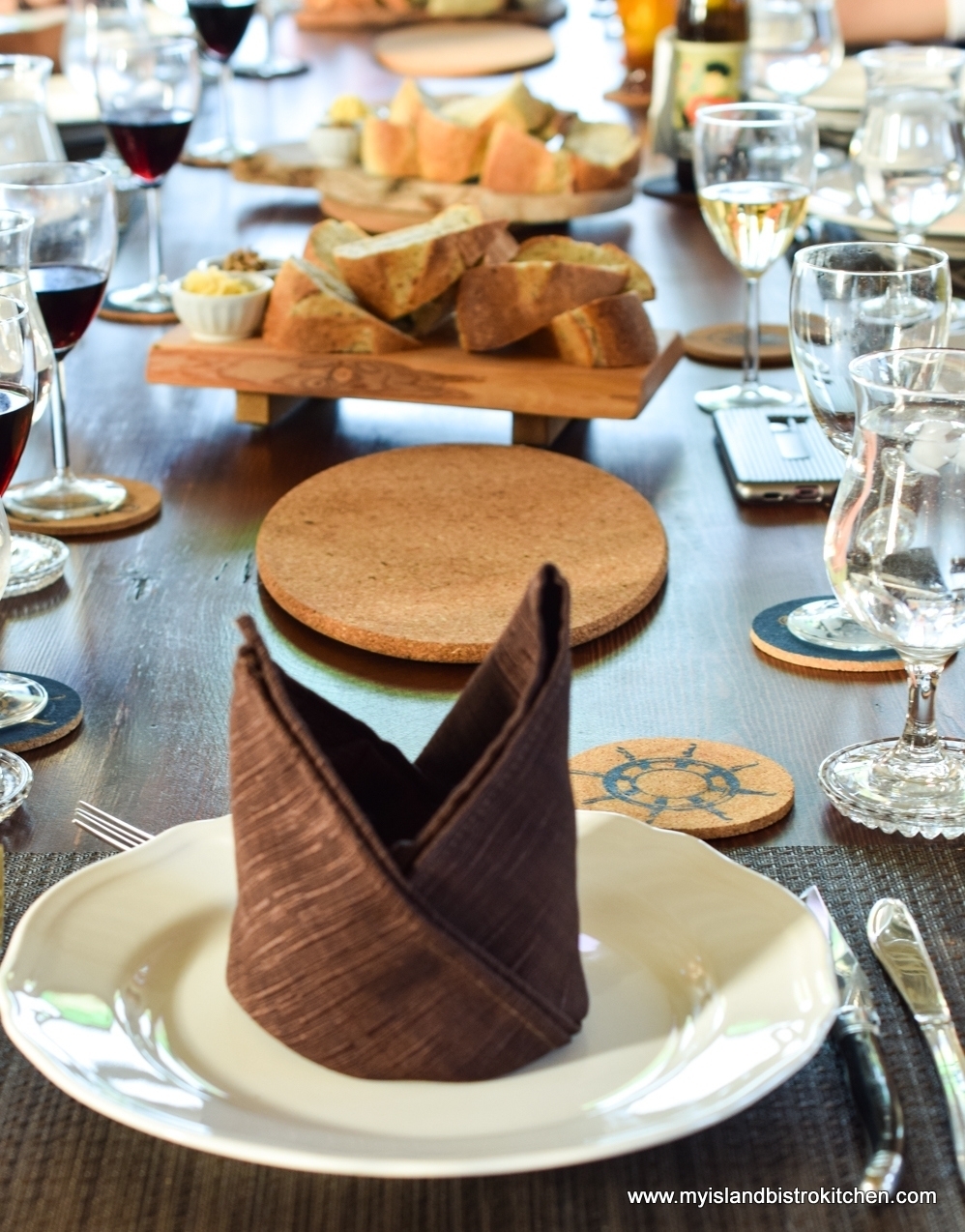
Guests leisurely made their way inside the church where the meal was served. The big 12-foot long handmade harvest table occupies much of the space that once would have been filled with church pews.
The Table Culinary Studio, New London, PEI
By this time, guests were very comfortable in the company of each other and, since there were three Islanders present, the conversation soon turned to various aspects of how local foods are produced and farming and fishing, in general. Food is such a commonality and ice breaker!
Dining at The Table Culinary Studio in New London, PEI
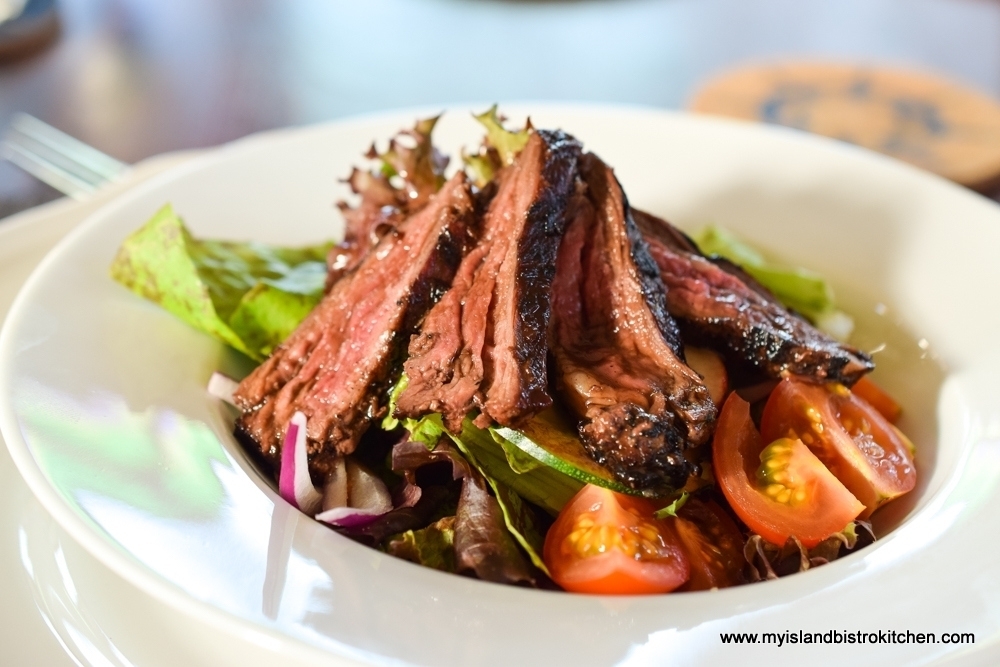
The meal began with a plated salad highlighted by the skirt steak from Atlantic Beef Products in Albany. The steak had been marinated in an onion garlic marinade.
Salad with Skirt Steak at The Table Culinary Studio in New London, PEI
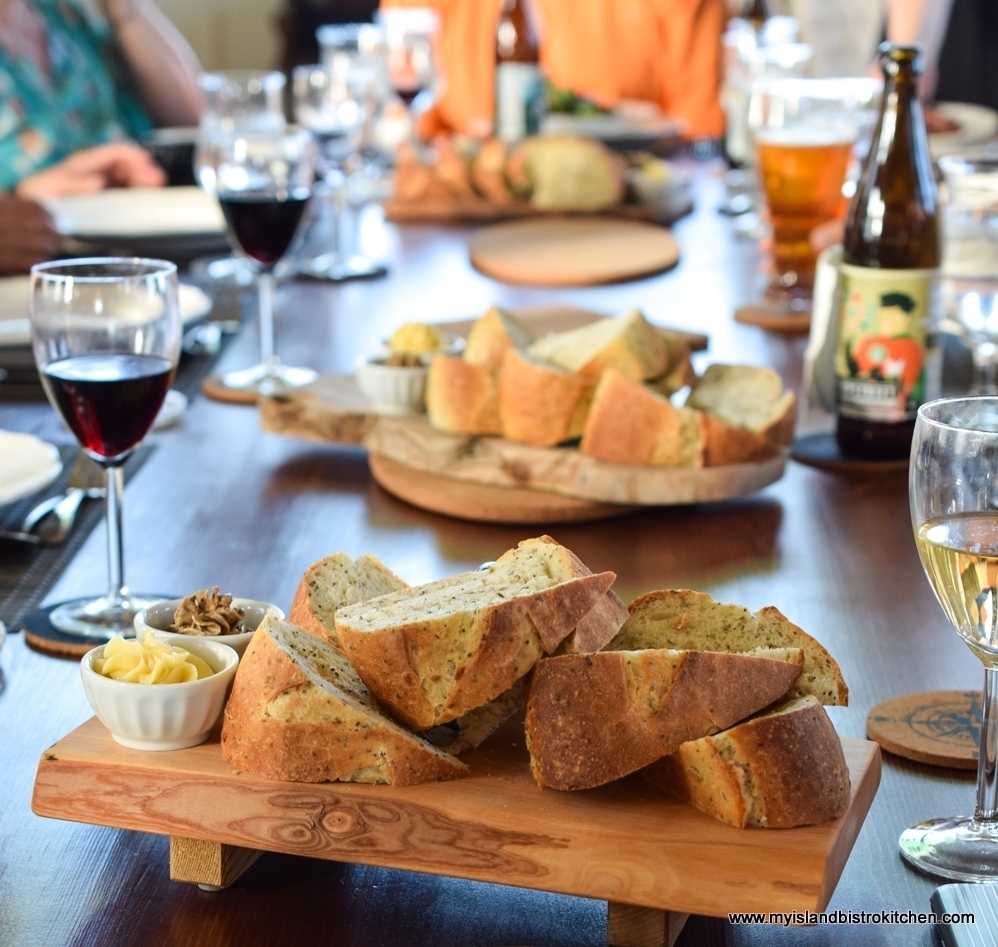
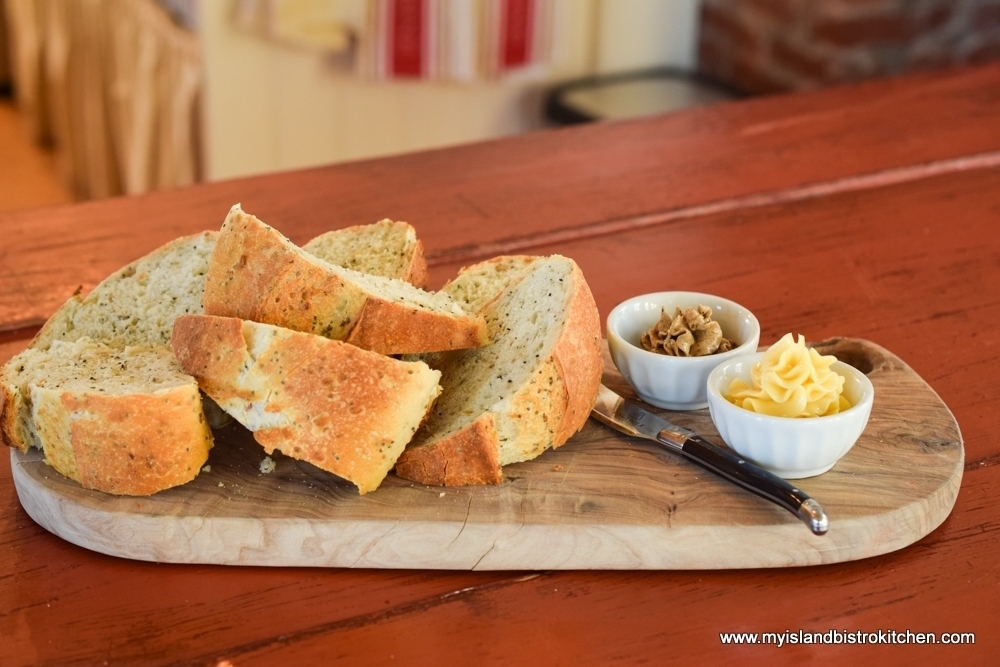
The boards of housemade sourdough bread were served with a black garlic spread as well as honey butter.
Bread Board at The Table Culinary Studio in New London, PEI
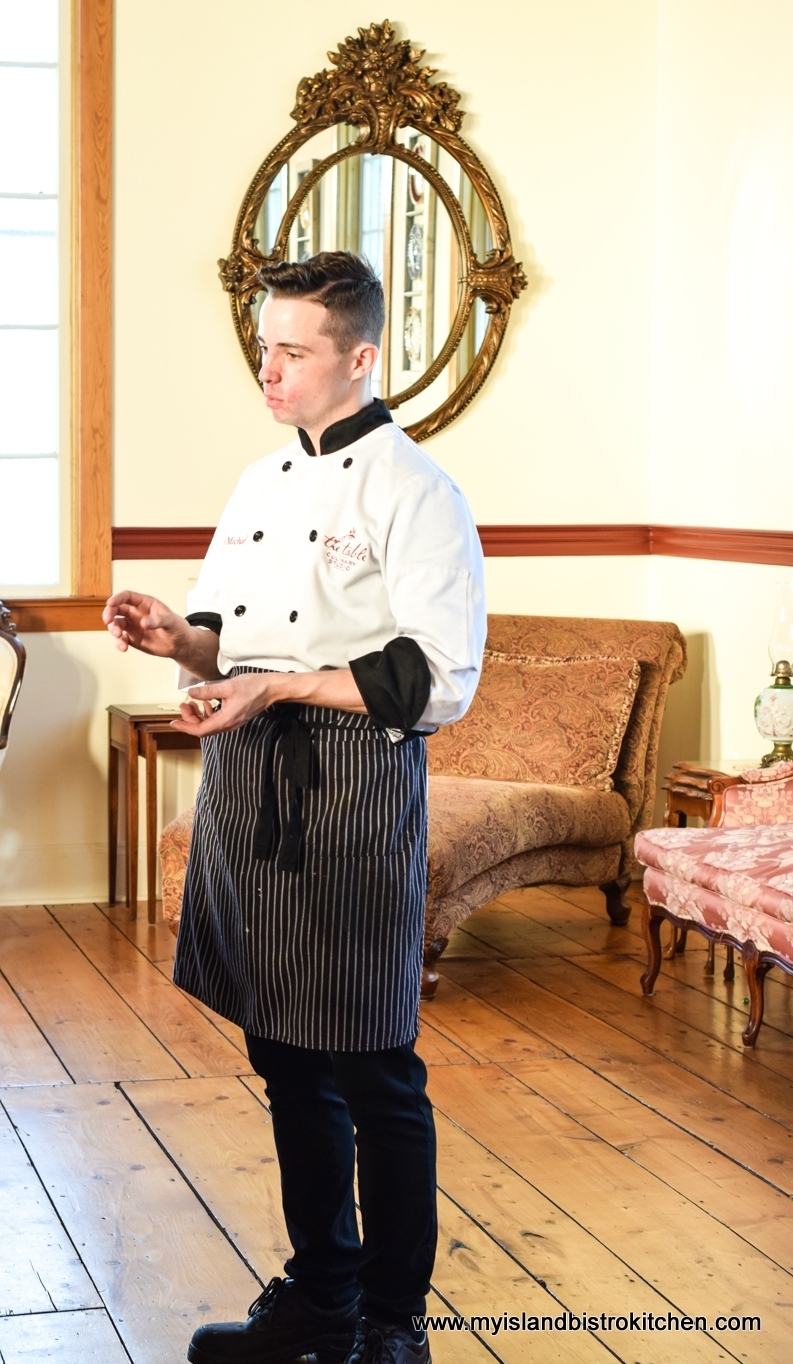
Before each course was presented, Chef Michael came tableside to explain what the course consisted of and how it was prepared.
Executive Chef, Michael Bradley, at The Table Culinary Studio in New London, PEI
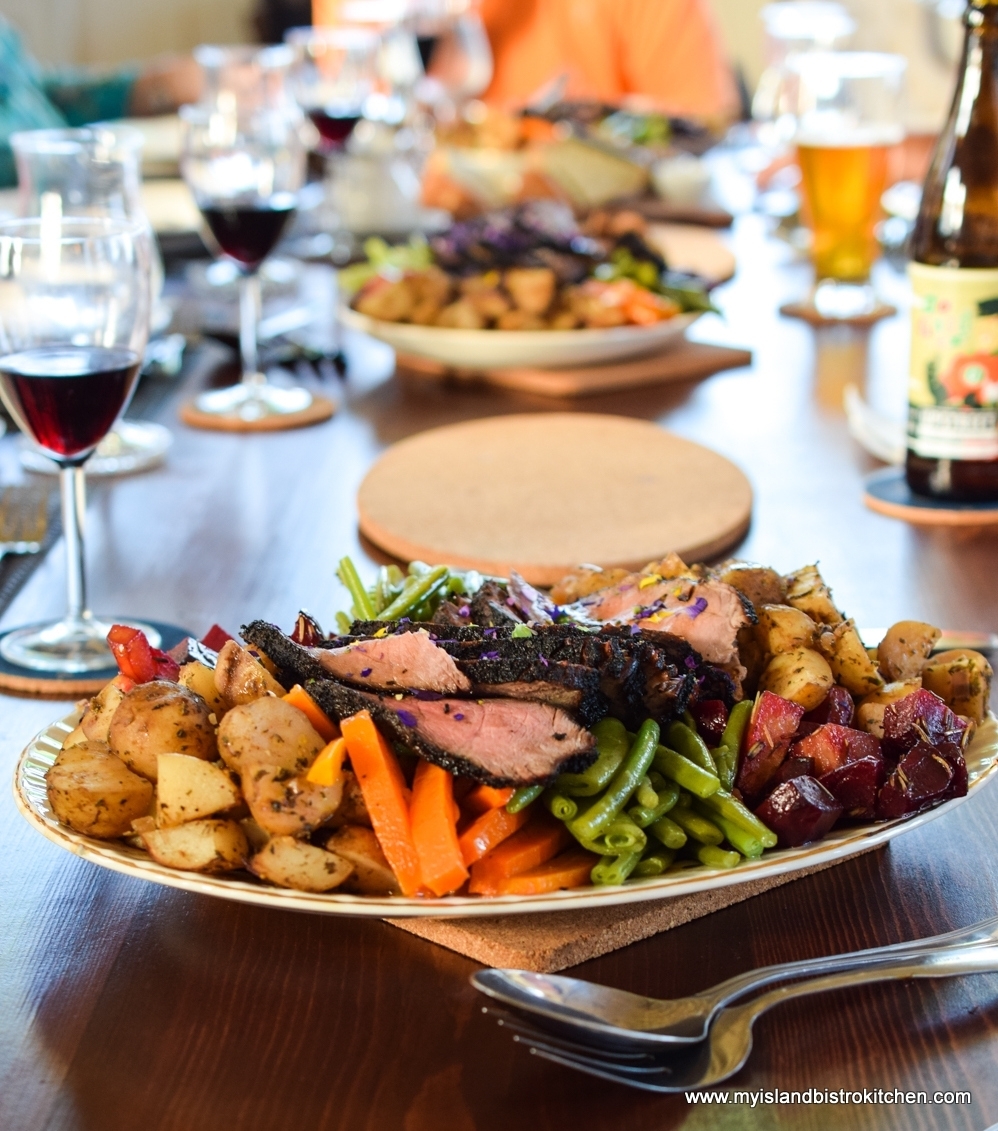
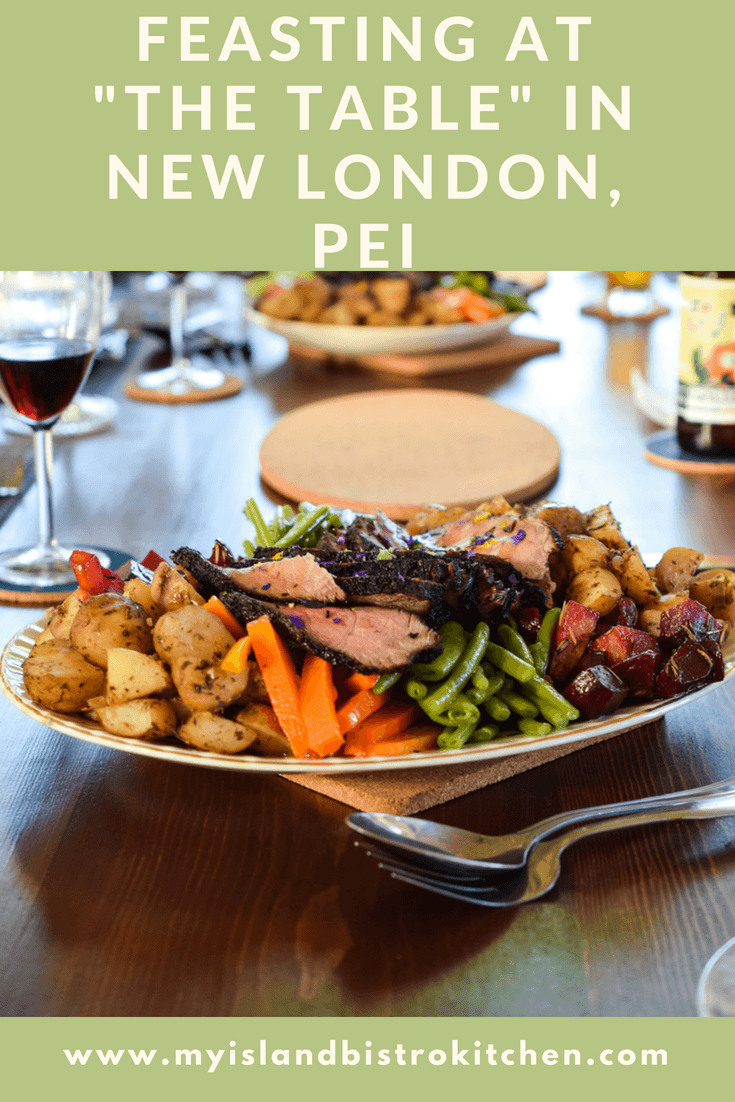
Next came huge platters of bountiful mixed seasonal vegetables with the fire-grilled sirloin tip roast.
Platters of Vegetables and Sirloin Tip Roast at The Table Culinary Studio, New London, PEI
The veggies (along with the salad greens) came from nearby Alexander Fresh Vegetables in Hope River. These were very attractively presented platters.
Platter of Vegetables and Sirloin Tip Roast at The Table Culinary Studio, New London, PEI
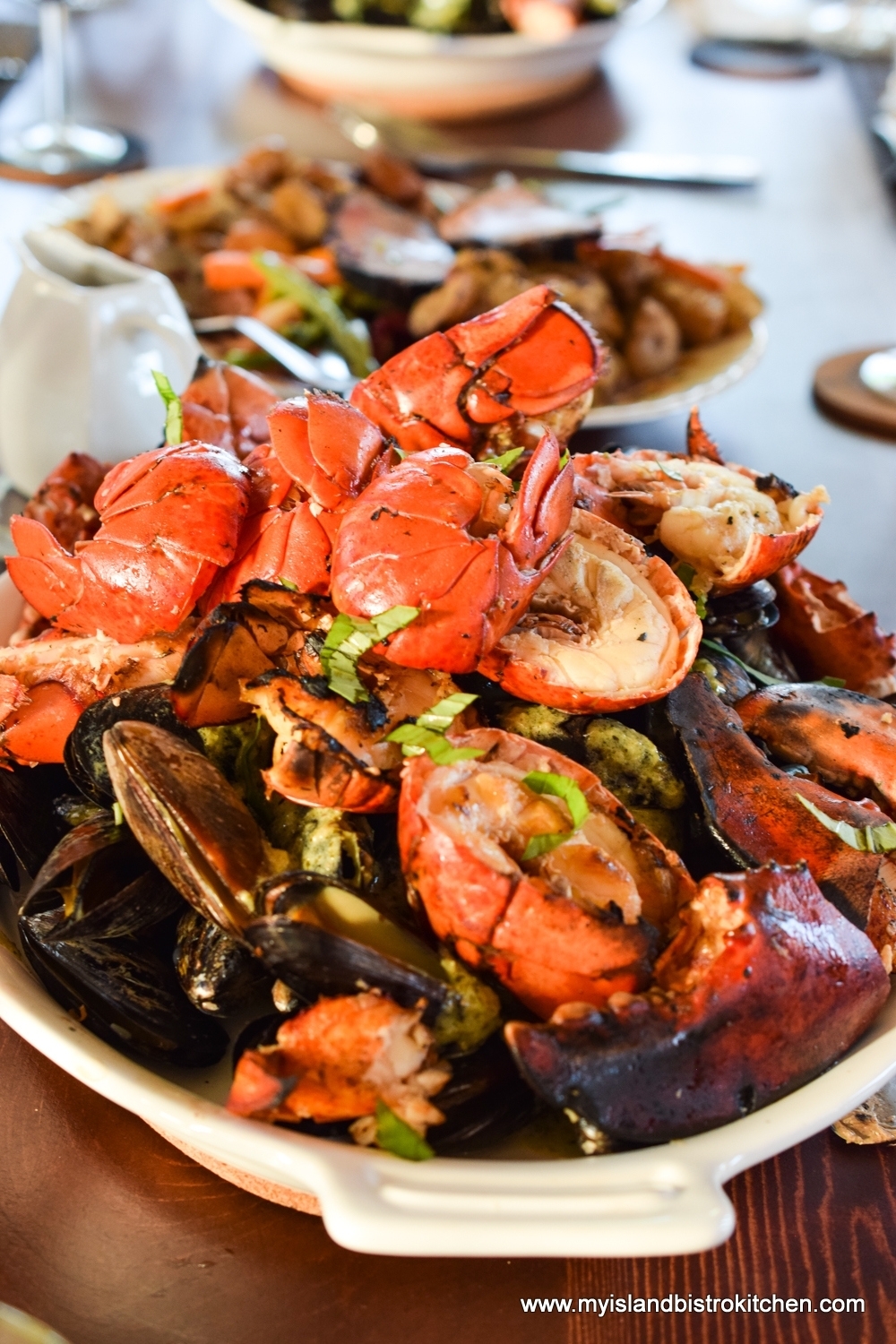
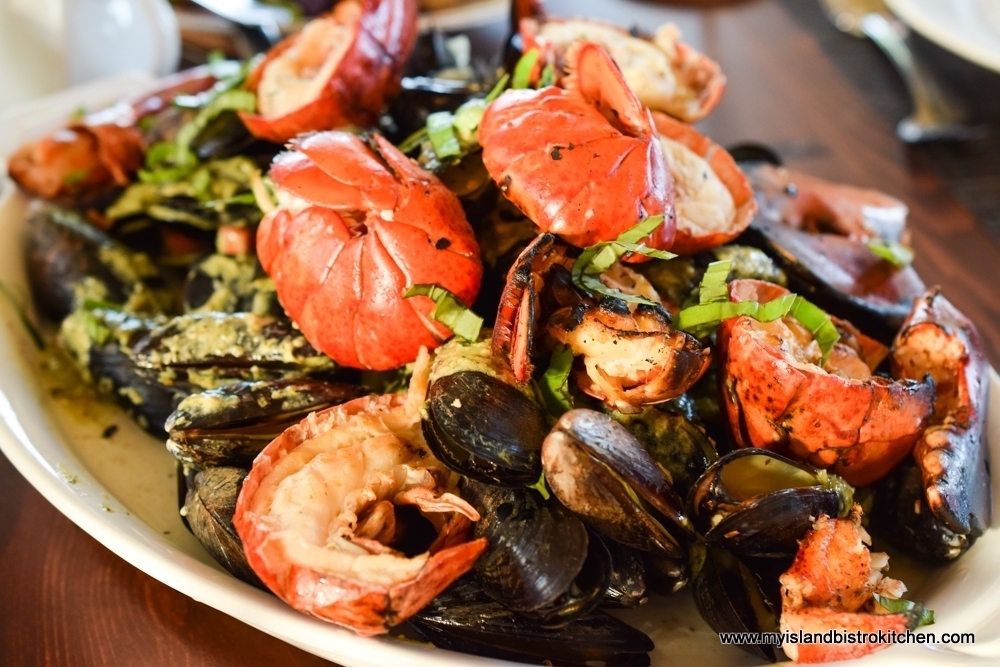
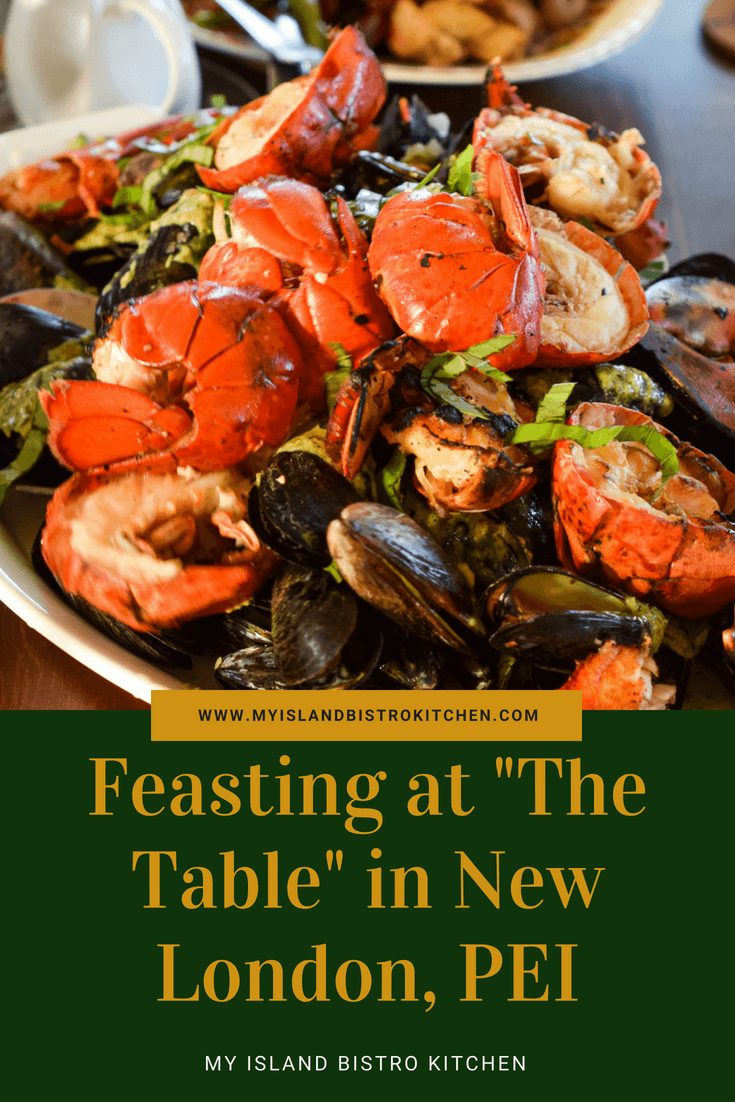
Then, the seafood platters arrived. All those mussels that had been cooking in the fire pit emerged from the pillowcases and formed the base for lobster claws and tails.
Lobsters and Mussels at The Table Culinary Studio in New London, PEI
The lobster, fished from boats out of nearby French River Harbour, had been par-cooked with a garlic butter and then was finished on the grill outside.
The green sauce accompanying the mussels was a garden pesto cream sauce.
Lobster and Mussels at The Table Culinary Studio, New London, PEI
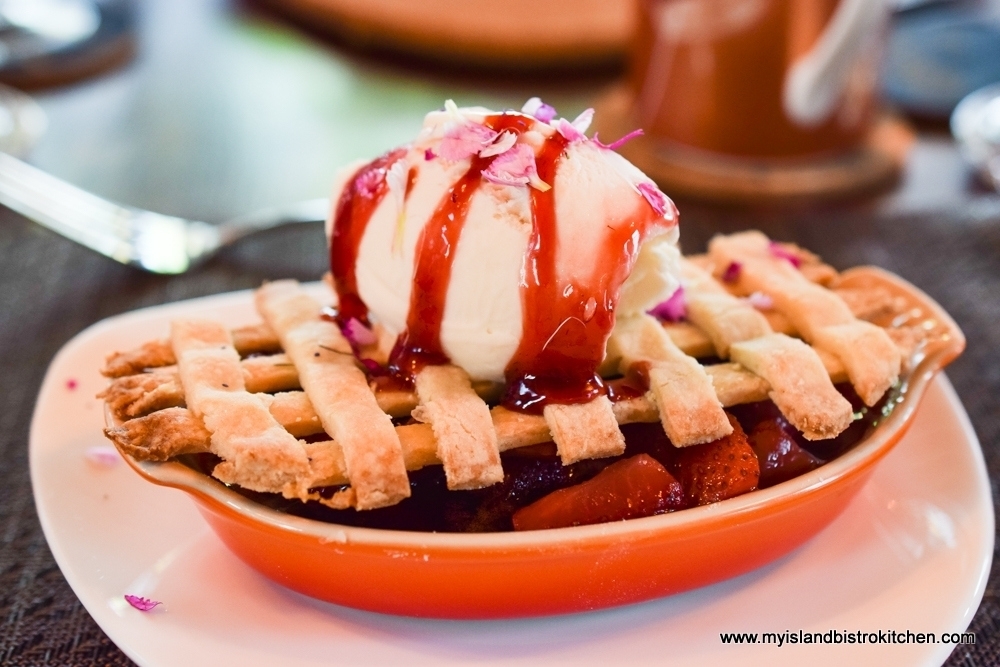
By this time, I was stuffed and thought I would just roll home but, wait, dessert was to come! Dessert was a blood orange infused carrot cake with orange cream cheese icing. I didn’t get a photo of it because I was too busy enjoying the gluten-free option that was a deconstructed strawberry pie made with a strawberry balsamic reduction and gluten-free pastry lattice, all topped with lactose-free ice cream.
Gluten-Free Dessert at The Table Culinary Studio in New London, PEI.
The Table prides itself on using the best of what is fresh and local. Most foods for their themed dinners come from under 10 km away and are farmed and fished by friends and neighbours. So, you know that when you dine at The Table, food will not have traveled thousands of miles before it has reached your plate. In fact, you can seek out the same food suppliers to purchase high quality local PEI products.
I asked Christine if they ever get families for their dinners. She tells me, although 90% of their clientele are adults, parents are welcome to bring their children and they do often have families in attendance. Patrons should note, however, that there is no children’s menu offered so the wee folk eat the same food as the adults.
What I have described above is the meal for the Surf and Turf dinner. I inquired if the meal ingredients are identical for this particular dinner every night. Christine informs me that the appetizers, vegetables, and dessert do vary by what is seasonally available. So, if you are having the Surf and Turf dinner at The Table after having read this post, you’ll be aware that the meal ingredients may not be 100% identical to what I enjoyed in early July.
So, if you want to really immerse yourself in local PEI foods and have a totally relaxing evening in the beautiful countryside of Prince Edward Island while feasting on carefully prepared dishes in a unique setting, you should check out The Table Culinary Studio. If you have dietary restrictions, be sure to advise of that when making your reservation and, to the extent possible, the culinary team at The Table will do all they can to accommodate special dietary needs.
For more information on dining options at The Table, and to make reservations, check out their website at http://www.thetablepei.ca/dining .
Pin Me to Pinterest!
Dinner at The Table Culinary Studio in New London, PEIDinner at The Table Culinary Studio in New London, PEI
My thanks to The Table Culinary Studio for the opportunity to experience their North Shore Surf and Turf Dinner and for the fine hospitality. My dinner at the The Table Culinary Studio was complimentary for the purpose of conducting a review of the North Shore Surf and Turf dinner. However, this in no way influenced my opinions of the dinner experience. All opinions expressed in this review are purely my own.
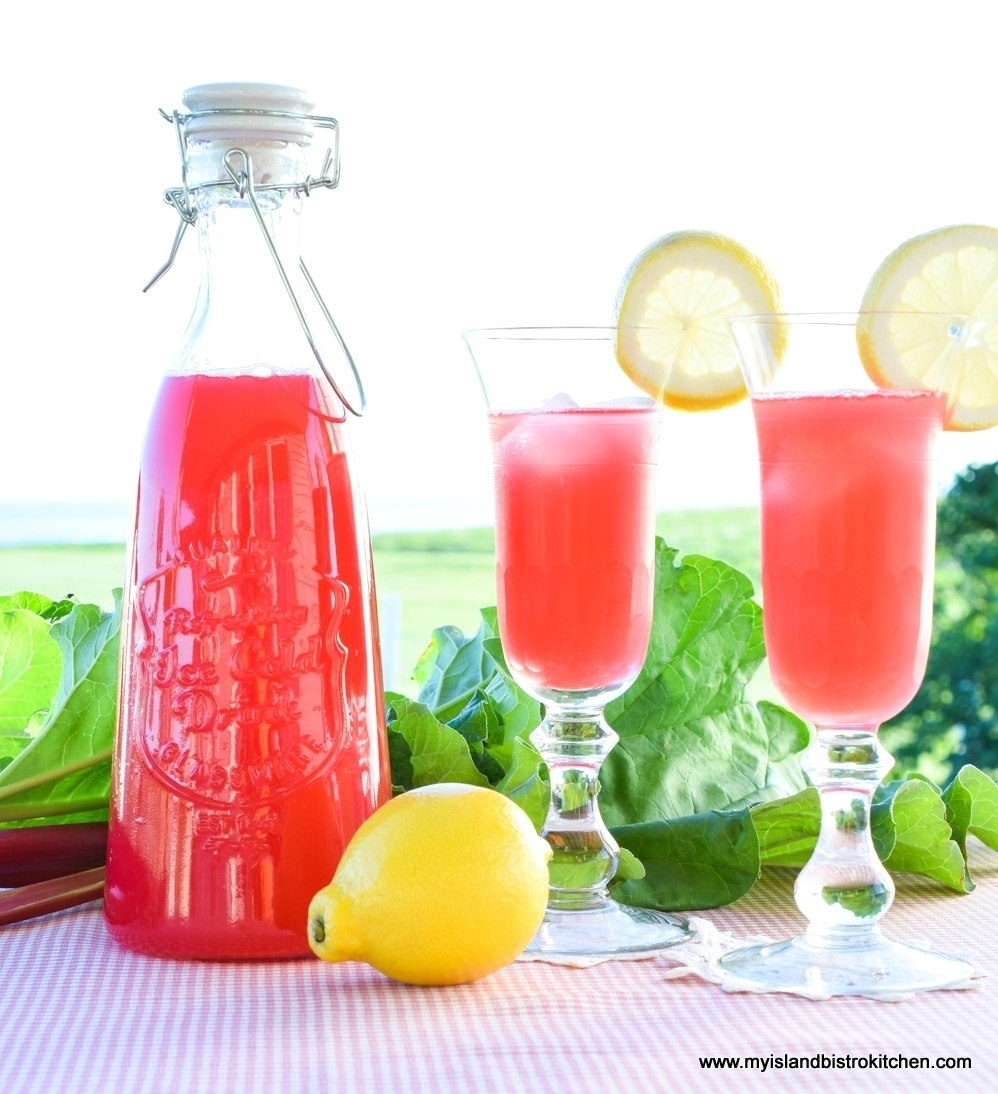
Lemonade is one of the most common of summer drinks. Served cold, it’s very refreshing on a hot summer’s day. Sometimes, I like to flavour my lemonades as I am doing today with rhubarb in the form of Rhubarb Lemonade. Continue reading Rhubarb Lemonade→
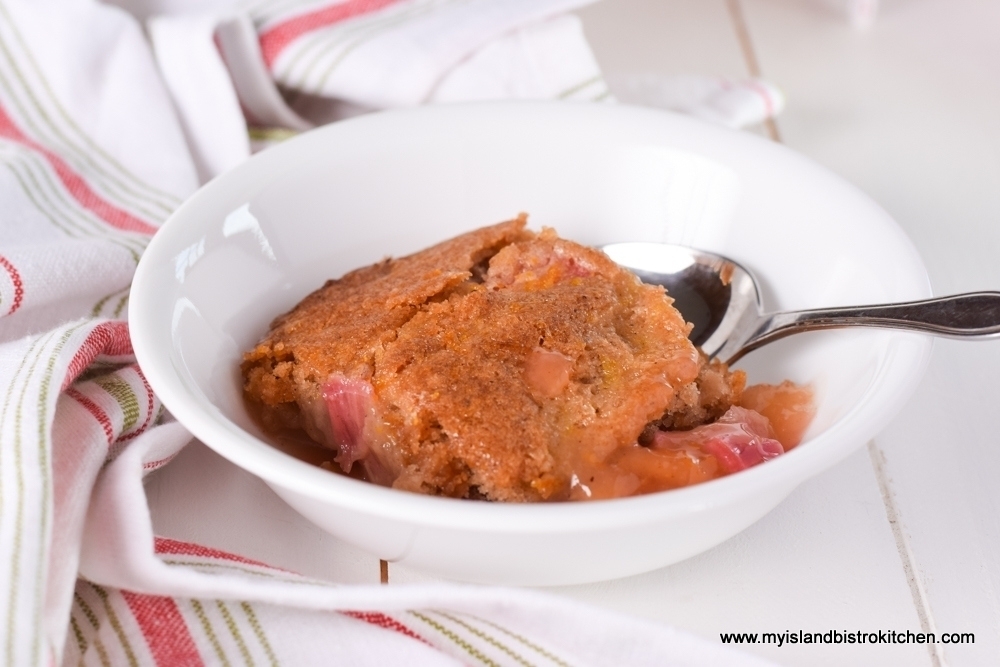
Today, I am sharing my recipe for a real old-fashioned type of dessert – Rhubarb Pudding Cake. The cake is “self-saucing” which means that the delectable sauce forms underneath the simple cake batter as the cake bakes. It’s an “all-in-one” pudding and cake! It may not be the most extravagant looking dessert but it sure is mighty tasty! If you are a rhubarb lover, you will love this dessert. Continue reading Old-fashioned Rhubarb Pudding Cake→
I love the produce our garden generates and its earliest treat is rhubarb. It is so versatile and I make lots of recipes using rhubarb. Today, a treat for my gluten-free diet followers — a new recipe for Deli-style Gluten-free Rhubarb Granola Muffins. Continue reading Deli-style Gluten-Free Rhubarb Granola Muffins→
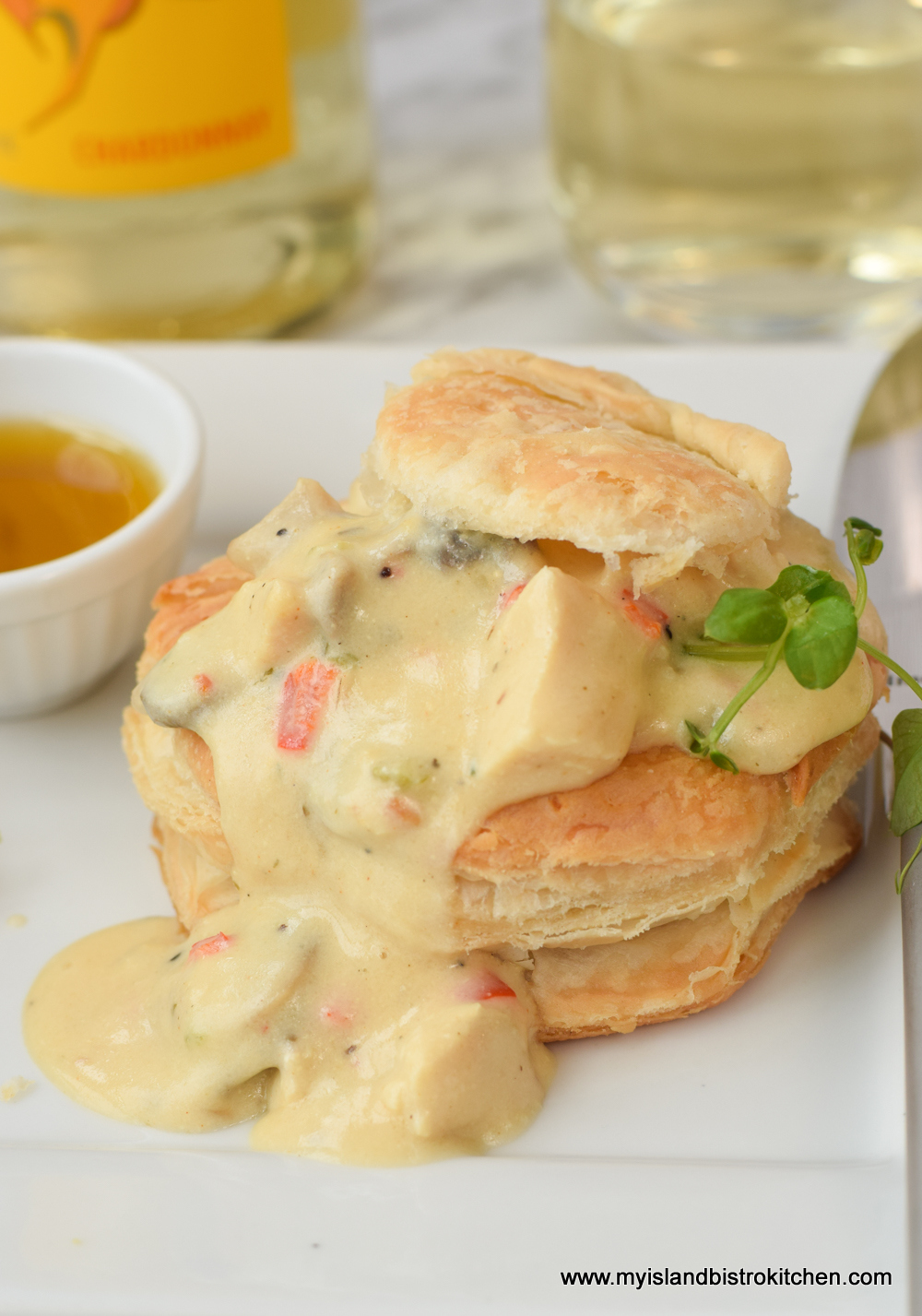
One of my favorite recipes is Chicken and Mushroom Vol-au-vent. Some may know this as “creamed chicken”. I actually make up a large batch of this delectable dish and freeze it in serving-sized portions. It makes a quick and easy meal when all that has to be done is bake the frozen patty shells, heat up the creamed mixture, and toss a green salad. Continue reading Chicken and Mushroom Vol-au-vent Recipe→
Today, I am sharing my recipe for Clumpy Almond Butter Granola. Homemade granola is so easy to make and customize to individual tastes. So long as you keep the proportions of ingredients, substitutions are perfectly acceptable. Continue reading Clumpy Almond Butter Granola Recipe→
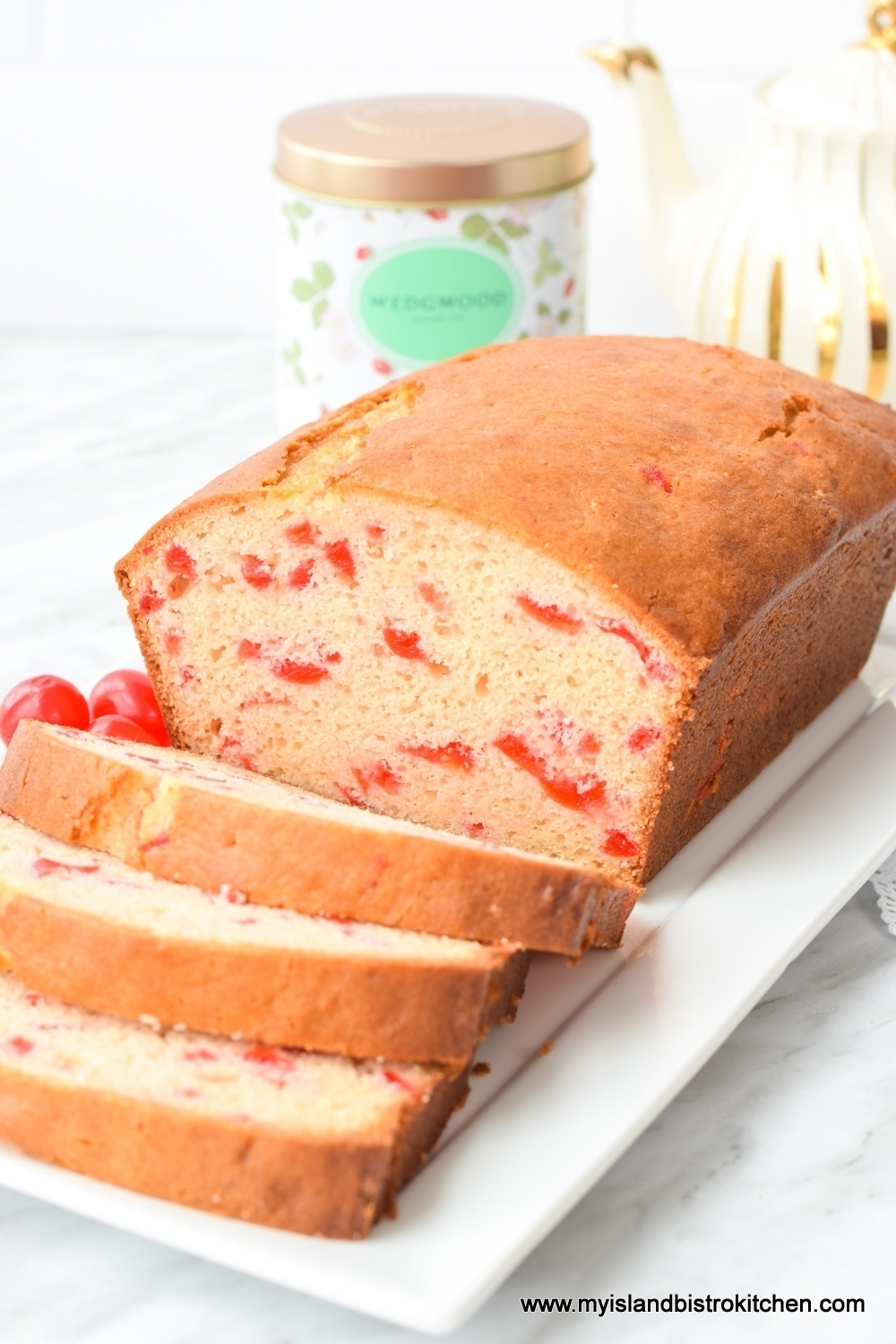
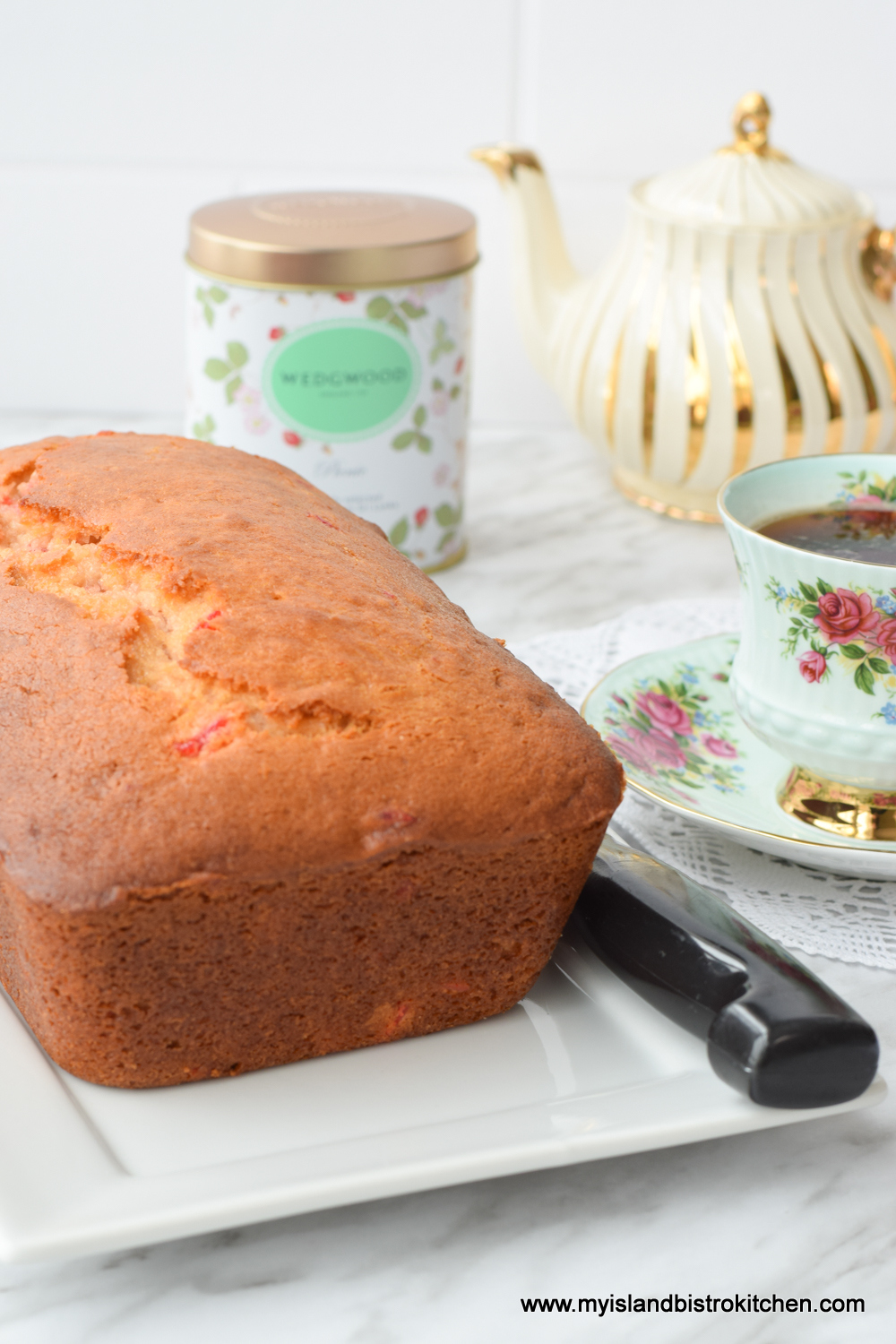
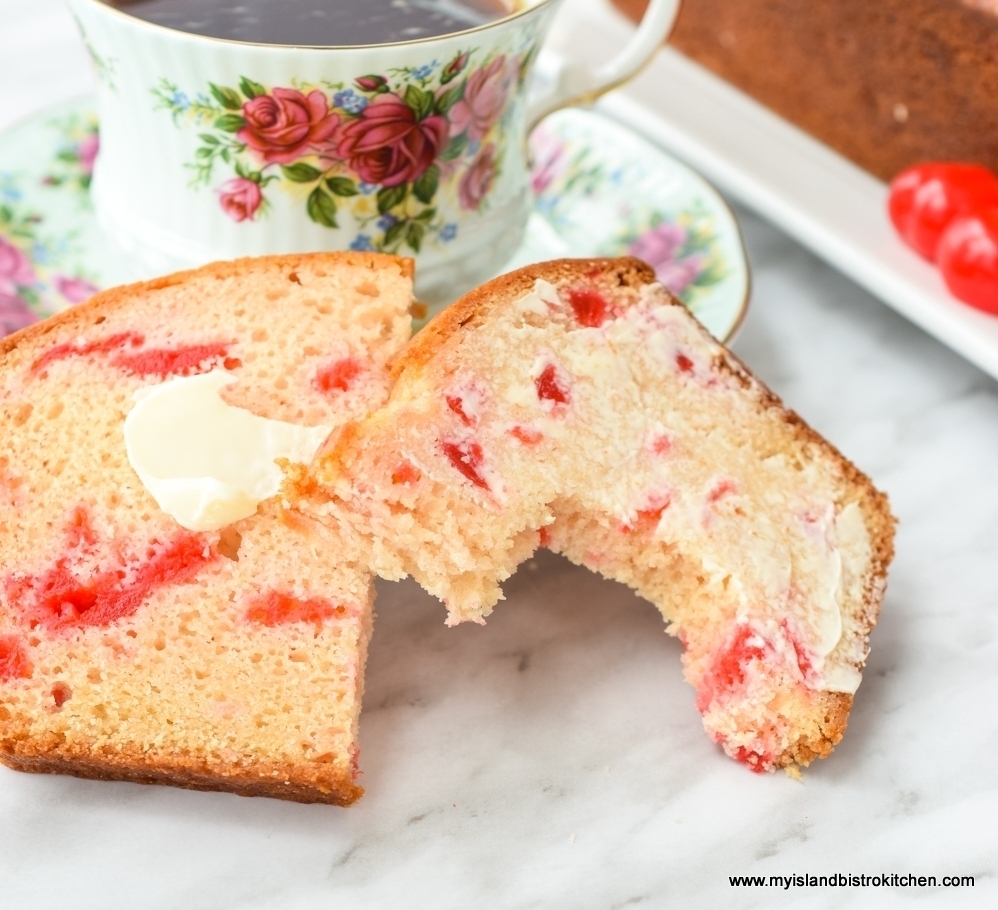
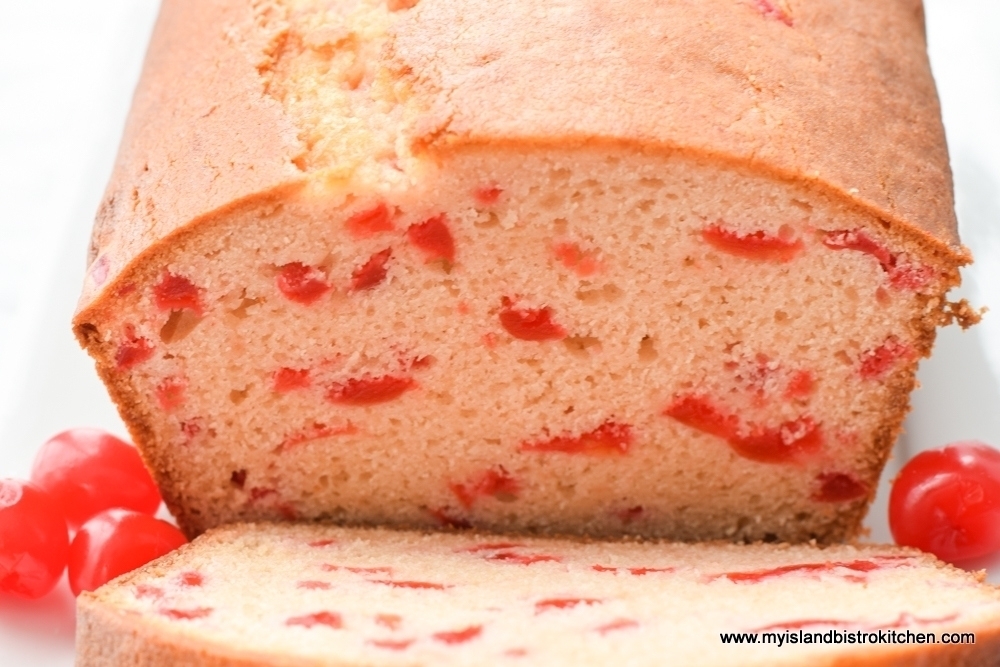
This Cherry Loaf recipe is as pretty as it is tasty, speckled with maraschino cherries that, themselves, lend great flavour to the loaf.
Quick breads, leavened with baking powder, and sometimes soda, are an easy alternative to muffins – but, they’re born of the same family! They are quick to make (because there is no yeast involved) and are great additions to breakfast, brunch, and coffeebreaks.
There are two methods for making quick breads.
Creaming Method– This method calls for the solid fat product (shortening, butter, or margarine) to be softened at room temperature for 25-30 minutes (not microwaved which can change its properties and can cause it to quickly become liquefied). The fat is then beaten/creamed, either by hand if you are prepared to devote some elbow grease to the process, or by electric mixer on low speed. The sugar is then added and creamed with the fat product until the mixture is a pale or light colour and the texture is airy or fluffy. This “creaming’ process whips air into the batter which allows air pockets (or bubbles) to form (and expand during baking) that, in addition to leavening agents such as baking powder and soda, help the cake or loaf to rise.
The room temperature eggs are then added, one at a time. Adding the eggs, with this technique, allows them time to, individually and slowly, mix in well with the creamed fat and sugar mixture and limit the possibility of them curdling. The watery eggs and the fat product don’t naturally mix well, or bind, together (same principle as trying to mix water and oil together). If all the eggs called for in the recipe are added all at once, they become more than what the fat-sugar mixture can handle at the same time and the ingredients separate and look curdled or scrambled. Adding the eggs slowly allows them to be better incorporated with the fat-sugar mixture.
With the creamed method, the liquid ingredients are combined together in one bowl or measuring cup and the dry ingredients are whisked together in a separate bowl. The dry ingredients are added to the creamed mixture alternately with the wet ingredients, beginning and ending with the dry ingredients (three additions of dry to two additions of wet ingredients). While the stand mixer should be fitted with the paddle attachment for the creaming method, it’s important not to over-beat the batter once the flour and liquid ingredients have been added because that will cause gluten to form and a loaf with a tough crumb is likely to result. Beat only until all the ingredients are incorporated and the batter is smooth.
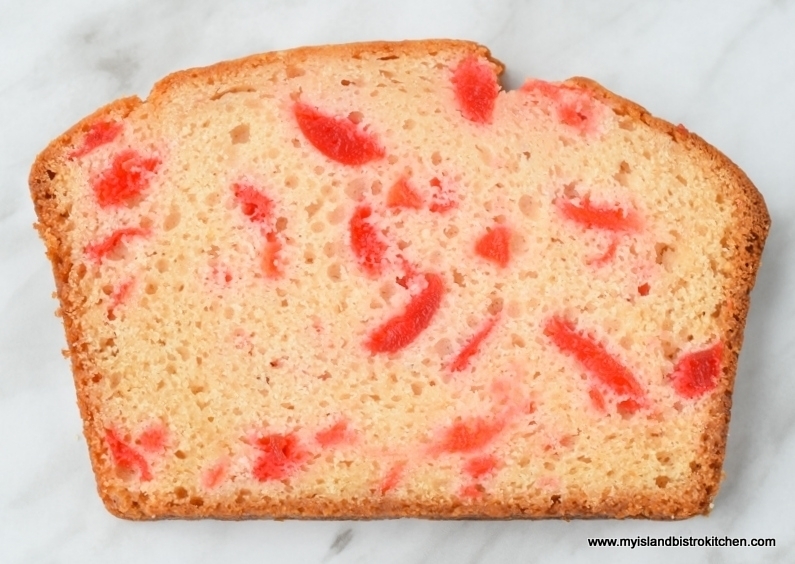
This method will yield a moist texture loaf with a fine crumb (lots of tiny holes of fairly uniform size), reminiscent of a dense cake texture.
Slice of Cherry Loaf
Muffin Method – This method calls for the dry ingredients to be whisked together well in one bowl. All the liquid ingredients are mixed in a separate bowl with oil or a fat that has been liquefied (and, often, the sugar is mixed in with the liquid ingredients). The liquid ingredients are then simply added to the dry ingredients and stirred together just until the ingredients are barely combined.
Because no creaming of butter and sugar is involved in this method, the loaf will not have the added advantage of the air pockets being formed by this process to help the loaf to rise. In this method, the loaf will rely solely on leavening agents (baking powder, soda) to rise. The batter will often be lumpy which is okay (it will even out on its own during baking) and it’s important not to overmix the batter trying to get it smooth as this will activate the development of gluten that will result in a tough crumb.
For this method, stir the mixture by hand because an electric mixer will overmix the batter. This method will often yield a slightly drier texture (than the creaming method does) with a larger, coarser crumb in the loaf, closely resembling the texture of muffins, hence the name “muffin method”.
The muffin method is commonly used to mix up waffles and pancakes as well.
Cherry Loaf
My recipe for Cherry Loaf uses the creamed method because I want a delicate, refined texture in this particular loaf.
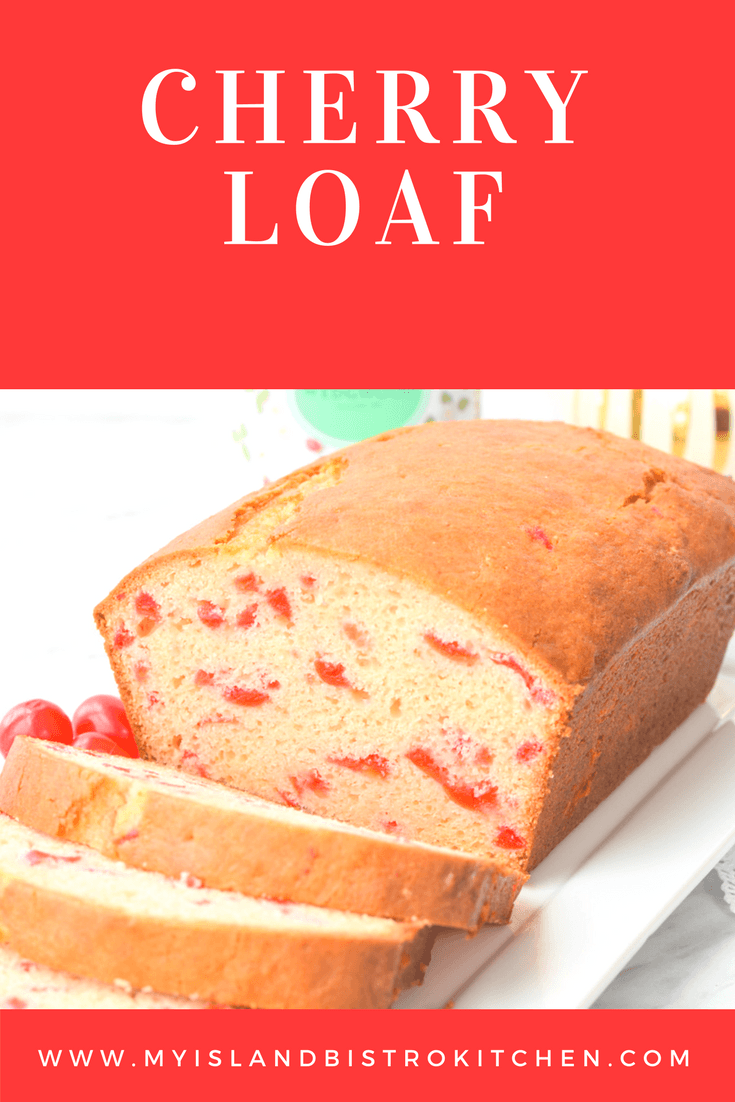
Cherry Loaf
All ingredients should be at room temperature for about 25-30 minutes before mixing the batter. The ingredients blend better if they are at room temperature. If you think of nice soft butter or shortening being hit with cold eggs or milk, it’s obvious that the ingredients will simply clump together rather than blend in well. The result will be a loaf that does not have the best texture possible.
There is a choice of fat product in this loaf – either shortening, butter, or margarine will yield a good loaf. Butter, however, will obviously give the most flavor 😉
This loaf calls for maraschino cherries. These are the best option for this loaf because they are soft and beautifully bright colored. Dried cherries are too chewy and coarse and will not create the lovely red-dotted speckles throughout the loaf. Maraschino cherries, however, are wet and if they are not blotted dry, they will add too much excess moisture to the loaf. I recommend blotting the cherries with a paper towel, cutting them, and blotting them again. The idea is not to dry them out but, rather, to remove the excess moisture.
Cherry Loaf
[Printable recipe follows at end of posting]
Cherry Loaf
Ingredients:
1/3 cup shortening, butter, or margarine
¾ cup granulated sugar
¼ cup brown sugar, lightly packed
2 large eggs, room temperature
2/3 cup milk, room temperature
1½ tbsp orange juice, room temperature
2½ tbsp maraschino cherry juice, room temperature
1 tsp vanilla
¼ tsp almond flavouring
2¼ cups all-purpose flour
2 tsp baking powder
¼ tsp baking soda
¼ tsp salt
¾ cup maraschino cherries, well-drained, blotted dry, and coarsely chopped
Method:
Bring shortening, butter, or margarine, eggs, milk, and orange and maraschino cherry juices to room temperature approximately 25-30 minutes before preparing batter.
Remove cherries from their juice and, using paper towel, blot them dry. Cut up cherries and blot again on paper towel to remove the excess moisture. Set aside.
Preheat oven to 350°F. Grease 9”x5”x3” loaf pan.
In 1-cup measuring cup, or small bowl, combine the milk, orange juice, cherry juice, vanilla, and almond flavouring. Stir to mix.
In medium-sized bowl, combine the flour, baking powder, baking soda, and salt. Whisk together well.
In bowl of stand mixer fitted with paddle attachment and on low speed, cream the shortening, butter, or margarine well. Gradually add the granulated sugar, then the brown sugar. Increase mixer speed to medium and beat until ingredients are pale-colored and mixture has an airy/fluffy texture. Stop mixer, as necessary, to scrape bowl with rubber spatula to ensure the ingredients are evenly incorporated.
Add the eggs, one at a time, beating well after each addition and using the spatula, as necessary, to scrape sides of bowl.
Add the flour mixture alternately with the milk mixture, starting and ending with the dry ingredients (three additions of dry ingredients with two additions of wet ingredients). Periodically scrape sides of bowl with spatula to ensure all ingredients are combined. Do not overmix.
Remove bowl from mixer stand and stir in the cherries by hand, just until they are blended in.
Transfer batter to prepared pan and, using a knife, smooth the top of the loaf. Bake for approximately 1 hour or until cake tester inserted into center of loaf comes out clean. If loaf starts to brown, it may be loosely tented with tin foil after about 45 minutes of baking; ensure loaf top is completely set before allowing the tin foil to touch it as it will peel off the top of the loaf. Let loaf rest in pan for 10 minutes then turn out on to wire rack to cool completely before cutting.
Yield: One loaf, 14 slices (sliced approximately ½” thick)
Notes: Loaf is best made the day before it is needed. Let cool completely on wire rack then place in airtight plastic bag and store in refrigerator overnight to allow the flavours time to blend and the loaf to soften. Loaf freezes well.
This flavourful cherry loaf is an easy-to-make moist quick bread that is speckled with colorful maraschino cherries
Course
Snack
Cuisine
American
Servings14
My Island Bistro KitchenMy Island Bistro Kitchen
Ingredients
1/3cupshortening, butter, or margarine
3/4cupgranulated sugar
1/4cupbrown sugar, lightly packed
2large eggs, room temperature
2/3cupmilk, room temperature
1 1/2tbsporange juice, room temperature
2 1/2tbspmaraschino cherry juice, room temperature
1tspvanilla
1/4tspalmond flavouring
2 1/4cupsall-purpose flour
2tspbaking powder
1/4tspbaking soda
1/4tspsalt
3/4cupmaraschino cherries, well-drained, blotted dry, and coarsely chopped
Instructions
Bring shortening, butter, or margarine, eggs, milk, and orange and maraschino cherry juices to room temperature approximately 25-30 minutes before preparing batter.
Remove cherries from their juice and, using paper towel, blot them dry. Cut up cherries and blot again on paper towel to remove the excess moisture. Set aside.
Preheat oven to 350°F. Grease 9”x5”x3” loaf pan.
In 1-cup measuring cup, or small bowl, combine the milk, orange juice, cherry juice, vanilla, and almond flavouring. Stir to mix.
In medium-sized bowl, combine the flour, baking powder, baking soda, and salt. Whisk together well.
In bowl of stand mixer fitted with paddle attachment and on low speed, cream the shortening, butter, or margarine well. Gradually add the granulated sugar, then the brown sugar. Increase mixer speed to medium and beat until ingredients are pale-colored and mixture has an airy/fluffy texture. Stop mixer, as necessary, to scrape bowl with rubber spatula to ensure the ingredients are evenly incorporated.
Add the eggs, one at a time, beating well after each addition and using the spatula, as necessary, to scrape sides of bowl.
Add the flour mixture alternately with the milk mixture, starting and ending with the dry ingredients (three additions of dry ingredients with two additions of wet ingredients). Periodically scrape sides of bowl with spatula to ensure all ingredients are combined. Do not overmix.
Remove bowl from mixer stand and stir in the cherries by hand, just until they are blended in.
Transfer batter to prepared pan and, using a knife, smooth the top of the loaf. Bake for approximately 1 hour or until cake tester inserted into center of loaf comes out clean. If loaf starts to brown, it may be loosely tented with tin foil after about 45 minutes of baking; ensure loaf top is completely set before allowing the tin foil to touch it as it will peel off the top of the loaf. Let loaf rest in pan for 10 minutes then turn out on to wire rack to cool completely before cutting.
Recipe Notes
Notes: Loaf is best made the day before it is needed. Let cool completely on wire rack then place in airtight plastic bag and store in refrigerator overnight to allow the flavours time to blend and the loaf to soften. Loaf freezes well.
[Copyright My Island Bistro Kitchen]
For other quick bread recipes from My Island Bistro Kitchen, click on the links below:
If you have made this recipe and enjoyed it and/or wish to share it with your friends and family, please do so on social media but be sure to share the direct link to this posting from my website.
Connect with My Island Bistro Kitchen on Social Media
Follow “the Bistro” on Pinterest at https://www.pinterest.ca/peibistro/ and pin the Pinterest-ready photo found at the end of this post to your favorite Pinterest boards.
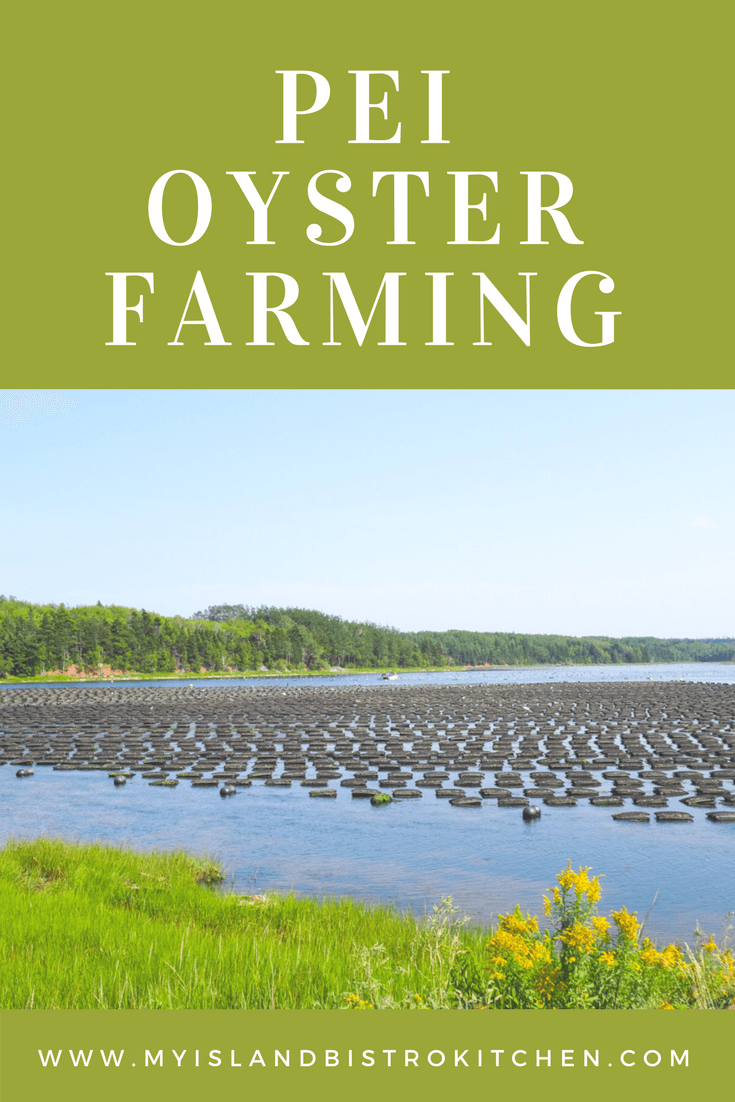
Prince Edward Island is well-known for its variety of high quality shellfish – think lobster, mussels, and oysters, in particular. Today, however, my blog posting is all about the world-famous PEI Malpeque oysters. According to the PEI Government website (https://www.princeedwardisland.ca/en/information/agriculture-and-fisheries/oysters ), the Island is Canada’s second largest oyster producing province and is the largest oyster producing province in the Atlantic region. It’s not uncommon in my travels to find PEI Malpeque Oysters on a restaurant menu. No matter the variety or brand of oysters from PEI, or what part of the Island they are fished or farmed, they are generally all referred to as “Malpeques”. How that came to be is, itself, an interesting story.
PEI oysters have a long history with the government issuing leases for oyster fishing back as far as the mid-1800s to those wishing to fish oysters from the ocean seabed. The oysters were made famous at the 1900 Paris World Fair where, in an oyster-tasting contest, they were crowned the world’s best oysters. The oysters were simply named for Malpeque Bay on the Island’s north shore from where the winning oysters were fished.
However, the oyster industry on PEI was stricken in 1915 when disease wiped out about 90% of the Island’s oyster population. Miraculously, however, the oysters in Malpeque Bay survived. Seed (which is basically a tiny version of an adult oyster) from these oysters was gathered and spread throughout other bodies of water around the Island and the oyster industry rebounded. To this day, over 100 years later, all oysters produced on PEI are considered to be direct descendants of oysters from Malpeque Bay. So, that’s why all PEI oysters, regardless from what part of the Island they come, or what variety or brand they are, are called “Malpeques”. Who knew PEI oysters had lineage and a family tree! So, while there is one species – the Malpeques – there can be any number of varieties and brands. A little more about the varieties of “Malpeques” a bit later.
To find out more about the oyster industry on PEI, I paid a visit to the Raspberry Point Oyster Co., one of the Island’s largest oyster growing operators, processors, and exporters. At the company’s hub operations center in Bayview near Cavendish on PEI’s north shore, I caught up with James Power, oyster connoisseur and manager of the Raspberry Point Oyster Co.
James Power, Manager, Raspberry Point Oyster Co., PEI
James lives and breathes oysters and you would be hard pressed to find anyone any more passionate about the oyster industry than James. And, with good reason. Oyster sales are brisk for the Raspberry Point Oyster Co., growing year over year. James tells me that more than 10M oysters are cultured annually from the company’s farming operations in New London Bay, Rustico, and Oyster Bed Bridge/Rustico Bay. While the majority (about 90%) of their sales are in North America (with Montreal, Toronto, and Boston accounting for about 75% of sales), they regularly ship internationally all over the world that includes weekly shipments to the Netherlands as well as regular shipments to places like Belgium, France, Hong Kong, China, and Singapore. Small wonder, then, why it’s generally not too surprising to find PEI oysters on restaurant menus in all corners of the world!
Both oyster fishing and oyster farming exist on PEI. The traditional method of oyster fishing is done through the use of manually-operated large wooden tongs.
Oyster Fishing on PEI
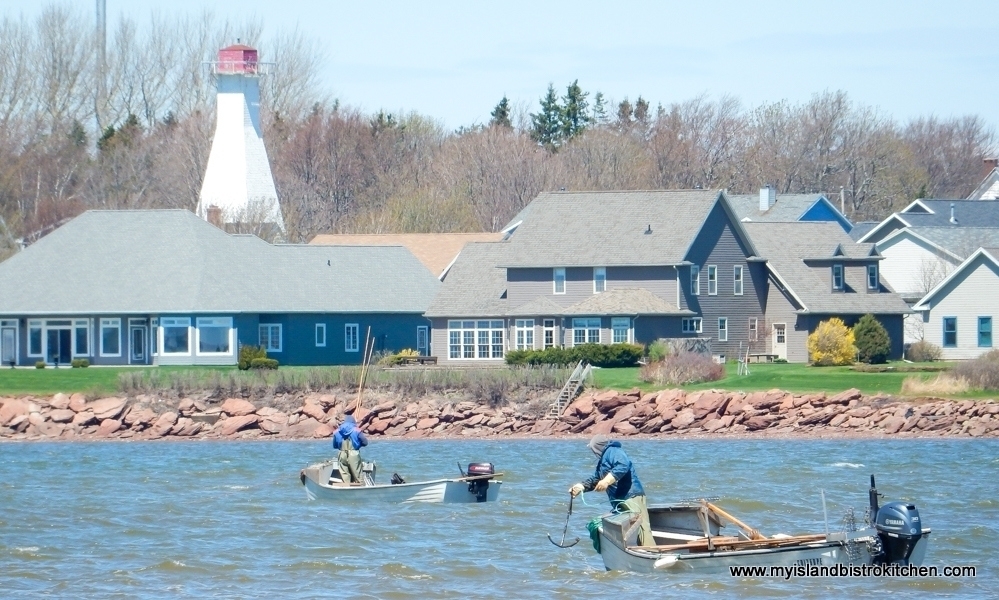
If you travel around the shores, bays, rivers, and estuaries of PEI, a common sight from spring to fall will be dozens of little dories each manned by a lone fisher using long wooden tongs with rakes at the ends to scoop up the oysters. These are independent local oyster fishers who buy licenses from the federal government allowing them to fish wild oysters on any public fishing grounds.
Oyster Fishing
These oysters are known as bottom culture oysters that are slow to mature taking, on average, 5-7 years to grow to the desired market size of 3” – 3½“. Bottom culture oysters grow slowly because there is less natural food available to them. Oysters harvested by these small independent fishers are sold to oyster processing plants.
Oyster Fishing in Summerside, PEI
The other method of producing oysters is to raise, culture, or grow the oysters, a practice commonly known as “oyster farming” and that’s the method used by large commercial growers for mass production needed to meet demands from around the world. Growers lease ground, that is not public fishing ground, in which to grow their oysters.
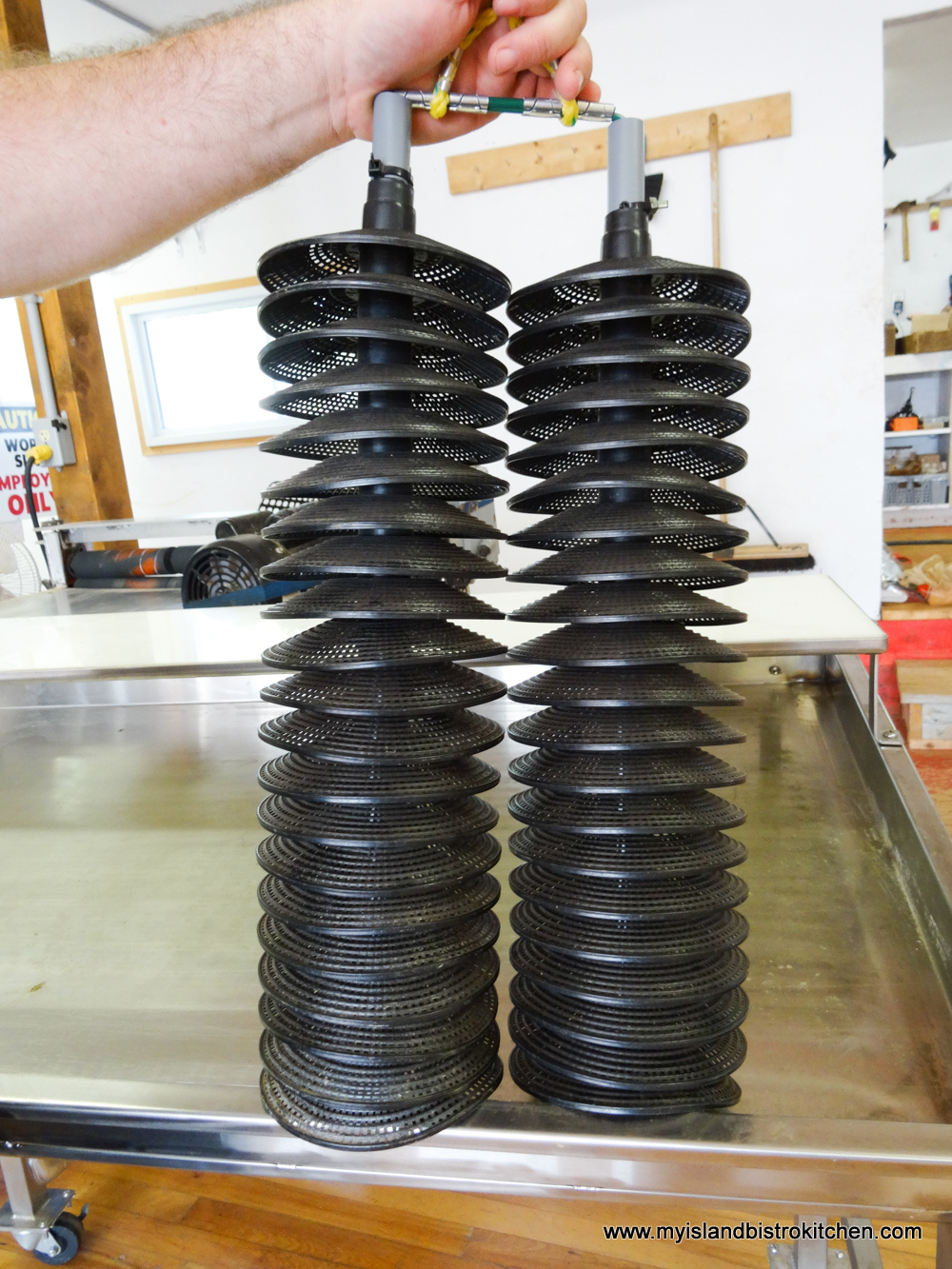
There are two methods of oyster aquaculture – bottom culture and off-bottom (sometimes known as top, floating, or surface culture) and Raspberry Point Oyster Co. uses both methods. With bottom culture oysters, grown in water depth between 3’ and 8’, the grower spreads the oyster seed on the seabed. James says their top culture oysters are grown in water that is between 8’ and 15’ deep. The oyster seed is purchased from hatcheries and from oyster farmers who catch wild spat, or larvae in collectors like the ones in the photo below. Once the oysters are big enough, they will be transferred to netted bags to grow, safe from predators like starfish and crabs.
Oyster Spat Collectors
All oysters at Raspberry Point Oyster Co. are started as top culture in floating mesh bags and then some are moved to bottom culture areas. The type of culture (bottom or top) used is often chosen on the basis of local growing conditions. Some parts of leased areas are too shallow for top culture and others might have too soft a seabed for bottom culture oysters. Using the two methods of farming, therefore, allows the Raspberry Point Oyster Co. to maximize the growing areas in their leases and also allows oysters to develop with different flavours, colors (they range from brown/white, gray to green), and appearance. Generally, the larger oyster seed is spread on the seabed because the oysters’ advanced size makes it more difficult for crabs and starfish to get at them.
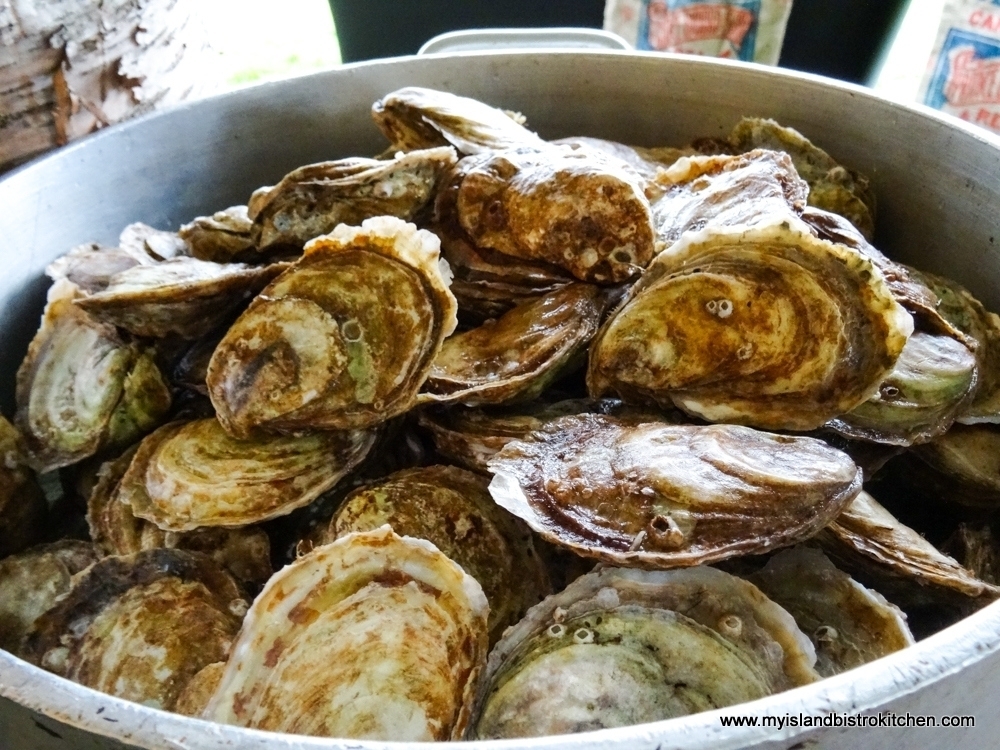
Colors, Shapes, and Textures of PEI Oysters
When the bottom culture oysters have grown to market size, specialized oyster harvesters that use water pressure, scoop up the oysters. The oysters come up from the seabed on to an escalator and those that are of the desired size are harvested while ones not quite of sufficient size are returned to the seabed bottom to allow them to continue to grow. Bottom culture oysters usually take 5-7 years to grow to market size and this is because there is usually less water flow and food on the sea bed than is available for surface culture oysters. Oyster farmers do not need to provide special food for their oysters as the bivalves draw all the necessary nutrients from their seawater habitat along with naturally occurring plankton and plant life. So long as the mollusks have clean water and care is taken to limit their predators access, oysters will grow naturally on their own.
The other method of growing oysters is top culture, often referred to as surface or floating culture. With advances in oyster growing technology and methods, today’s floating aquaculture speeds up the rate of maturation allowing for top culture oysters to be grown in about 3-5 years. There is usually more constant water flow as the result of wave action during tidal changes and more natural food supplies nearer the water’s surface so oysters grown as top culture in floating bags just at or under the water surface are able to grow to market size sooner. Top culture oyster farming involves growing the oysters in mesh bags that float in basket-like cages around the water surface level.
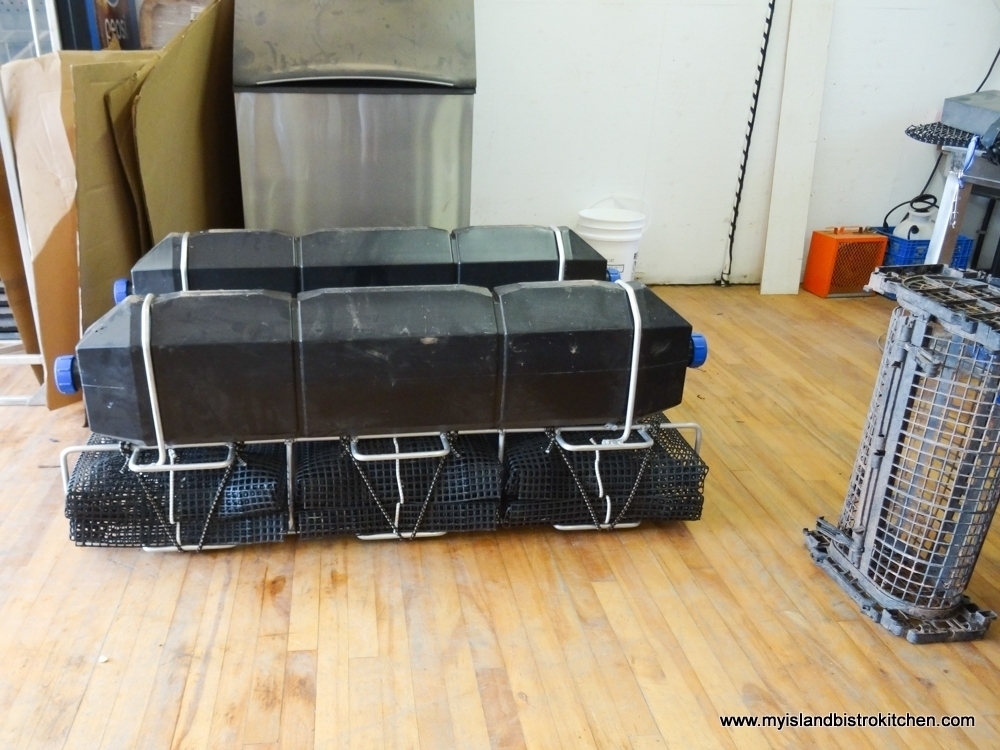
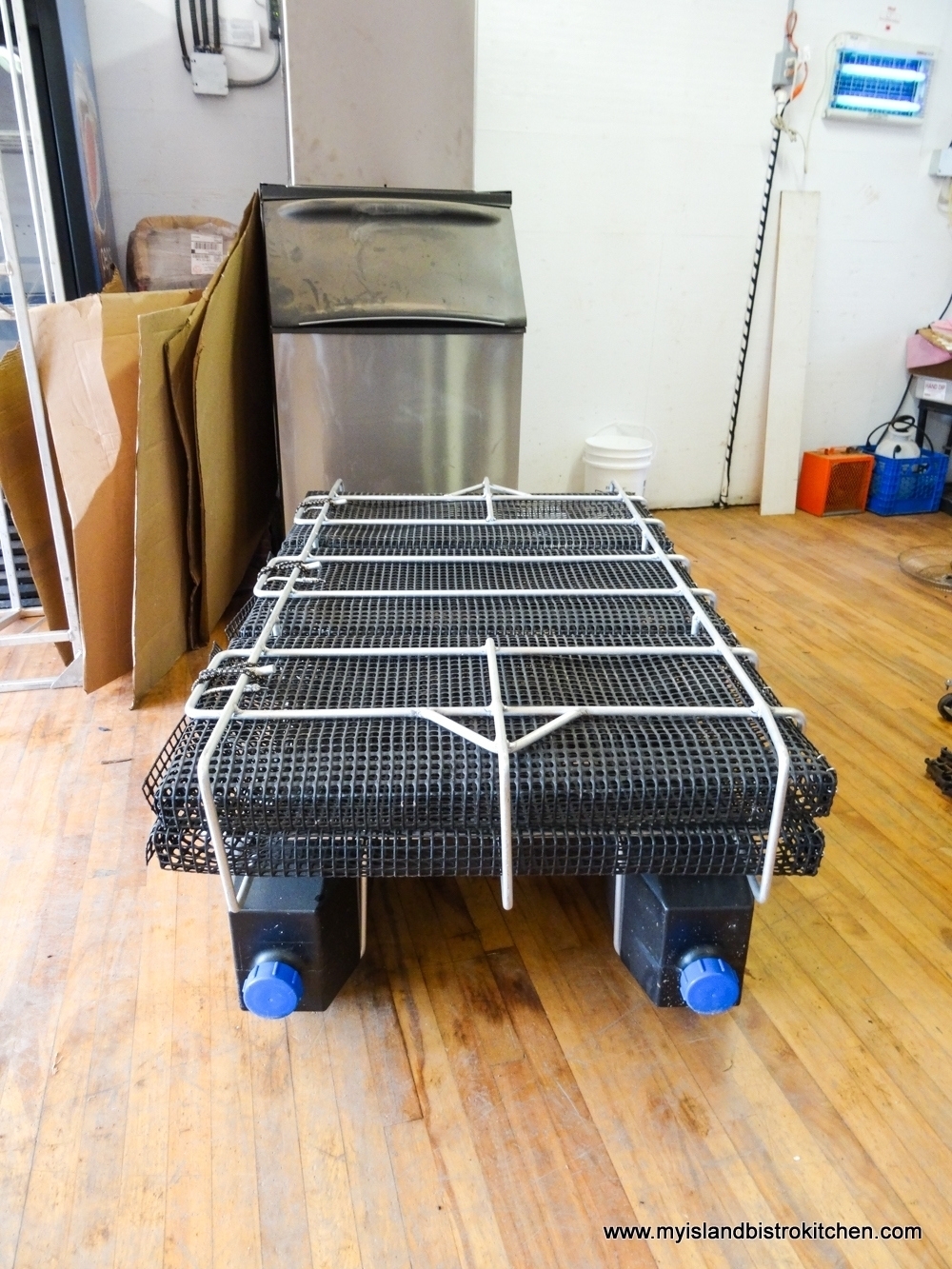
Floating Cage for Top Culture OystersFloating Cage for Top Culture Oysters
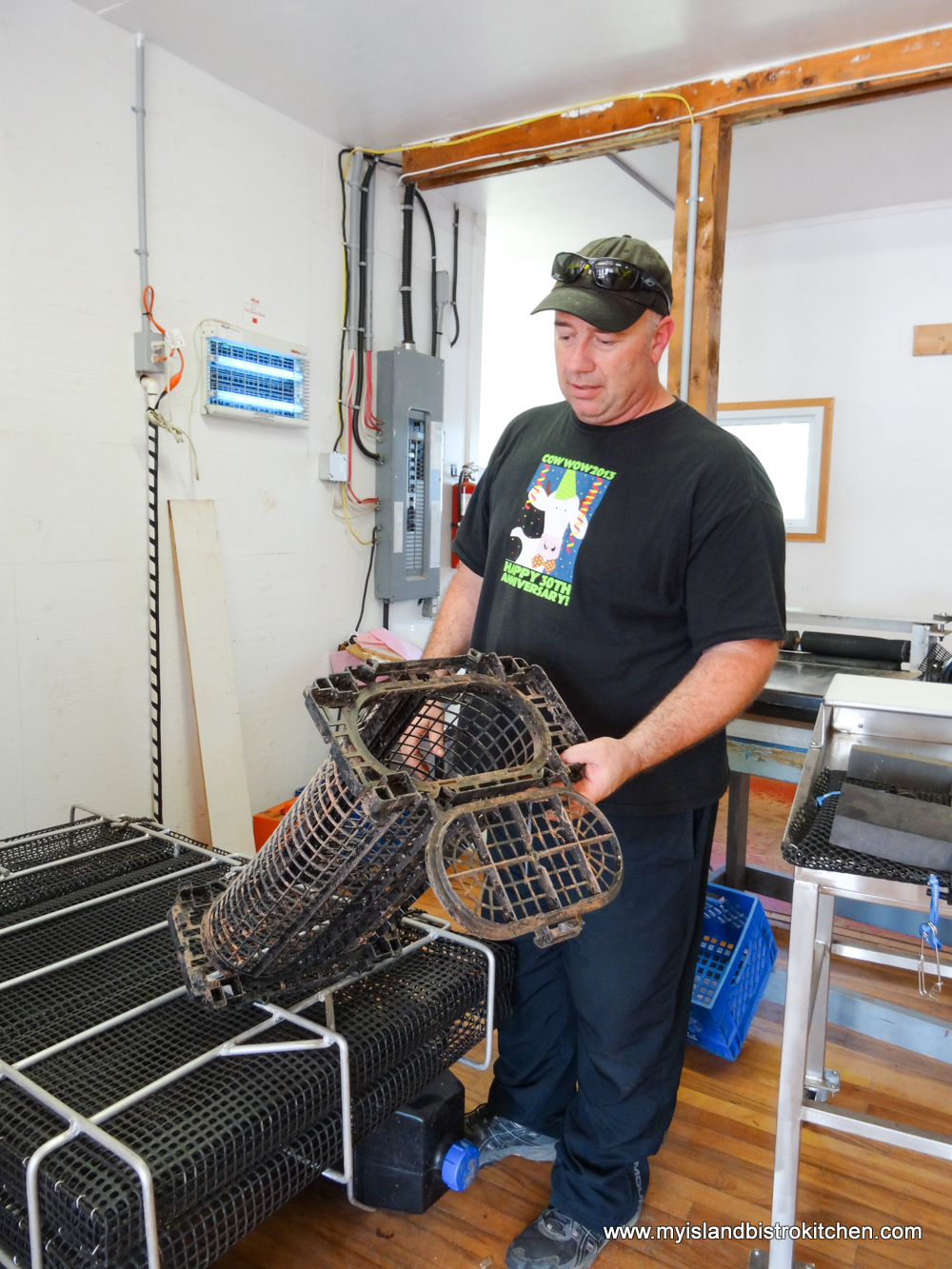
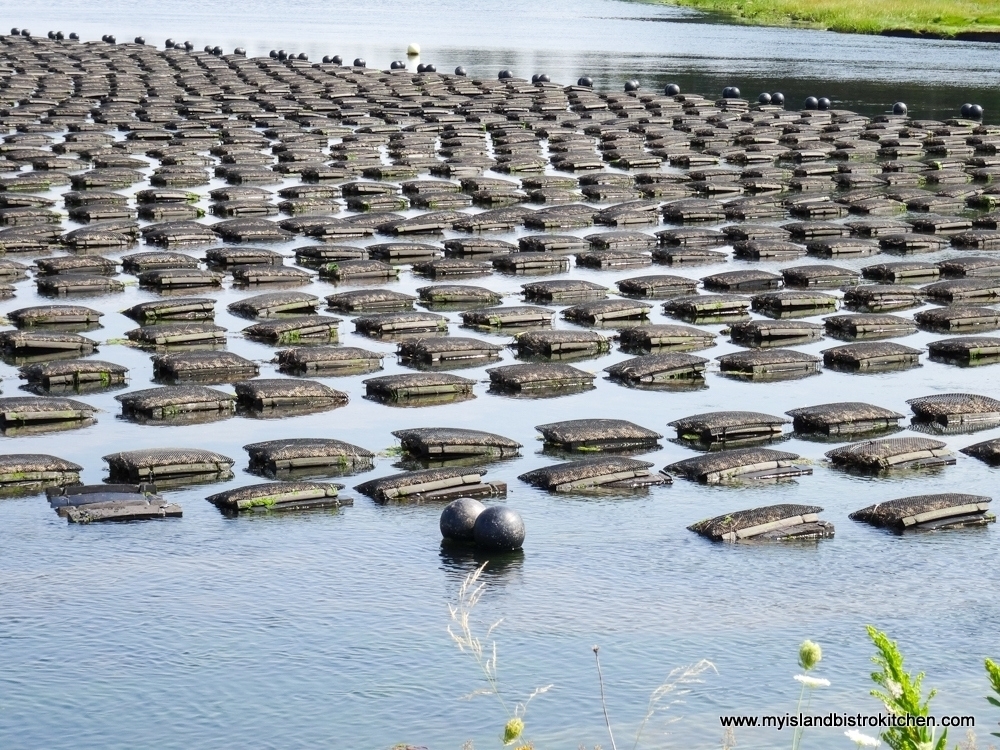
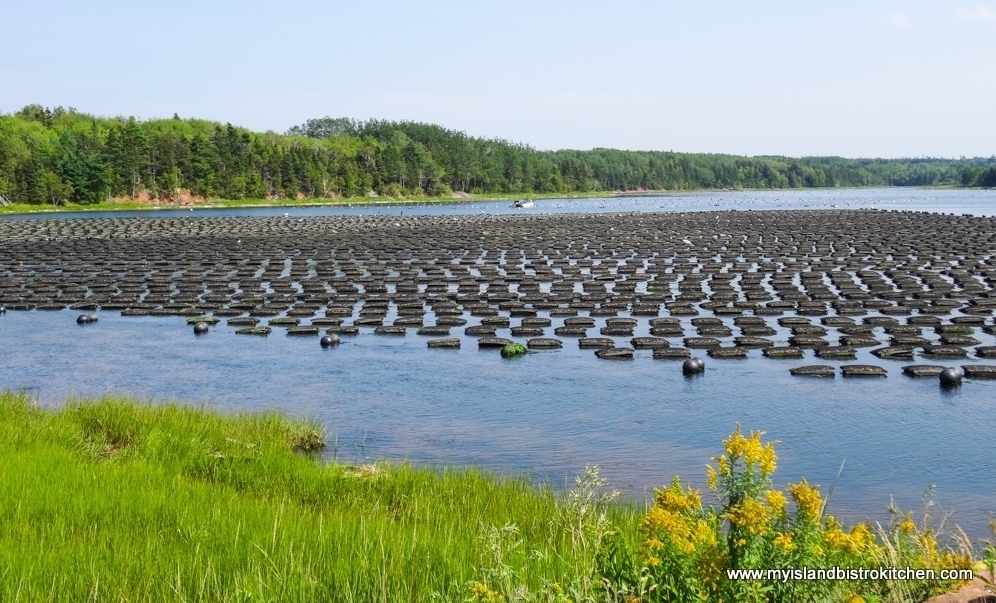
The baskets are constructed so that the water is able to flush through, bringing food to the mollusks and keeping them cleaner than those grown in the mud on the seabed bottom. The baskets are regularly flipped and the water flow and waves rock the baskets and chip away, or manicure, the rough edges of the oysters, giving them a more desirable looking shell. This also allows for seaweed, barnacles, and other organisms that find their way into the baskets to be exposed to sunlight and dry out and not become an infestation to the growing oysters. The bags inside the floating baskets also help to protect the oysters against predators. So, if you see rows of these floating cages in a body of water around the Island, you’ll know they’re filled with growing oysters.
Floating Cages of Oysters in New London Bay, PEIFloating Cages of Oysters in New London Bay, PEI
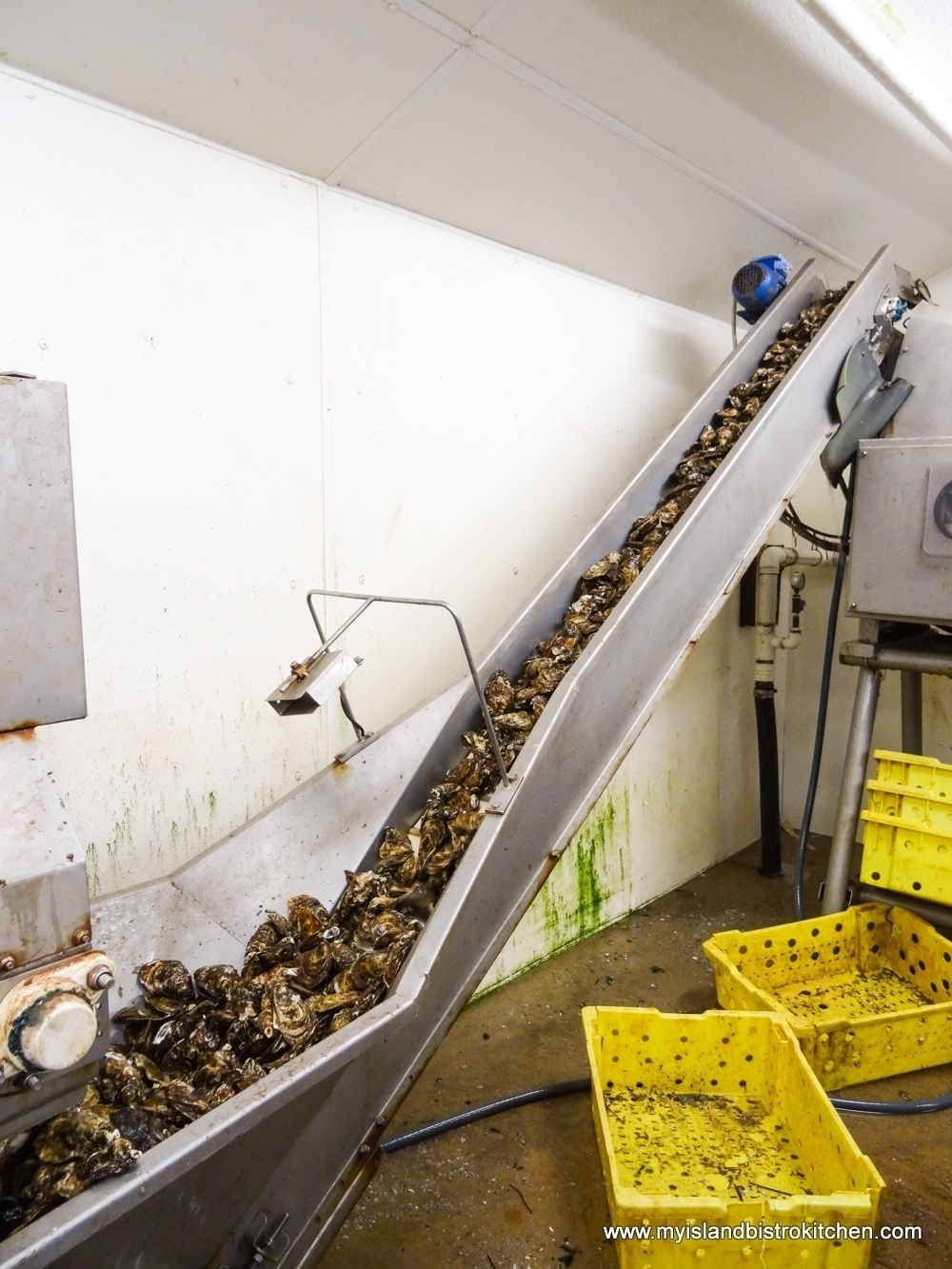
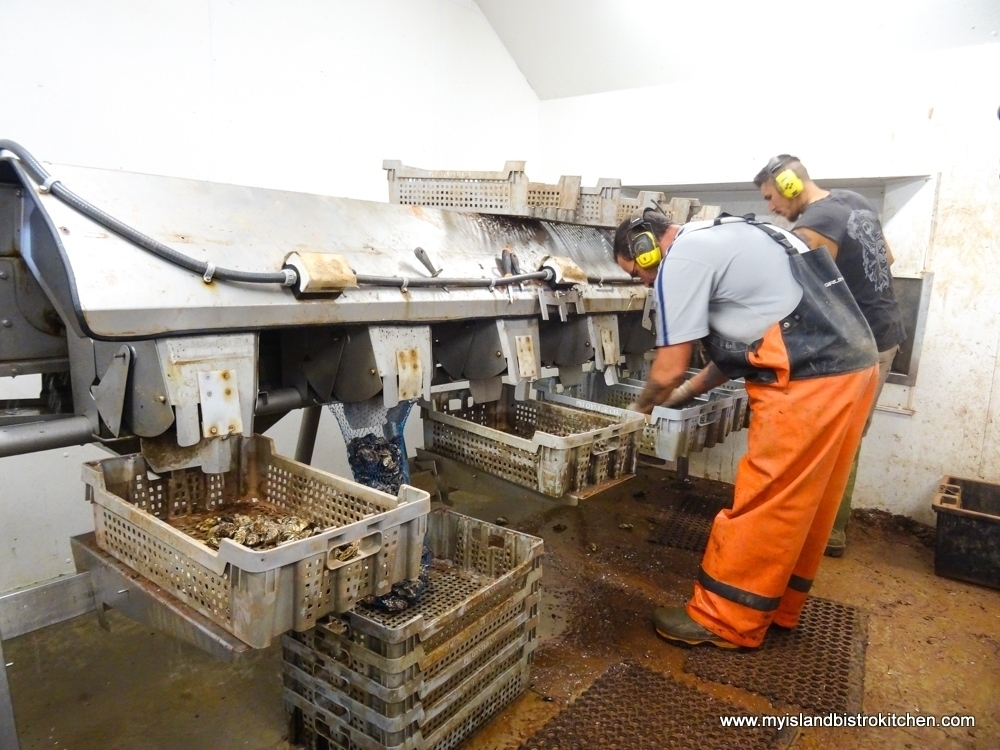
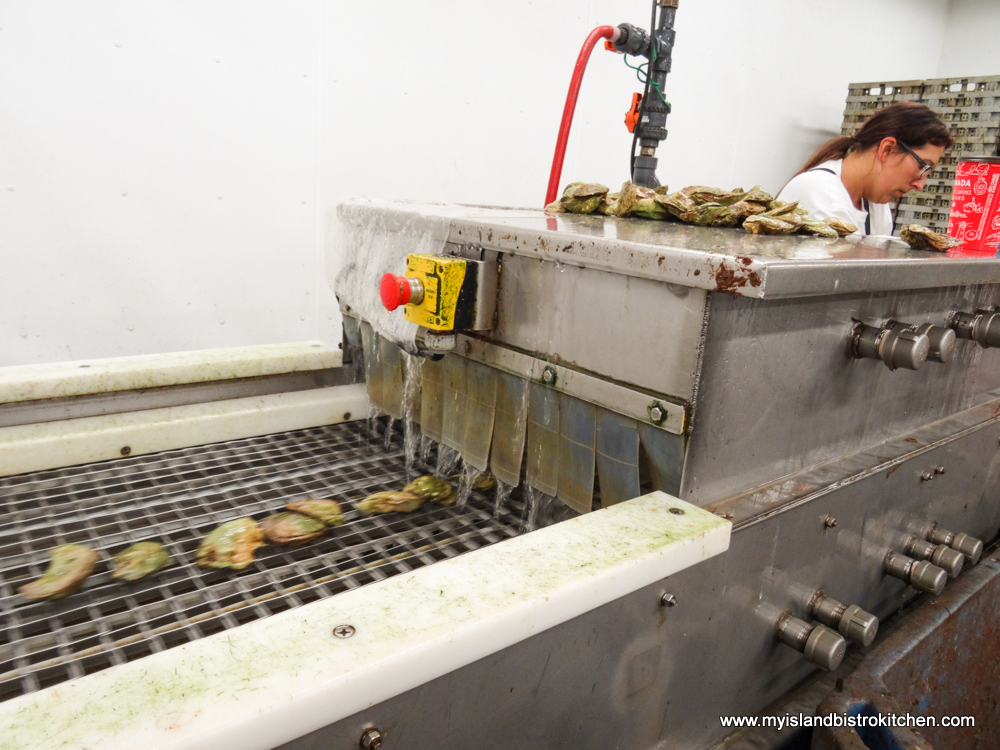
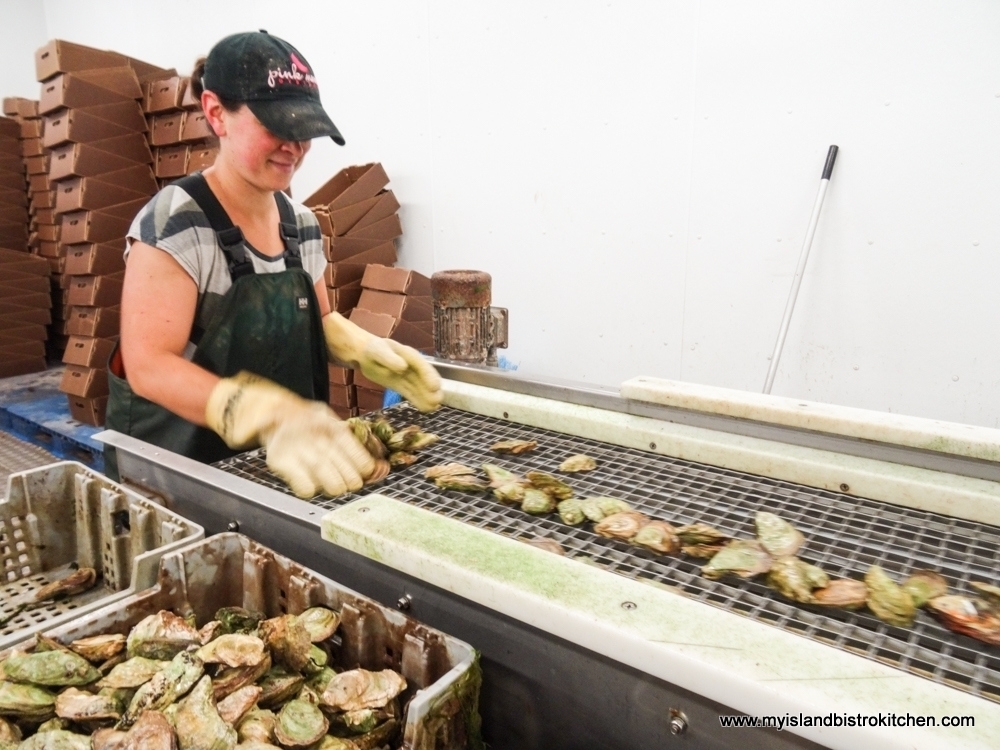
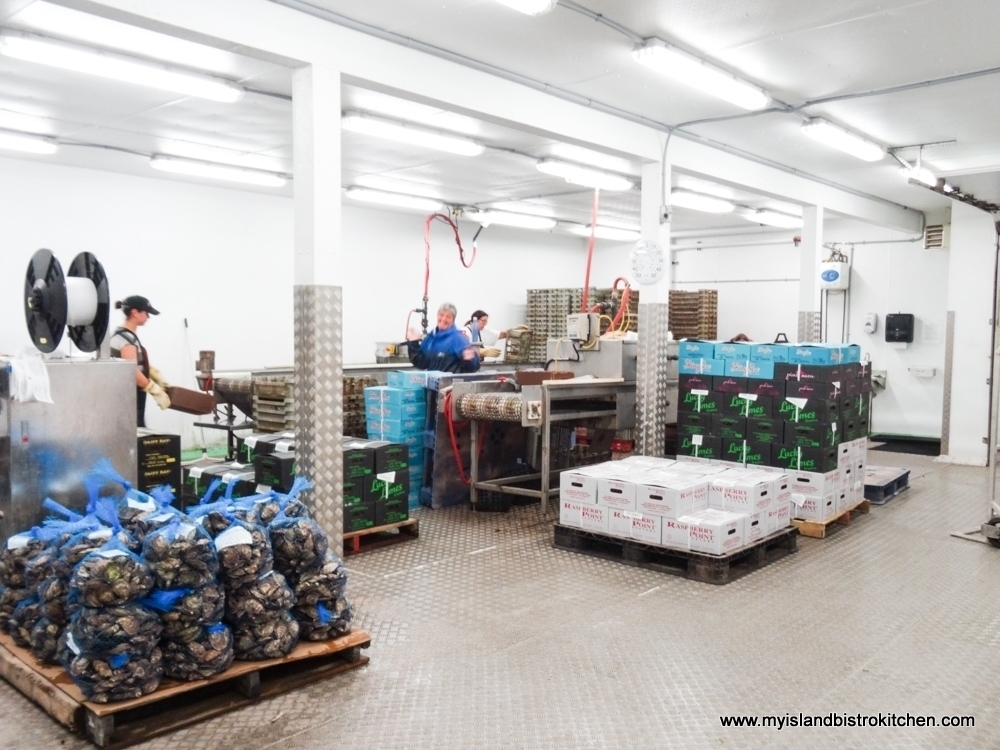
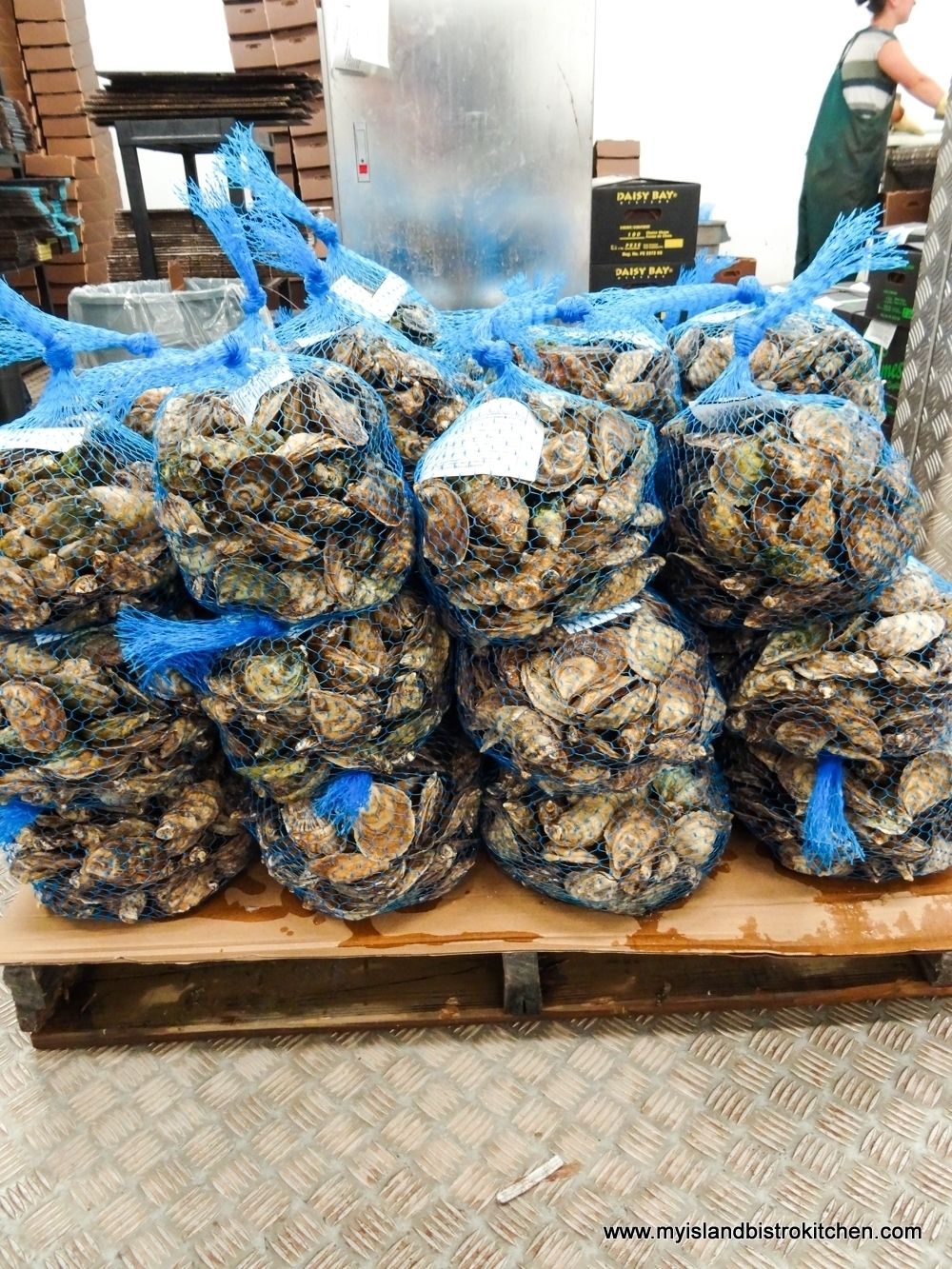
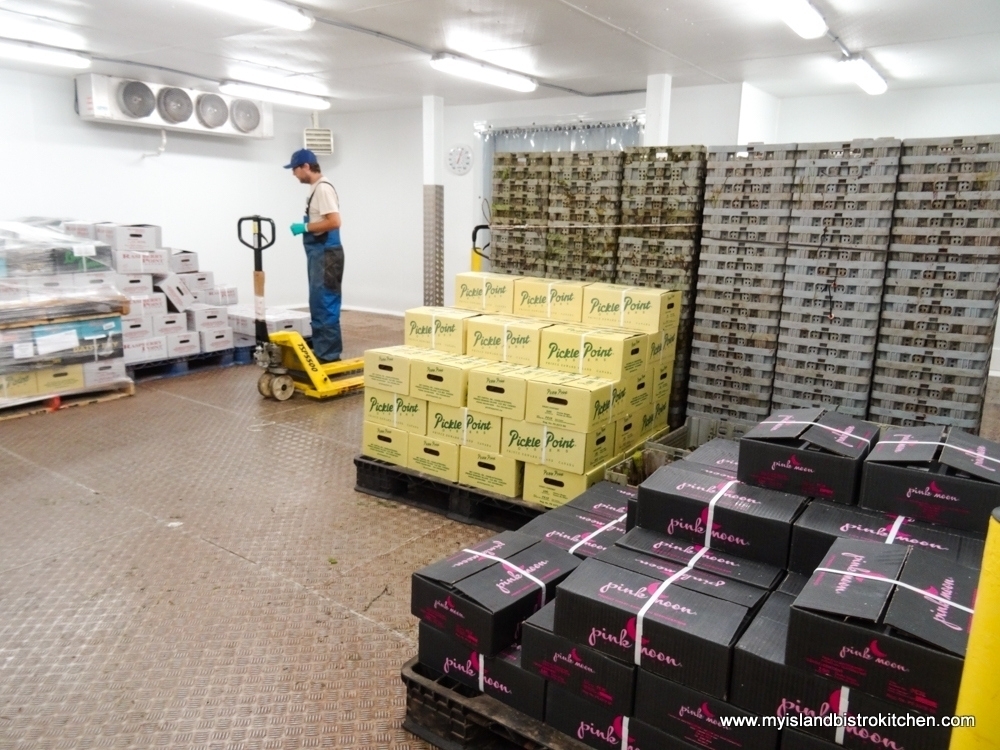
Once oysters, either bottom or top cultures, have reached their market size, they are brought into the processing plant where they are culled, graded for size and shape, washed, counted, boxed, and are shipped to customers around the world.
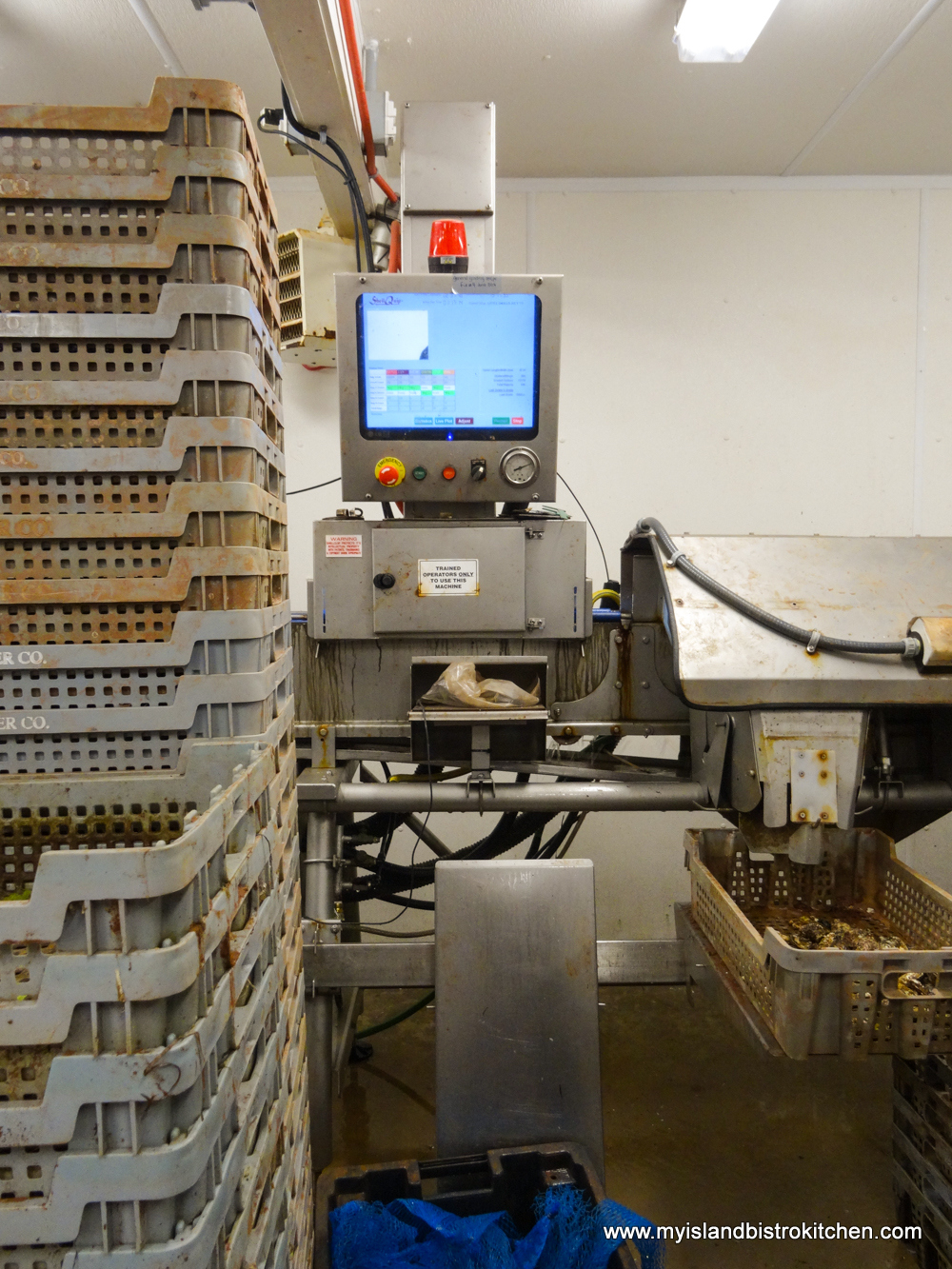
Oysters Arriving at the Processing PlantGrading and Sorting OystersWashing the OystersQuality Controlling the Oysters Just Before They Are Boxed for ShippingA Box of “Lucky Limes” Oysters from Raspberry Point Oyster Co. in PEIInside the Processing Plant at Raspberry Point Oyster Company, Bayview, PEIBags of Oysters at the Raspberry Point Oyster Co.Inside the Cold Storage Room at Raspberry Point Oyster Co. in Bayview, PEI
Because this industry is now year-round, oysters not needed for immediate shipment are put into trays like the ones shown to the left in the photo below and placed back out into shallow water until needed.
Oyster Trays
Since they are already graded, counted, and sorted by variety, they can quickly be retrieved and shipped when orders come in year-round.
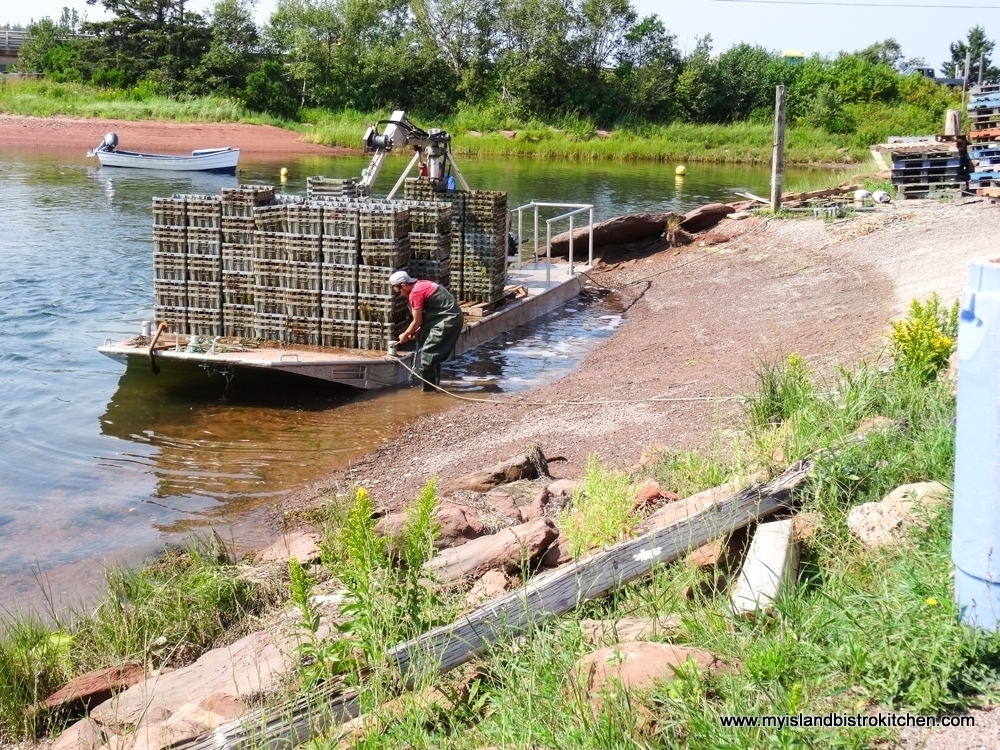
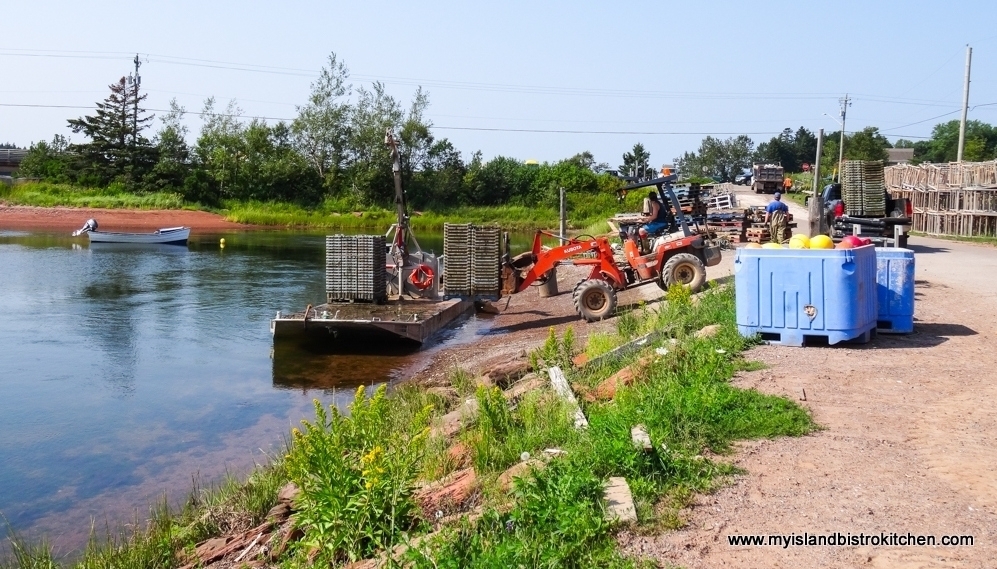
The barge in the photo below is returning to shore with a load of trays filled with graded and sorted oysters which will soon be on their way somewhere in the world to fill orders!
Barge Returning to Shore with a Load of Oysters Ready for MarketOffloading Oysters Ready for Market
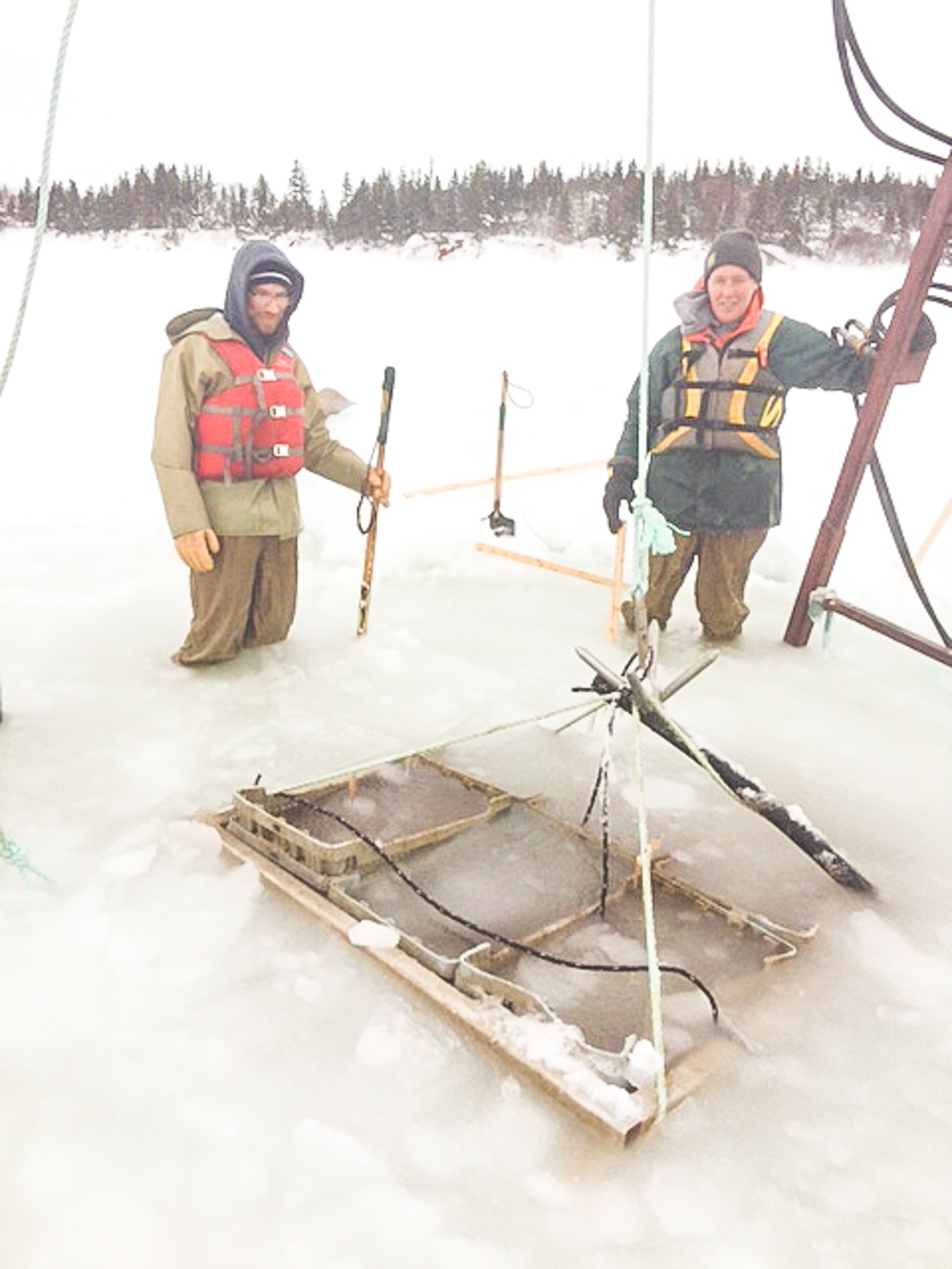
Oysters like cold water but, in PEI’s cold winters, they can’t stay up near the water’s surface where they would freeze. So, for top culture/surface grown oysters, the Raspberry Point Oyster Co. sinks aluminum cages filled with oysters into 15’ – 20’ of water each winter. At the time of writing, the company prepared upwards of 1000 aluminum cages that they filled and sunk with 7000 graded and sorted oysters per cage at the end of November. Locations of cages are marked by a metal pole and the oyster harvesters head out over the ice to retrieve the oysters to fill winter shipments, making the Island’s oyster farming a year-round industry.
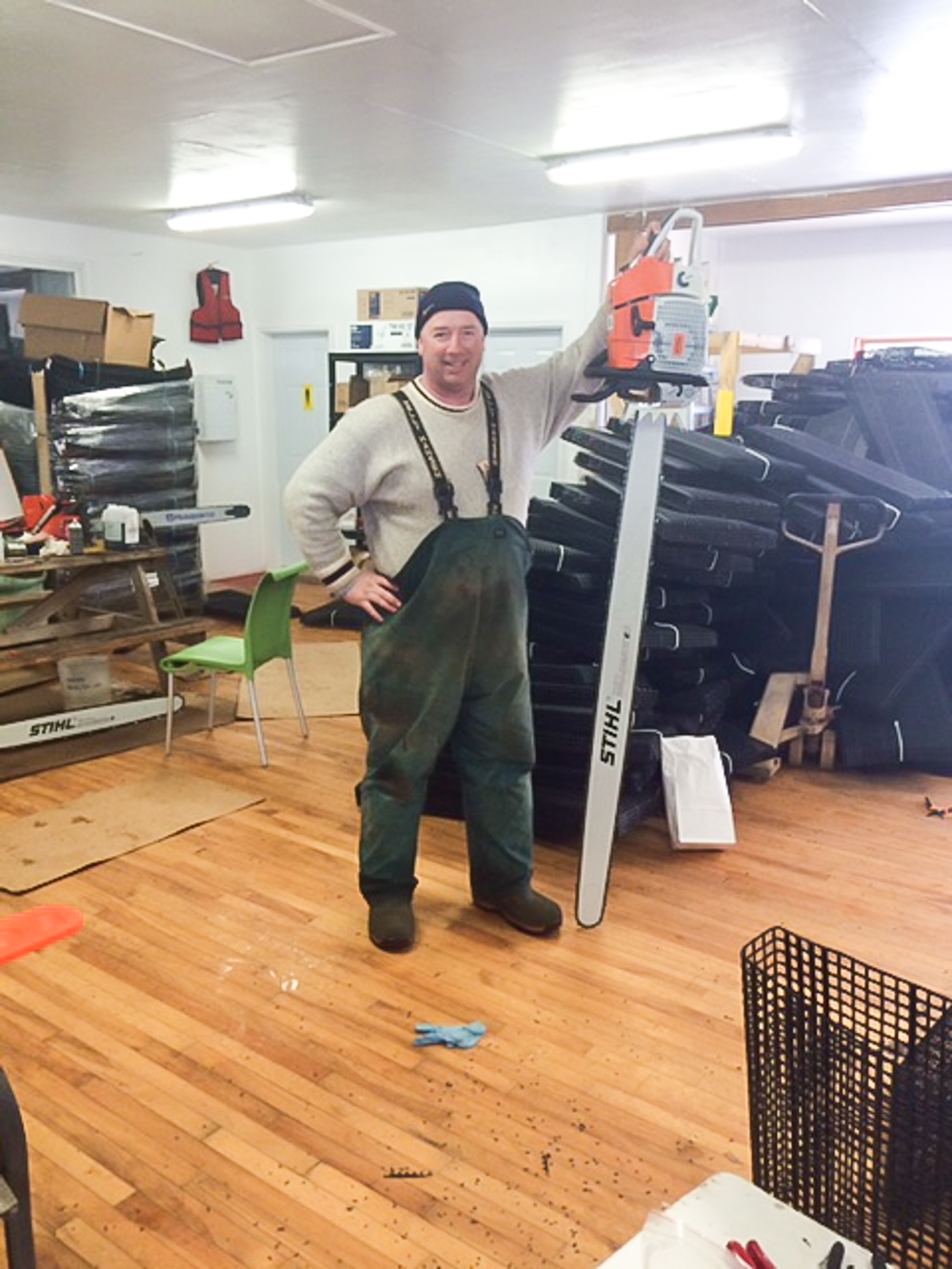
Preparing to Saw Through Ice to Retrieve Oyster Cages (Photo submitted by James Power, Raspberry Point Oyster Co.)
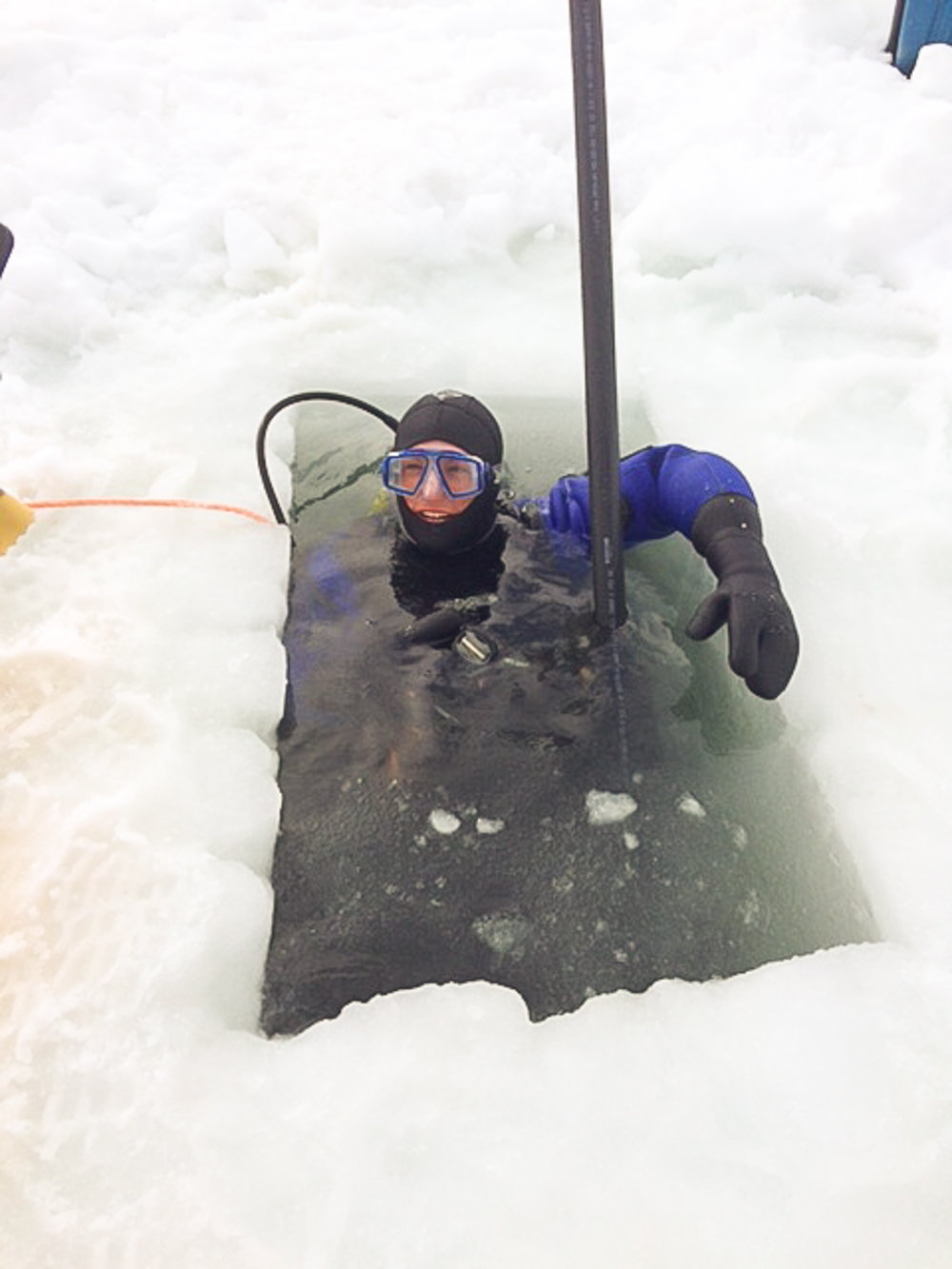
Sometimes, the ice is so thick that workers have to use a high-powered saw (shown in photo above) to cut through the thick ice so that tethered divers can dive in and locate the cages and hook them up to a hydraulic lift that will pull them out of the water.
Diving Under the Ice to Retrieve Oyster Cages Sunk for the Winter (Photo Submitted by James Power, Raspberry Point Oyster Co.)Retrieved Oyster Cage Filled with Oysters Ready for Market (Photo Submitted by James Power, Raspberry Point Oyster Co.)
The oysters are then hauled on a sled towed behind a four-wheeler or, if the ice is sufficiently thick, by a truck, back to the processing and shipping plant.
The varieties of oysters on PEI are often (though not always) named for the body of water in which they are grown. The Raspberry Point Oyster Co. draws its name from a little point of land on the Homestead Trail in nearby Cavendish. Readers from outside PEI will likely associate the Cavendish name as the setting for famed authoress Lucy Maud Montgomery’s famous Anne of Green Gables series of books. A number of years ago, Scott and Charles Linkletter, the owners of Raspberry Point’s forerunner company, The PEI Oyster Company, had a lease to fish oysters in this area so they renamed the company to the Raspberry Point Oyster Co. Today, still owned and operated by the Linkletter family, Raspberry Point Oyster Co. has six varieties of Malpeque oysters on the market:
Raspberry Point– Bearing the company name, this variety of 3” oysters is grown as bottom culture in leases in New London Bay. The Raspberry Point variety is the company’s most popular oyster.
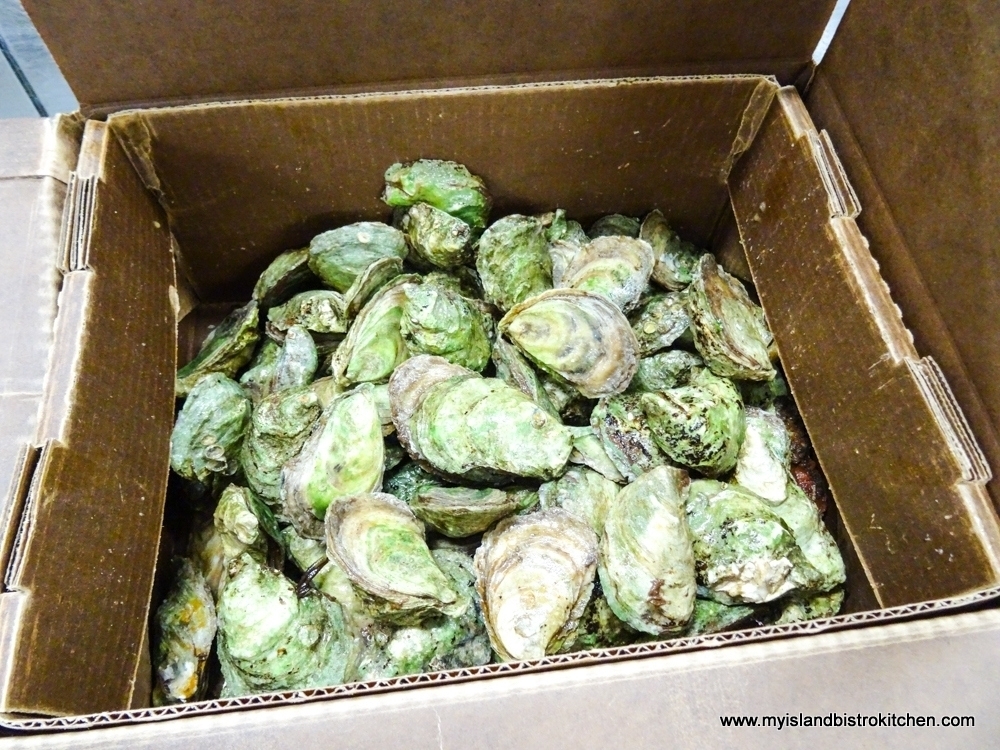
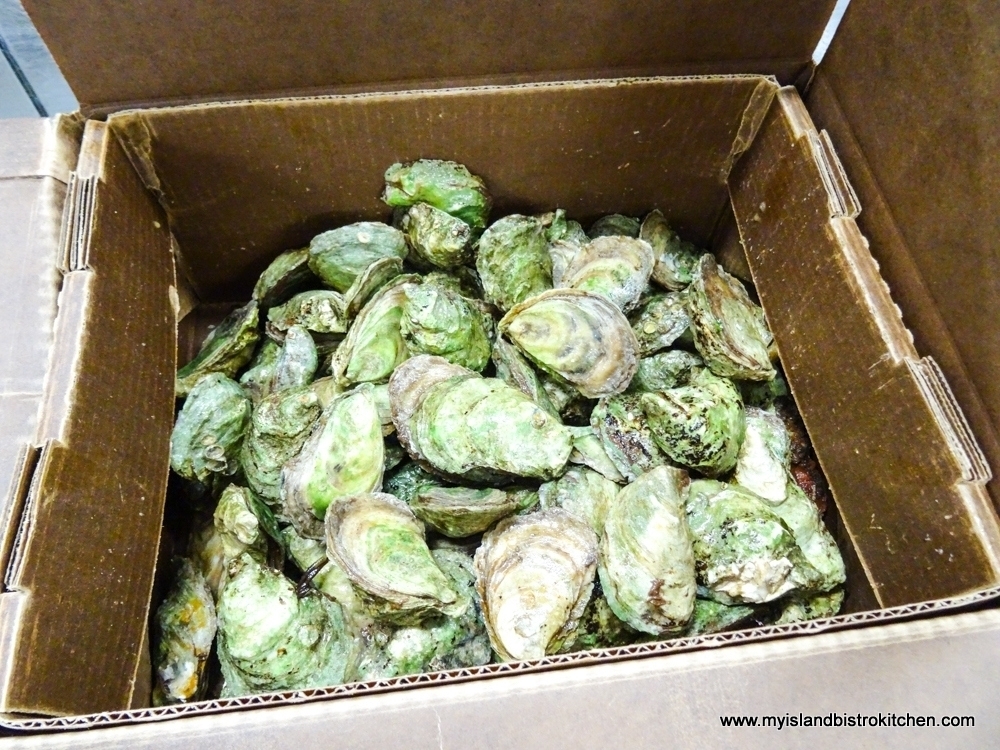
Lucky Limes – These are 3” oysters, also bottom grown in a lease along the Homestead Trail in New London Bay. The water in this area is filled with algae and that’s what turns the oyster shells green, thus the “lime” in the name.
Box of Lucky Lime Variety of Oysters from Raspberry Point Oyster Co.
Shiny Sea– At 2½“ in size, these are considered to be the “baby brother” of the larger 3” Raspberry Point variety. These bottom cultures are also grown in New London Bay.
Pickle Point – These are top-culture oysters as they are grown nearer the water’s surface in floating bags in New London Bay.
Daisy Bay – These 3” oysters are top-culture, or surface culture, grown in North Rustico.
Irish Point– Considered to be cocktail size oysters, these 2½“ oysters are also surface cultures and are grown in North Rustico.
Controls are in place to ensure sustainability of the Island’s oyster industry. Only so many leases are granted by the government to avoid overfishing. The mollusks, themselves, help to ensure their species continue to survive as they act as great filters to clean the water of toxins by filtering algae and phytoplankton from the water.
According to James, the nature of the water flow and the shape of the seed oyster will basically determine the final shape of the oyster. While James will say that the perfect oyster is very much an individual’s own taste, he says the perfect shaped oyster, in his opinion, is a rounded tear-drop shape that is 3” long by 2” wide. The perfect flavour should consist of a clean, salty taste and a sweet finish. The meat should be a little bit, but not too, fatty because nothing should interfere with the natural salty taste.
Power says oysters are like terroir is to wine – the flavour of each variety is built on the content of the bay or stream in which the oysters are grown and each oyster will look and taste a little different from the next one. Since the oysters are coming from the sea and the French word for sea is “mer”, perhaps the term “merroir”, as some have coined it, might be the best description! Power says true oyster connoisseurs can identify the different flavour profiles in raw oysters. Oysters grown in waters that have more of a rock base may have a mineral-rich flavour (though none of Raspberry Point oysters have this terroir/merroir) while others grown elsewhere may have a slight vegetable taste picked up from whatever vegetation or algae may be in their water habitat.
Power also says the oyster meat and flavour change with the seasons. In summer, the oysters are thin and salty – the bivalves are more interested in reproduction than getting fat so keeping their svelte figure is obviously their concern! In the fall (September – October), the waters are getting colder and the oysters will start building up fat for the cold winter months. When the water temperature gets down to 5°C, the oysters shut down and hibernate inside their hard shells, living off the fat they built up in the fall. So, if you are eating oysters that come from icy waters, they’re likely to be quite plump and perhaps just a little sweeter. In the spring, the oysters still stay fat but, as the snow melts, it dilutes the natural salt in the water so the oysters will taste less salty.
Oysters are low in fat, high in protein, and are a good source of iron and zinc. They are also a source of, amongst others, Vitamins B12 and C along with Thiamin, Magnesium, and Phosphorus.
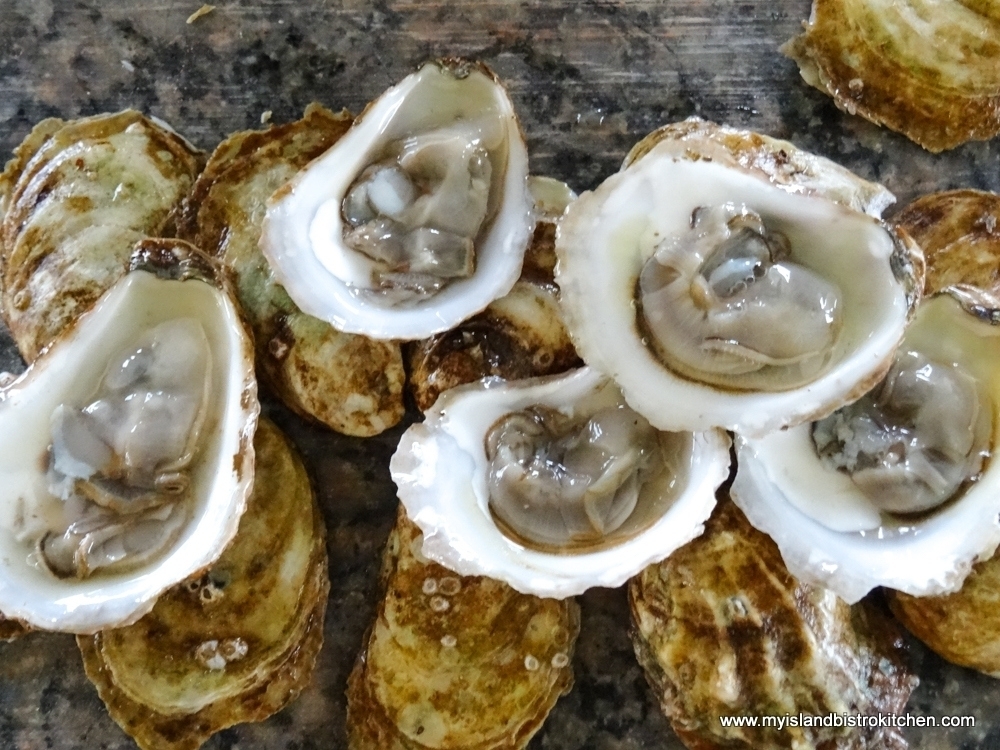
PEI Oysters
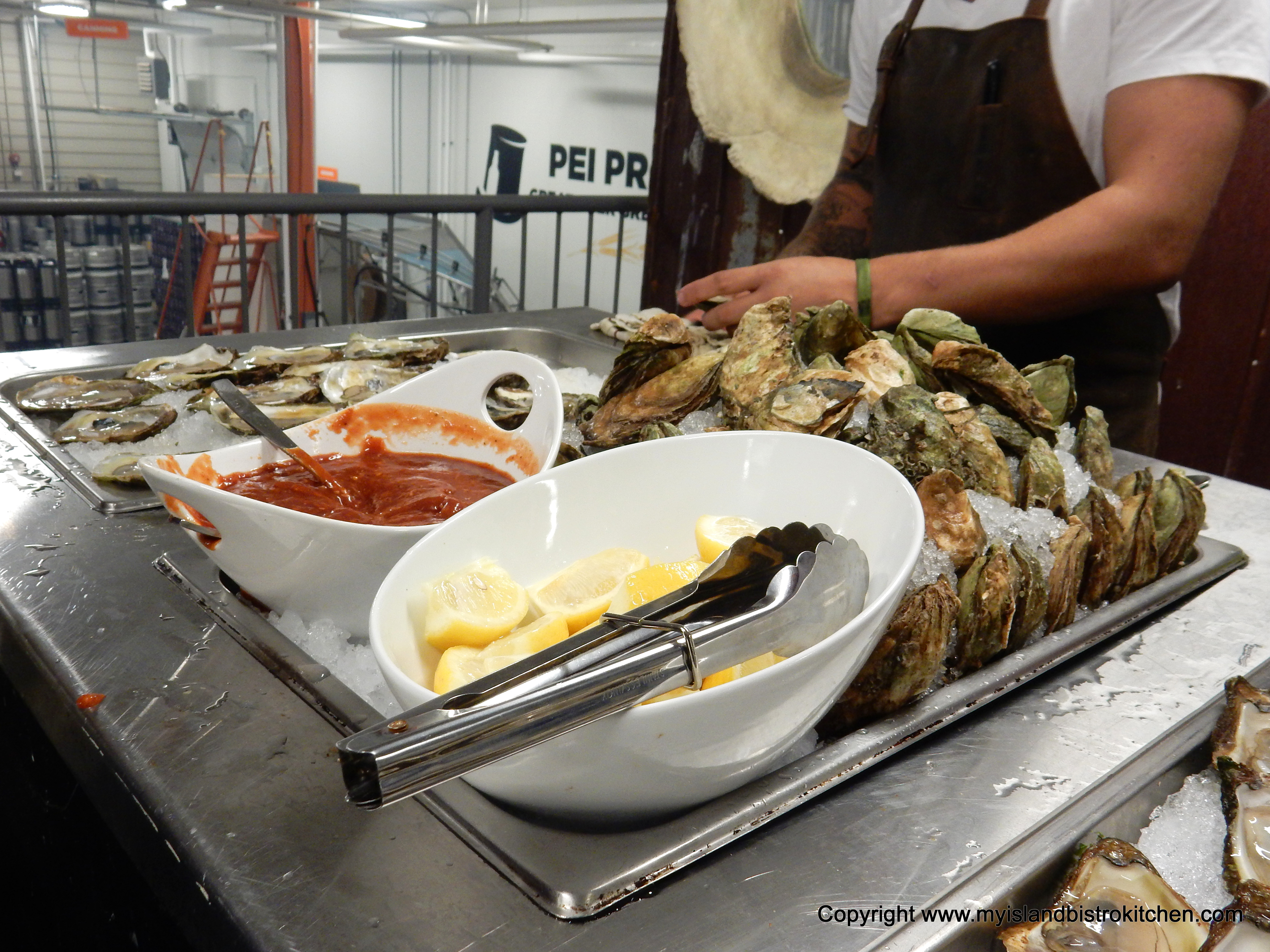
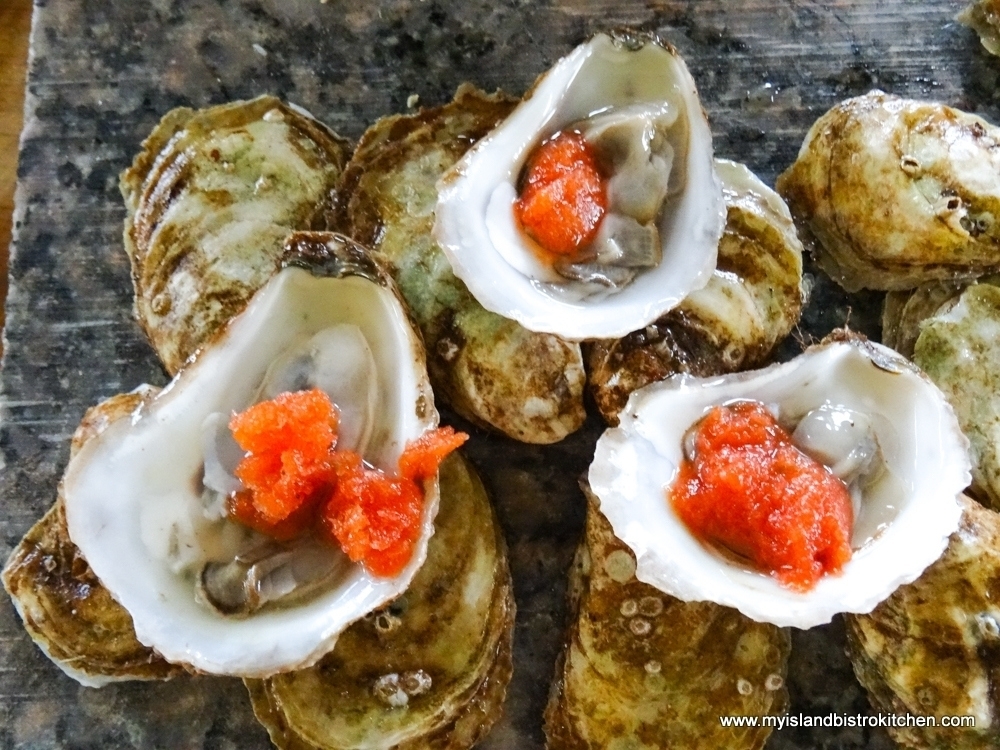
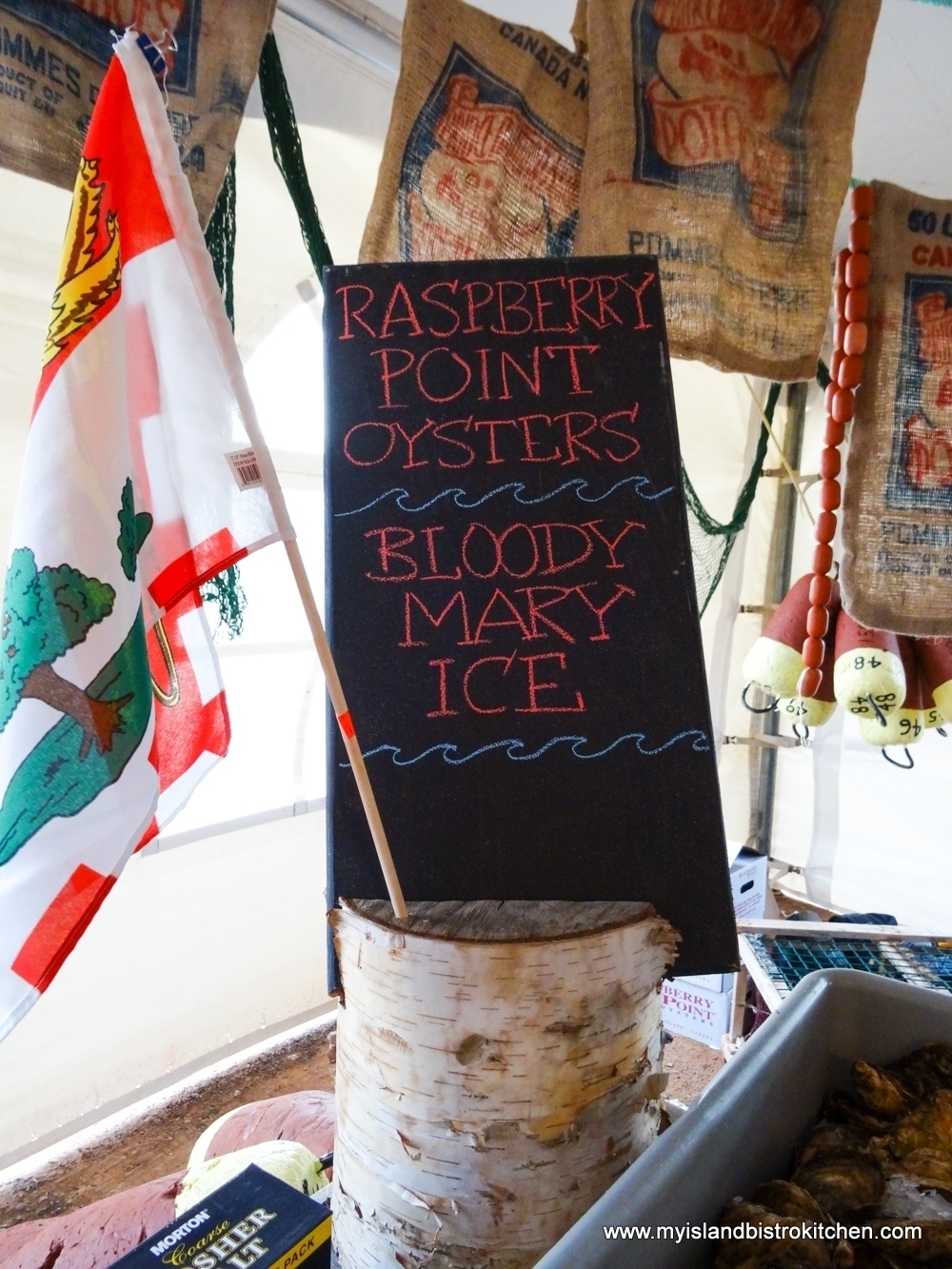
Oysters are most often served raw on the half shell on a bed of ice with freshly squeezed lemon or, sometimes, with a peppery shallot mignonette. Chef Michael Smith often serves oysters with a Bloody Mary Ice seen in the photo below.
Shucked PEI Oysters Served with Bloody Mary Ice
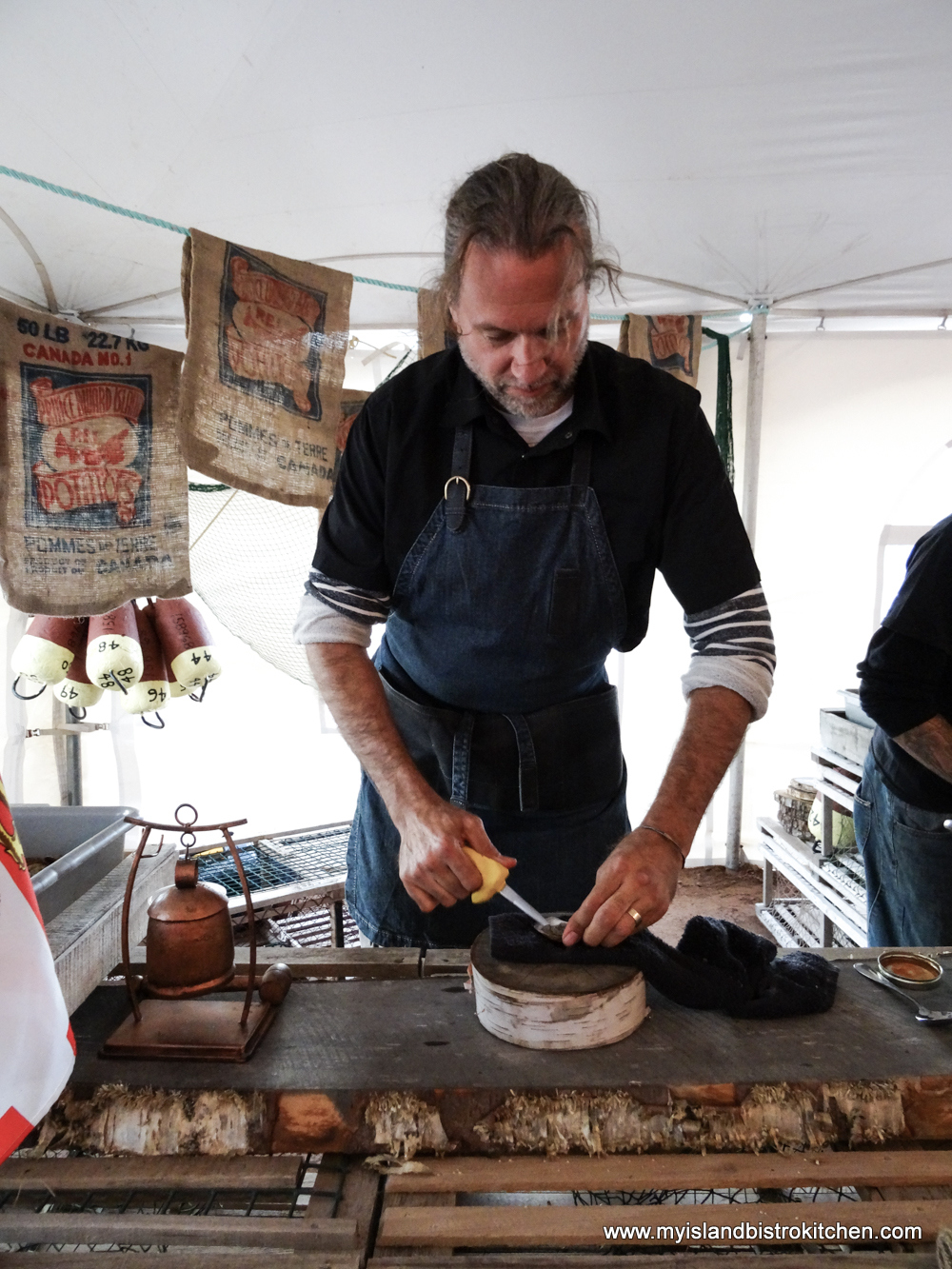
Oysters are shucked using a special short, blunt knife made for this purpose. Power says he believes oysters are popular, especially eaten raw, because they are an all-natural food, not processed or transformed. Oyster bars are very popular and an emerging trend is to pair oysters with wines, beers, and whiskey. Fresh oysters are available at most fish markets on PEI as well as the larger supermarkets. On PEI, many restaurants serve raw oysters and, at many Fall Flavours Festival events each September, oysters are a staple, like they were at the 2017 “A Taste of Rustico” event where Chef Michael Smith (in photo below) was busy shucking Raspberry Point oysters.
Chef Michael Smith Shucking Raspberry Point Oysters at “Taste of Rustico” Fall Flavours event 2017Raspberry Point Oysters at Taste of Rustico Event 2017
So, the next time you are slurping back one of the plump briny Prince Edward Island oysters, you’ll now know a little bit more about how the Island oysters are produced, the flavour profile of an Island oyster, and you’ll be enjoying a unique terroir (or perhaps it’s “merroir”) taste from waters in and around Prince Edward Island on Canada’s East Coast.
I love a bowl of rich Irish Stew any time of the year but, for certain, I will make it around St. Patrick’s Day! It’s a filling and tummy-warming stew that is always a welcome sight on the dinner table. Continue reading My Island Bistro Kitchen’s Irish Stew→
These Gluten-Free Zucchini Date Muffins will rival any traditional wheat-based muffins! They sport a lovely gently domed top that is the hallmark of a perfect muffin shape, they are packed full of flavor, and they have a lovely tender, moist crumb. Continue reading The Ultimate Gluten-Free Zucchini Date Muffins→
I am a huge fan of batch cooking and preparing make-ahead meals, like this Beef Pasta Casserole, to freeze for easy weeknight meal preparation.
I began batch cooking many years ago when I moved away from my family home and began life on my own. I went in search of cookbooks designed for cooking for one or two and didn’t find much on the market. What recipes I did find took ingredients that either weren’t available locally or the recipes called for sizes of ingredients that weren’t available in Canada.
I also soon discovered it really wasn’t much fun having to prepare a meal from scratch each night for one person. That’s when I realized I didn’t need cookbooks with recipes sized down to one or two servings; I needed a freezer and I needed to batch cook make-ahead meals!
Beef Pasta Casserole
I currently have two freezers plus a deep freezer compartment in the bottom of the refrigerator and all are filled with make ahead-meals. The entrées are a mix of very basic fare, like baked beans, pasta casseroles, and fish cakes, and more elaborate meals like fillings for vol-au-vents and crèpes for nights that call for something a little extra special.
Batch cooking means you still do the prep work but it is all done upfront at once and it eases the pressure of meal preparation on weeknights, especially on nights where one is late getting home from work. So long as I have the makings for a salad in the fridge and some rolls, biscuits, or bread in the freezer, I can pull out a frozen entrée and have dinner on the table in 30 minutes or so. Clean-up is super easy, too, since there are no prep dishes or pots and pans to be washed, just the plate, glass, and utensils to be loaded into the dishwasher.
Beef Pasta Casserole
One of my standby casseroles is this beef pasta casserole. It’s not hard to prepare and does not take any wild or weird ingredients. This makes a huge casserole so it’s great to take to potlucks or divide into meal-sized servings and frozen. Use a large roaster or two 2-quart casseroles or, if you have a small household, divide the casserole up into small single serving casseroles or ramekins and freeze them. I have a ton of ramekins and small individual-sized casserole dishes as I find they are the perfect serving size for individual servings of casseroles. I store these casseroles, unbaked, in large plastic freezer containers in the freezer.
Beef Pasta Casserole Ready for the Freezer
Easy steps make this casserole. Brown the ground beef, drain, and set it aside. Cook the pasta. Next, sauté the onion, garlic cloves, celery, green pepper, and mushrooms. Then, combine all the liquid ingredients and canned tomatoes. Combine all the ingredients together along with some cheese and, voilà, that’s it! Top the casserole with some extra cheese and bake in the oven for 25-30 minutes. If freezing the casserole, freeze it unbaked and without the cheese topping which is best added at the time of baking.
Serve with your favorite green salad and biscuits, rolls, or bread.
Beef Pasta Casserole
Beef Pasta Casserole
Ingredients:
1½ lbs lean ground beef
1½ – 2 tbsp vegetable oil
1-2 tbsp vegetable oil
2/3 cup onion, chopped
3 garlic cloves, minced
1/3 cup celery, chopped
¼ cup green pepper, chopped
¾ cup sliced button mushrooms
1 – 284ml can tomato soup
1 tsp Worcestershire sauce
½ cup beef broth (homemade or commercial)
¼ cup tomato paste
1 tbsp maple syrup
2 tbsp basil pesto (homemade or commercial)
2 tsp Italian seasoning
¼ tsp ground ginger
1 – 398ml can diced tomatoes with juice
Salt and pepper, to taste
400g fusilli (regular or gluten-free), cooked according to package directions and drained (about 5 cups raw pasta)
2/3 cup shredded cheese of choice (e.g., cheddar, or a blend of cheeses)
2 tbsp grated Parmesan cheese
½ cup shredded cheese of choice for topping casserole
Method:
In large frypan, heat the vegetable oil and brown the meat over medium-low heat. Drain. Set aside.
Preheat oven to 350°F.
In large saucepan, heat second amount of vegetable oil over medium heat. Sauté the onion, garlic, celery, and green pepper for approximately 2 minutes. Add the mushrooms and sauté for 3-4 minutes. Remove from heat and set aside.
In a large bowl or measuring cup, combine the tomato soup, Worcestershire sauce, beef broth, tomato paste, maple syrup, basil pesto, Italian seasoning, and ground ginger. Stir well. Stir in canned tomatoes with juice. Season with salt and pepper, to taste.
In large bowl or pot, combine the cooked pasta, meat, vegetables, liquid ingredients, 2/3 cup shredded cheese, and Parmesan cheese. Stir gently to combine ingredients. Transfer mixture to large greased roaster, two – 2-quart casseroles, or divide into individual serving-sized dishes such as ramekins.
Sprinkle casserole(s) with remaining ½ cup shredded cheese. Bake in oven for 25-30 minutes to heat through. Serve hot. Casserole freezes well.
Yield: 12-14 servings
If you have made this recipe and enjoyed it and/or wish to share it with your friends and family, please do so on social media but be sure to share the direct link to this posting from my website.
This tasty Beef Pasta Casserole is an easy-to-make weeknight casserole that combines ground beef, pasta, cheese, and a tomato-based sauce. Freezes well.
Course
Main Course
Cuisine
American
Servings12
My Island Bistro KitchenMy Island Bistro Kitchen
Ingredients
1 1/2lbslean ground beef
1 1/2 - 2tbspvegetable oil
1-2 tbspvegetable oil
2/3cuponion, chopped
3garlic cloves, minced
1/3cupcelery, chopped
1/4cupgreen pepper, chopped
3/4cupsliced button mushrooms
1 -284mlcan tomato soup
1tspWorcestershire sauce
1/2cup beef broth
1/4cuptomato paste
1tbspmaple syrup
2tbspbasil pesto
2tspItalian seasoning
1/4tspground ginger
1 -398mlcan diced tomatoes with juice
salt and pepper, to taste
400gfusilli (regular or gluten-free), cooked according to package directions and drained (about 5 cups raw pasta)
2/3cupshredded cheese of choice (e.g., cheddar, or a blend of cheeses)
2tbspgrated Parmesan cheese
1/2cupshredded cheese of choice for topping casserole
Instructions
In large frypan, heat the vegetable oil and brown the meat over medium-low heat. Drain. Set aside.
Preheat oven to 350°F.
In large saucepan, heat second amount of vegetable oil over medium heat. Sauté the onion, garlic, celery, and green pepper for approximately 2 minutes. Add the mushrooms and sauté for 3-4 minutes. Remove from heat and set aside.
In a large bowl or measuring cup, combine the tomato soup, Worcestershire sauce, beef broth, tomato paste, maple syrup, basil pesto, Italian seasoning, and ground ginger. Stir well. Stir in canned tomatoes with juice. Season with salt and pepper, to taste.
In large bowl or pot, combine the cooked pasta, meat, vegetables, liquid ingredients, 2/3 cup shredded cheese, and Parmesan cheese. Stir gently to combine ingredients. Transfer mixture to large greased roaster, two – 2-quart casseroles, or divide into individual serving-sized dishes such as ramekins.
Sprinkle casserole(s) with remaining ½ cup shredded cheese. Bake in oven for 25-30 minutes to heat through. Serve hot. Casserole freezes well.
Recipe Notes
[Copyright My Island Bistro Kitchen]
Looking for other tasty casseroles? Try these from My Island Bistro Kitchen:
Here is my suggested meal plan for the upcoming week. If you want to check out previous weeks’ meal plans, click here for the meal plan for week 1, here for week 2’s plan, here for the meal plan for week 3, here for Week 5, and here for Week 6. I’ve provided a list of the main ingredients that, for the most part, would probably involve a shopping trip to the supermarket for most. However, as always, read each recipe thoroughly and carefully to create your own list as I have not listed what I consider to be “staple” items like regular milk, butter, eggs, flour, sugar, butter/shortening, oil, spices, etc.
This week, we’ll start off with a roast chicken or turkey. I watch and get chickens or turkeys when they are on sale and I usually have a stock of 2-3 in the freezer. They are great week starters because, yay, there are leftovers!!!! This means the leftovers can be transformed into other dishes such as turkey chowder and chicken (turkey) chow mein casserole. And, if you are cooking a turkey (or a large chicken), don’t throw out the carcass as it makes great poultry stock!
Click on the green links below to access the recipes for this week’s meal plan.
MONDAY
Bran Muffins – A healthy batch of muffins to start off the week.
Shopping List: Applesauce, molasses, natural bran, all-purpose and whole wheat flours, and raisins
NOTE: Be sure to save 2 cups of cubed turkey/chicken for the turkey chowder for Wednesday’s dinner and 1 cup for the casserole for Thursday’s dinner.
Dinner: Leftover Roast Chicken or Turkey with Potato Salad (add a green salad, if desired)
Don’t reserve potato salad just for summer picnics and barbeques. It’s great any time of the year and is a fine accompaniment to cold chicken or turkey.
Shopping List: For the Potato Salad – potatoes (such as Yukon Gold or Reds), eggs, celery, onion, salad dressing (click here for my recipe), sour cream, sweet relish, and mustard).
Leftover chicken (or turkey) gets re-purposed into this flavorful easy-to-prepare casserole.
Shopping list: For the casserole: 1 – 10oz can Cream of Chicken Soup, Parmesan cheese, fresh mushrooms, red pepper, celery, onion, garlic, chicken broth, cashew pieces, sliced water chestnuts, and chow mein noodles. (Note: This recipe requires 1 cup of the cooked, cubed leftover turkey/chicken) For the salad: Lettuce and fresh vegetables of choice and dressing. For the biscuits: Whipping cream, milk, and standard baking supplies.
By far, one of my most popular recipes and one of the most frequently searched for on my website. Dinner in one casserole! A simple meal but a mighty tasty one!
Shopping List: Ground beef, potatoes, onion, celery, parsnips, carrots, frozen peas, Minute Rice, and 1 – 10oz can tomato soup
A Saturday night tradition in many Maritime homes. These beans freeze great if there are any leftovers.
Shopping List: For the Baked Beans – 1 – 1lb bag yellow eye beans, garlic, dry mustard, liquid chicken bouillon, tomato paste, cider vinegar, pure maple syrup, molasses, BBQ sauce, and onion. For White Bread: Yeast, milk, flour and general baking supplies.
This bread pudding is such a treat, especially when flavored with maple liqueur that is made right here in PEI by Deep Roots Distillery in Warren Grove, just outside Charlottetown.
Shopping List: For Pudding: 1 – 1lb loaf of soft French bread, whole milk, blend/cream, baking apples, maple liqueur, and raisins. For Sauce: Maple syrup and maple liqueur.
Apple-Maple Bread Pudding
SUNDAY
Sunday Breakfast: Special Treat – Irish Cream French Toast, a great way to use some of the homemade bread from yesterday
Irish Cream jazzes up traditional French toast. A lovely weekend treat.
Shopping List: Irish Cream Liqueur (click here for my recipe), orange juice, eggs